
Empty Palm Fruit Bunch: 10 Amazing Uses and Benefits for 2025
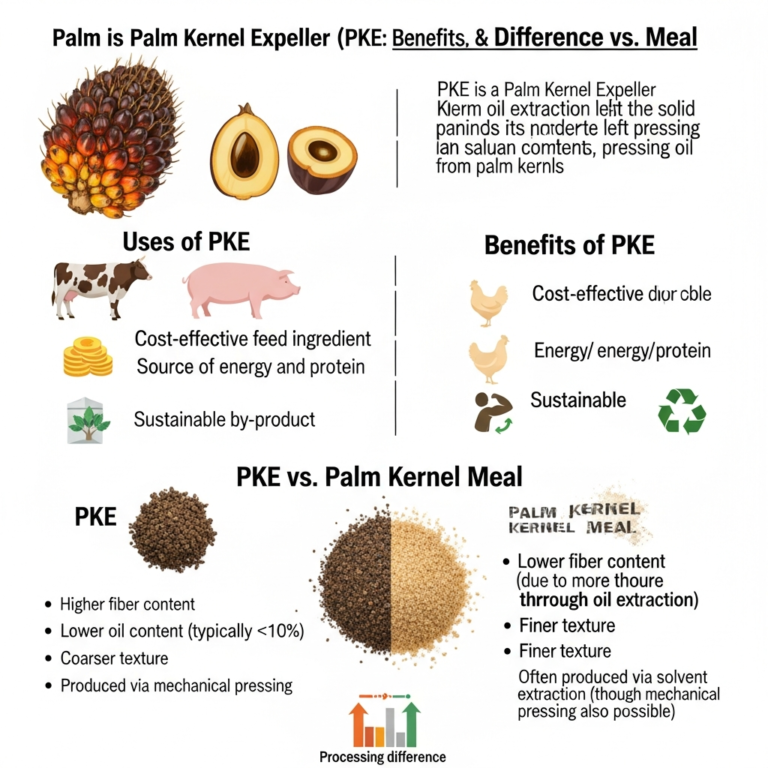
The palm oil industry is a cornerstone of global agriculture, producing essential goods like Crude Palm Oil and Palm Kernel Oil. However, it also generates significant biomass. Alongside valuable byproducts from the Palm Kernel, such as Palm Kernel Expeller, the industry produces vast quantities of fibrous waste. The most abundant of these is the Oil Palm Fruit Bunch, commonly known as the Empty Palm Fruit Bunch (EFB).
For decades, EFB was considered a disposal problem. Today, a shift towards a circular economy has transformed this humble byproduct into a valuable resource with incredible potential. This article explores the innovative uses and benefits driving this sustainable revolution, turning agricultural waste into wealth.
Table of Contents
- 1. Biofuel Production from the Empty Palm Fruit Bunch
- 2. Organic Fertilizer and Soil Conditioner
- 3. Sustainable Pulp and Paper Production
- 4. A Perfect Medium for Mushroom Cultivation
- 5. Advanced Biocomposites and Bioplastics
- 6. Effective Mulching and Erosion Control
- 7. Eco-Friendly Livestock Feed
- 8. Manufacturing of Fiberboards
- 9. Production of High-Grade Activated Carbon
- 10. Thermal and Acoustic Insulation Material
1. Biofuel Production from the Empty Palm Fruit Bunch
One of the most significant uses for EFB is in renewable energy. Due to its high calorific value, it’s an excellent source of biomass. It can be processed into pellets or briquettes, similar to other resources like the Palm Kernel Shell, or used directly in boilers to generate electricity. This greatly reduces reliance on fossil fuels in palm oil mills.
Furthermore, through gasification and fermentation, this biomass can be converted into advanced biofuels like bio-ethanol. This positions the Empty Palm Fruit Bunch as a key player in the global transition to cleaner energy, a goal supported by the International Renewable Energy Agency (IRENA).

2. Organic Fertilizer and Soil Conditioner
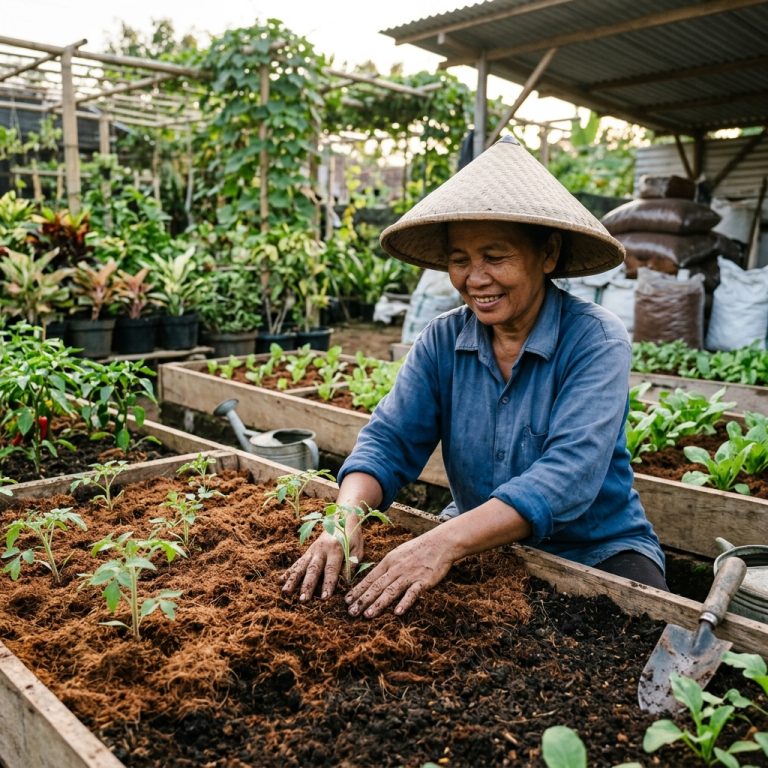
Raw EFB is rich in nutrients, especially potassium (K), which is vital for plant growth. Instead of being discarded, it is often returned to the plantation as organic fertilizer. This practice, known as bunch application, slowly releases nutrients, improves soil structure, and increases water-holding capacity.
Composting the Empty Palm Fruit Bunch accelerates this process, creating a potent soil conditioner that reduces the need for chemical fertilizers. This sustainable practice enhances soil health and biodiversity, a principle supported by the Food and Agriculture Organization (FAO).
3. Sustainable Pulp and Paper Production
The high cellulose content in EFB makes it a viable alternative to wood for producing pulp and paper. This non-wood fiber source helps reduce deforestation and pressure on natural forests. The paper produced is suitable for various applications, from packaging materials to writing paper.
While the technology is still evolving, several companies are successfully producing commercial-grade pulp from this agricultural residue. This innovation showcases how industrial waste can be upcycled into everyday products.
4. A Perfect Medium for Mushroom Cultivation
The lignocellulosic composition of an Empty Palm Fruit Bunch makes it an ideal substrate for growing various types of edible mushrooms, such as oyster mushrooms. The EFB provides the necessary nutrients and physical structure for the mycelium to thrive, leading to high-yield harvests.
This application creates an additional revenue stream for farmers. After the mushrooms are harvested, the spent substrate can be used as an even more effective organic compost, creating a closed-loop, zero-waste system.

5. Advanced Biocomposites and Bioplastics
Research into green materials has highlighted the potential of EFB fibers as reinforcement in biocomposites. These fibers can be mixed with polymers to create strong, lightweight materials for automotive parts and construction panels, offering a sustainable alternative to fiberglass.
Scientists are also exploring ways to extract cellulose from the Empty Palm Fruit Bunch to produce biodegradable plastics. As detailed in studies on ScienceDirect, this could help combat plastic pollution by offering eco-friendly packaging solutions.
6. Effective Mulching and Erosion Control
On plantations, shredded EFB serves as an excellent mulching material. When spread around the base of palm trees, it helps to suppress weed growth, conserve soil moisture by reducing evaporation, and regulate soil temperature.
On hilly or sloped terrain, this mulch also plays a crucial role in preventing soil erosion caused by heavy rainfall. The fibrous mat holds the topsoil together, maintaining the land’s fertility for future generations.
7. Eco-Friendly Livestock Feed
While not directly edible raw due to high lignin content, the Empty Palm Fruit Bunch can be processed into a nutritious feed for ruminants like cattle. Processes like fermentation can break down the tough fibers, making the nutrients more accessible.
This provides a low-cost, sustainable source of roughage. Research in journals of Animal Feed Science and Technology confirms its potential as a valuable feed component when properly treated.
8. Manufacturing of Fiberboards
The strong fibers of the EFB can be compressed with a binder to create medium-density fiberboard (MDF). This EFB-based fiberboard is a sustainable alternative to traditional wood-based boards used in the furniture and construction industries.
Using a waste product like the Empty Palm Fruit Bunch reduces the demand for timber, contributing to forest conservation. This application is a perfect example of industrial symbiosis, where one industry’s waste becomes another’s raw material.
9. Production of High-Grade Activated Carbon
Through a process called pyrolysis, EFB can be converted into activated carbon. This highly porous material has a vast surface area, making it incredibly effective at adsorbing impurities from liquids and gases.
Activated carbon from the Empty Palm Fruit Bunch is used in water purification systems, air filters, and various industrial processes. It provides a cost-effective and sustainable solution for pollution control.
10. Thermal and Acoustic Insulation Material
The fibrous nature of this biomass gives it excellent insulation properties. Researchers are developing insulation panels made from its fibers for use in buildings to provide both thermal and acoustic insulation.
This green building material helps reduce energy consumption for heating and cooling, lowers noise pollution, and is fully biodegradable at the end of its life, contributing to a more sustainable construction industry.
Conclusion: From Waste to Wealth
The journey of the Empty Palm Fruit Bunch from a problematic waste product to a sought-after resource is a testament to innovation and the circular economy. The 10 uses highlighted here are just the beginning, as research continues to unlock new possibilities.
By embracing the full potential of EFB, we can create more sustainable industries, reduce our environmental footprint, and build a future where waste is no longer wasted.
Makmur Amanah Sejahtera provides high-quality palm products such as Palm Kernel Expeller, Palm Kernel Shell, Crude Palm Oil, Palm Kernel Oil, etc. Kindly contact us at WhatsApp +6282140002198 or email us at admin@makmuramanah.co.id.Looking for High-Quality Palm Products?

 English
  Indonesian
  Chinese
  Arabic