
Table of Contents
- What Exactly Is Coconut Shell Charcoal?
- The Top 5 Powerful Benefits of Coconut Shell Charcoal
- Diverse Uses for Coconut Shell Charcoal Beyond the Grill
- Coconut Shell vs. Other Biofuels: A Quick Comparison
- How to Choose the Best Coconut Shell Charcoal: A Buyer’s Guide
- Frequently Asked Questions (FAQ)
- The Final Word on Coconut Shell Charcoal
Have you ever considered what happens to the millions of coconut shells discarded daily? Many are transformed into an amazing, eco-friendly fuel source: coconut shell charcoal. This guide will walk you through its incredible benefits, from powering your weekend barbecue to purifying your drinking water. It’s more than just charcoal; it’s a sustainable choice for a modern world.
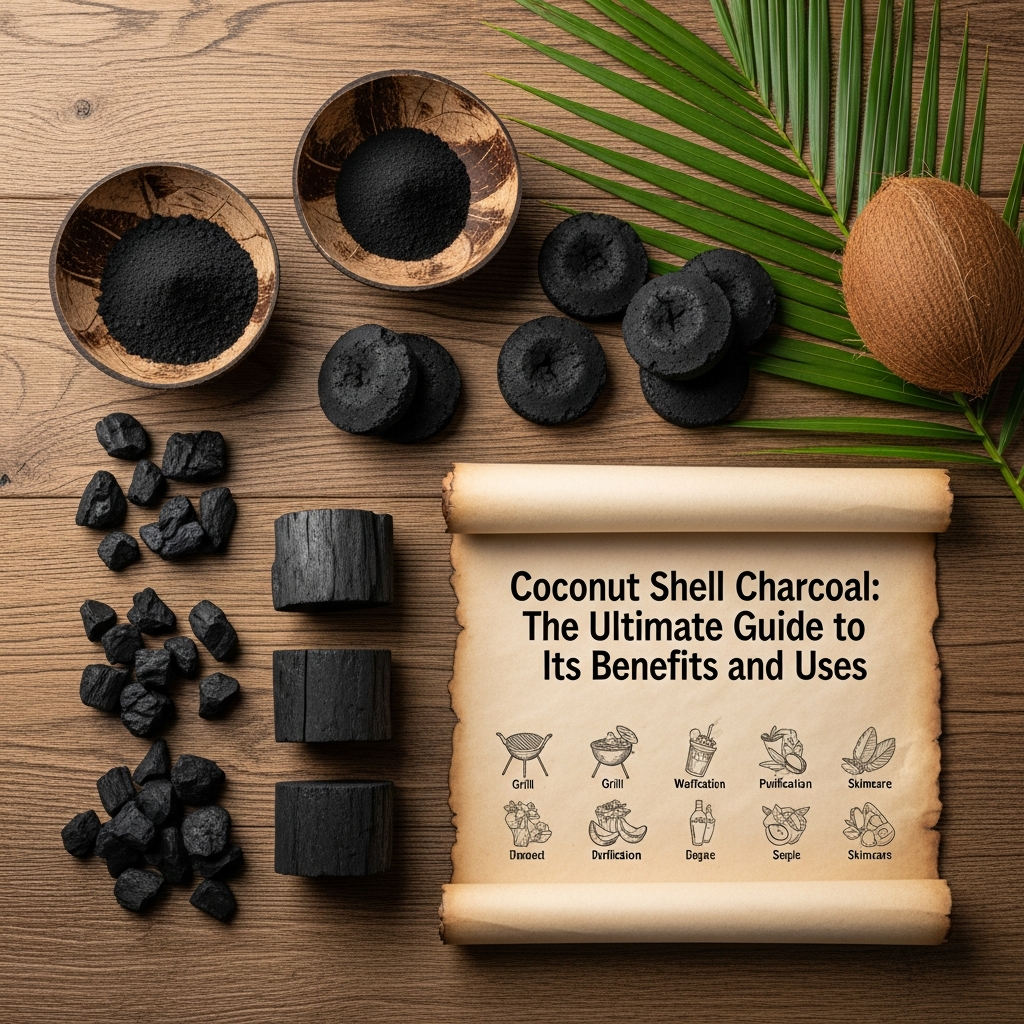
Coconut shell charcoal is rapidly gaining popularity as a superior alternative to traditional lump charcoal and briquettes. Its unique properties make it cleaner, hotter, and longer-lasting. In this ultimate guide, we will explore everything you need to know about this remarkable product.
[IMAGE SUGGESTION: A visually appealing pile of coconut shell charcoal briquettes, possibly in a natural, rustic setting.]
Alt Text: A pile of high-quality coconut shell charcoal briquettes ready for use.
What Exactly Is Coconut Shell Charcoal?
Coconut shell charcoal is a type of charcoal produced by carbonizing coconut shells in a kiln with a limited supply of air. This process burns off volatile substances, leaving behind pure carbon with a porous structure. Unlike traditional wood charcoal, which contributes to deforestation, this product utilizes an agricultural byproduct, making it an excellent example of waste-to-energy innovation.
The production is a masterclass in sustainability. By giving a second life to coconut shells, we reduce waste in landfills and create a high-performance fuel. The resulting coconut shell charcoal is dense, clean-burning, and packed with energy, making it a valuable resource across various industries.
The Top 5 Powerful Benefits of Coconut Shell Charcoal
Why make the switch? The advantages are clear, ranging from environmental responsibility to superior performance. Here are the top reasons why coconut shell charcoal is the ultimate choice.
1. Eco-Friendly and Sustainable
The most significant benefit is its positive environmental impact. No trees are cut down to produce it. Instead, it repurposes shells from the thriving coconut industry that would otherwise be discarded. This helps reduce methane emissions from decomposing waste and lessens the pressure on our forests. For more on sustainable materials, check out the Rainforest Alliance‘s work on responsible sourcing.
2. Higher Heat and Longer Burn Time
From a performance standpoint, coconut shell charcoal is a powerhouse. It burns significantly hotter and longer than most wood-based charcoals, reaching temperatures of over 1,000°F (540°C). This consistent, high heat is perfect for searing meats and ensures your grill stays hot for hours, reducing the need to refuel during a long cooking session.
[IMAGE SUGGESTION: A close-up shot of glowing coconut shell charcoal briquettes in a barbecue grill, with food cooking evenly above it.]
Alt Text: Glowing coconut shell charcoal briquettes providing high, even heat for grilling.
3. Produces Less Smoke and Ash
Say goodbye to overpowering, acrid smoke and heavy ash cleanup. Because it’s made from dense shells and contains very few impurities, coconut shell charcoal produces minimal smoke and ash. This means the true flavor of your food shines through without being masked by a smoky taste. It’s a cleaner experience both for your food and your lungs.
4. A Natural Purifying Agent
When “activated,” coconut shell charcoal becomes an incredible filtering agent. The activation process creates millions of tiny pores, dramatically increasing its surface area. This allows it to adsorb impurities, toxins, and contaminants, making it a key component in water and air purification systems worldwide. This property is extensively documented in studies on water treatment, such as those referenced by the U.S. Environmental Protection Agency (EPA).
5. Incredibly Versatile Applications
While fantastic for grilling, its uses extend far beyond the backyard. As we’ve touched on, it’s used in filtration, but it also finds its way into health and beauty products, horticulture as biochar, and even industrial processes. This versatility makes coconut shell charcoal a truly remarkable and valuable global commodity.
Diverse Uses for Coconut Shell Charcoal Beyond the Grill
Let’s dive deeper into the varied applications of this multipurpose material. Its unique structure and purity make it suitable for tasks where traditional charcoal would fall short.
For Barbecuing and Grilling
This is the most popular use. Chefs and backyard enthusiasts love coconut shell charcoal because its consistent, high heat provides a perfect sear. Furthermore, the low smoke output ensures that the food tastes like food, not fuel.
As Activated Carbon for Filtration
Activated coconut charcoal is a filtration superstar. It’s used in everything from household water pitchers to large-scale municipal water treatment plants. Its microporous structure is particularly effective at trapping organic compounds and chlorine, significantly improving the taste and safety of drinking water. The World Health Organization (WHO) provides extensive guidelines on safe drinking water that highlight the importance of effective filtration methods.
In Health and Beauty Products
The “detoxifying” properties of activated charcoal have made it a trendy ingredient in the wellness industry. You can find coconut shell charcoal in whitening toothpaste, facial masks, and skin cleansers. It works by binding to dirt and oils, helping to clear pores and remove surface stains from teeth.
For Horticultural and Agricultural Purposes
When used in soil, it’s called “biochar.” Coconut shell biochar helps improve soil structure, aeration, and water retention. It also creates a habitat for beneficial microbes, promoting healthier plant growth and reducing the need for chemical fertilizers. This ancient practice is being rediscovered as a powerful tool for sustainable agriculture, as detailed in many scientific journals like Biofuels, Bioproducts and Biorefining.
Coconut Shell vs. Other Biofuels: A Quick Comparison
While coconut shell charcoal stands out for its unique properties, it’s part of a larger family of sustainable biofuels derived from agricultural waste. Understanding its place in this ecosystem highlights the importance of using renewable resources. Another significant player in the biofuel industry comes from the oil palm tree, which provides a range of valuable products.
For instance, Palm Kernel Shell (PKS) is another high-performance biomass fuel used in industrial boilers. While coconut charcoal is preferred for grilling, PKS is a go-to for large-scale energy production. Both are byproducts, with PKS coming from the processing of the Palm Kernel. The entire Oil Palm Fruit Bunch is utilized to create various products, from biomass fuels to high-quality oils.
The processing also yields valuable byproducts like Palm Kernel Expeller (PKE), a nutritious animal feed, and two distinct types of oil: Crude Palm Oil (CPO) and Palm Kernel Oil (PKO), each with unique applications in food and industry. This whole-process approach, similar to the coconut industry, emphasizes a zero-waste philosophy.
How to Choose the Best Coconut Shell Charcoal: A Buyer’s Guide
Not all charcoal is created equal. When shopping, look for products labeled “100% coconut shell.” Avoid brands that use fillers or chemical binders, as these can produce unpleasant odors and harmful smoke. High-quality coconut shell charcoal will typically come in uniform briquettes that are dense and hard to break.
Frequently Asked Questions (FAQ)
Is coconut shell charcoal better than regular charcoal?
In many ways, yes. It burns hotter, lasts longer, produces less ash and smoke, and is made from a renewable, sustainable resource. This makes it a superior choice for both performance and environmental reasons.
Can I use it in a regular grill?
Absolutely. Coconut shell charcoal can be used in any standard charcoal grill, kamado cooker, or smoker just like traditional briquettes or lump charcoal.
Is it completely smokeless?
While it’s considered low-smoke, it’s not entirely smokeless. You will see some smoke upon ignition and when fats from food drip onto the hot coals. However, it produces significantly less smoke than wood-based charcoals.
The Final Word on Coconut Shell Charcoal
From the garden to the grill, coconut shell charcoal proves to be an exceptional product with a conscience. Its sustainable origins, coupled with its powerful and clean performance, make it the ultimate choice for conscious consumers.
By choosing coconut shell charcoal, you are not only upgrading your grilling game but also supporting a system that values waste reduction and environmental health. It’s a small change that makes a big impact.
Makmur Amanah Sejahtera provides high-quality palm products such as Palm Kernel Expeller, Palm Kernel Shell, Crude Palm Oil, Palm Kernel Oil, etc. Kindly contact us at WhatsApp +6282140002198 or email us at admin@makmuramanah.co.id.Looking for High-Quality Palm Products?
 English
  Indonesian
  Chinese
  Arabic