
Table of Contents
- 1. What Exactly is Palm Kernel Expeller (PKE)?
- 2. How is Palm Kernel Expeller (PKE) Produced?
- 3. Key Specifications of High-Quality Palm Kernel Expeller (PKE)
- 4. The Ultimate Guide to Palm Kernel Expeller (PKE) Uses
- 5. What Influences the Palm Kernel Expeller (PKE) Price in 2025?
- 6. Weighing the Pros and Cons: Benefits and Limitations
- 7. Frequently Asked Questions (FAQ)
- 8. Your Trusted PKE Supplier
1. What Exactly is Palm Kernel Expeller (PKE)?
Palm Kernel Expeller (PKE) is a highly valuable co-product derived from the palm oil industry, originating from the Oil Palm Fruit Bunch. It is the material left over after the mechanical extraction (crushing) of oil from the kernel of the palm fruit. Often referred to as Palm Kernel Cake (PKC), it is a globally recognized feed ingredient, prized for its balanced energy and protein content, making it a staple in livestock diets worldwide.
Unlike some other feed ingredients, PKE provides a unique combination of crude protein, high fiber, and moderate fat levels. This nutritional profile makes it particularly suitable for certain types of livestock. As the global demand for cost-effective and sustainable animal feed grows, understanding the role of Palm Kernel Expeller (PKE) is more crucial than ever for farmers, nutritionists, and commodity traders.
This guide will provide a comprehensive look into everything you need to know about this versatile feedstuff, from its production process and specifications to its various applications and price drivers in 2025.
2. How is Palm Kernel Expeller (PKE) Produced?
The production of Palm Kernel Expeller (PKE) is a multi-step process directly linked to palm oil milling. It begins after the palm fruit’s flesh is pressed to extract Crude Palm Oil. The remaining nut is then cracked. This process separates the valuable Palm Kernel from its hard outer casing, the Palm Kernel Shell, which is another useful biomass product.
These kernels are then subjected to a mechanical crushing process using an expeller press. This high-pressure process squeezes out the Palm Kernel Oil, leaving behind the solid, protein-rich mass known as PKE. The quality of the final product depends heavily on the efficiency of the oil extraction and the cleanliness of the process. A minimal residual oil content is often desired, as it indicates an efficient extraction.
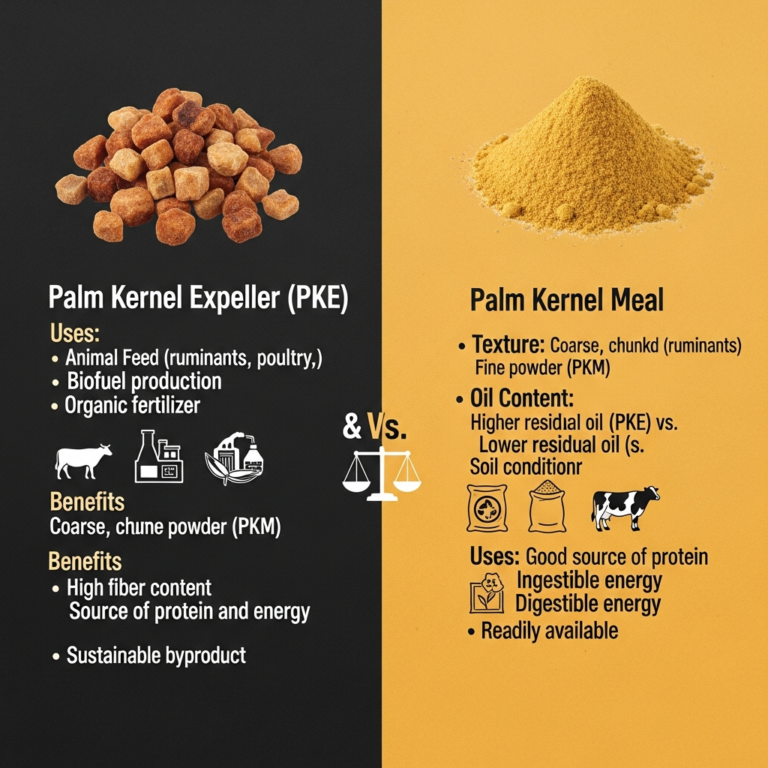
It’s important to distinguish this from Palm Kernel Meal (PKM), which sometimes undergoes a solvent extraction process. The mechanical expeller method is generally preferred for producing animal feed. The resulting Palm Kernel Expeller (PKE) is a valuable and consistent feed resource.
3. Key Specifications of High-Quality Palm Kernel Expeller (PKE)
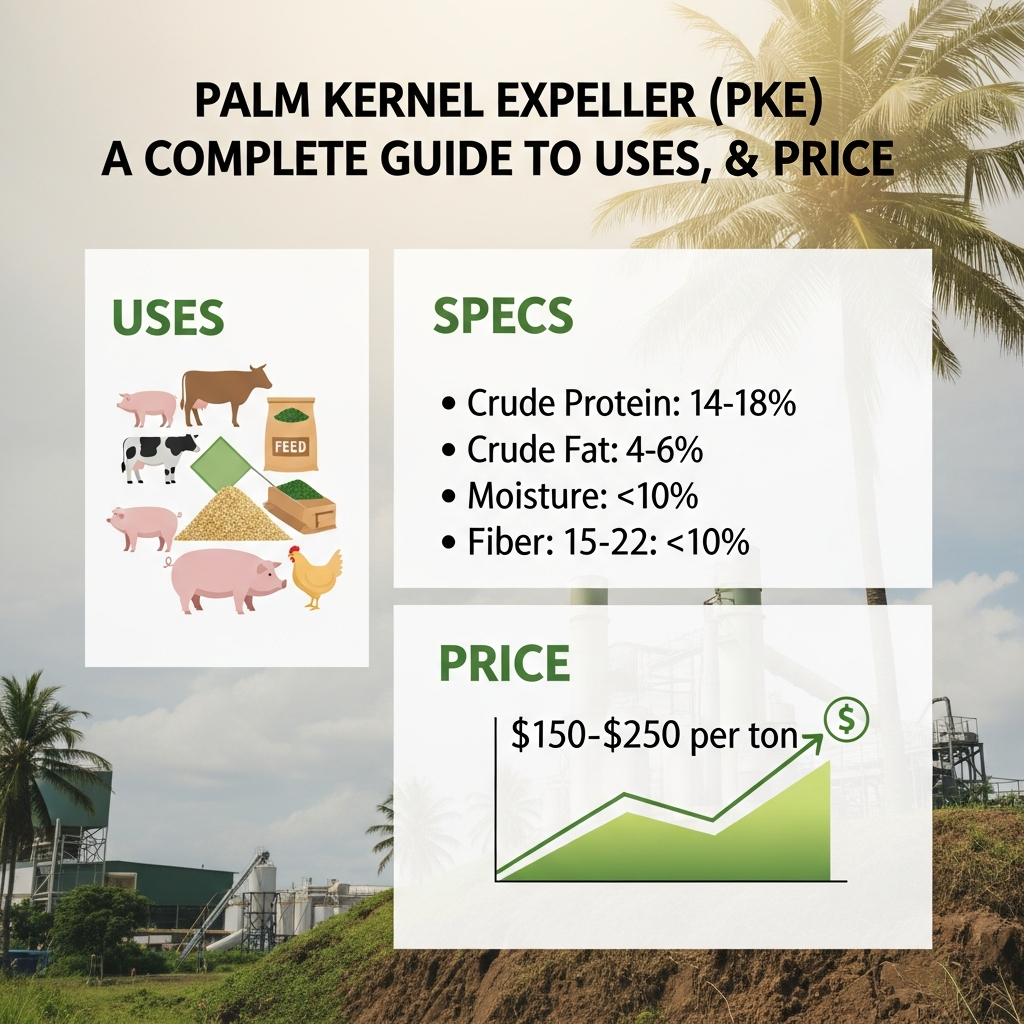
When purchasing Palm Kernel Expeller (PKE), buyers look at several key specifications to determine its quality and suitability for their needs. These metrics ensure that the feed will provide the expected nutritional value for livestock. A poor-quality batch can impact animal health and performance.
Here are the most critical specifications to check on a typical analysis sheet:
- Crude Protein (CP): Typically ranges from 14-18%. This is vital for muscle growth and milk production.
- Crude Fiber: High levels, usually 15-20%. Beneficial for ruminant digestion but can be a limiting factor for poultry.
- Crude Fat (Residual Oil): Generally between 5-10%. This is an excellent source of energy for animals.
- Moisture Content: Should be below 12% to prevent mold growth and ensure stability during storage.
- Shell and Dirt Content: A low percentage (typically <5%) indicates a cleaner, higher-quality product. For more details on quality parameters, refer to studies like those found on ScienceDirect on PKE quality.
Understanding these specs allows for accurate feed formulation and ensures you are getting the best value for your investment in Palm Kernel Expeller (PKE).
4. The Ultimate Guide to Palm Kernel Expeller (PKE) Uses
The versatility of Palm Kernel Expeller (PKE) is its greatest strength. It has become an indispensable ingredient in various feed formulations across the agricultural sector.
4.1. A Staple in Ruminant Feed (Cattle, Goats, Sheep)
The primary market for Palm Kernel Expeller (PKE) is feed for ruminant animals like dairy cows, beef cattle, goats, and sheep. Its high fiber and moderate protein content are ideal for the ruminant digestive system, promoting healthy rumen function. It is often praised for being a cost-effective source of energy and protein, helping to lower overall feed costs without compromising performance.
In dairy rations, PKE can increase butterfat content in milk and provides a consistent source of digestible fiber. For beef cattle, it supports healthy weight gain and is a reliable component in fattening programs. As noted by the Food and Agriculture Organization (FAO), it’s a significant feed resource in many parts of the world.
4.2. Use in Monogastric Diets (Poultry & Swine)
While not as common as in ruminant feed, Palm Kernel Expeller (PKE) is also used in diets for monogastric animals like chickens and pigs. However, its high fiber content can be a limiting factor, as these animals cannot digest fiber as efficiently as ruminants.
For this reason, PKE is typically included at lower rates (5-10%) in poultry and swine feeds. Enzyme supplementation is sometimes used to improve its digestibility. When managed correctly, it can still serve as an economical way to provide protein and energy. For more information on feed ingredients, you can check out our guide to sustainable animal feed.
4.3. Emerging Industrial Applications
Beyond animal feed, researchers are exploring other uses for Palm Kernel Expeller (PKE). Due to its high biomass content, it is being investigated as a potential feedstock for biofuel production. Additionally, its organic nature makes it suitable for use as a base for organic fertilizers, returning nutrients to the soil.
5. What Influences the Palm Kernel Expeller (PKE) Price in 2025?
The price of Palm Kernel Expeller (PKE) is dynamic and influenced by a range of global and local factors. For anyone looking to buy or sell PKE, understanding these drivers is key to making informed decisions in 2025.
- Palm Oil Production: The supply of PKE is directly tied to the production of palm oil. A bumper harvest can lead to a higher supply of PKE, potentially lowering prices.
- Competing Feed Prices: PKE’s price is heavily influenced by the cost of substitutes like soybean meal, corn, and distillers dried grains (DDGS). When these alternatives become expensive, demand for PKE rises. You can track related commodity prices on platforms like IndexMundi.
- Global Shipping Costs: As a globally traded commodity, freight rates play a significant role in the final landed price of Palm Kernel Expeller (PKE), especially for major importers like New Zealand and Europe.
- Import/Export Policies: Government tariffs, import quotas, and biofuel mandates can shift demand and affect market prices significantly.
6. Weighing the Pros and Cons: Benefits and Limitations
Like any feed ingredient, Palm Kernel Expeller (PKE) has its own set of advantages and disadvantages that users must consider.
Key Benefits:
- Cost-Effective: It is often cheaper than other protein sources like soybean meal, helping to reduce feed costs.
- Good Energy Source: The residual oil and digestible fiber provide a steady release of energy, particularly for ruminants.
- High Availability: In palm oil-producing regions, PKE is an abundant and readily available resource. For more on its composition, academic sources like government agricultural departments offer valuable insights.
Potential Limitations:
- High Fiber Content: This can limit its inclusion in diets for poultry and young animals.
- Variability in Quality: Nutritional content can vary between suppliers. Always request a certificate of analysis.
- Palatability: Some animals may require an adaptation period to get used to the taste and texture of feeds containing PKE.
7. Frequently Asked Questions (FAQ)
Q1: What is the difference between Palm Kernel Expeller (PKE) and Palm Kernel Cake (PKC)?
A: The terms are often used interchangeably. Generally, both refer to the meal left after extracting oil from palm kernels. PKE specifically refers to the product from mechanical expeller pressing, which is the most common form in the feed industry.
Q2: Is Palm Kernel Expeller (PKE) safe for all livestock?
A: It is very safe for most ruminants like cattle and goats. For poultry and swine, it should be used at lower inclusion rates due to its high fiber content. It is not recommended for horses due to the risk of colic.
Q3: How should I store Palm Kernel Expeller (PKE)?
A: PKE should be stored in a cool, dry place away from direct sunlight to prevent mold growth. Proper storage is crucial to maintain its nutritional quality and prevent spoilage, especially because of its residual oil content.
8. Your Trusted PKE Supplier
Looking for High-Quality Palm Products?
Makmur Amanah Sejahtera provides high-quality palm products such as Palm Kernel Expeller, Palm Kernel Shell, Crude Palm Oil, Palm Kernel Oil, etc. Kindly contact us at WhatsApp +6282140002198 or email us at admin@makmuramanah.co.id.
 English
  Indonesian
  Chinese
  Arabic