
Table of Contents
If you’re looking for a sustainable, efficient, and versatile alternative to traditional charcoal, you’ve come to the right place. Coconut shell charcoal is rapidly gaining popularity not just for grilling, but for a surprising number of applications, from filtration to farming. This incredible product transforms a common agricultural waste product into a powerful resource with amazing benefits.
In this comprehensive guide, we’ll explore everything you need to know about coconut shell charcoal, from its creation process to its many uses and advantages. Get ready to discover why this eco-friendly fuel is a game-changer for 2025 and beyond.
What Exactly is Coconut Shell Charcoal?
Coconut shell charcoal is a type of charcoal produced from the hard, woody shells of coconuts. Unlike traditional wood charcoal, which contributes to deforestation, it is made by carbonizing coconut shells, which are an abundant byproduct of the coconut industry. This process makes it a highly sustainable and renewable resource, much like other powerful biomass materials such as Palm Kernel Shell.
The resulting charcoal is known for its high carbon content, low ash, and minimal smoke production. Its unique microporous structure also makes it an excellent material for activated carbon, which is used in a wide range of purification applications. It’s a truly remarkable product of upcycling.
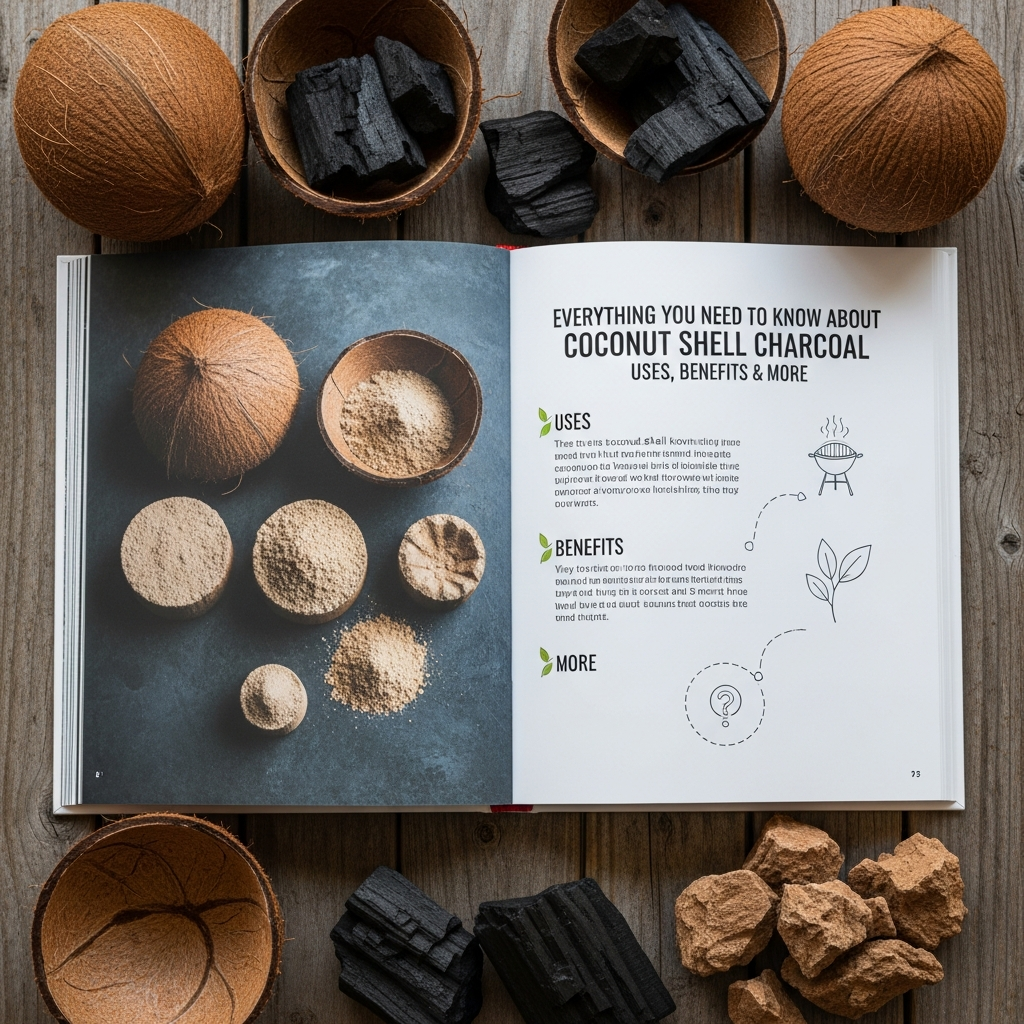
[Image Suggestion: A close-up shot of raw, clean coconut shells next to finished coconut shell charcoal briquettes.]
How is Coconut Shell Charcoal Made? The Eco-Friendly Process
The production of coconut shell charcoal is a fascinating process centered around a technique called pyrolysis. This involves heating the coconut shells to very high temperatures (up to 1,200°C) in a low-oxygen environment, often a specialized kiln or drum.
This controlled burning process removes moisture and volatile compounds from the shells, leaving behind pure carbon. The lack of oxygen prevents the shells from completely combusting into ash, instead transforming them into a dense, carbon-rich charcoal. This principle of converting agricultural waste, like coconut shells or the Oil Palm Fruit Bunch, into valuable resources is key to a sustainable future.
The Ultimate 7 Benefits of Coconut Shell Charcoal in 2025
The advantages of using coconut shell charcoal extend far beyond a better barbecue experience. Here are seven of the most significant benefits that make it a superior choice.
1. It’s an Eco-Friendly and Sustainable Champion
This is perhaps the most crucial benefit. Coconut shell charcoal is made from a waste product, meaning no trees are cut down for its production. By utilizing coconut shells, we reduce landfill waste and support a circular economy. For more on the importance of sustainable materials, see this article from the World Wildlife Fund (WWF).
2. Produces High, Consistent Heat
When it comes to performance, this charcoal truly shines. It burns hotter than most traditional wood charcoals, which means you can sear meats perfectly and cook food faster. This high heat is also incredibly consistent, preventing frustrating hot spots and ensuring your food cooks evenly every time.
3. Offers a Longer, More Efficient Burn Time
Don’t you hate having to refuel the grill midway through cooking? Coconut shell charcoal burns for a significantly longer duration, often up to twice as long as conventional options. This means you use less charcoal per cooking session, making it more efficient and convenient.
4. Generates Less Smoke and Ash
Say goodbye to overwhelming smoke and messy clean-ups. This type of charcoal is virtually smokeless and odorless, so the flavor of your food remains pure and untainted. It also produces very little ash, making post-grill cleaning a breeze.
[Image Suggestion: A vibrant photo of food being grilled over glowing coconut shell charcoal briquettes, with minimal smoke visible.]
Alt text: Delicious food cooking on a grill with clean-burning coconut shell charcoal.
5. Acts as a Natural Purifier
When “activated,” coconut shell charcoal becomes an incredible filtration agent. Its porous surface can adsorb impurities and contaminants from water and air. According to research on PubMed Central, activated carbon is highly effective for removing pollutants, making it a key component in modern water filters and air purifiers.
6. Incredible Versatility in Use
Beyond the grill, its uses are vast. Activated coconut shell charcoal is used in health and beauty products like teeth whitening powders and face masks. In horticulture, it’s known as “biochar,” a fantastic soil amendment that improves water retention and nutrient levels. This highlights a key trend in modern agriculture: finding value in every part of a crop. For example, after oil is extracted from the Palm Kernel, the remaining mash becomes Palm Kernel Expeller, a valuable animal feed. This mirrors how different parts of the oil palm can yield both Crude Palm Oil and Palm Kernel Oil, ensuring nothing goes to waste.
7. It’s a Cost-Effective Choice
While the initial bag might sometimes be priced slightly higher than cheap charcoal brands, its long burn time means you use less product over time. This efficiency makes coconut shell charcoal a more economical option in the long run for regular grillers.
Common Uses for Coconut Shell Charcoal
- Barbecuing and Grilling: Its primary use due to high, even heat and low smoke.
- Water Filtration: Activated forms are used in home and industrial water purifiers.
- Air Purification: Effectively removes odors and harmful gases from the air.
- Horticulture (Biochar): Improves soil structure and fertility.
- Health and Beauty: Used in products for detoxification and cosmetic purposes, as explained by Healthline.
Coconut Shell Charcoal vs. Other Charcoals
How does it stack up against the competition? Here’s a quick comparison:
| Feature | Coconut Shell Charcoal | Lump Wood Charcoal | Standard Briquettes |
|---|---|---|---|
| Source | Renewable (Waste Shells) | Hardwood (Trees) | Wood scraps, sawdust, additives |
| Heat Output | High & Consistent | High but can be inconsistent | Medium & Consistent |
| Burn Time | Long | Short to Medium | Medium |
| Smoke/Ash | Very Low | Low to Medium | High |
For a deeper dive into charcoal types, read our complete guide to different types of charcoal here.
The Final Word on Coconut Shell Charcoal
From backyard barbecues to large-scale industrial purification, coconut shell charcoal has proven itself to be a superior and highly versatile product. Its eco-friendly origins, combined with its powerful performance, make it the ideal choice for the conscious consumer in 2025.
By opting for coconut shell charcoal, you are not only choosing a better grilling experience but also supporting a more sustainable and resource-efficient world. Make the switch today and experience the incredible difference for yourself.
Looking for High-Quality Palm Products?
Makmur Amanah Sejahtera provides high-quality palm products such as Palm Kernel Expeller, Palm Kernel Shell, Crude Palm Oil, Palm Kernel Oil, etc. Kindly contact us at WhatsApp +6282140002198 or email us at admin@makmuramanah.co.id.
 English
  Indonesian
  Chinese
  Arabic