
Table of Contents
- What Is Palm Kernel Expeller (PKE)?
- How Is Palm Kernel Expeller (PKE) Produced?
- The Nutritional Profile of Palm Kernel Expeller (PKE)
- Primary Uses of Palm Kernel Expeller (PKE) in 2025
- 5 Incredible Benefits of Using Palm Kernel Expeller (PKE)
- Palm Kernel Expeller (PKE) vs. Other Common Feeds
- Challenges and Considerations for Palm Kernel Expeller (PKE)
- Source High-Quality Palm Products
- Conclusion: The Bright Future of Palm Kernel Expeller (PKE)
In the vast world of animal nutrition, finding cost-effective, sustainable, and nutrient-rich feed ingredients is a constant challenge. This is where Palm Kernel Expeller (PKE) emerges as a powerful contender. As a significant by-product of the palm oil industry, this feed ingredient offers a unique solution for livestock farmers globally.
But what exactly is it, and how can it benefit your agricultural operations? This ultimate guide explores everything you need to know about Palm Kernel Expeller (PKE), from its production process to its diverse applications and key benefits in modern farming.

What Is Palm Kernel Expeller (PKE)?
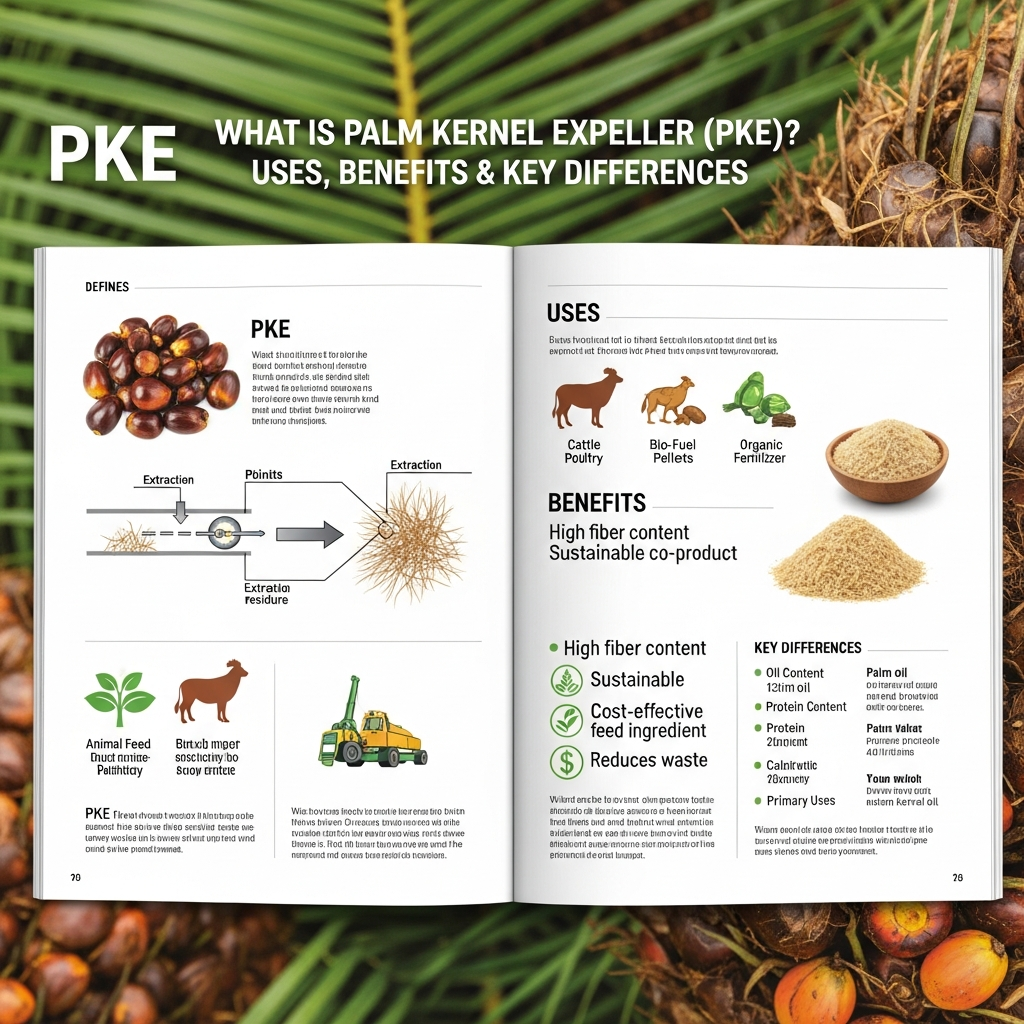
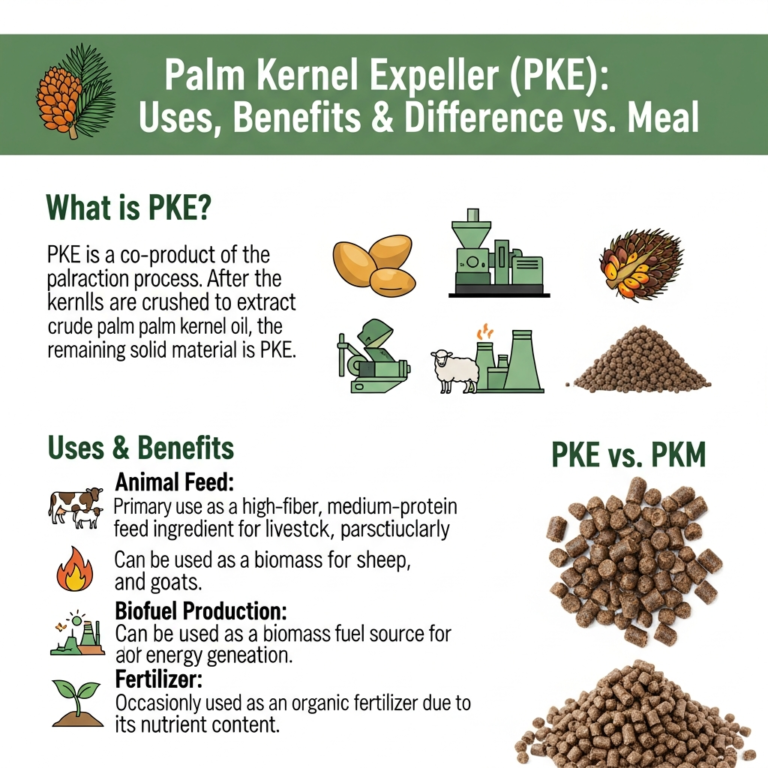
Palm Kernel Expeller (PKE) is a by-product derived from the mechanical extraction of oil from the kernel of the oil palm fruit (Elaeis guineensis). After the palm fruit is harvested and its fleshy part is processed to produce Crude Palm Oil, the hard inner nut is cracked to reveal the Palm Kernel. This kernel is then crushed to extract Palm Kernel Oil.
The solid residue left behind after this oil extraction is the Palm Kernel Expeller. It is also commonly known as Palm Kernel Cake (PKC). This material is rich in fiber, protein, and residual oil, making it a valuable ingredient for animal feed formulations.
The global importance of this by-product cannot be overstated, as it transforms a potential waste product into a valuable resource, contributing significantly to a more circular economy within the agricultural sector.
How Is Palm Kernel Expeller (PKE) Produced?
The production of PKE is an integral part of the palm oil milling process, which begins with the fresh Oil Palm Fruit Bunch. The method of oil extraction directly influences the final quality and nutritional composition of the expeller. There are two primary methods:
- Mechanical Extraction (Expeller Press): This is the most common method. The palm kernels are crushed and physically pressed using a screw press to squeeze out the oil. The remaining solid mass is the Palm Kernel Expeller (PKE). This method typically leaves a higher residual oil content (around 8-12%) in the final product.
- Solvent Extraction: In this process, a solvent (usually hexane) is used to extract the remaining oil from the kernel after an initial pressing. This method is more efficient, resulting in a lower residual oil content in the final product, often called palm kernel meal.
The Nutritional Profile of Palm Kernel Expeller (PKE)
The nutritional value of Palm Kernel Expeller (PKE) can vary based on the extraction process and the quality of the kernels. However, it is generally recognized for its excellent balance of energy, protein, and fiber.
According to a study published by the Feedipedia information system, PKE is a good source of protein and energy for many types of livestock.
Key Nutritional Components:
- Crude Protein: Typically ranges from 14-21%. While not as high as soybean meal, it provides essential amino acids for animal growth and maintenance.
- Crude Fiber: Very high, often between 12-20%. This high fiber content is particularly beneficial for ruminant animals like cattle, sheep, and goats, as it aids in proper rumen function.
- Crude Fat/Oil: Ranges from 8-12%. This residual oil is a great source of concentrated energy for animals.
- Minerals: PKE is a good source of essential minerals, including phosphorus, copper, zinc, and manganese, which are vital for bone health and metabolic functions.
Primary Uses of Palm Kernel Expeller (PKE) in 2025
The versatile nutritional profile of Palm Kernel Expeller (PKE) makes it suitable for a wide range of animals. Its primary application is as a key ingredient in compound feeds.
Ruminant Feed (Cattle, Goats)
PKE is most widely used for feeding ruminants. Its high fiber content supports healthy digestion, and its protein and energy levels make it an excellent supplement to pasture-based diets, especially for dairy and beef cattle. Many farmers rely on this feed to improve milk production and weight gain.
Poultry and Swine Feed
While its high fiber can be a limitation for monogastric animals like pigs and chickens, PKE can be included in their diets at lower levels. Advanced processing techniques are being developed to improve its digestibility for these animals. For more information, the Food and Agriculture Organization (FAO) provides extensive resources.
Aquaculture Feed
Palm Kernel Expeller (PKE) is also gaining traction as a sustainable plant-based protein source in fish feed, helping to reduce the reliance on more expensive fishmeal.
5 Incredible Benefits of Using Palm Kernel Expeller (PKE)
Incorporating PKE into animal feed offers several compelling advantages for farmers and the feed industry.
- Cost-Effectiveness: It is often more affordable than other protein sources like soybean meal or fishmeal, helping farmers reduce feed costs without compromising on essential nutrients.
- High Energy Content: The residual palm kernel oil provides a dense source of energy, which is crucial for high-production animals like dairy cows.
- Excellent Fiber Source: For ruminants, the fiber in Palm Kernel Expeller (PKE) is invaluable for stimulating rumination and maintaining a healthy gut pH.
- Sustainability: As a by-product, PKE contributes to a zero-waste philosophy in the palm oil industry. Utilizing it in feed reduces the environmental footprint of agriculture.
- Good Palatability: Most livestock, especially cattle, find PKE palatable, ensuring consistent feed intake.

Palm Kernel Expeller (PKE) vs. Other Common Feeds
Understanding how Palm Kernel Expeller (PKE) stacks up against other feed ingredients is crucial for formulating balanced rations.
PKE vs. Soybean Meal
Soybean meal is a gold standard for protein in animal feed, with levels often exceeding 44%. PKE has lower protein (14-21%) but significantly higher fiber. The choice often comes down to the animal’s needs and a cost-benefit analysis, where PKE is typically the more economical option.
PKE vs. Copra Expeller
Copra expeller, a by-product of coconut oil production, is nutritionally similar. However, as noted in research from institutions like The National Center for Biotechnology Information (NCBI), PKE generally has a more balanced amino acid profile, making it slightly more versatile.
Challenges and Considerations for Palm Kernel Expeller (PKE)
While Palm Kernel Expeller (PKE) is a fantastic resource, there are factors to consider for its optimal use.
- Quality Variability: The nutritional content can vary between suppliers. It’s essential to source PKE from reputable producers who can provide a consistent product analysis.
- Mycotoxin Risk: Like many feed ingredients stored in tropical climates, PKE can be susceptible to mold and mycotoxin contamination if not stored correctly. Proper storage in a dry, cool place is critical.
- Grit Content: Some lower-quality PKE may contain excess Palm Kernel Shell fragments, which can reduce palatability and digestibility.
Source High-Quality Palm Products
Looking for High-Quality Palm Products?
Makmur Amanah Sejahtera provides high-quality palm products such as Palm Kernel Expeller, Palm Kernel Shell, Crude Palm Oil, Palm Kernel Oil, etc. Kindly contact us at WhatsApp +6282140002198 or email us at admin@makmuramanah.co.id.
Conclusion: The Bright Future of Palm Kernel Expeller (PKE)
Palm Kernel Expeller (PKE) stands out as a valuable, sustainable, and economically viable feed ingredient. Its unique combination of protein, fiber, and energy makes it an indispensable component in rations for ruminants and a promising supplement for other livestock.
By understanding its benefits, nutritional profile, and proper application, farmers and feed manufacturers can leverage the power of Palm Kernel Expeller (PKE) to enhance animal performance, reduce costs, and contribute to a more sustainable global food system. As we move into 2025 and beyond, its role is only set to grow.
 English
  Indonesian
  Chinese
  Arabic