
Table of Contents
- What is an Empty Palm Fruit Bunch (EFB)?
The Astonishing Benefits of Utilizing Empty Palm Fruit Bunch
Top 4 Applications of Empty Palm Fruit Bunch (EFB)
The Processing of Empty Palm Fruit Bunch: From Waste to Wealth
Challenges and Future Outlook for EFB
Conclusion: The Power of a Humble Bunch
What is an Empty Palm Fruit Bunch (EFB)?
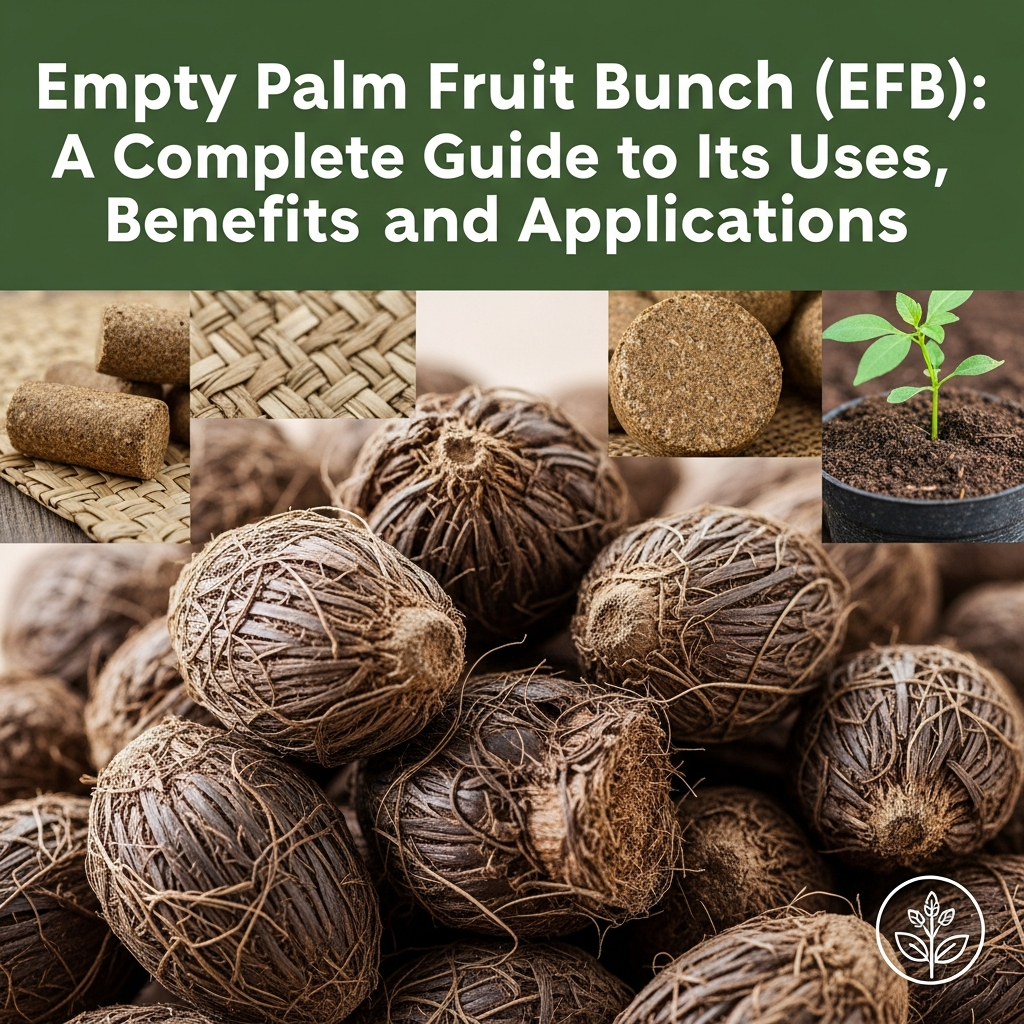
An Empty Palm Fruit Bunch is the lignocellulosic biomass that remains once the fresh fruit bunches (FFB) have been processed and the palm fruits are stripped off for oil extraction. These bunches consist of a rachis and spikelets, forming a dense, fibrous material rich in potassium and other nutrients. This process also yields other valuable byproducts like the Palm Kernel and its valuable derivatives, Palm Kernel Oil and Palm Kernel Expeller. For every ton of Crude Palm Oil produced, approximately 1.3 tons of Empty Palm Fruit Bunch waste is generated. Considering the scale of global palm oil production, this amounts to millions of tons of EFB annually, presenting both a significant disposal challenge and a massive opportunity for sustainable innovation.
The Astonishing Benefits of Utilizing Empty Palm Fruit Bunch
Harnessing the potential of the Empty Palm Fruit Bunch offers a wide array of environmental and economic advantages. It is a prime example of turning a problematic waste stream into a valuable commodity that supports sustainability goals.Environmental Advantages
- Waste Reduction: Utilizing EFB prevents it from ending up in landfills or being openly burned, which releases harmful greenhouse gases like methane and carbon dioxide into the atmosphere.
Renewable Resource: As a byproduct of a constantly harvested crop, EFB is a renewable resource that can replace fossil fuels and other non-renewable materials in various applications.
Carbon Sequestration: When used as mulch or compost, the Empty Palm Fruit Bunch helps improve soil health and sequester carbon, contributing to healthier agricultural ecosystems. You can learn more about this in our article on sustainable agriculture practices.
Economic Opportunities
- Value Creation: It transforms a low-value waste product into high-value goods like biofuel, paper, and composite materials, creating new revenue streams for palm oil producers.
Job Generation: The collection, processing, and application of EFB create jobs in rural communities, supporting local economies and fostering skilled labor in green technologies.
Energy Independence: By using the Empty Palm Fruit Bunch for energy generation, mills and surrounding communities can reduce their dependence on expensive and volatile fossil fuels.
Top 4 Applications of Empty Palm Fruit Bunch (EFB)
The versatility of EFB allows it to be used in numerous industries. Its fibrous nature and chemical composition make it an ideal raw material for both energy and material production. Here are some of the most impactful applications of the Empty Palm Fruit Bunch.1. As a Biofuel and Energy Source
Perhaps the most common use of EFB is as a solid biofuel. The high calorific value of dried EFB makes it an excellent fuel for boilers in palm oil mills, generating steam and electricity to power the facility. It can be processed into pellets or briquettes, which are denser, have lower moisture content, and are easier to transport. These biofuels are a direct substitute for coal and other biomass like Palm Kernel Shell, significantly reducing carbon emissions. For more technical details, research published in the Energies journal often covers biomass conversion technologies.
2. In Agriculture and Composting
The rich nutrient profile of the Empty Palm Fruit Bunch makes it a superb soil conditioner. When shredded, it can be applied directly to fields as mulch, which helps retain soil moisture, suppress weed growth, and prevent erosion. When composted, EFB breaks down into a potent organic fertilizer that enriches the soil with potassium and organic matter, improving crop yields without synthetic chemicals. According to the Soil Science Society of America, adding organic matter is critical for long-term soil health.3. For Pulp and Paper Production
The short fibers of the Empty Palm Fruit Bunch are suitable for producing pulp, which can then be used to manufacture paper, cardboard, and other packaging materials. This provides a sustainable alternative to using wood from forests, helping to combat deforestation. The process requires less chemical treatment compared to wood, making it a more environmentally friendly option for the paper industry. Research in journals like TAPPI Journal explores the viability of non-wood fibers for papermaking.4. As a Composite Material
EFB fibers can be combined with polymers to create strong, lightweight biocomposite materials. These materials are used to make medium-density fiberboard (MDF), furniture, and even automotive interior components. This application locks carbon into a durable product and reduces the need for petroleum-based plastics and synthetic fibers. A study in the journal Composites Part A highlights the growing interest in natural fiber reinforcements like the Empty Palm Fruit Bunch.The Processing of Empty Palm Fruit Bunch: From Waste to Wealth
Before it can be used in these applications, raw EFB must undergo processing. Fresh EFB has a very high moisture content (around 60-70%) and still contains residual oil, which must be addressed.- Shredding: The large, bulky bunches are first shredded into smaller fibers. This increases the surface area and makes subsequent processing steps more efficient.
Pressing/Dewatering: The shredded EFB is then pressed to squeeze out excess water and recover any remaining oil. This step is crucial for improving its fuel quality and preventing rot.
Drying: For applications like biofuel pellets, the fibers are further dried to reduce moisture content to below 15%, ensuring efficient combustion and stability during storage.
Challenges and Future Outlook for EFB
Despite its immense potential, the widespread adoption of the Empty Palm Fruit Bunch faces some hurdles. The high moisture content and bulky nature make transportation and storage costly. Furthermore, the initial investment in processing equipment can be substantial for small-scale mills. However, the future is bright. Ongoing research is focused on developing more efficient dewatering and conversion technologies. As the world pushes towards a circular economy and sustainable energy sources, the value of the Empty Palm Fruit Bunch is set to increase, driving further innovation and investment in this remarkable resource.Conclusion: The Power of a Humble Bunch
The Empty Palm Fruit Bunch is a testament to the principles of sustainability and ingenuity. Once considered a mere nuisance, it is now a sought-after raw material that fuels power plants, enriches soil, and builds modern materials. By embracing the full potential of EFB, we can mitigate the environmental impact of the palm oil industry and pave the way for a more resourceful and circular future.Looking for High-Quality Palm Products?
Makmur Amanah Sejahtera provides high-quality palm products such as Palm Kernel Expeller, Palm Kernel Shell, Crude Palm Oil, Palm Kernel Oil, etc. Kindly contact us at WhatsApp +6282140002198 or email us at admin@makmuramanah.co.id.
 English
  Indonesian
  Chinese
  Arabic