
Table of Contents
- What Is RBD Palm Olein CP6?How Is RBD Palm Olein CP6 Produced?Understanding the Grades: A Comparison of CP6, CP8, and CP10Detailed Specifications of RBD Palm Olein CP6Key Applications and UsesHow to Choose and Store RBD Palm Olein CP6Health and Nutritional AspectsSustainability and Sourcing ConsiderationsYour Trusted SupplierConclusion
From the crispy texture of your favorite fried snacks to the smooth consistency of ice cream, a versatile and globally significant cooking oil is often working behind the scenes. This ultimate guide for 2025 delves into the world of RBD Palm Olein CP6, one of the most widely used edible oils on the planet. We’ll explore everything from its production process and technical specifications to its various grades and essential applications in the food industry.
What Is RBD Palm Olein CP6?
Let’s break down the name. RBD Palm Olein CP6 stands for Refined, Bleached, and Deodorized Palm Olein with a Cloud Point of 6° Celsius. It is the liquid fraction obtained from the fractionation of palm oil after it has undergone a thorough refining process. This process removes impurities, resulting in a stable, odorless, and neutral-tasting oil with a light yellow color, making it a perfect ingredient that doesn’t interfere with the food’s natural flavor.
The “CP6” is a crucial quality parameter. The Cloud Point (CP) indicates the temperature at which the oil starts to become cloudy or solidify. A lower cloud point, like 6°C, means the oil remains liquid at cooler temperatures. This makes RBD Palm Olein CP6 a premium choice for bottling and cooking in regions with temperate climates.
How Is RBD Palm Olein CP6 Produced?
The journey from a fresh palm fruit to a bottle of refined oil is a meticulous, multi-stage process designed to ensure purity, stability, and quality. The creation of RBD Palm Olein CP6 involves two primary phases: extraction and refining, followed by fractionation.
The process begins with harvesting Oil Palm Fruit Bunch. These are then sterilized and threshed to separate the fruit. The fruit’s flesh (mesocarp) is pressed to extract Crude Palm Oil (CPO). The remaining nut contains the Palm Kernel, which is used to create other valuable products.
- Refining, Bleaching, and Deodorizing (RBD): The extracted CPO is treated to remove Free Fatty Acids (FFAs), filtered (bleached) to remove color pigments, and finally steam-treated under a vacuum (deodorized) to eliminate odors and tastes. This results in a bland, stable oil known as RBD Palm Oil. For more detail, you can explore resources like the ScienceDirect overview on palm oil.
Fractionation: The RBD Palm Oil is then carefully cooled in a process called dry fractionation. This controlled cooling causes the solid, higher-melting-point fraction (stearin) to crystallize, which is then separated from the liquid fraction (olein). The resulting liquid is the highly sought-after RBD Palm Olein CP6, prized for its excellent resistance to cold.

Understanding the Grades: A Comparison of CP6, CP8, and CP10
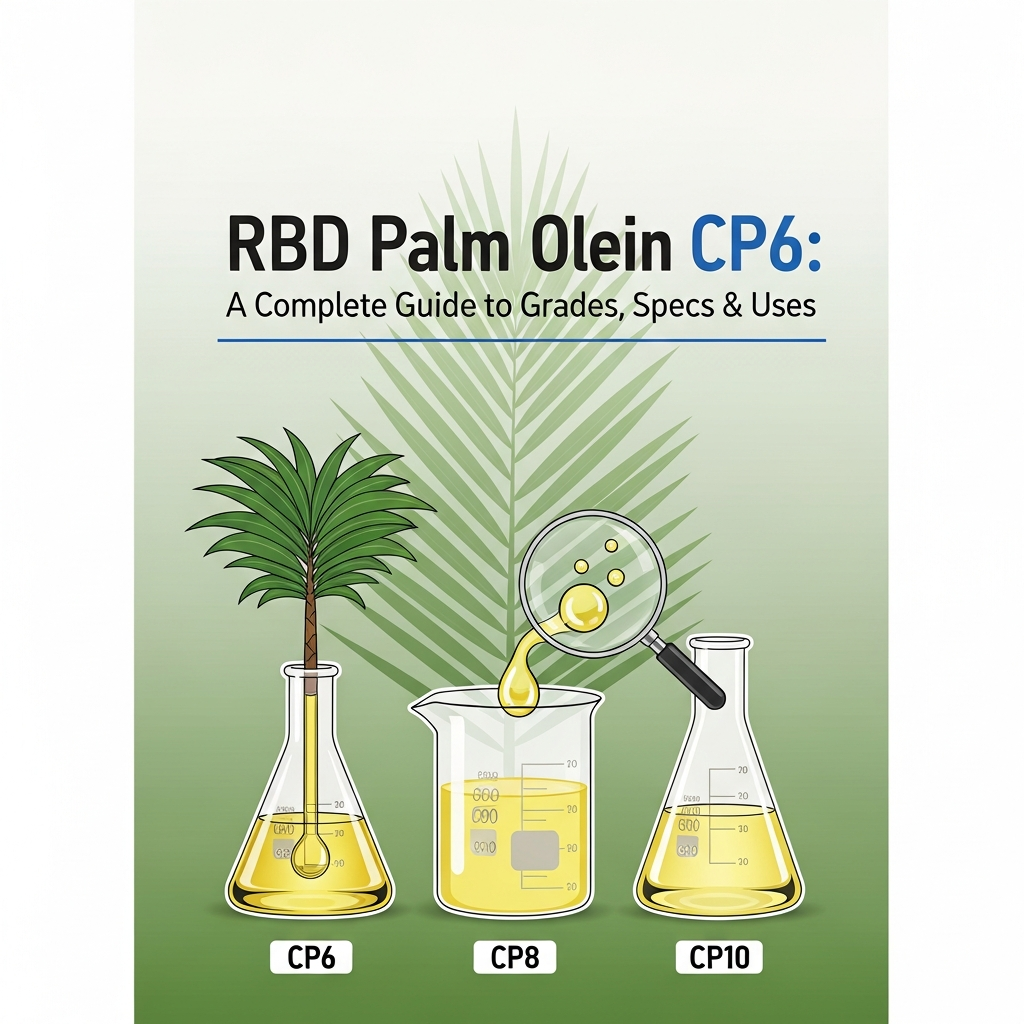
While RBD Palm Olein CP6 is a high-quality grade, you will also encounter CP8 and CP10 in the market. The primary difference is the cloud point, which dictates their performance and suitability for different climates and applications.
| Grade | Cloud Point | Key Characteristics | Common Use Case |
|---|---|---|---|
| RBD Palm Olein CP6 | Max 6°C | Remains liquid at lower temperatures. Premium quality. | Bottled cooking oil for temperate climates, high-quality food manufacturing. |
| RBD Palm Olein CP8 | Max 8°C | Good balance of stability and liquidity. | General-purpose cooking oil, industrial frying, common in sub-tropical regions. |
| RBD Palm Olein CP10 | Max 10°C | Most common grade, solidifies more easily in cool weather. | Standard cooking oil in tropical countries, bulk industrial frying. |
Detailed Specifications of RBD Palm Olein CP6
Quality control is paramount in the edible oils industry. The specifications for RBD Palm Olein CP6 are governed by international standards to ensure safety and performance. Buyers and food manufacturers rely on these parameters to guarantee consistency in their final products.
Here are the typical technical specifications for high-quality RBD Palm Olein CP6, often aligned with standards from organizations like the Codex Alimentarius:
| Parameter | Value |
|---|---|
| Free Fatty Acids (FFA) as Palmitic | 0.1% Max |
| Moisture & Impurities (M&I) | 0.1% Max |
| Iodine Value (Wijs) | 56 Min |
| Slip Melting Point | 24°C Max |
| Cloud Point | 6°C Max |
| Color (5.25” Lovibond Cell) | 3 Red Max |
Key Applications and Uses of RBD Palm Olein CP6
The unique properties of RBD Palm Olein CP6—namely its high stability, neutral flavor, and excellent performance at high temperatures—make it incredibly versatile for both commercial and household use.
Deep Frying and Cooking
With a high smoke point (around 235°C or 455°F), it is an ideal choice for deep frying. It resists oxidation, which means it can be used multiple times before needing to be replaced, making it highly cost-effective for restaurants and industrial food producers. Its neutral taste ensures that it doesn’t impart any unwanted flavor to the food.

Food Manufacturing
Beyond the frying pan, RBD Palm Olein CP6 is a foundational ingredient in countless processed foods. It’s used in the production of:
- Margarine and Shortening: Provides the desired creamy texture and mouthfeel.Instant Noodles: The noodles are often pre-fried in it to dehydrate them and shorten final cooking time.Confectionery: Used in chocolates and sweets for its gloss, snap, and melt-in-your-mouth quality.Baked Goods: Contributes to the flakiness and tenderness of pastries, biscuits, and cakes.
How to Choose and Store RBD Palm Olein CP6
When purchasing RBD Palm Olein CP6, quality and packaging are key. Look for clear, light-yellow oil without any cloudiness or sediment. Ensure the packaging is sealed and airtight to prevent oxidation. Reputable brands will always display production and expiry dates clearly.
Proper storage is essential to maintain its freshness:
- Store in a cool, dark place: Keep it away from direct sunlight and heat sources like your stove, which can accelerate degradation.Keep the container sealed: Always close the lid tightly after use to limit exposure to air.Avoid temperature fluctuations: While this oil is designed to resist cold, frequent temperature changes can still affect its shelf life.
Health and Nutritional Aspects
Palm oil’s nutritional profile is often debated. RBD Palm Olein CP6 contains a balanced ratio of saturated and unsaturated fatty acids. It is notably rich in Vitamin E, particularly tocotrienols, which are potent antioxidants. Like all fats and oils, it should be consumed in moderation as part of a balanced diet, a recommendation supported by global health bodies like the World Health Organization (WHO).
Sustainability and Sourcing Considerations
The environmental impact of palm oil cultivation is a significant global concern. In response to issues like deforestation, the industry has seen a major push towards sustainable production. When sourcing RBD Palm Olein CP6, it is vital to look for suppliers committed to sustainability. The leading certification standard is from the Roundtable on Sustainable Palm Oil (RSPO). RSPO certification ensures that the palm oil is produced in a way that protects wildlife, conserves habitats, and respects the rights of local communities.
Your Trusted Supplier of Palm Products
While CPO is refined to make olein, other parts of the palm fruit yield a variety of valuable materials. The kernel, for instance, is crushed to produce Palm Kernel Oil. The leftover solids become Palm Kernel Expeller, a key ingredient in animal feed, and the hard outer covering is known as Palm Kernel Shell, used as a high-quality biofuel.
Makmur Amanah Sejahtera provides high-quality palm products such as Palm Kernel Expeller, Palm Kernel Shell, Crude Palm Oil, Palm Kernel Oil, etc. Kindly contact us at WhatsApp +6282140002198 or email us at admin@makmuramanah.co.id. RBD Palm Olein CP6 is more than just a simple cooking oil; it is a highly refined, globally traded commodity that is indispensable to the modern food supply chain. Its excellent stability, low cloud point, and neutral profile make it a preferred choice for a vast range of applications, from industrial frying to home cooking. By understanding its grades, specifications, and the importance of sustainable sourcing, consumers and manufacturers alike can make more informed and responsible choices for their culinary needs.Looking for High-Quality Palm Products?
Conclusion

 English
  Indonesian
  Chinese
  Arabic