
Table of Contents
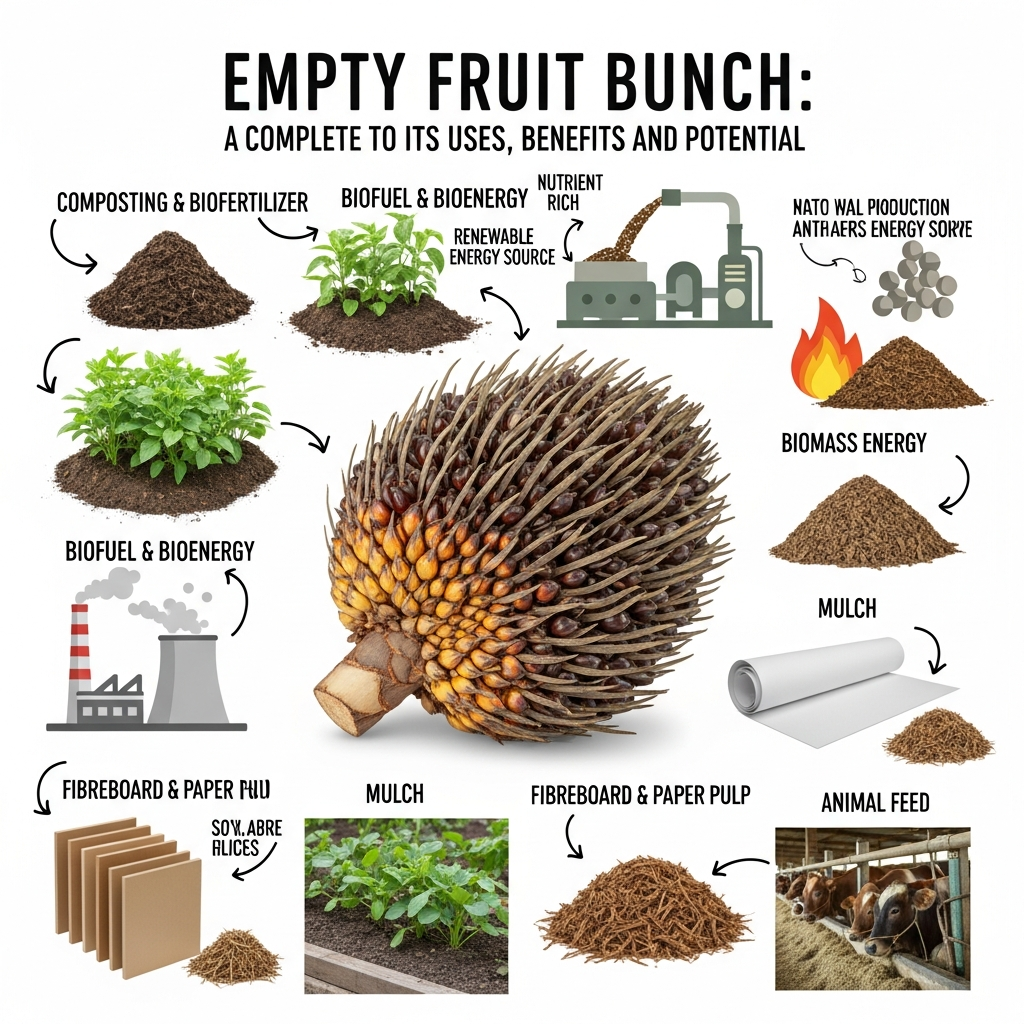
The palm oil industry, while vital, generates significant biomass waste. For decades, a key byproduct was considered problematic residue. However, a shift towards sustainability and circular economies has revealed its incredible potential. This guide explores the complete journey of the Empty Fruit Bunch, transforming it from a simple byproduct into a cornerstone of green innovation.
Once the [Oil Palm Fruit Bunch](https://makmuramanah.co.id/tandan-kosong-kelapa-sawit) are processed to extract [Crude Palm Oil](https://makmuramanah.co.id/minyak-sawit-mentah), the leftover stalk is the Empty Fruit Bunch (EFB). This lignocellulosic material is rich in nutrients and fiber, making it a valuable resource rather than waste. Understanding its properties is the first step to unlocking its wide-ranging applications.
What Exactly Is an Empty Fruit Bunch?
An Empty Fruit Bunch is the fibrous biomass that remains after the palm fruits have been stripped from the fresh fruit bunch in the milling process. Each bunch weighs several kilograms and is composed mainly of cellulose, hemicellulose, and lignin. Traditionally, these bunches were either burned, leading to air pollution, or left to rot in landfills.

Today, modern technology and a deeper understanding of biochemistry have provided numerous pathways to upcycle this material. The high moisture content (around 60-70%) presents a challenge, but once addressed, the EFB becomes a versatile raw material for various industries.
Other Valuable Palm Byproducts
It’s important to see EFB in the broader context of palm oil processing. The fruit itself yields not only valuable oil but also the [Palm Kernel](https://makmuramanah.co.id/kernel-sawit). This kernel is then processed to create [Palm Kernel Oil](https://makmuramanah.co.id/minyak-kernel-sawit), with the remaining solid residue becoming [Palm Kernel Expeller](https://makmuramanah.co.id/palm-kernel-expeller-pke), a protein-rich animal feed. Even the hard kernel casing, the [Palm Kernel Shell](https://makmuramanah.co.id/cangkang-sawit), is used as a high-grade solid fuel. The EFB is simply the largest piece of this zero-waste puzzle.
Top 5 Benefits of the Empty Fruit Bunch
The transition from treating EFB as waste to a resource offers profound environmental and economic advantages. Here are five of the most significant benefits of this remarkable biomass.
1. A Powerhouse for Sustainable Energy
One of the most prominent uses for EFB is as a renewable energy source. It can be processed into various forms of biofuel, such as briquettes, pellets, or used directly in biomass power plants for co-firing. This process generates steam and electricity to power the mill itself or even supply the national grid.
By replacing fossil fuels, EFB contributes to reducing greenhouse gas emissions. According to the International Renewable Energy Agency (IRENA), biomass like EFB is a critical component of the global transition to sustainable energy.
2. The Ultimate Organic Soil Enhancer
The high organic matter and nutrient content, particularly potassium, make this fibrous biomass an excellent material for composting. When composted, it becomes a dark, nutrient-rich organic fertilizer that improves soil structure, water retention, and microbial activity in agricultural lands.
Using EFB compost reduces the need for chemical fertilizers, which can have detrimental effects on the environment. This practice aligns perfectly with sustainable and regenerative agriculture, a topic championed by organizations like the Food and Agriculture Organization (FAO).

3. An Eco-Friendly Alternative for Pulp and Paper
The long fibers found in EFB are suitable for producing pulp and paper. This non-wood source of pulp helps alleviate the pressure on forests, combating deforestation. The paper produced is biodegradable and can be used for packaging, printing, and writing materials.
Research published in journals like Industrial Crops and Products has demonstrated the viability and environmental benefits of using EFB fibers, marking a significant step towards a more sustainable paper industry.
4. A Key Component in Advanced Biocomposites
Innovation has led to the use of EFB fibers as reinforcement in polymer composites. These biocomposites are lightweight, strong, and more environmentally friendly than traditional plastics or fiberglass. They are increasingly used in the automotive industry for interior parts, as well as for furniture, decking, and other construction materials.
The development of such materials from this byproduct showcases a perfect example of the circular economy in action, where waste from one industry becomes a valuable raw material for another.
5. A Superior Substrate for Mushroom Cultivation
The cellulosic structure of this biomass makes it an ideal substrate for growing various types of edible mushrooms, such as oyster mushrooms. After being sterilized and inoculated with mushroom spawn, the EFB provides the necessary nutrients for the fungi to thrive, creating an additional revenue stream for farmers.
How Is an Empty Fruit Bunch Processed for Use?
Raw EFB cannot be used directly for most applications due to its high moisture and oil residue. The typical processing steps include:
- Shredding: The large, bulky bunches are shredded into a more manageable fibrous material.
- Pressing/Dewatering: The shredded EFB is pressed to remove excess water and residual oil, significantly increasing its calorific value for fuel applications.
- Further Processing: Depending on the end-use, the material might be pelletized for fuel, composted for fertilizer, or pulped for paper production.
[Video Suggestion: An animated explainer video showing the journey of an Empty Fruit Bunch from the palm oil mill through various processing lines to become pellets, compost, and paper.]
The Exciting Future Potential of EFB Technology
The innovation surrounding the Empty Fruit Bunch is far from over. Researchers are actively exploring more advanced applications that could further enhance its value. This includes the production of bioethanol, a liquid biofuel that could power vehicles.
Other promising areas include extracting nanocellulose for high-strength, advanced materials and producing activated carbon for water and air purification systems. As technology evolves, the potential uses for the humble EFB will only continue to grow.
Challenges and Considerations in EFB Utilization
Despite its vast potential, utilizing the Empty Fruit Bunch is not without challenges. The primary hurdles include the logistics of transporting the bulky, wet biomass from mills to processing facilities. The initial capital investment for processing equipment can also be substantial.
However, with rising fossil fuel costs and increasing global demand for sustainable products, the economic case for investing in EFB processing technology is becoming stronger every day. Government incentives and carbon credits can further improve the financial viability of these green projects.
Conclusion: From Waste to Wonder
The Empty Fruit Bunch provides a powerful lesson in sustainability. What was once a disposal headache for the palm oil industry is now a celebrated resource driving innovation in renewable energy, agriculture, and material science. Its journey from a discarded stalk to a valuable commodity is a testament to the power of the circular economy.
Makmur Amanah Sejahtera provides high-quality palm products such as Palm Kernel Expeller, Palm Kernel Shell, Crude Palm Oil, Palm Kernel Oil, etc. Kindly contact us at WhatsApp +6282140002198 or email us at admin@makmuramanah.co.id. By embracing the full potential of EFB, we can reduce waste, create economic value, and take a significant step towards a more sustainable and resource-efficient future. The future is not just green; it’s fibrous. For more insights into green technologies, check out resources like the Journal of Cleaner Production.Looking for High-Quality Palm Products?
 English
  Indonesian
  Chinese
  Arabic