
The global demand for cost-effective and nutritious animal feed is constantly rising. In this landscape, understanding valuable by-products from the processing of the Oil Palm Fruit Bunch is key to sustainable agriculture. This guide offers a deep dive into Palm Kernel Expeller (PKE), a significant feed ingredient derived from the palm oil industry, exploring its uses, benefits, and specifications for modern farming in 2025.
Table of Contents
- What Exactly is Palm Kernel Expeller (PKE)?
- How is Palm Kernel Expeller (PKE) Produced?
- Nutritional Specifications of Palm Kernel Expeller (PKE)
- Primary Uses of Palm Kernel Expeller (PKE) in Modern Agriculture
- Key Benefits of Using Palm Kernel Expeller (PKE)
- Potential Limitations of Palm Kernel Expeller (PKE)
- Conclusion: The Future of Palm Kernel Expeller (PKE) in Animal Feed
What Exactly is Palm Kernel Expeller (PKE)?
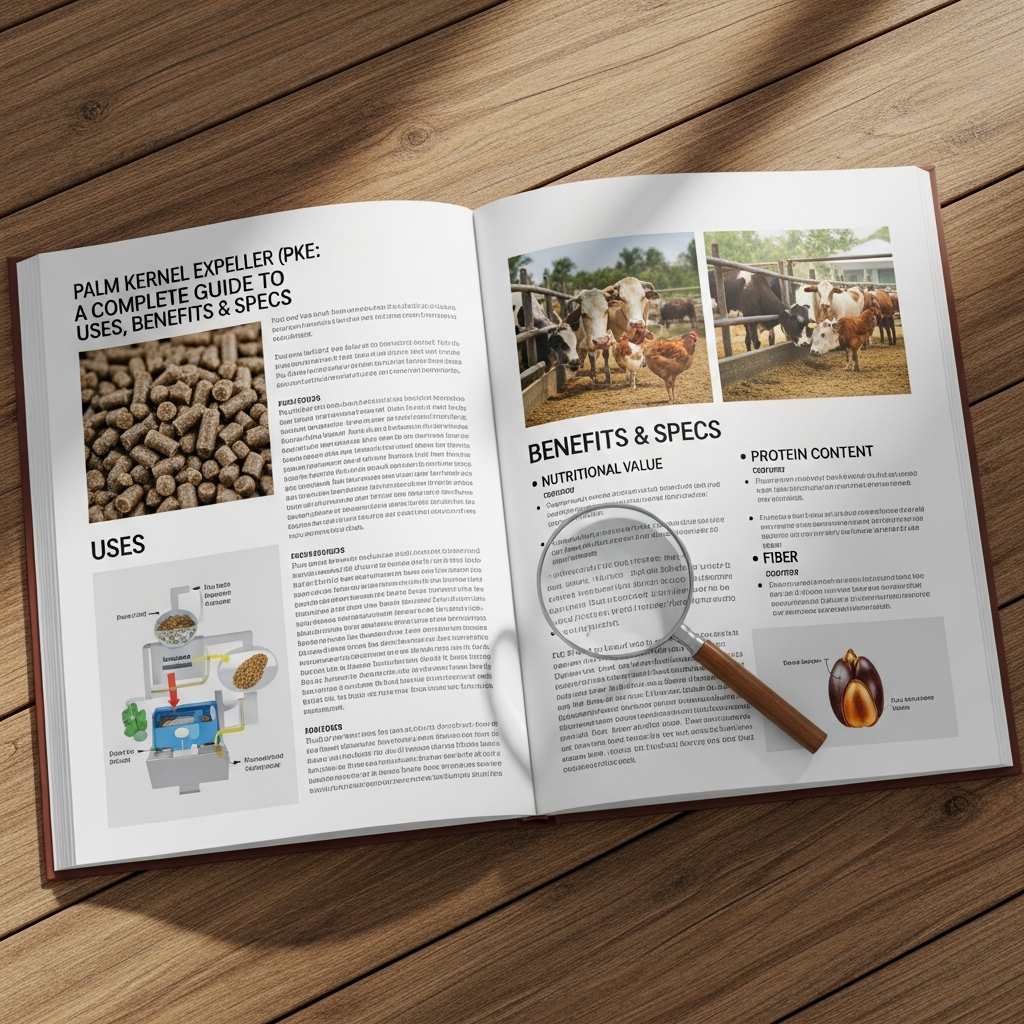
Palm Kernel Expeller (PKE), also known as Palm Kernel Cake (PKC), is a by-product from the mechanical extraction of oil from the kernel of the palm nut. After the palm fruit’s flesh is used to produce Crude Palm Oil, the inner nut is cracked to reveal the Palm Kernel. This kernel is then crushed to extract oil, and the leftover solid material is the PKE.
Historically considered a waste product, PKE is now recognized globally as an important animal feed ingredient, particularly for ruminant livestock. Its balanced profile of energy, medium-level protein, and high fiber makes it a valuable and affordable component in feed formulations worldwide.

How is Palm Kernel Expeller (PKE) Produced?
The production of Palm Kernel Expeller (PKE) is a straightforward mechanical process. It avoids the use of chemical solvents, which makes it a preferred choice in many feed applications. The process generally involves a few key steps.
- Cracking and Separation: The hard shell of the palm nut is cracked, and the kernel is separated from the Palm Kernel Shell fragments.
- Flaking and Cooking: The kernels are broken down into smaller particles (flaked) and then cooked under steam to rupture the oil-bearing cells.
- Oil Extraction (Expelling): The cooked kernel flakes are fed into a mechanical screw press (an expeller) which applies immense pressure. This action squeezes out the valuable Palm Kernel Oil.
- The By-Product: The solid, fibrous material left behind after the oil has been expelled is the final product: Palm Kernel Expeller (PKE). It is then typically dried and sold as a coarse meal or pelletized for easier transport and storage.
Nutritional Specifications of Palm Kernel Expeller (PKE)
The nutritional value of PKE can vary based on the oil extraction efficiency and the amount of shell remaining. However, it is primarily valued for its high fiber and moderate protein content. Understanding the specs of Palm Kernel Expeller (PKE) is crucial for accurate feed formulation.
Here is a typical nutritional profile:
| Nutrient | Typical Range (%) |
|---|---|
| Crude Protein | 14 – 18% |
| Crude Fibre | 16 – 20% |
| Crude Fat / Oil | 5 – 10% |
| Ash | 4 – 6% |
| Moisture | < 12% |
The high fiber content is particularly beneficial for ruminants, as it supports healthy rumen function. For more detailed analysis, you can refer to scientific studies, such as this comprehensive overview on ScienceDirect.
Primary Uses of Palm Kernel Expeller (PKE) in Modern Agriculture
The versatility of Palm Kernel Expeller (PKE) makes it a staple in various sectors of the animal feed industry. Its primary application is for ruminant animals due to their unique ability to digest its high-fiber content.

PKE for Ruminants (Cattle, Sheep, Goats)
This is where PKE truly shines. For dairy and beef cattle, it serves as an excellent source of bypass protein and energy. Its fibrous nature promotes cud-chewing and saliva production, which helps maintain a stable and healthy rumen pH. It is often used to supplement pasture-based diets, as noted by agricultural bodies like the Food and Agriculture Organization (FAO).
PKE in Poultry and Swine Feed
The use of Palm Kernel Expeller (PKE) in monogastric animals like chickens and pigs is more limited. The high fiber content can be difficult for them to digest, potentially hindering nutrient absorption. However, with the use of feed enzymes that help break down fiber, inclusion rates of 5-10% are possible in their diets, providing a cost-saving alternative to other ingredients.
Key Benefits of Using Palm Kernel Expeller (PKE)
Incorporating PKE into feed rations offers several compelling advantages for farmers and feed manufacturers.
1. Cost-Effectiveness
PKE is generally more affordable than other common protein sources like soybean meal or canola meal. This price advantage allows for a significant reduction in overall feed costs, directly impacting a farm’s profitability.
2. High Palatability for Ruminants
Cattle and other ruminants find Palm Kernel Expeller (PKE) highly palatable, which encourages feed intake and supports consistent growth and milk production. Its pleasant, nutty aroma is a key factor in its acceptance by livestock.
3. Sustainable and Readily Available
As a by-product of the massive palm oil industry, Palm Kernel Expeller (PKE) is abundant and readily available. Using PKE is a form of upcycling, turning a potential waste stream into a valuable resource, which aligns with sustainable agricultural practices. For more on its global impact, see resources from CABI’s Invasive Species Compendium on the source plant.
Potential Limitations of Palm Kernel Expeller (PKE)
While PKE is an excellent resource, users should be aware of a few potential issues to ensure optimal results.
The quality of PKE can vary. High shell content can reduce its digestibility and energy value. Therefore, it’s crucial to source Palm Kernel Expeller (PKE) from reputable suppliers who can provide a consistent and high-quality product.
Like any agricultural commodity, PKE can be susceptible to mold and mycotoxins if not dried and stored correctly. Proper storage in a dry, cool environment is essential to maintain its quality and safety, a topic covered extensively by experts like Alltech.
Conclusion: The Future of Palm Kernel Expeller (PKE) in Animal Feed
Palm Kernel Expeller (PKE) stands out as a highly valuable, cost-effective, and sustainable feed ingredient for 2025 and beyond. While primarily suited for ruminants, its application is expanding, driven by ongoing research in animal nutrition.
By understanding its nutritional profile, benefits, and proper handling, farmers and feed producers can leverage PKE to lower costs, improve animal performance, and contribute to a more sustainable agricultural system.
Looking for a reliable supply of high-quality palm products?
Makmur Amanah Sejahtera provides premium palm derivatives such as Palm Kernel Expeller, Palm Kernel Shell, Crude Palm Oil, Palm Kernel Oil, and more. Contact us today to secure your supply.
WhatsApp: +62 821-4000-2198
Email: admin@makmuramanah.co.id
It’s more than just a by-product; Palm Kernel Expeller (PKE) is a key component in the future of efficient livestock feeding.
 English
  Indonesian
  Chinese
  Arabic