
Table of Contents
- What Exactly is Coconut Shell Charcoal?
- 7+ Astounding Benefits of Coconut Shell Charcoal
- 1. Superior Sustainability and Eco-Friendliness
- 2. Incredible High Heat and Long Burn Time
- 3. Produces Minimal Ash for Easy Cleanup
- 4. A Pure, Clean Burn with No Unwanted Flavors
- 5. A Natural Purifying Agent
- 6. Unmatched Versatility in Its Uses
- 7. Cost-Effective in the Long Run
- Common Uses for Coconut Shell Charcoal
- Coconut Shell Charcoal vs. Traditional Charcoal
- How to Choose the Best Coconut Shell Charcoal
- Exploring Other Sustainable Biomass Products
- The Final Word
Are you searching for a grilling fuel that’s not only effective but also kind to the planet? Look no further. Coconut shell charcoal is revolutionizing the way we think about charcoal, offering a sustainable, powerful, and clean-burning alternative to traditional wood or lump charcoals. This guide will walk you through its incredible benefits, diverse uses, and why it stands out as the superior choice for 2025 and beyond.
What Exactly is Coconut Shell Charcoal?
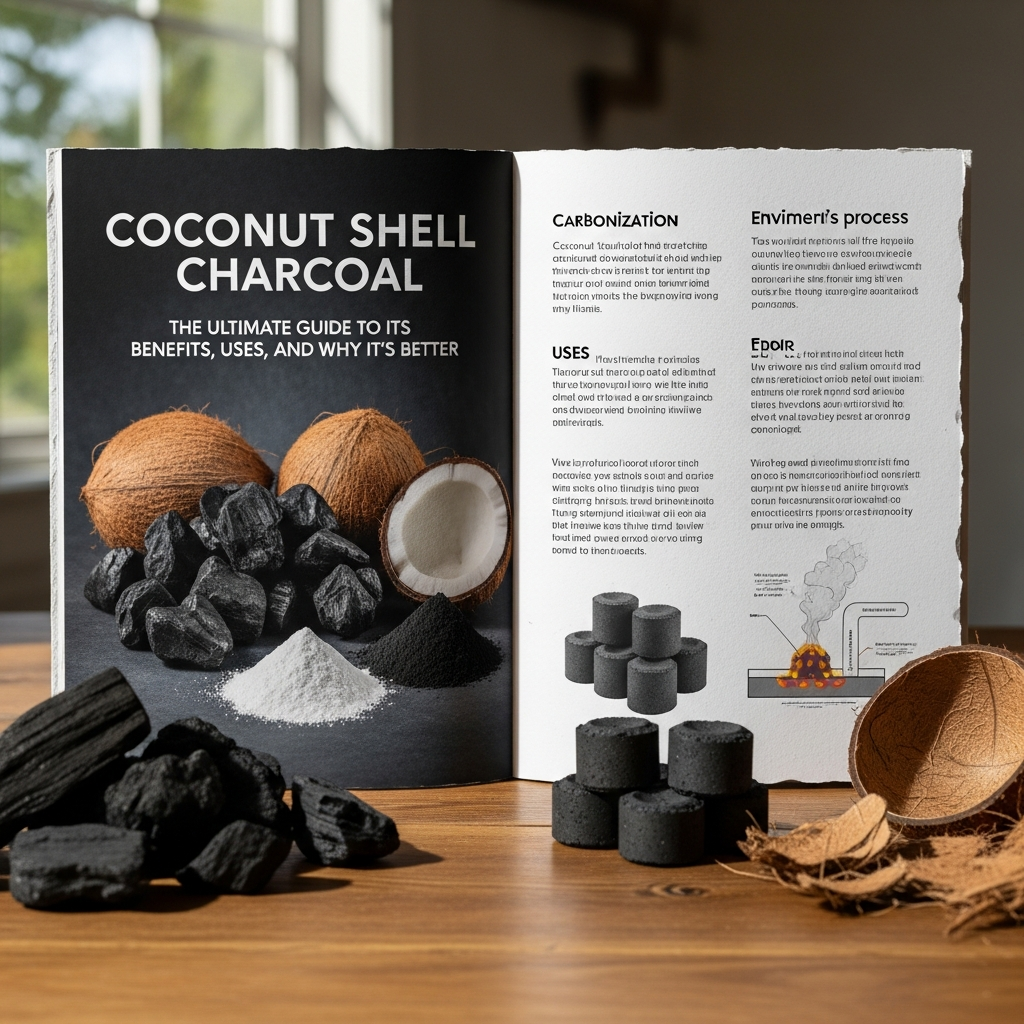
As the name suggests, coconut shell charcoal is a product derived from the hard, woody shells of coconuts. These shells, which are often discarded as agricultural waste after the coconut flesh and water are extracted, are given a new purpose through a process called carbonization.
During carbonization, the shells are heated in a kiln with limited oxygen. This process burns off volatile compounds like water, methane, and hydrogen, leaving behind pure carbon, or “char.” The resulting product is a dense, highly efficient charcoal that is perfect for a wide range of applications.

7+ Astounding Benefits of Coconut Shell Charcoal
The rising popularity of this fantastic fuel isn’t without reason. It offers significant advantages over its conventional counterparts. Here’s a closer look at what makes coconut shell charcoal the ultimate choice.
1. Superior Sustainability and Eco-Friendliness
One of the biggest draws of coconut shell charcoal is its environmental credential. Unlike traditional charcoal that contributes to deforestation, this alternative is made from a renewable resource that is a byproduct of the massive coconut industry. No trees are cut down to produce it, which helps preserve vital ecosystems and biodiversity. For more on the impact of sustainable choices, check out the Rainforest Alliance.
2. Incredible High Heat and Long Burn Time
Don’t let its humble origins fool you; coconut shell charcoal packs a serious punch. It burns significantly hotter and longer than most traditional lump charcoals and briquettes. This means you use less fuel during a single cooking session, and the consistent, high heat provides excellent searing and even cooking for your food.
3. Produces Minimal Ash for Easy Cleanup
A common frustration with grilling is the mountain of ash left behind. Coconut shell charcoal burns so efficiently that it produces very little ash—often less than 5% of its original weight. This makes cleanup incredibly simple and means less ash flying around and landing on your food.
4. A Pure, Clean Burn with No Unwanted Flavors
Because it’s made from a single, natural source and contains no binders or chemical additives, coconut shell charcoal provides a very clean burn. It is odorless and smokeless, ensuring that the only flavors you taste are from your food and any wood chips you choose to add—not from the fuel itself.
5. A Natural Purifying Agent
When coconut shell charcoal is “activated,” its porous surface area is dramatically increased, turning it into a powerful adsorbent. Activated coconut charcoal is a world-class purifier, used globally in water and air filters to trap impurities and contaminants. This property stems from its unique microporous structure, as detailed in studies found on platforms like ScienceDirect.
6. Unmatched Versatility in Its Uses
While perfect for grilling and BBQ, the uses for this wonder material don’t stop there. The unmatched versatility of coconut shell charcoal makes it a favorite for hookah and shisha due to its consistent heat and long burn time. Additionally, its activated form is used in everything from health and beauty products to soil enrichment in horticulture.
7. Cost-Effective in the Long Run
While the initial bag might seem slightly more expensive than cheap briquettes, its long-burning nature means you use less charcoal per session. This efficiency makes coconut shell charcoal a more economical choice over time, saving you money while delivering a premium experience. For tips on mastering your grill, explore resources from the BBQ & Grilling Association.

Common Uses for Coconut Shell Charcoal
The unique properties of coconut shell charcoal lend it to a variety of applications beyond the backyard grill.
- Barbecuing and Grilling: Its primary use, prized for high, even heat and low smoke.
- Hookah/Shisha: It’s the top choice for hookah enthusiasts because it is odorless and long-lasting.
- Water and Air Filtration: Activated coconut charcoal is a key component in many home and industrial filtration systems.
- Horticulture: Used as biochar, it can improve soil drainage, aeration, and nutrient retention. A study from the EPA highlights the benefits of activated carbon in soil.
- Gold Recovery: In the mining industry, its porous nature is used to adsorb gold from solutions.
Coconut Shell Charcoal vs. Traditional Charcoal
How does it stack up against the competition? Here’s a quick comparison of coconut shell charcoal with other common fuels:
| Feature | Coconut Shell Charcoal | Lumpwood Charcoal | Standard Briquettes |
|---|---|---|---|
| Source | Renewable (Coconut Waste) | Wood/Trees (Deforestation) | Wood Dust & Binders |
| Burn Time | Very Long | Short to Medium | Medium |
| Heat Output | Very High & Consistent | High but Inconsistent | Medium & Consistent |
| Ash Content | Very Low (<5%) | Low to Medium | High |
| Smoke/Odor | Virtually None | Varies (can be smoky) | Can have chemical smells |
How to Choose the Best Coconut Shell Charcoal
When shopping for coconut shell charcoal, look for brands that specify their product is 100% pure coconut shell. Avoid any that list fillers or chemical binders. The briquettes should be dense and uniform, which indicates good manufacturing quality. Reading reviews from fellow grilling enthusiasts can also point you toward a high-quality product that delivers a consistent burn.
Exploring Other Sustainable Biomass Products
The innovation in utilizing agricultural byproducts doesn’t stop with coconut shells. The palm oil industry, another cornerstone of tropical agriculture, also produces valuable, eco-friendly resources. These materials provide sustainable alternatives in various sectors, from energy to animal feed. For instance, the hard covering of the palm fruit, the Palm Kernel Shell, is an excellent biofuel. The fibrous residue from oil extraction, known as Palm Kernel Expeller, is a nutrient-rich component for animal feed.
The entire process starts with the Oil Palm Fruit Bunch, from which the valuable Palm Kernel is extracted. This kernel is then processed to produce high-quality oils like Crude Palm Oil (CPO) and Palm Kernel Oil (PKO), showcasing a full-circle approach to sustainability.
The Final Word
Ultimately, coconut shell charcoal is more than just a fuel; it’s a smarter, cleaner, and more responsible choice. It offers superior performance for grilling, a multitude of uses in other industries, and a clear environmental benefit by repurposing agricultural waste and preventing deforestation.
By choosing coconut shell charcoal, you are investing in a better cooking experience and a healthier planet. Make the switch today and feel the difference in your grilling and your conscience.
Your Source for High-Quality Palm Products
Looking for High-Quality Palm Products?
Makmur Amanah Sejahtera provides high-quality palm products such as Palm Kernel Expeller, Palm Kernel Shell, Crude Palm Oil, Palm Kernel Oil, etc. Kindly contact us at WhatsApp +6282140002198 or email us at admin@makmuramanah.co.id.
 English
  Indonesian
  Chinese
  Arabic