
Table of Contents
- What Is RBD Palm Olein CP6?
- Understanding the Terminology: RBD and CP6 Explained
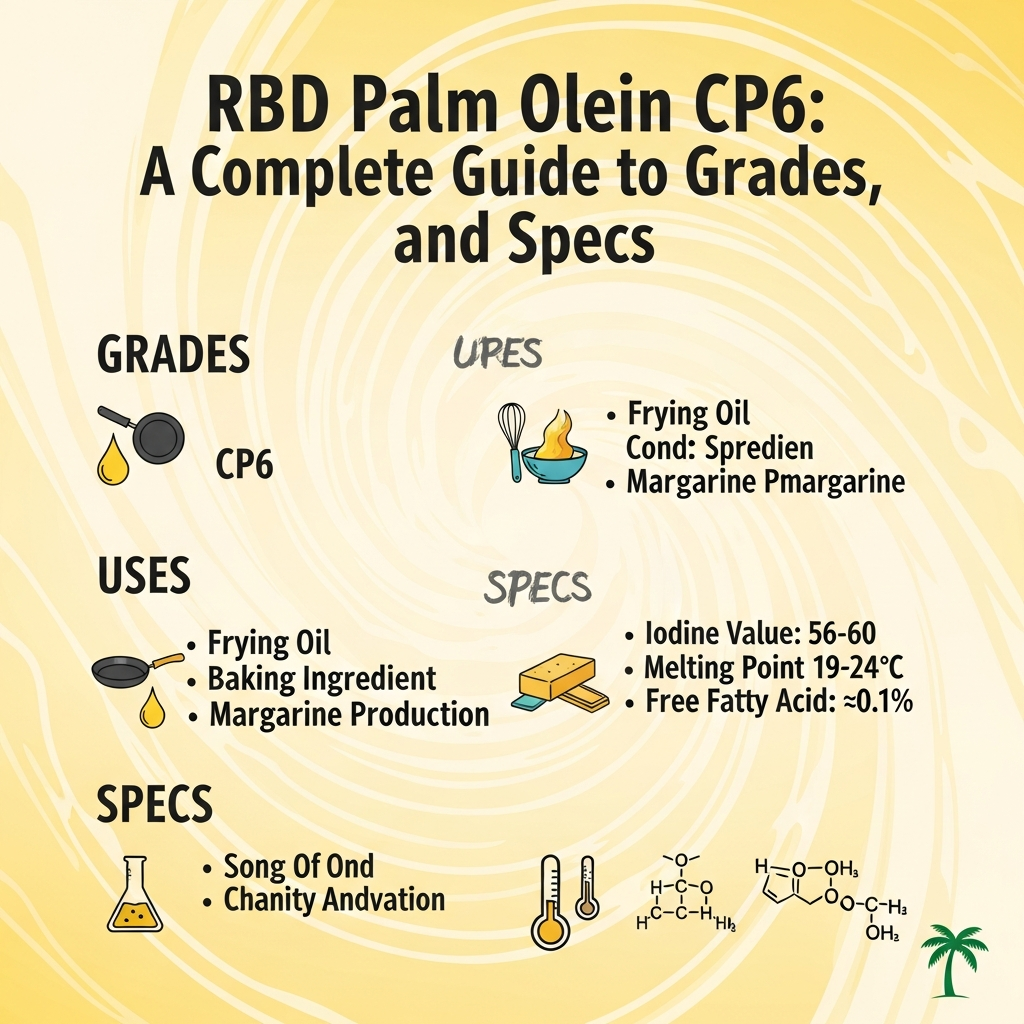
- Key Specifications of RBD Palm Olein CP6
- Top 5 Industrial Uses for RBD Palm Olein CP6
- Navigating Sustainability in Palm Oil Production
- Choosing a Reliable Supplier for RBD Palm Olein CP6
- Frequently Asked Questions
What Is RBD Palm Olein CP6?
RBD Palm Olein CP6 is one of the most widely used edible oils in the world, renowned for its versatility, stability, and affordability. It is the liquid fraction obtained from the fractionation of palm oil after it has undergone a specific refining process. This process makes it a preferred choice for countless food manufacturers and culinary professionals globally.
The term “RBD” stands for “Refined, Bleached, and Deodorized,” while “CP6” refers to its Cloud Point of 6° Celsius. This specific grade is celebrated for its excellent performance in cooking and frying, making it a staple ingredient in everything from instant noodles to confectionery treats. This guide will explore everything you need to know about this remarkable cooking oil.

Understanding the Terminology: RBD and CP6 Explained
To fully appreciate the qualities of RBD Palm Olein CP6, it’s essential to understand what each part of its name signifies. The acronyms describe the journey from crude palm oil to the refined product used in kitchens and factories.
The “RBD” Process: Refining for Purity
The journey from Crude Palm Oil to a refined, edible product involves three key steps to remove impurities and enhance its quality:
- Refining: This initial stage removes Free Fatty Acids (FFAs), which can cause the oil to smoke and spoil. Neutralizing the oil results in a purer, more stable product.
- Bleaching: The oil is filtered through bleaching earth (a type of clay) to remove natural pigments like carotenoids, resulting in a light, golden-yellow color.
- Deodorizing: In the final step, steam is used under a vacuum to strip away any residual odors and tastes, yielding a neutral-flavored oil perfect for various food applications.
The “CP6” Designation: What is Cloud Point?
The “CP” in RBD Palm Olein CP6 stands for Cloud Point, which is the temperature at which the oil starts to become cloudy or solidify. A CP of 6°C means this grade of palm olein will remain clear and liquid in temperate climates, making it highly desirable for markets where temperatures can drop.
Key Specifications of RBD Palm Olein CP6
The quality of RBD Palm Olein CP6 is determined by a set of technical specifications that suppliers must meet. These parameters ensure consistency and performance. For a detailed breakdown, industry bodies like the Malaysian Palm Oil Council (MPOC) provide official standards.
- Free Fatty Acids (FFA): Typically a maximum of 0.1%, indicating high purity and stability.
- Iodine Value (IV): Usually between 56-59, which reflects the degree of unsaturation and affects the oil’s stability.
- Cloud Point: A maximum of 6°C, as the name suggests.
- Moisture & Impurities (M&I): A maximum of 0.1% to ensure a long shelf life.
- Color (Lovibond): Typically a maximum of 3 Red, ensuring a visually appealing light golden hue.
Top 5 Industrial Uses for RBD Palm Olein CP6
The unique properties of RBD Palm Olein CP6 make it an indispensable ingredient in numerous sectors. Its high smoke point and neutral flavor are just two of the reasons for its widespread adoption.

1. Premium Cooking and Frying Oil
With a high smoke point (around 235°C or 455°F), it is perfect for deep-frying. It resists oxidation, meaning it can be used for longer without breaking down, delivering consistently crispy and delicious results for products like french fries, chips, and doughnuts.
2. Margarine and Shortening
Its semi-solid consistency at room temperature makes it an ideal base for margarine, spreads, and shortening. It provides the desired texture and mouthfeel in baked goods without the need for hydrogenation, which creates trans fats.
3. Instant Noodle Production
A significant portion of global RBD Palm Olein CP6 is used for flash-frying instant noodles. This process pre-cooks the noodles and reduces their moisture content, extending shelf life and ensuring they cook quickly for the consumer.
4. Confectionery and Bakery
From chocolate coatings that melt in your mouth to creamy fillings in biscuits, this oil provides stability and structure. Its neutral taste ensures that the primary flavors of the confection are not overpowered.
5. Non-Food Applications
Beyond the kitchen, it is a key ingredient in making soaps, detergents, and cosmetics. It is also used in the production of biodiesel, contributing to the renewable energy sector. According to a study published in Bioresource Technology, its chemical properties make it a viable feedstock for biofuel.
Navigating Sustainability in Palm Oil Production
The palm oil industry has faced scrutiny for its environmental impact. Issues like deforestation and loss of biodiversity are serious concerns. However, the industry has made significant strides towards sustainability through certification and responsible sourcing.
When choosing a supplier, it is crucial to look for certifications that ensure the RBD Palm Olein CP6 is sourced from sustainable and environmentally responsible plantations.
Organizations like the Roundtable on Sustainable Palm Oil (RSPO) have established global standards for sustainable palm oil production. RSPO-certified products guarantee that the palm oil was produced without causing harm to forests or communities. The World Health Organization (WHO) also advocates for sustainable food systems as part of a healthy diet.
Choosing a Reliable Supplier for RBD Palm Olein CP6
Selecting the right supplier is critical to ensuring you receive high-quality RBD Palm Olein CP6 that meets all necessary specifications. A dependable partner provides transparent sourcing information, adheres to international quality standards, and has a strong track record of reliability. This consistency is crucial for both food production and industrial applications.
A comprehensive supplier often manages a full spectrum of palm-based products, demonstrating deep industry expertise. The value chain includes derivatives from the palm fruit’s nut, or Palm Kernel, which is processed into valuable products like Palm Kernel Oil. The remaining solid residue, Palm Kernel Expeller, is a nutrient-rich ingredient for animal feed. Even the hard Palm Kernel Shell is repurposed as a clean, efficient biofuel. Managing these diverse outputs, all originating from the Oil Palm Fruit Bunch, signifies a supplier’s commitment to a zero-waste, sustainable process.
Makmur Amanah Sejahtera provides high-quality palm products such as Palm Kernel Expeller, Palm Kernel Shell, Crude Palm Oil, Palm Kernel Oil, etc. Kindly contact us at WhatsApp +6282140002198 or email us at admin@makmuramanah.co.id. CP6 stands for “Cloud Point 6° Celsius.” It is the temperature at which the oil begins to appear cloudy as it solidifies, making it suitable for cooler and temperate climates where it remains liquid. Like all fats, it should be consumed in moderation. It is rich in Vitamin E and free of trans fats. Its balance of saturated and unsaturated fatty acids makes it a very stable oil for high-temperature cooking. Palm oil is the oil extracted from the palm fruit. Palm olein is the liquid fraction obtained by fractionating palm oil. Palm stearin is the solid fraction. This makes RBD Palm Olein CP6 a more liquid and versatile product than unfractionated palm oil.Looking for High-Quality Palm Products?
Frequently Asked Questions
1. What does CP6 stand for in RBD Palm Olein?
2. Is RBD Palm Olein CP6 healthy?
3. What is the difference between palm oil and palm olein?
 English
  Indonesian
  Chinese
  Arabic