
Table of Contents
- 1. What Exactly is Palm Kernel Expeller (PKE)?
- 2. How is Palm Kernel Expeller (PKE) Produced?
- 3. The Nutritional Profile of Palm Kernel Expeller (PKE)
- 4. The Ultimate Top 5 Benefits of Palm Kernel Expeller (PKE)
- 5. Common Uses and Applications of PKE
- 6. Potential Drawbacks and Key Considerations
- 7. Conclusion: The Future of PKE in Global Agriculture
In the world of agriculture and livestock management, finding sustainable and cost-effective feed sources is a constant pursuit. Enter the Palm Kernel Expeller (PKE), a valuable by-product of the palm oil industry that has become a cornerstone in animal nutrition worldwide. This guide explores everything you need to know about this remarkable feed ingredient.
From its production process to its extensive benefits, PKE offers a compelling solution for farmers looking to optimize costs without compromising on quality. Let’s dive into what makes this ingredient so essential for modern farming.

1. What Exactly is Palm Kernel Expeller (PKE)?
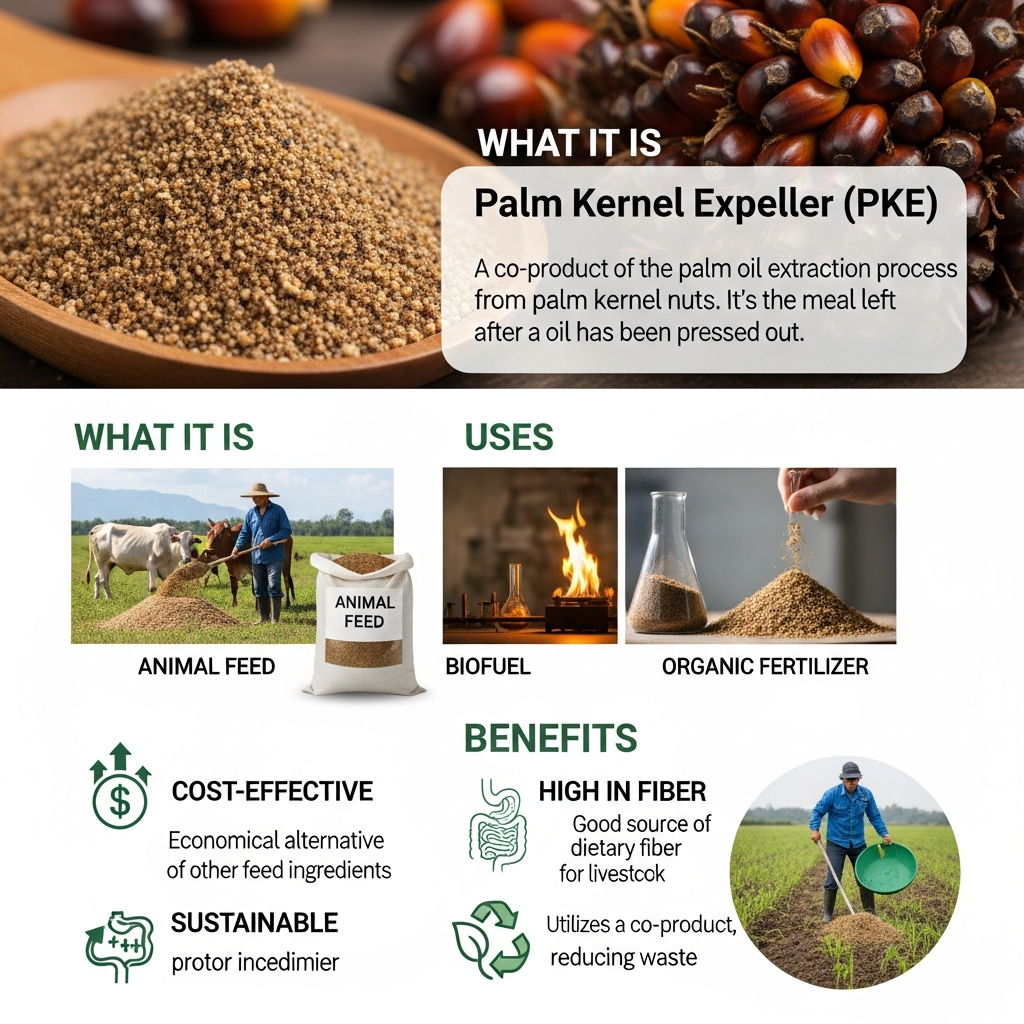
Palm Kernel Expeller (PKE) is the material left over after the oil has been extracted from the kernel of the oil palm fruit. It is a co-product of the palm kernel oil extraction process, which uses a mechanical screw press (expeller) to squeeze the oil out. The resulting solid residue is a nutrient-rich mash known as PKE.
Often sold as pellets, cake, or mash, PKE is highly regarded as an affordable source of protein and fiber for livestock, particularly for ruminants like cattle, sheep, and goats. Its global significance has grown as the demand for sustainable feed ingredients continues to rise.
2. How is Palm Kernel Expeller (PKE) Produced?
The production of Palm Kernel Expeller (PKE) is a straightforward mechanical process. It begins after the palm fruit’s flesh is used to produce Crude Palm Oil. The hard nut is cracked open to reveal the Palm Kernel, which is then crushed and heated to rupture its oil cells.
This crushed kernel is fed into a large screw press, or expeller, which applies immense pressure to extract the valuable Palm Kernel Oil. The fibrous, solid material that remains is the PKE. This process avoids the use of solvents, making it a purely mechanical and natural extraction method. For a detailed overview of oil extraction, you can refer to academic resources like this article on ScienceDirect.
3. The Nutritional Profile of Palm Kernel Expeller (PKE)
The primary appeal of PKE lies in its balanced nutritional composition. While the exact values can vary based on the extraction efficiency and source, it generally offers a solid profile for animal feed formulations.
- Crude Protein: Typically ranges from 14-18%. This makes it a valuable protein source for supporting animal growth and milk production.
- Crude Fiber: High in fiber (around 16-22%), which is particularly beneficial for the digestive health of ruminant animals.
- Residual Oil (Fat): Contains about 5-12% fat, providing a concentrated source of energy.
- Minerals: A good source of essential minerals such as phosphorus, magnesium, iron, and manganese.
This nutritional mix makes Palm Kernel Expeller (PKE) a versatile ingredient that can supplement or partially replace more expensive feed components like soybean meal or corn.
An animated video showing the journey from palm fruit to Palm Kernel Expeller (PKE), highlighting the mechanical extraction process.
4. The Ultimate Top 5 Benefits of Palm Kernel Expeller (PKE)
Farmers and feed manufacturers favor PKE for several compelling reasons that directly impact both animal health and operational profitability.
4.1. A Cost-Effective Powerhouse for Animal Feed
As a by-product, PKE is significantly more affordable than many primary feed crops. This cost advantage allows farmers to lower overall feed expenses, which often represent the largest portion of their operational budget, without sacrificing essential nutrients.
4.2. High in Beneficial Fiber
The high fiber content is a major benefit for ruminants. It promotes healthy rumen function, aids in cud chewing, and helps prevent metabolic issues like acidosis. This makes Palm Kernel Expeller (PKE) an excellent forage extender, especially during dry seasons when grazing is limited.
4.3. A Reliable Source of Protein and Energy
With its solid protein and fat content, PKE provides the building blocks for muscle development and a steady supply of energy. This contributes to better weight gain in beef cattle and sustained milk yield in dairy cows. The Feedipedia entry on palm kernel meal provides extensive data on its nutritional value for different animals.
4.4. Promotes Sustainable Farming Practices
Utilizing PKE turns a potential waste product into a valuable resource. This aligns with a circular economy, reducing the environmental footprint by using every part of the Oil Palm Fruit Bunch. Other by-products like Palm Kernel Shell are also used as biofuel, enhancing sustainability. Organizations like the Roundtable on Sustainable Palm Oil (RSPO) work to ensure responsible supply chain management.
4.5. Versatile Applications Across Livestock
While ideal for cattle, Palm Kernel Expeller (PKE) is also used in feed for sheep, goats, swine, and even poultry, though often in smaller quantities for non-ruminants due to its high fiber content. This versatility makes it a staple ingredient in the global feed industry.

5. Common Uses and Applications of PKE
The primary use of PKE is undeniably in Total Mixed Rations (TMR) for dairy and beef cattle. However, its applications extend further:
- Feed Pellets: It is a common binding and nutritional agent in pelleted compound feeds.
- Aquaculture: It is sometimes included in diets for certain fish species, like tilapia.
- Biofuel: Lower-grade PKE can be used as biomass for generating energy.
6. Potential Drawbacks and Key Considerations
Despite its benefits, there are a few factors to consider when using Palm Kernel Expeller (PKE). Quality can be inconsistent, with variations in protein and oil content. It’s also crucial to source PKE from reputable suppliers to avoid contamination with mycotoxins, which can be harmful to animals.
Furthermore, due to its gritty texture, palatability can sometimes be an issue. It is often recommended to introduce it gradually into an animal’s diet and mix it with more palatable ingredients like molasses. Research from journals like the Journal of Animals often covers best practices for incorporating such ingredients into feed rations.
7. Conclusion: The Future of PKE in Global Agriculture
The role of Palm Kernel Expeller (PKE) in global agriculture is secure and growing. As the world population expands and the demand for affordable animal protein increases, the need for sustainable and economical feed ingredients will become even more critical.
PKE stands out as a prime example of agricultural efficiency—a valuable by-product that supports farmers, reduces waste, and provides excellent nutrition for livestock. By understanding its benefits and managing its challenges, PKE will remain an indispensable tool for a more sustainable and productive farming future.
—
Makmur Amanah Sejahtera provides high-quality palm products such as Palm Kernel Expeller, Palm Kernel Shell, Crude Palm Oil, Palm Kernel Oil, etc. Kindly contact us at WhatsApp +6282140002198 or email us at admin@makmuramanah.co.id.Looking for High-Quality Palm Products?
 English
  Indonesian
  Chinese
  Arabic