
- What is Palm Kernel Expeller (PKE)? An Introduction
- How is Palm Kernel Expeller (PKE) Produced?
- Nutritional Profile and Specifications of Palm Kernel Expeller (PKE)
- The Primary Uses of Palm Kernel Expeller (PKE) in Agriculture
- Key Benefits of Using Palm Kernel Expeller (PKE)
- Potential Drawbacks and Considerations
- Global Market and Trade of Palm Kernel Expeller (PKE)
- Frequently Asked Questions (FAQ)
- Conclusion: The Future of Palm Kernel Expeller (PKE)
What is Palm Kernel Expeller (PKE)? An Introduction
Palm Kernel Expeller (PKE) is a significant by-product derived from the mechanical extraction of oil from the kernel of the palm fruit. After the palm kernel is crushed to extract its oil, the leftover fibrous residue is what we know as PKE. It is an internationally recognized and traded commodity, primarily valued as a high-quality ingredient in animal feed.
Due to its balanced energy and protein content, this feed ingredient has become a staple in the rations for various livestock, especially ruminants like dairy and beef cattle. This guide explores the entire lifecycle of PKE, from its production process to its diverse applications and specifications in the global agricultural market.
Understanding the properties of Palm Kernel Expeller is crucial for farmers and feed manufacturers looking for cost-effective and nutritious feed solutions. Its sustainability as a by-product adds to its appeal in an increasingly eco-conscious world.

How is Palm Kernel Expeller (PKE) Produced?
The production of PKE is intrinsically linked to the palm oil industry, starting with the Oil Palm Fruit Bunch. After the fruit is processed to extract Crude Palm Oil from its fleshy mesocarp, the remaining nut is then cracked to retrieve the valuable Palm Kernel.
These kernels undergo a mechanical crushing process using screw presses, known as expellers. This high-pressure extraction squeezes out the Palm Kernel Oil. The solid, de-oiled material left behind is the Palm Kernel Expeller. The term “expeller” specifically refers to this mechanical, solvent-free extraction method. This process also yields other useful materials like the Palm Kernel Shell, which is often used as a biofuel.
The quality of the final PKE can vary depending on the efficiency of the oil extraction process, the quality of the kernels, and how the product is handled and stored post-production. Proper drying and storage are essential to prevent mold growth and mycotoxin contamination.
Nutritional Profile and Specifications of Palm Kernel Expeller (PKE)
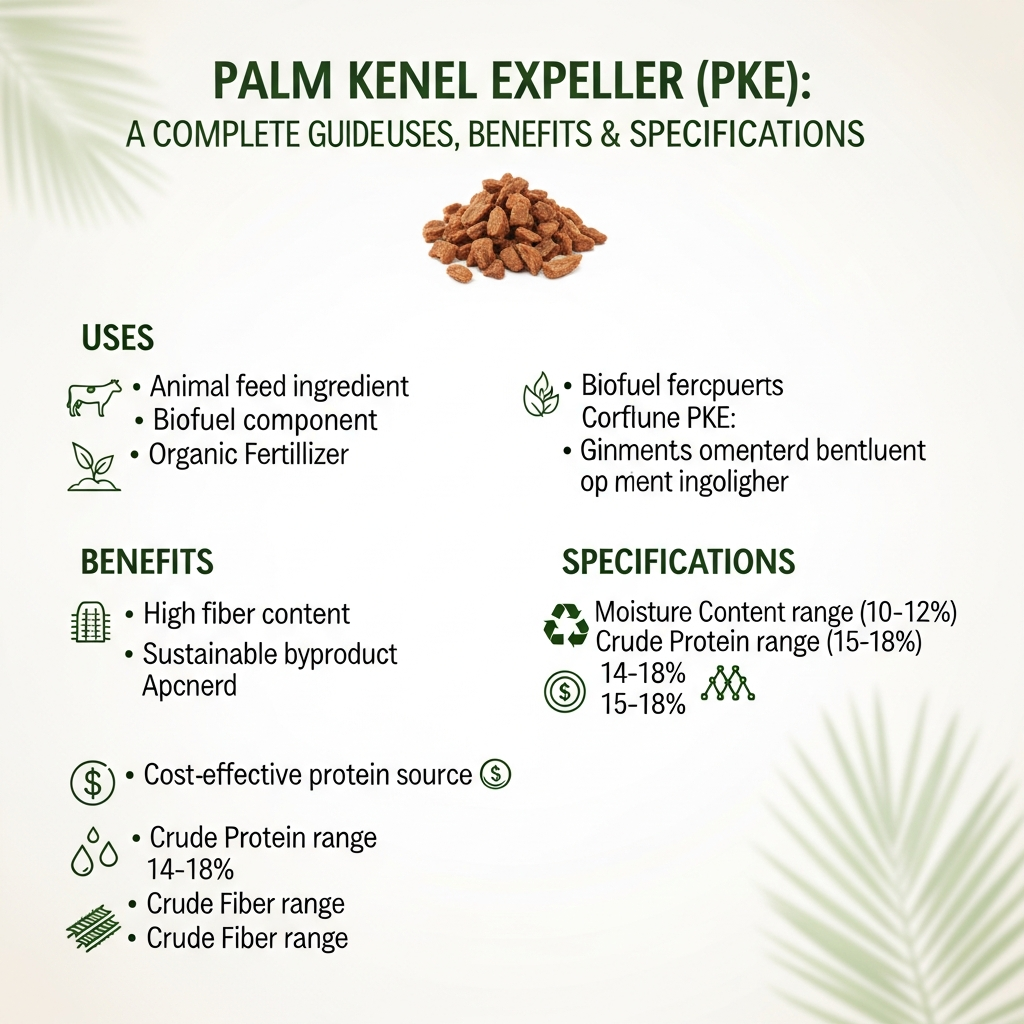
Palm Kernel Expeller (PKE) is prized for its unique nutritional composition, which makes it a valuable feed ingredient. While exact values can vary by source and processing method, a typical analysis provides a good overview of its benefits.
It is particularly noted for its high fiber content, which is beneficial for the digestive health of ruminant animals. The residual oil content also makes it a good source of energy. Below are the typical specifications for high-grade PKE.
| Nutrient | Typical Percentage (%) |
|---|---|
| Crude Protein | 14-18% |
| Crude Fibre | 16-20% |
| Crude Fat (Residual Oil) | 8-12% |
| Ash | 4-6% |
| Moisture | <10% |
The Primary Uses of Palm Kernel Expeller (PKE) in Agriculture
The versatility of PKE allows it to be used across different sectors of the livestock industry. Its primary application remains firmly in animal nutrition, where it serves as a reliable source of protein and energy.
PKE for Ruminant Feed (Cattle, Goats, Sheep)
PKE is most widely used in feed for ruminants. Its high fibre and moderate protein levels are ideal for dairy and beef cattle, supporting milk production and weight gain. The gritty texture can also stimulate rumination and saliva production, promoting a healthy digestive environment. However, it’s important to balance rations carefully, as PKE can have high copper levels, which may be toxic to sheep in large quantities. For more detailed research, refer to this study on PKE’s effect on ruminant performance.
PKE in Poultry and Swine Diets
For monogastric animals like pigs and chickens, the use of Palm Kernel Expeller (PKE) is more limited due to its high fibre content. Animals with a single-chambered stomach cannot easily digest this fiber. However, with the addition of specific feed enzymes to break down the fibrous components, PKE can be successfully incorporated into poultry and swine diets at lower inclusion rates, as detailed in research from the Brazilian Journal of Animal Science.
Other Agricultural Applications
Beyond animal feed, researchers are exploring other uses for this valuable by-product. Its high biomass content makes it a potential feedstock for producing biofuels. It is also used in some regions as a component in organic fertilizers, returning valuable nutrients to the soil.
Key Benefits of Using Palm Kernel Expeller (PKE)
The widespread adoption of Palm Kernel Expeller (PKE) in the global feed industry is driven by several key advantages that benefit both producers and farmers.
- Cost-Effectiveness: PKE is often more affordable than other protein sources like soybean meal or corn, helping to reduce the overall cost of animal feed.
- High Energy Content: The significant residual fat content provides a concentrated source of energy for livestock, supporting growth and productivity.
- Sustainable By-Product: Using PKE maximizes the value derived from the palm fruit, promoting a more circular economy and reducing waste in the palm oil industry.
- Good Source of Fibre: Essential for ruminant animals, the fibre in PKE supports healthy gut function and digestion.
Potential Drawbacks and Considerations for Palm Kernel Expeller (PKE)
While PKE offers many benefits, it is important to be aware of its potential limitations to ensure it is used safely and effectively.
Quality can be inconsistent depending on the source and processing method, affecting nutritional values. If not stored in dry, cool conditions, this feed ingredient is susceptible to mold, which can lead to mycotoxin contamination. The Food and Agriculture Organization (FAO) provides guidelines on mitigating these risks in animal feed.
Finally, the palatability of PKE can be lower than other feedstuffs, sometimes requiring a gradual introduction to an animal’s diet. Nutrient imbalances, such as low levels of the amino acid lysine, must also be corrected with other ingredients for balanced nutrition, especially for poultry.

Global Market and Trade of Palm Kernel Expeller (PKE)
The market for Palm Kernel Expeller (PKE) is a robust and essential part of the global agribusiness trade. The primary producers are Malaysia and Indonesia, which together account for the vast majority of the world’s palm oil production.
Major importing regions and countries include the European Union, New Zealand, China, and South Korea, where PKE is a critical ingredient for large-scale dairy and livestock operations. Market prices for PKE are influenced by palm oil production levels, demand from the feed industry, and the prices of competing feed commodities like soybean meal. For insights into commodity markets, the USDA Foreign Agricultural Service offers comprehensive reports.
Frequently Asked Questions (FAQ) about Palm Kernel Expeller (PKE)
What is the difference between Palm Kernel Meal and PKE?
The terms are often used interchangeably. However, “Palm Kernel Expeller” (PKE) specifically refers to meal produced via mechanical pressing. “Palm Kernel Meal” (PKM) can also refer to a product that has undergone solvent extraction, which results in a lower residual oil content.
Is PKE safe for all animals?
PKE is very safe for cattle and other ruminants when included as part of a balanced diet. For sheep, copper levels must be monitored. For poultry and swine, its use is limited by its high fiber, and it should be introduced at lower levels, preferably with feed enzymes.
How should Palm Kernel Expeller (PKE) be stored?
PKE must be stored in a cool, dry place away from direct sunlight and moisture to prevent the growth of mold and protect its nutritional quality. Proper storage is key to avoiding spoilage and mycotoxin development.
Conclusion: The Future of Palm Kernel Expeller (PKE)
In summary, Palm Kernel Expeller (PKE) stands out as a highly valuable and sustainable by-product of the palm oil industry. Its excellent nutritional profile, cost-effectiveness, and reliability have cemented its place as a key ingredient in animal feed formulations around the world, particularly for ruminants.
While considerations regarding quality control and proper dietary formulation are essential, the benefits of PKE are undeniable. As the global demand for animal protein continues to grow, the importance of efficient, sustainable, and affordable feed sources like Palm Kernel Expeller will only increase, securing its role in the future of agriculture.
Makmur Amanah Sejahtera provides high-quality palm products such as Palm Kernel Expeller, Palm Kernel Shell, Crude Palm Oil, Palm Kernel Oil, etc. Kindly contact us at WhatsApp +6282140002198 or email us at admin@makmuramanah.co.id.Looking for High-Quality Palm Products?
 English
  Indonesian
  Chinese
  Arabic