
Palm Kernel Expeller: 7 Proven Benefits & Uses (2026 Guide)
Palm Kernel Expeller is rapidly becoming the gold standard for cost-effective livestock nutrition in 2026, offering a high-energy solution for farmers worldwide. As feed costs continue to rise, finding sustainable, nutrient-dense alternatives to traditional grains is no longer just an option—it is a necessity for maintaining profitability in the modern agricultural landscape.
In the competitive sector of animal husbandry, relying solely on corn or soy can severely impact your bottom line due to market volatility. This is where Palm Kernel Expeller (PKE) steps in as a game-changer. Also known as palm kernel cake, this byproduct of the palm oil extraction process has evolved from a secondary ingredient to a cornerstone of ruminant diets globally. Its unique combination of fiber, energy, and protein makes it a versatile tool for nutritionists.
According to recent agricultural data, the global utilization of palm byproducts has increased by 15% in the last two years, driven by the demand for sustainable feed sources. Whether you are managing a dairy herd in New Zealand, a beef feedlot in Europe, or a goat farm in Asia, understanding the technical specifications and strategic application of Palm Kernel Expeller is crucial. This comprehensive guide will explore the nutritional profile, specific benefits, and practical feeding strategies to help you maximize herd performance while controlling costs.

What is Palm Kernel Expeller?
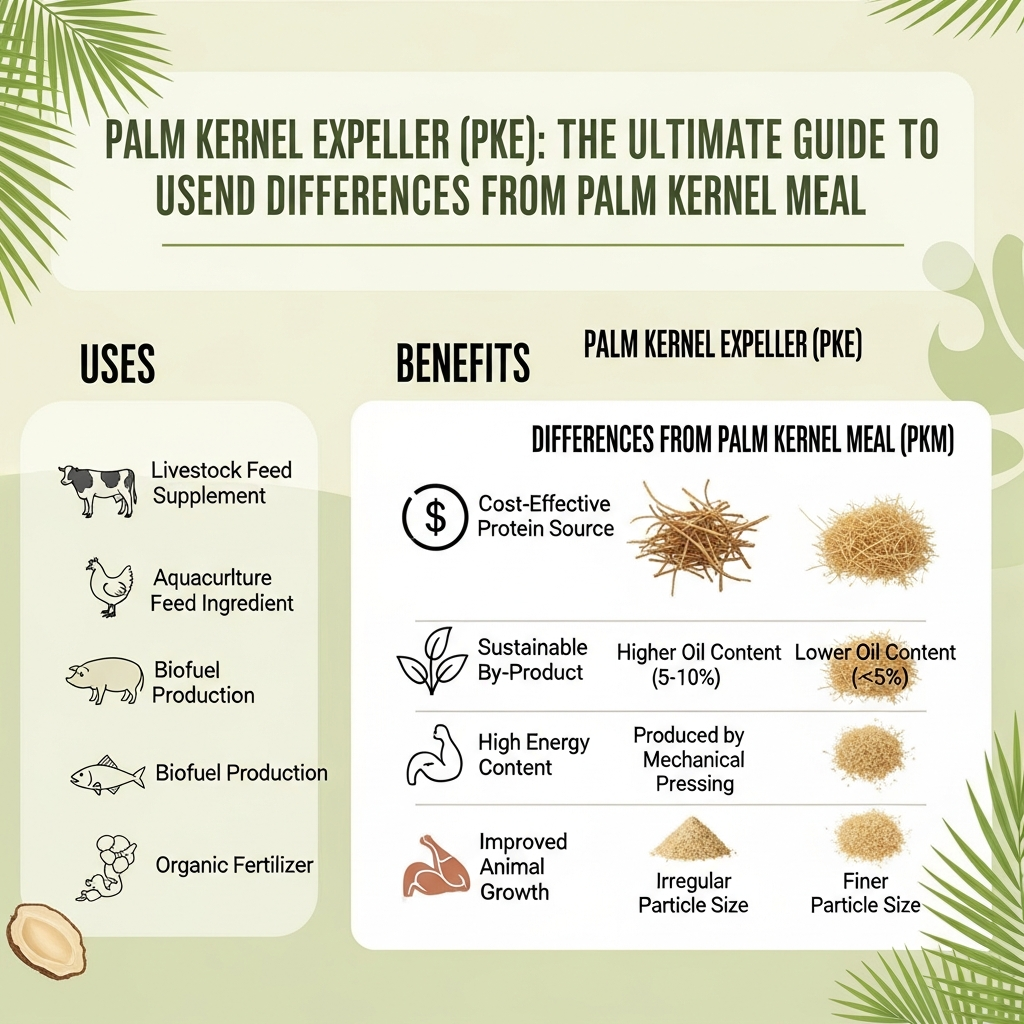
Palm Kernel Expeller is a high-fiber, medium-protein byproduct obtained from the mechanical extraction of oil from palm kernels. Unlike solvent-extracted meals which use chemicals like hexane, PKE is produced using a physical screw press method. This mechanical process retains a higher residual oil content (typically 6% to 10%), making it an excellent source of metabolizable energy for livestock.
It is produced by crushing the kernels of the oil palm fruit (Elaeis guineensis). The process begins with the separation of the kernel from the shell—the shell itself being another valuable commodity known as Palm Kernel Shell, used primarily for biomass energy. The kernels are then crushed, resulting in a palatable feed ingredient that is rich in essential nutrients and safe for animal consumption.
For decades, PKE has been utilized primarily in the dairy industry due to its ability to boost milk fat content. However, its application has expanded significantly. Today, it serves as a critical buffer feed during pasture deficits and a core component of Total Mixed Rations (TMR). Its gritty, fibrous texture also stimulates rumination, contributing to better gut health compared to finely ground concentrates.
Nutritional Profile of Palm Kernel Expeller
Understanding the detailed nutritional breakdown is vital for formulating balanced rations. Palm Kernel Expeller is characterized by its balanced ratio of energy to protein, making it distinct from other vegetable proteins like soybean or canola meal.
Below is a detailed nutritional analysis based on 2026 industry averages:
| Nutrient Parameter | Average Value (Dry Matter Basis) | Function for Livestock |
|---|---|---|
| Crude Protein (CP) | 14.0% – 17.0% | Supports muscle growth, tissue repair, and milk production. |
| Crude Fat (Oil) | 6.0% – 10.0% | Provides high metabolizable energy; improves pellet quality. |
| Neutral Detergent Fiber (NDF) | 60.0% – 70.0% | Promotes rumen health, salivation, and prevents acidosis. |
| Metabolizable Energy (ME) | 10.5 – 11.5 MJ/kg | Essential fuel for maintenance, lactation, and weight gain. |
| Phosphorus | 0.48% – 0.60% | Critical for skeletal strength and metabolic functions. |
| Calcium | 0.20% – 0.30% | Requires balancing to maintain proper Ca:P ratio. |
Why Palm Kernel Expeller is an Energy Booster
The secret to the high energy value of PKE lies in its residual oil. Fat contains roughly 2.25 times the energy of carbohydrates. Because Palm Kernel Expeller retains up to 10% oil, it offers a “cool energy” source—energy that doesn’t spike rumen acidity like starch does. For specialized high-energy requirements, such as in early-lactation dairy cows, some producers may further supplement with Calcium Salts of Palm Oil Fatty Acids to maximize caloric intake without disrupting digestion.
It is worth noting that the high phosphorus-to-calcium ratio requires supplementation with calcium sources, such as feed-grade limestone, to prevent urinary calculi in male animals (water belly). This is a standard management practice in feed formulation.
Palm Kernel Expeller vs. Palm Kernel Meal: Key Differences
A common source of confusion in the industry is the difference between “Expeller” and “Meal.” While often used interchangeably, the production method creates distinct nutritional variances that affect how you should feed them.

1. Extraction Method
Palm Kernel Expeller is produced via mechanical extraction. A screw press physically squeezes the oil out of the kernel. This method is chemical-free and naturally leaves a higher percentage of residual oil.
In contrast, Palm Kernel Meal (PKM) is typically produced via solvent extraction (usually using hexane). This chemical process removes nearly all the oil, leaving a product with slightly higher protein concentration but significantly lower energy density and varying palatability.
2. Energy Density
Because PKE retains 6-10% oil compared to PKM’s 1-2%, PKE provides superior energy values. This makes Palm Kernel Expeller the preferred choice for livestock requiring energy-dense diets, such as finishing beef cattle or lactating cows, without the risks associated with high-starch grains.
3. Palatability and Texture
The residual oil in the expeller variant enhances palatability and reduces dustiness, which is a common issue with solvent-extracted meals. Improved palatability ensures higher feed intake and less wastage in the trough. Furthermore, the mechanical pressing creates a flake or chip form that is easier for animals to pick up compared to the fine, dusty powder of solvent meal.
7 Proven Benefits of Palm Kernel Expeller
Integrating Palm Kernel Expeller into your feed strategy offers multifaceted benefits that go beyond simple cost savings. Here is why top nutritionists are recommending it in 2026.
1. Enhanced Milk Solids Production
Research published in reputable journals like ScienceDirect has consistently shown that PKE inclusion increases milk fat percentage in dairy cows. The fiber and fat profile alters rumen fermentation towards acetate and butyrate production—the primary precursors for milk fat synthesis. This is directly correlated to higher milk checks for farmers paid on solids.
2. Cost-Effective Protein Source
Compared to soybean meal, PKE offers a more economical protein source. While the protein content (14-17%) is lower than soy (44-48%), it is sufficient for maintenance and mid-level production. This allows farmers to reserve expensive high-protein concentrates for peak lactation periods and use PKE to bulk up the ration. For non-ruminant applications requiring fiber, it serves a role similar to Copra Meal, another cost-effective byproduct.
3. Safe Feed for Ruminants (Reduced Acidosis Risk)
PKE is considered a “safe” feed because it poses a very low risk of acidosis. Its high Neutral Detergent Fiber (NDF) content buffers the rumen, making it an ideal supplement when feeding high-sugar spring grass or high-starch grains. It slows down the passage rate of feed, ensuring more thorough digestion and stable rumen pH.
4. Excellent Shelf Life and Storage
Due to its lower moisture content and the natural antioxidant properties of residual palm oil (Vitamin E), Palm Kernel Expeller can be stored for extended periods without significant spoilage, provided it is kept dry. This allows farmers to buy in bulk during low-price seasons and store it for winter feeding.
5. Versatility Across Species
While dominant in ruminant diets, PKE can also be used in swine and poultry diets in limited quantities. For non-ruminants, it serves as a fiber source to improve gut health and satiety in gestating sows. According to studies found on NCBI, moderate inclusion in poultry diets can reduce cholesterol in eggs without affecting production rates.
6. Sustainability Credentials
Using byproducts of the palm oil industry reduces waste and improves the overall sustainability of agricultural supply chains. Organizations like Feedipedia (FAO) highlight the importance of utilizing agro-industrial byproducts to reduce the environmental footprint of animal agriculture. By using PKE, farmers are participating in a circular economy.
7. Improved Body Condition Score (BCS)
The energy density helps maintain body condition scores in cows, especially during the dry period or winter months when pasture quality declines. Maintaining optimal BCS is critical for reproductive performance in the subsequent season. Cows fed PKE tend to hold condition better than those on pure forage diets.

Feeding Palm Kernel Expeller: Expert Recommendations
To maximize the benefits of Palm Kernel Expeller, proper introduction and rationing are essential. Sudden dietary changes can cause digestive upset, so a gradual transition is recommended.
Cattle and Dairy Cows
For adult cattle, PKE can constitute up to 30-50% of the total dry matter intake, although 20-30% is typical.
- Transition: Start with small amounts (0.5 kg/head/day) and increase over 10-14 days to full allowance.
- Method: It is often fed in troughs, trailers, or incorporated into TMR wagons. It blends well with silage and other concentrates.
- Target: Aim for 3-6 kg per cow per day for lactating animals to support milk solids.
Sheep and Goats
Sheep are highly responsive to PKE supplementation. However, due to their sensitivity to copper toxicity (though PKE is generally low in copper, the total diet mineral balancing is key), it should be introduced carefully.
- Rate: Feed approx 200g – 500g per head per day.
- Benefit: Aids in wool growth and lactation performance, particularly in twin-bearing ewes.
Swine and Poultry
Monogastric animals lack the rumen to digest high fiber efficiently.
- Swine: Up to 15-20% in finishing diets or gestating sow diets for satiety.
- Poultry: Up to 5-10% in layer diets. It helps produce a deep yellow yolk color due to the carotenes in the residual oil.
Sourcing, Storage, and Quality Control
Not all PKE is created equal. Quality depends heavily on the processing efficiency and storage conditions. When sourcing, look for a brownish color and a pleasant, nutty smell. Avoid material that smells rancid or musty.
Storage Tips:
- Store in a clean, dry bay with a concrete floor.
- Protect from wind and rain to prevent mold growth (mycotoxins).
- While less dusty than Palm Kernel Shell biomass, PKE should be covered to prevent moisture absorption.
- Monitor pile temperature if storing large quantities for long periods to prevent spontaneous combustion, although this is rare compared to other oily meals.
For those involved in industrial applications beyond feed, the palm ecosystem provides various other valuable products. For instance, RBD CP8 is a fractionated palm oil used in cooking and frying, showcasing the versatility of the palm fruit.
Potential Drawbacks and Management
No feed ingredient is perfect. Being aware of potential limitations allows for better management:
- Palatability Issues: Some animals may initially reject the texture. Mixing with molasses, salt, or silage can drastically improve acceptance.
- Mineral Imbalance: As mentioned, the Ca:P ratio must be corrected. Ensure your mineral pack addresses this.
- Physical Quality: PKE can vary from meal to pellet to chips. Ensure your supplier provides a consistent physical form to prevent sorting by livestock.
Makmur Amanah Sejahtera provides high-quality palm products such as Palm Kernel Expeller, Palm Kernel Shell, Crude Palm Oil, Palm Kernel Oil, etc. Kindly contact us at WhatsApp +6282140002198 or email us at admin@makmuramanah.co.id.
Frequently Asked Questions
What is the main difference between Palm Kernel Expeller and Palm Kernel Cake?
There is no practical difference; the terms are synonymous in the feed industry. “Palm Kernel Cake” is the general term for the solid residue left after oil extraction. “Expeller” specifically refers to the mechanical screw press method used to produce it, which is the most common form available for animal feed.
Is Palm Kernel Expeller safe for all livestock?
Yes, it is generally safe for ruminants (cattle, sheep, goats) and can be used for non-ruminants (pigs, poultry) in smaller quantities. The high fiber content makes it ideal for ruminants but limits its inclusion rate for monogastric animals to around 15-20% of the diet to prevent digestive issues.
How much PKE can I feed my dairy cows?
Dairy cows can safely consume up to 6 kg of PKE per day, depending on the rest of the diet composition. Most nutritionists recommend 2-4 kg per cow per day to balance pasture intake without displacing too much fresh forage or causing mineral imbalances. Always introduce it gradually.
Does PKE affect the taste of milk or meat?
When fed within recommended limits, PKE does not negatively alter the flavor of milk or meat. In fact, it tends to produce firmer body fat in cattle and whiter fat color, which is preferred in certain premium beef markets compared to the yellow fat produced by grass-only diets.
Where can I buy high-quality Palm Kernel Expeller?
You should source PKE from certified suppliers who guarantee traceability and quality control. Reputable exporters like Makmur Amanah Sejahtera ensure that the moisture, dirt, and shell content are kept to strict export standards to maximize nutritional value.
Can Palm Kernel Expeller replace Corn or Soy?
PKE cannot fully replace corn or soy due to different nutrient profiles, but it can significantly reduce reliance on them. It replaces some energy from corn and some protein from soy, acting as a “mid-protein, mid-energy” filler that lowers overall ration costs.
Conclusion
In the evolving landscape of agriculture, Palm Kernel Expeller stands out as a robust, economical, and nutritious feed solution. Its ability to provide safe energy, enhance milk solids, and maintain livestock condition during feed deficits makes it indispensable for modern farming. By understanding the differences between mechanical expeller and solvent meal, and by implementing balanced feeding strategies, you can significantly improve your herd’s performance.
As we move through 2026, securing a reliable supply of high-quality feed ingredients is paramount. Whether you need PKE, Cocopeat for animal bedding, or other palm derivatives, choosing the right partner ensures your agricultural success. Start integrating PKE today to build a more resilient and profitable livestock operation.
 English
  Indonesian
  Chinese
  Arabic