
Palm Kernel Expeller is the powerhouse by-product transforming sustainable livestock nutrition strategies in 2026. For feed millers and livestock farmers facing rising raw material costs, finding a high-energy, cost-effective protein source is no longer optional—it is essential.
The global shift towards sustainable agriculture has spotlighted palm by-products. However, confusion often arises regarding the specific variations of these products. Understanding the nutritional profile and specific applications of PKE determines whether your feed formulation succeeds or fails.
In this comprehensive guide, we analyze the critical benefits, production methods, and distinct differences between expeller and meal varieties to help you optimize your livestock operations.
What is Palm Kernel Expeller? (Definition & Production)
Palm Kernel Expeller (PKE), often referred to as Palm Kernel Cake (PKC), is a by-product obtained from the crushing of palm kernels to extract oil using the mechanical screw press method. Unlike solvent extraction methods that strip almost all oil, the mechanical expeller process leaves a significant residual oil content typically ranging from 6% to 10%.
This residual oil is the defining feature. It provides a dense source of metabolizable energy, making Palm Kernel Expeller a superior ingredient for ruminant feed compared to lower-fat alternatives.
According to data from Feedipedia, an authoritative resource by INRAE, CIRAD, AFZ, and FAO, palm kernel products have become a staple in the diets of dairy and beef cattle across New Zealand, Australia, and Europe due to their balanced ratio of energy to protein.
How Palm Kernel Expeller is Produced
The production of PKE involves intense physical pressure. The palm kernels are dried, cleaned, and ground before being fed into a screw press. This mechanical force squeezes out the bulk of the oils (Crude Palm Kernel Oil), leaving behind the solid residue known as the expeller.
Because no chemical solvents like hexane are used in this specific process, the resulting feed is often viewed as more natural and palatable for livestock. This production method ensures that the Palm Kernel Expeller retains vital nutrients, including moderate protein levels (14%–17%) and high fiber content.
Palm Kernel Expeller vs. Palm Kernel Meal: The Critical Difference
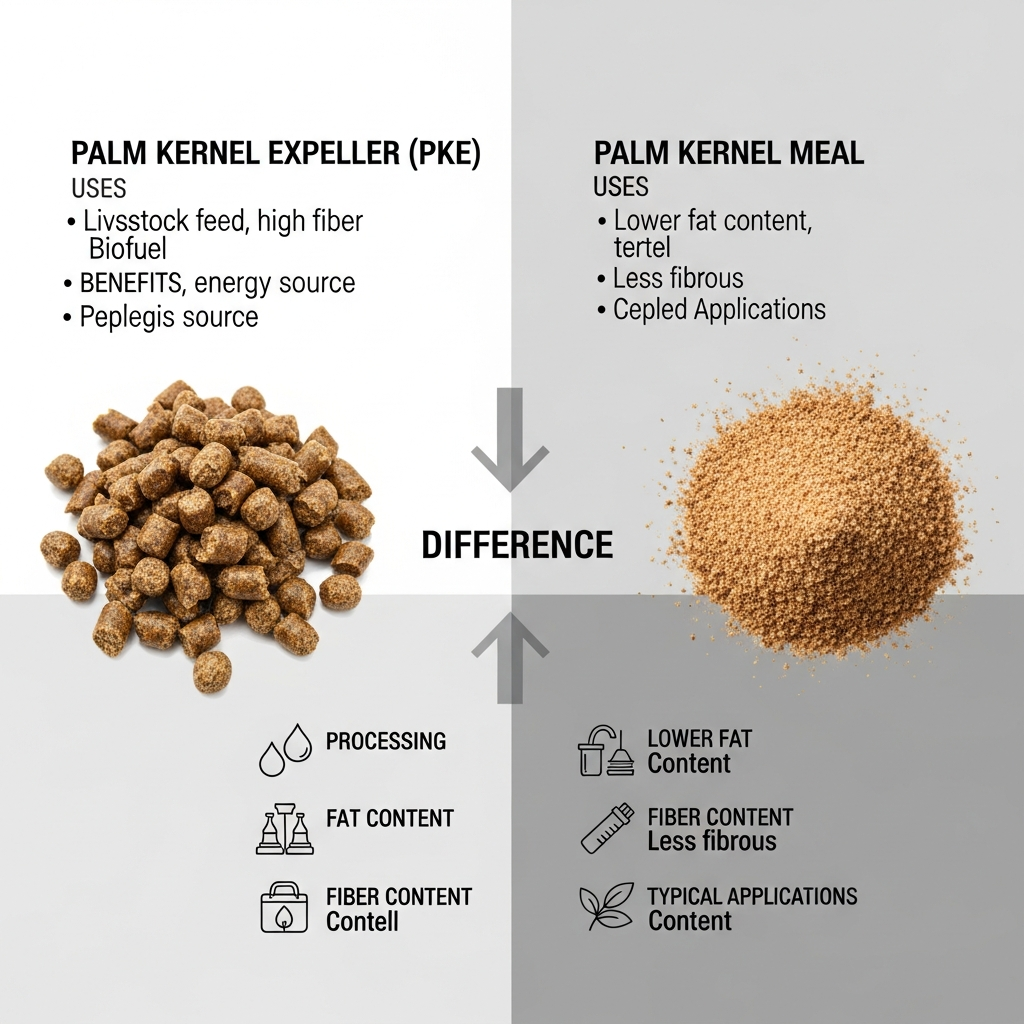
Many buyers use the terms “expeller” and “meal” interchangeably, but this is a costly mistake. The difference lies entirely in the extraction method and the resulting oil content.
While Palm Kernel Expeller is produced via mechanical pressure, Palm Kernel Meal typically refers to the by-product of solvent extraction. This distinction alters the energy density of the feed significantly.
| Feature | Palm Kernel Expeller (PKE) | Palm Kernel Meal (PKM) |
|---|---|---|
| Extraction Method | Mechanical Screw Press | Solvent Extraction (Hexane) |
| Residual Oil (Fat) | High (6% – 10%) | Low (0.5% – 2.0%) |
| Energy Value | High Energy Density | Moderate Energy Density |
| Palatability | Higher (due to oil content) | Lower (dryer texture) |
| Primary Use | High-energy Ruminant Feed | General Feed Filler |
For operations requiring higher fat intake for energy, specifically in dairy production to boost milk fat, Palm Kernel Expeller is the undisputed choice. Its caloric density provides a buffer against weight loss during high lactation periods.
Detailed Nutritional Profile
To fully leverage PKE, it is crucial to understand its typical chemical composition. The following data represents high-quality Indonesian PKE commonly exported to global markets.
- Dry Matter (DM): 88% – 92%
- Crude Protein (CP): 14% – 17%
- Crude Fat (Ether Extract): 6% – 10%
- Neutral Detergent Fiber (NDF): 60% – 65%
- Metabolizable Energy (Ruminants): ~10.5 – 11.5 MJ/kg DM
- Ash: 4% – 6%
This profile highlights why PKE is not just a protein source but a hybrid energy-protein supplement.
7 Key Nutritional Benefits of PKE for Livestock
Integrating PKE into animal diets offers multifaceted benefits. In 2026, efficient feed formulation relies on ingredients that serve multiple nutritional roles simultaneously.
1. High Metabolizable Energy
The residual oil in PKE serves as a direct energy source. For ruminants, this energy is easily digestible and helps maintain body condition scores (BCS) during periods of pasture deficit or heat stress.
2. Balanced Protein Source
With a crude protein content of 15–17%, PKE is a solid medium-grade protein source. While not as high as soybean meal, it is far more cost-effective and provides sufficient amino acids for maintenance and growth functions in cattle.
3. Rich in Fiber (NDF)
PKE is high in Neutral Detergent Fiber (NDF). This fiber is crucial for stimulating rumen function and preventing acidosis, a common issue when feeding high-starch grains like corn or barley.
4. Natural Source of Minerals
It contains essential minerals such as phosphorus, calcium, and magnesium. This mineral profile reduces the need for heavy external supplementation in total mixed rations (TMR), lowering overall feed costs.
5. Cost-Effectiveness
Compared to corn or soy, Palm Kernel Expeller offers a lower cost per unit of energy. This economic advantage is vital for maintaining margins in beef and dairy farming, especially when global grain prices fluctuate.
6. Enhanced Palatability
The nutty aroma and oily texture make PKE highly palatable once animals are conditioned to it. Livestock tend to accept it readily, which reduces feed refusal rates and waste compared to dryer, dustier meals.
7. Reduced Mycotoxin Risk
High-quality PKE, especially when sourced from reputable suppliers like Makmur Amanah, is typically processed and shipped with strict moisture controls. This significantly reduces the risk of aflatoxins compared to corn-based feeds, which are highly susceptible to mold in humid climates.
Practical Uses in Animal Feed Formulations
The application of PKE varies by species, but its primary dominance remains in the ruminant sector. However, research published in Animal Feed Science and Technology suggests growing applications in non-ruminant diets when treated with specific enzymes to break down fiber.
For Dairy Cattle
This is the most common use case globally. Dairy cows require significant energy to produce milk. The fat content in PKE helps boost milk solids and butterfat percentages. It is typically fed as a supplement to pasture or silage at rates of 2–6 kg per cow per day.
Furthermore, for farms looking to optimize fat intake further, combining PKE with bypass fats like Calcium Salts of Palm Oil Fatty Acids can yield superior lactation results without disrupting rumen fermentation.
For Beef Cattle
Beef cattle benefit from the steady weight gain provided by the energy-protein balance in PKE. It serves as an excellent “finishing” feed component, helping cattle achieve desired market weights without excessive fat deposition associated with high-starch grains.
For Swine and Poultry
Historically, the high fiber content limited PKE use in monogastric animals (pigs and chickens). However, modern fermentation and enzyme inclusion strategies allow for inclusion rates of 10–15% in swine diets, reducing overall feed costs. Studies indicate that PKE can replace part of the soybean meal in pig diets without affecting growth performance if balanced correctly.
If you are formulating for diverse livestock, you might also consider Copra Meal, another high-quality derivative that pairs well with PKE in mixed feed rations for moderate growth rates.
Global Market Trends & Sourcing in 2026
The supply chain for palm products has evolved. In 2026, traceability and sustainability are paramount. Importers in the EU and Oceania now demand strict adherence to deforestation-free supply chains.
Indonesia remains the world’s largest producer of palm oil and its by-products. Sourcing directly from Indonesian suppliers ensures freshness and competitive pricing. When selecting a supplier, verify their ability to control moisture levels (below 10%) and shell contamination.
Other by-products, such as Palm Kernel Shell, are also gaining traction in the biomass energy sector, demonstrating the versatility of the palm industry beyond just animal feed. For industrial applications, refined oils like RBD CP8 continue to be in high demand for food processing.
How to Store and Manage PKE Quality
Proper storage is critical to maintaining the nutritional value of Palm Kernel Expeller. Because of its oil content, it can be susceptible to oxidation (rancidity) if exposed to high heat and humidity for prolonged periods.
- Moisture Control: Ensure the warehouse is dry and ventilated. Moisture levels in the product should be kept below 10% to prevent mold growth.
- Pest Management: Like all grains, PKE attracts rodents and weevils. Implement strict pest control protocols.
- First-In, First-Out (FIFO): Rotate stock regularly to ensure animals are fed the freshest product available.
For agricultural bedding needs alongside feed storage, many farmers also utilize Cocopeat for superior moisture absorption in barns, keeping the environment dry and hygienic.
Makmur Amanah Sejahtera provides high-quality palm products such as Palm Kernel Expeller, Palm Kernel Shell, Crude Palm Oil, Palm Kernel Oil, etc. Kindly contact us at WhatsApp +6282140002198 or email us at admin@makmuramanah.co.id.
Frequently Asked Questions
Is Palm Kernel Expeller good for cows?
Yes, PKE is exceptional for cows. It provides a non-heating source of energy derived from fat and fermentable fiber. This supports milk solid production in dairy cows and steady weight gain in beef cattle without causing acidosis.
What is the maximum inclusion rate of PKE in dairy rations?
Generally, PKE can constitute up to 30–40% of the dry matter intake for dairy cattle. However, it is best introduced gradually over 7–10 days to allow the rumen bacteria to adapt to the new feed source to avoid rejection.
Does PKE affect the taste of milk or meat?
When fed within recommended limits, PKE does not negatively alter the flavor of milk or meat. In fact, it can improve the firmness of body fat in finishing cattle, which is often desirable in specific markets.
What is the difference between PKE and Copra Meal?
PKE comes from the oil palm fruit, while Copra Meal comes from coconuts. Copra Meal generally has higher protein but can be more susceptible to rancidity. PKE is often more available and cost-stable in the Southeast Asian market.
Can PKE be used as fertilizer?
While primarily a feed, PKE is organic matter rich in nitrogen and phosphorus. It can be composted and used as a soil amendment, although this is less economically viable than using it for livestock feed due to its nutritional value.
Conclusion
As we navigate the agricultural landscape of 2026, the efficiency of feed inputs remains the single biggest lever for profitability. Palm Kernel Expeller stands out not just as a filler, but as a strategic nutritional component that offers high energy, fiber safety, and cost efficiency.
By understanding the differences between expeller and meal, and utilizing reputable sources, farmers can significantly enhance their herd’s performance. Whether you are blending it with high-energy supplements or using it as a standalone pasture supplement, PKE is a proven asset.
Secure your supply chain today with high-quality Palm Kernel Expeller and ensure your livestock receive the premium nutrition they deserve.
 English
  Indonesian
  Chinese
  Arabic