
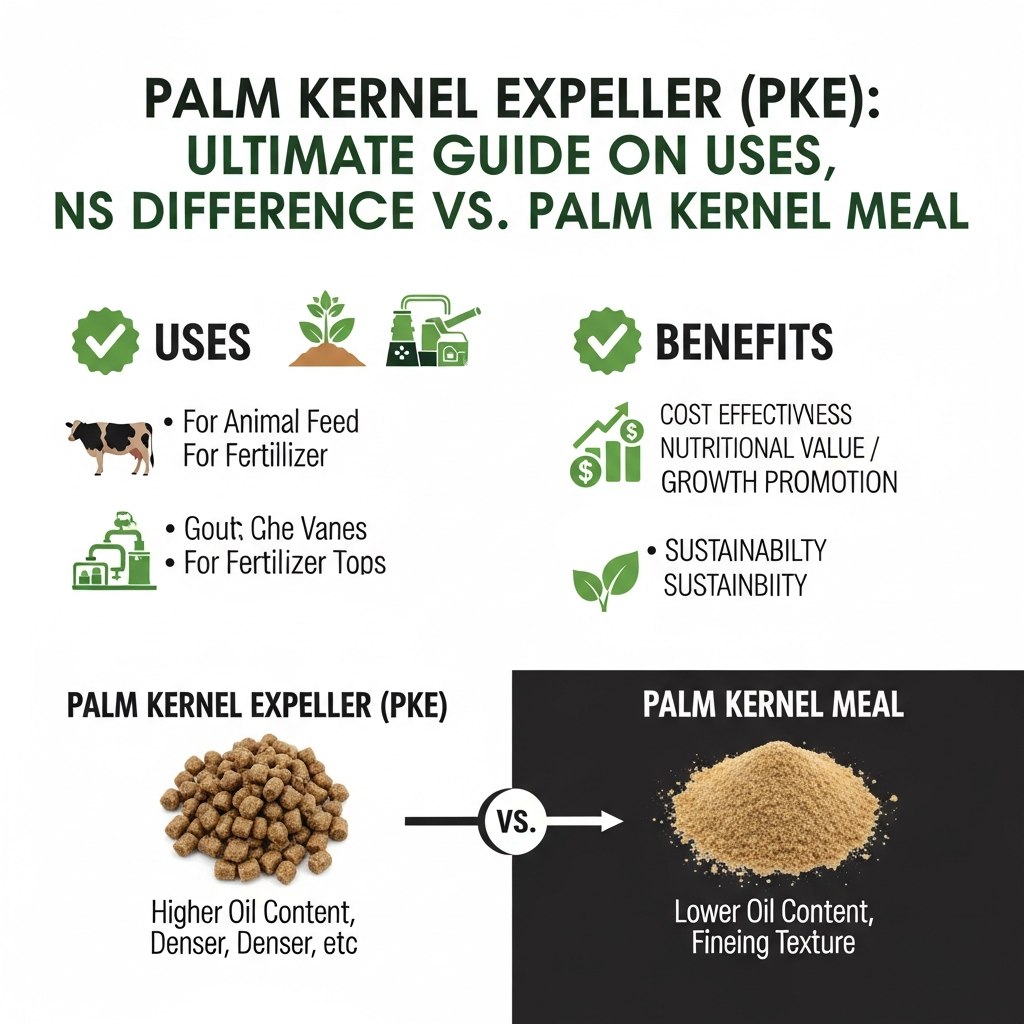
Palm Kernel Expeller is rapidly becoming the gold standard in sustainable livestock nutrition for 2026, offering an unparalleled balance of energy, protein, and cost-efficiency. For decades, farmers and feed manufacturers have sought reliable alternatives to expensive soy and corn, and PKE has emerged as the definitive solution.
In this comprehensive guide, we will dismantle the complexities of this byproduct, explore its specific nutritional advantages, and clearly define the critical differences between PKE and Palm Kernel Meal. Whether you are managing a dairy farm in New Zealand or sourcing feed ingredients in Europe, understanding the value of Palm Kernel Expeller is essential for maximizing profitability this year.
What is Palm Kernel Expeller? (Definition & Production)
Palm Kernel Expeller (PKE), frequently referred to as Palm Kernel Cake (PKC), is a nutritious byproduct derived from the mechanical extraction of oil from the kernel of the oil palm fruit (Elaeis guineensis). Unlike chemical extraction methods, PKE is produced using screw presses, which preserves a higher fat content beneficial for livestock energy.
This mechanical process leaves a residual oil content of approximately 6% to 10% in the cake, making it a high-energy feed supplement. It is widely recognized as a premium ingredient for ruminant livestock due to its high fiber content (NDF) and moderate protein levels.
According to the Food and Agriculture Organization (FAO), the global production of palm kernel products continues to rise, driven largely by sustainable practices in major producing nations like Indonesia and Malaysia. This availability stabilizes prices, making it a strategic choice for 2026 feed formulations against volatile soy markets.
The Extraction Process Explained
Understanding the production helps in assessing quality. The process typically involves:
- Crushing: The kernels are broken down into smaller pieces to increase surface area.
- Heating: The material is cooked to rupture oil cells and reduce moisture.
- Pressing: Mechanical screw presses squeeze out the bulk of the oil.
- Cooling & Grinding: The remaining cake (Expeller) is cooled and ground into meal or pellets for export.
Nutritional Profile of Palm Kernel Expeller
The nutritional value of PKE is what makes it a powerhouse in animal feed. It is not merely a filler; it is a functional ingredient. The high energy derived from the residual oil is particularly beneficial for dairy cattle, aiding in milk fat production without the risk of acidosis associated with starch.
Below is a typical nutritional breakdown accepted by industry standards for 2026:
| Nutrient Parameter | Average Composition |
|---|---|
| Crude Protein (CP) | 14% – 17% |
| Crude Fat (Oil) | 6% – 10% |
| Neutral Detergent Fiber (NDF) | 50% – 60% |
| Metabolizable Energy (Ruminants) | 10.5 – 11.5 MJ/kg |
| Moisture | Max 10% |
| Ash | 4% – 6% |
This profile makes it comparable to Copra Meal, another coconut-derived feed, though PKE often provides better availability and price stability. It is also a superior fiber source compared to wheat bran in many ruminant diets.
Palm Kernel Expeller vs. Palm Kernel Meal: The Critical Difference
One of the most common mistakes buyers make is confusing Palm Kernel Expeller with Palm Kernel Meal (PKM). While they come from the same source, the extraction method changes the nutritional output significantly.
| Feature | Palm Kernel Expeller (PKE) | Palm Kernel Meal (PKM) |
|---|---|---|
| Extraction Method | Mechanical Screw Press | Solvent Extraction (Hexane) |
| Oil Content | High (6% – 10%) | Low (0.5% – 2%) |
| Energy Level | High Metabolizable Energy | Moderate Energy |
| Palatability | Excellent (due to fats) | Fair (dry and dusty) |
1. Production Method & Energy
PKE is produced via mechanical expulsion. This leaves more oil (energy) in the feed. PKM is produced using solvent extraction, which strips nearly all oil, significantly reducing its energy density for livestock.
2. Palatability & Handling
The residual oil in the expeller variety improves texture and taste, making it more palatable to animals than the dry, solvent-extracted meal. Furthermore, PKE is less dusty, reducing respiratory issues in barns and wastage during handling.
7 Proven Benefits of Palm Kernel Expeller for Livestock
As we navigate the feed markets of 2026, the versatility of this product stands out. Here is why top agricultural firms are stockpiling it.
1. Boosts Milk Fat in Dairy Cattle
The high neutral detergent fiber (NDF) and residual oil content in Palm Kernel Expeller are directly linked to increased butterfat production. A study published in ScienceDirect confirms that ruminants fed with protected fats and fiber sources like PKE show improved milk composition due to increased acetate production in the rumen.
2. Cost-Effective Protein Source
Compared to soybean meal, PKE offers a moderate protein source at a fraction of the cost. It allows farmers to balance the protein-energy ratio in the diet without breaking the bank, acting as a buffer against volatile grain prices.
3. Safe for Ruminant Digestion
PKE is generally free from aflatoxins when stored correctly and does not cause acidosis, a common issue with starch-heavy feeds like corn. Its fibrous nature stimulates chewing and saliva production, buffering the rumen pH effectively.
4. Excellent Pellet Quality
Feed manufacturers prefer PKE because it binds well due to its oil and fiber matrix. It helps produce durable pellets that reduce dust and wastage during transport, ensuring that animals consume the full nutritional value.
5. Sustainable By-Product
Using PKE contributes to a circular economy. It utilizes the by-products of the palm oil industry, which also produces Palm Kernel Shell for renewable energy and RBD CP8 for food, ensuring zero waste in the production cycle.
6. Long Shelf Life
With a low moisture content (typically under 10%), PKE has excellent storage properties. It resists mold growth better than wetter feeds like brewery by-products, provided it is stored in a dry, ventilated environment.
7. Versatility Across Species
While best for ruminants, it can also be used in swine and poultry diets in smaller inclusion rates, providing fiber that improves gut health. Recent trials suggest moderate inclusion in sow diets can improve satiety.
How to Feed Palm Kernel Expeller Correctly
To maximize the benefits, introduction strategies are vital. Animals may need a few days to adjust to the new feed due to its specific texture and smell.
For Dairy Cows
Start with 1-2 kg per head per day and gradually increase to 4-6 kg. It works best when mixed with silage or molasses to improve intake initially. For high-yielding cows, supplementing with Calcium Salts of Palm Oil Fatty Acids alongside PKE can further boost energy bypass without disrupting rumen fermentation.
For Beef Cattle
PKE can constitute up to 30-50% of the total ration for beef cattle. It provides the steady energy release required for weight gain without the risk of rapid fat deposition associated with high-starch grains, promoting leaner meat quality.
For Swine and Poultry
Limit inclusion to 15-20% for pigs and 5-10% for poultry due to the high fiber content. Monogastric animals digest fiber less efficiently than ruminants, so enzyme supplementation is often recommended to unlock nutritional value.
Global Market Trends & Sourcing PKE in 2026
The 2026 market outlook for Palm Kernel Expeller remains bullish. As climate change impacts soy production in the Americas, importers in New Zealand, Europe, and South Korea are turning to Southeast Asia for reliable feed supplies. According to recent data from the USDA, Southeast Asian exports of palm by-products have seen a steady 5% year-on-year increase.
Key Sourcing Criteria
- Indonesia’s Dominance: Indonesia remains the world’s largest exporter, ensuring consistent supply chains.
- Price Competitiveness: Despite rising logistics costs, PKE remains cheaper per unit of energy than corn or wheat middlings.
- Sustainability Certification: More buyers are requesting traceable PKE (RSPO or ISCC certified), ensuring it comes from deforestation-free zones.
Furthermore, the usage of related horticultural products like Cocopeat in agriculture highlights the growing trend of utilizing all plant-based by-products efficiently. Buyers should look for suppliers who can guarantee “Profat” (Protein + Fat) levels above 21% for premium grade PKE.
Conclusion
Palm Kernel Expeller is more than just an alternative feed; it is a strategic asset for modern livestock management. Its unique combination of mechanical extraction benefits, high energy, and cost-efficiency makes it a superior choice over solvent-extracted meals and expensive grains.
By integrating PKE into your feed formulations in 2026, you ensure better herd health, higher milk fat yields, and a more sustainable bottom line. Whether you are comparing it to corn, soy, or Palm Kernel Expeller from different regions, the data is clear: PKE provides the competitive edge modern agriculture demands.
Makmur Amanah Sejahtera provides high-quality palm products such as Palm Kernel Expeller, Palm Kernel Shell, Crude Palm Oil, Palm Kernel Oil, etc. Kindly contact us at WhatsApp +6282140002198 or email us at admin@makmuramanah.co.id.
Frequently Asked Questions
What is the main difference between Palm Kernel Expeller and Palm Kernel Cake?
There is no difference; they are synonyms. “Expeller” refers to the machine used (screw press), while “Cake” refers to the physical form of the product after pressing. Both terms describe the mechanical extraction byproduct.
Is Palm Kernel Expeller safe for horses?
Yes, but in moderation. It is a “cool feed” providing slow-release energy. However, due to its calcium-phosphorus ratio, it must be balanced with calcium supplements to prevent orthopedic issues in horses.
How long can PKE be stored?
If kept in a dry, well-ventilated warehouse with moisture below 10%, PKE can be stored for 6 to 12 months. Proper monitoring is required to prevent oxidation of the residual oil.
Can PKE replace corn in cattle diets?
It can partially replace corn. While corn is a starch energy source, PKE is a fiber/fat energy source. Replacing 30-50% of corn with PKE is common to reduce costs while maintaining energy levels.
What is the price of Palm Kernel Expeller in 2026?
Prices fluctuate based on global oil palm yields and logistics. However, PKE generally trades at a 30-40% discount compared to Soybean Meal. Contact Makmur Amanah Sejahtera for the latest FOB/CIF quotes.
 English
  Indonesian
  Chinese
  Arabic