
Palm Kernel Expeller: 9 Amazing Uses & Benefits (2026 Guide)
Palm Kernel Expeller stands as a revolutionary ingredient for modern livestock nutrition strategies in 2026. As global feed costs continue to rise and the demand for high-quality animal protein increases, securing a cost-effective, nutrient-dense feed source is no longer optional—it is essential for survival in the competitive agricultural sector.
Are you struggling to balance feed efficiency with strict nutritional requirements? You are not alone. Farmers and feed millers worldwide are turning to this byproduct of the palm oil industry to optimize their rations. This comprehensive guide explores why Palm Kernel Expeller (PKE) is the superior choice for maximizing livestock performance without breaking the bank.
According to FAO agricultural reports from late 2025, global utilization of palm byproducts in animal feed has grown by 15% year-over-year. This surge is driven largely by its effectiveness in ruminant diets and its availability from major producers like Indonesia. This article delves deep into the science, benefits, and practical applications of PKE, ensuring you have the expert knowledge to outpace your competition.
What is Palm Kernel Expeller (PKE)?
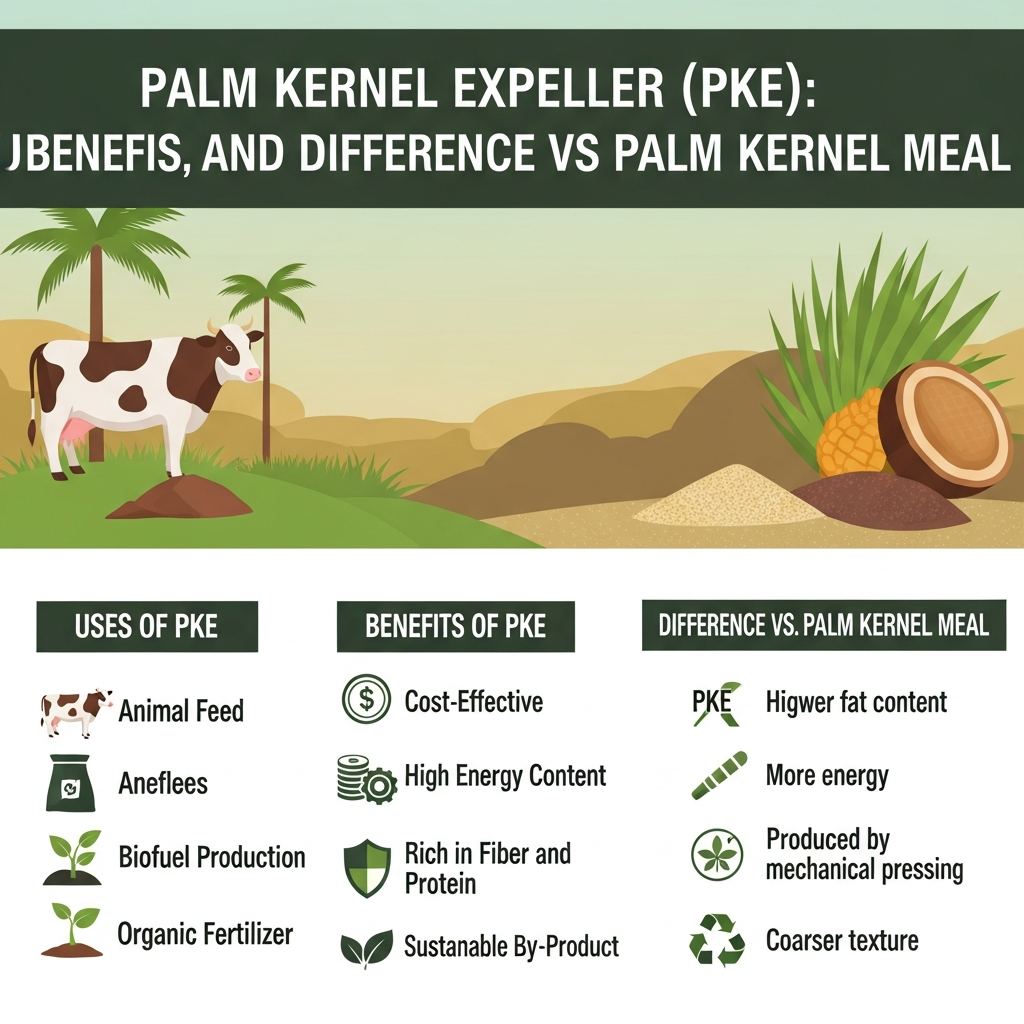
Palm Kernel Expeller, often abbreviated as PKE or PKC (Palm Kernel Cake), is a high-fiber, medium-protein feed ingredient obtained from the mechanical extraction of oil from palm kernels. Unlike other extraction methods, the mechanical screw press process preserves a significant amount of residual oil, making PKE a valuable energy source for livestock.
Produced primarily in Indonesia and Malaysia, the world’s leaders in palm oil production, PKE has become a staple in the diets of dairy cattle, beef cattle, and even swine. It serves as an excellent source of digestible fiber and energy, acting as a buffer against rumen acidosis in high-concentrate diets.
Technically, it is the solid residue left behind after the kernels of the oil palm fruit (Elaeis guineensis) are crushed to extract palm kernel oil. Its granular texture and savory aroma make it highly palatable to livestock, ensuring consistent feed intake even during stressful transition periods.
Nutritional Profile of Palm Kernel Expeller
Understanding the nutritional composition is critical for formulating balanced diets. PKE is renowned for its balanced ratio of protein to energy, making it a versatile ingredient that fits into various ration formulations.
| Nutrient Parameter | Average Value (%) | Description |
|---|---|---|
| Crude Protein (CP) | 14% – 16% | Moderate protein source suitable for maintenance and growth. |
| Crude Fat (Ether Extract) | 6% – 10% | High residual oil provides significant metabolizable energy. |
| Crude Fiber | 15% – 18% | Excellent digestible fiber for rumen health. |
| Neutral Detergent Fiber (NDF) | 60% – 65% | High NDF content stimulates chewing and salivation. |
| Metabolizable Energy (Ruminants) | 10 – 11 MJ/kg | Comparable to wheat bran or corn gluten feed. |
| Moisture | Max 10% | Low moisture content ensures long shelf life and prevents mold. |
Furthermore, the amino acid profile, while limiting in lysine for monogastrics, is perfectly adequate for ruminants. The high phosphorus-to-calcium ratio necessitates calcium supplementation, often achieved by incorporating Calcium Salts of Palm Oil Fatty Acids into the diet to maintain mineral balance.
9 Amazing Benefits of PKE for Livestock
Integrating Palm Kernel Expeller into your feed rations offers a multitude of advantages. Here are the top nine benefits observed by nutritionists and veterinarians in 2026:
1. Significant Cost Reduction with Palm Kernel Expeller
Feed typically accounts for 60-70% of livestock production costs. PKE is competitively priced compared to traditional protein sources like soybean meal or energy sources like corn. By substituting a portion of expensive concentrates with PKE, farmers can drastically lower their production costs while maintaining, or even improving, animal performance. This economic advantage is crucial for maintaining margins in a volatile market.
2. Enhanced Milk Fat Production
For dairy farmers, butterfat content determines milk price. The residual oil in PKE is rich in medium-chain fatty acids (lauric and myristic acids). These fatty acids are directly utilized by the mammary gland to synthesize milk fat via de novo synthesis, leading to higher butterfat percentages and increased revenue per liter of milk produced.
3. Excellent Source of Ruminant Energy
The combination of fermentable fiber and residual fat provides a steady release of energy. This “cool energy” helps maintain body condition scores in beef cattle without the risk of metabolic disorders associated with high-starch grains. It prevents the rapid spikes in insulin that can lead to fat deposition in unwanted areas.
4. Improved Rumen Health
The fibrous nature of PKE provides physically effective fiber (peNDF). This stimulates saliva production and chewing activity (cud-chewing). Saliva contains bicarbonates that naturally buffer the rumen, stabilizing pH levels and reducing the risk of sub-acute ruminal acidosis (SARA), a common and costly issue in intensive feedlots.
5. High Palatability
Livestock generally find the nutty aroma of Palm Kernel Expeller highly attractive. While there may be a short adaptation period of 2-3 days, animals quickly accept the feed. This ensures high dry matter intake is maintained, which is critical for high-producing dairy cows and growing beef cattle.
6. Versatility in Feed Formulation
PKE blends well with other ingredients. It can be mixed with Copra Meal, silage, or molasses. Its physical texture also makes it suitable for pelleting, reducing dustiness in compound feeds. It acts as an absorbent carrier for liquid additives, ensuring even distribution throughout the mix.
7. Non-GMO Alternative
In a market where consumers are increasingly wary of genetically modified organisms, PKE from Indonesia is predominantly non-GMO. This allows producers to label their meat and dairy products as natural and non-GMO, commanding a premium price in markets like Europe and New Zealand.
8. Long Shelf Life
Due to its low moisture content and the antioxidative properties of Vitamin E (tocopherols) naturally present in palm oil, PKE has a stable shelf life. This reduces spoilage losses during storage compared to wetter byproducts like brewer’s grain. When stored properly, it can last for months without degrading in quality.
9. Sustainable Byproduct
Using PKE contributes to the circular economy. By repurposing a byproduct of the palm oil industry, we reduce waste. It pairs sustainably with other biomass fuels like Palm Kernel Shell used for energy in processing plants, creating a zero-waste ecosystem around palm production.
Palm Kernel Expeller vs. Palm Kernel Meal: Key Differences
There is often confusion between Palm Kernel Expeller (PKE) and Palm Kernel Meal (PKM). While they originate from the same seed, the processing method creates distinct nutritional profiles that affect how they should be fed.
- Extraction Method: PKE is produced via mechanical screw pressing, whereas PKM is produced via solvent extraction (usually using hexane).
- Fat Content: This is the major differentiator. PKE retains 6-10% oil, offering higher energy. PKM typically contains less than 2% oil, making it lower in energy but slightly higher in protein concentration due to the removal of fat.
- Application: PKE is preferred for animals requiring higher energy density (dairy cows, finishing beef). PKM is often used where lower energy is sufficient or where fat intake must be restricted.
For most livestock applications where energy intake is a limiting factor, PKE is the superior choice. The mechanical extraction process is also viewed as more “natural” compared to chemical solvent extraction, aligning better with clean-label trends.
How to Use PKE in Animal Diets
To maximize the benefits of Palm Kernel Expeller, proper inclusion rates must be observed. Overfeeding can lead to mineral imbalances if not corrected. Consulting with a nutritionist is always recommended, but here are general guidelines.
Dairy Cattle
PKE can constitute 20-30% of the total dry matter intake. It is particularly effective when fed alongside lush pasture to balance the high soluble protein and low fiber of fresh grass. Research indicates that feeding up to 4-6 kg per head per day is safe and beneficial for milk solids. It pairs well with RBD CP8 oil supplementation for high-yielders needing extra energy density.
Beef Cattle
For fattening steers, PKE can be included at rates of 30-50% in the concentrate mix. It promotes steady weight gain and marbling. Ensure access to fresh water and a calcium supplement to balance the phosphorus in PKE. It serves as an excellent “backgrounding” feed for young stock before they enter the finishing phase.
Swine and Poultry
Due to high fiber content, inclusion rates for monogastrics are lower. For growing pigs, limit PKE to 10-15%. For poultry, keep it under 5-10% unless enzymes (mannanase) are added to improve digestibility. However, it can be effectively used as a bedding material or litter conditioner due to its absorbency, much like Cocopeat is used in horticulture.
Storage and Handling Best Practices
To maintain the quality of PKE, proper storage is non-negotiable. PKE is hygroscopic, meaning it can absorb moisture from the air.
- Moisture Control: Ensure the storage area is dry and well-ventilated. PKE should be stored at a moisture content below 10%.
- Pest Control: Store in concrete bunkers or silos to prevent rodent infestation.
- Rotation: Follow the First-In, First-Out (FIFO) principle to prevent old feed from becoming rancid.
- Monitoring: Regularly check for signs of mold or heating. If the temperature of the pile rises, it indicates microbial activity.
Why Source PKE from Indonesia?
Indonesia is the global epicenter of palm oil production. Sourcing Palm Kernel Expeller directly from Indonesian suppliers ensures freshness, consistency, and competitive pricing.
Indonesian suppliers comply with strict quality standards, ensuring low shell contamination and moisture control. Furthermore, the logistics infrastructure has improved significantly by 2026, allowing for efficient bulk shipments to markets in New Zealand, Europe, and East Asia. When you choose Indonesian PKE, you are accessing the freshest stock directly from the source, minimizing the degradation of nutrients that happens with long supply chains.
Conclusion
As we navigate the agricultural challenges of 2026, Palm Kernel Expeller remains a cornerstone of efficient livestock production. Its unique combination of digestible fiber, moderate protein, and high energy from residual oil makes it an unbeatable value proposition. Whether you are aiming to increase milk butterfat, reduce feed costs, or improve rumen health, PKE delivers proven results.
By understanding the differences between PKE and PKM and implementing the correct feeding strategies, you can unlock the full potential of your herd. Do not let rising feed costs eat into your profits—embrace the power of Palm Kernel Expeller today.
Makmur Amanah Sejahtera provides high-quality palm products such as Palm Kernel Expeller, Palm Kernel Shell, Crude Palm Oil, Palm Kernel Oil, etc. Kindly contact us at WhatsApp +6282140002198 or email us at admin@makmuramanah.co.id.
Frequently Asked Questions
Is Palm Kernel Expeller safe for sheep?
Yes, PKE is safe for sheep and is widely used in sheep fattening rations. However, because sheep are sensitive to copper toxicity, and PKE can contain varying levels of copper depending on the soil, it is advisable to test the batch. Generally, it is an excellent source of energy and fiber for ewes and lambs.
What is the difference between Palm Kernel Expeller and Copra Meal?
While both are byproducts of oil extraction (palm vs. coconut), Copra Meal generally has higher protein (20-22%) compared to PKE (14-16%). However, PKE is often more abundant and cost-effective. Cocopeat is a different byproduct entirely, used for gardening, not feed.
Can PKE be stored outside?
PKE should ideally be stored in a covered, dry shed on a concrete pad to prevent moisture absorption and mold growth. If stored outside, it must be covered with a high-quality tarp. PKE sheds water reasonably well due to its oil content, but prolonged exposure will degrade quality.
Does Palm Kernel Expeller affect meat taste?
Research suggests that feeding PKE produces firm, white fat in beef cattle, which is desirable in many markets. It does not negatively alter the flavor of the meat when fed at recommended inclusion rates.
How much Palm Kernel Expeller should I feed my cow?
For a standard dairy cow, 2 to 4 kg per day is the sweet spot. High-producing cows can tolerate up to 6 kg if introduced gradually. Always ensure the diet is balanced for minerals, particularly calcium, to counteract the phosphorus in the PKE.
What is the shelf life of Palm Kernel Expeller?
When stored in dry conditions (moisture <10%) and protected from direct sunlight, PKE can be stored for 6 to 12 months. The residual oil content is protected by natural Vitamin E, preventing rapid oxidation and rancidity.
 English
  Indonesian
  Chinese
  Arabic