
Palm Kernel Expeller: 7 Proven Benefits & Uses (2026)
Palm Kernel Expeller (PKE) stands as a premier choice for maximizing livestock productivity in the modern agricultural landscape. In an era where feed costs are rising and nutritional efficiency is paramount, finding a sustainable, high-energy feed ingredient is critical for farmers and feed millers alike. This byproduct of the palm oil industry has transformed from a mere residue into a global commodity essential for dairy and beef cattle performance.
As we navigate 2026, the demand for cost-effective animal feed solutions has never been higher. Recent industry data indicates that integrating byproducts like PKE can reduce feed costs by up to 20% while maintaining, or even enhancing, milk yield and weight gain. This comprehensive guide explores everything you need to know about PKE, from its production and nutritional profile to its specific benefits over other feed alternatives.
What is Palm Kernel Expeller?
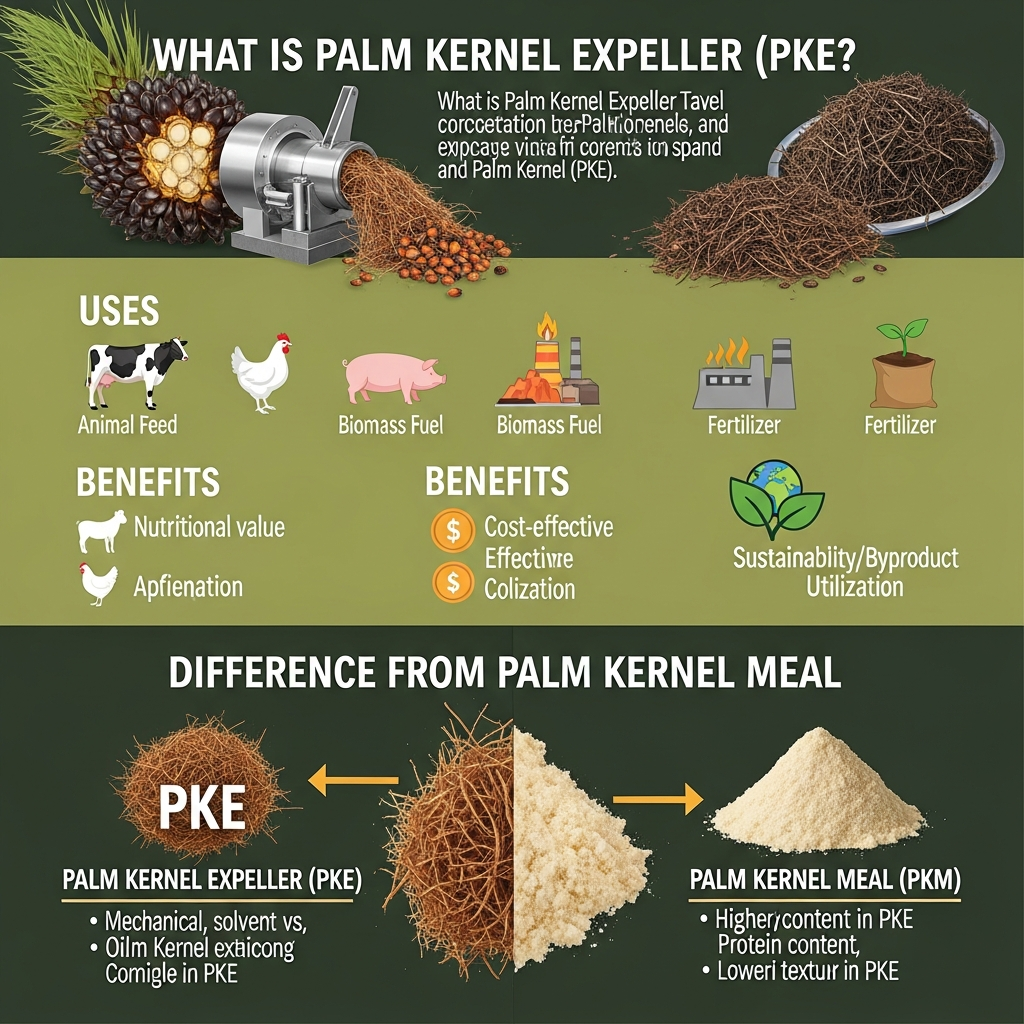
Palm Kernel Expeller (PKE), often referred to as Palm Kernel Cake (PKC) in certain regions, is a byproduct obtained from the extraction of oil from palm kernels. Unlike solvent extraction methods that strip almost all oil, PKE is produced using a mechanical screw press method. This process leaves a residual oil content of approximately 6% to 12%, making it an energy-dense feed ingredient particularly suitable for ruminants.
As experts in the palm derivative industry, we understand that quality varies significantly based on the extraction process. PKE is characterized by its gritty, fibrous texture and brownish color. It serves as a balanced source of energy, protein, and fiber, positioning it as a staple in animal nutrition strategies across New Zealand, Europe, and Asia.
For those looking to source premium feed ingredients, high-quality Palm Kernel Expeller provides a consistent nutrient profile that ensures herd health and productivity.
How Palm Kernel Expeller is Produced
Understanding the production process is vital for assessing the quality of the feed. The journey begins with the oil palm fruit, specifically the kernel found inside the nut.
- Crushing: The palm kernels are crushed to break the hard outer shell.
- Heating: The kernels are steam-conditioned to facilitate oil release.
- Mechanical Extraction: A screw press squeezes the oil out of the kernels. The solid residue that remains is the Palm Kernel Expeller.
This mechanical method contrasts with solvent extraction, which uses chemicals like hexane to remove oil, resulting in “Palm Kernel Meal” (PKM). Because no chemicals are used in the PKE process, it retains a higher oil content and is often considered a more natural feed option.
According to a report by the Wikipedia entry on Palm Kernel Oil, the mechanical extraction method is preferred for preserving the fat content that provides essential energy for livestock.
Nutritional Composition of Palm Kernel Expeller
The value of PKE lies in its unique nutritional makeup. It is neither solely a protein source nor just an energy source; it is a hybrid feed that offers a balanced release of nutrients.
| Parameter | Average Value (%) | Function for Livestock |
|---|---|---|
| Crude Protein | 14% – 17% | Supports muscle growth and repair. |
| Crude Fat (Oil) | 6% – 10% | Provides concentrated energy. |
| Crude Fiber | 12% – 18% | Promotes healthy rumen fermentation. |
| Metabolizable Energy (ME) | 10.5 – 11.5 MJ/kg | Fuel for maintenance and production. |
| Moisture | Max 10% | Ensures storage stability. |
While PKE is a moderate protein source, it can be effectively supplemented with Copra Meal for a different amino acid profile or combined with high-energy fats like Calcium Salts of Palm Oil Fatty Acids to boost energy density further for high-yielding dairy cows.
7 Proven Benefits of Palm Kernel Expeller for Livestock
Incorporating PKE into animal diets offers multifaceted advantages. Here are the seven most significant benefits proven by industry practice and research.
1. Enhances Milk Production in Dairy Cattle
Research published in the Journal of Dairy Science suggests that the fat content in PKE helps increase milk fat percentage. The moderate protein and high energy levels support sustained lactation without causing acidosis, a common issue with starchy feeds. Farmers often report improved milk solids when introducing PKE into the TMR (Total Mixed Ration).
2. Cost-Effective Feed Alternative
Compared to corn or soybean meal, PKE is significantly more affordable. It allows farmers to cheapen their ration cost while maintaining the necessary caloric intake for their animals. In the volatile markets of 2026, this economic advantage is a game-changer for maintaining profitability in dairy and beef operations.
3. High Fiber Content for Ruminant Health
The fibrous nature of PKE stimulates rumination (chewing the cud), which produces saliva and buffers the rumen pH. This reduces the risk of metabolic disorders and keeps the digestive system functioning optimally. It acts as a safe feed that balances out rapidly fermentable carbohydrates found in lush grass or grain-heavy diets.
4. Excellent Source of Bypass Protein
A portion of the protein in PKE escapes degradation in the rumen and is absorbed directly in the small intestine. This “bypass protein” is crucial for high-producing animals that require amino acids for tissue synthesis and milk protein production, ensuring that nutrient intake translates directly to output.
5. Improves Beef Cattle Weight Gain
For beef finishing systems, the energy density from the residual oil aids in marbling and steady weight gain. It serves as an excellent filler feed that keeps cattle satiated while providing the calories needed for growth. Field trials have shown that cattle fed a PKE-blend diet maintain consistent body condition scores even during pasture deficits.
6. Long Shelf Life and Storage Stability
Due to its lower moisture content and processing method, PKE has a long shelf life if stored correctly. It is less prone to rancidity compared to full-fat oilseeds, allowing farmers to buy in bulk and save on logistics. This stability makes it an ideal buffer feed to stockpile for drought seasons or winter months.
7. Sustainable and Eco-Friendly
Utilizing PKE contributes to a circular economy. By repurposing the residue of palm oil extraction, the industry reduces waste. Additionally, using PKE can reduce the reliance on crops that require extensive land use specifically for feed, such as dedicated corn silage fields.
Palm Kernel Expeller vs. Palm Kernel Meal: Key Differences
A common source of confusion is the difference between Expeller (PKE) and Meal (PKM). While they come from the same origin, their processing defines their nutritional value.
- Palm Kernel Expeller (PKE): Mechanical extraction. Contains 6-10% oil. Higher energy. Better for animals requiring caloric density.
- Palm Kernel Meal (PKM): Solvent extraction. Contains <2% oil. Lower energy. Often higher in protein percentage due to the removal of fat mass.
For most ruminant diets, the extra energy in PKE makes it the superior choice. However, for monogastrics like pigs or poultry, where high fiber and oil might be limiting factors, the meal version or other alternatives might be considered. Always consult a nutritionist when switching between these products.
Furthermore, other byproducts like Palm Kernel Shell are used for biomass energy rather than feed, highlighting the versatility of the oil palm tree.
Feeding Guidelines and Recommendations
Integrating Palm Kernel Expeller into a livestock diet requires careful planning to maximize benefits and avoid digestive upset.
Introduction Period
Like any new feed, PKE should be introduced gradually over 7 to 10 days. This allows the rumen microbes to adapt to the new fiber and protein structure. Start with small amounts (e.g., 0.5 kg per head per day) and gradually increase to the target inclusion rate.
Recommended Inclusion Rates
- Dairy Cows: Up to 20-30% of total dry matter intake (typically 3-6 kg per cow per day).
- Beef Cattle: Can be fed ad-libitum in pasture-based systems, or up to 40% in feedlot rations.
- Sheep and Goats: Use with caution due to copper sensitivity; typical rates are lower, around 10-15%.
It is important to ensure access to fresh water at all times, as the dry nature of PKE increases water consumption.
Global Market Trends 2026
According to the Food and Agriculture Organization (FAO), the trade of oilseed meals is projected to grow steadily. In 2026, we are seeing a shift towards sustainable sourcing. Importers in New Zealand, the EU, and South Korea are increasingly demanding traceability and sustainability certifications (like RSPO) for their feed ingredients.
The market is also witnessing a rise in “blended” feed products, where PKE is mixed with molasses or minerals to create a complete supplement pellet, reducing wastage and improving palatability. Prices are expected to remain competitive compared to soy and corn, cementing PKE’s role as a staple feed ingredient.
Additionally, innovations in logistics have improved the quality of PKE upon arrival, with better moisture control during shipping preventing mold growth.
Makmur Amanah Sejahtera provides high-quality palm products such as Palm Kernel Expeller, Palm Kernel Shell, Crude Palm Oil, Palm Kernel Oil, etc. Kindly contact us at WhatsApp +6282140002198 or email us at admin@makmuramanah.co.id.
Frequently Asked Questions
Is Palm Kernel Expeller safe for dairy cows?
Yes, PKE is widely used and safe for dairy cows. It is a common supplementary feed in New Zealand and Australia. However, it is essential to introduce it gradually to the diet to allow the rumen bacteria to adapt. It is also recommended to ensure adequate copper supplementation management, as PKE can sometimes contain high levels of copper.
What is the recommended inclusion rate for PKE?
For adult cattle, Palm Kernel Expeller can generally be included at rates of up to 20-30% of the total dry matter intake. Higher inclusion rates are possible but should be balanced with calcium and other minerals. Always consult a vet or nutritionist for specific herd formulations.
Can PKE be fed to horses or poultry?
PKE is primarily a ruminant feed. It is not ideal for poultry due to its high fiber content and low digestibility for monogastrics. For horses, it can be used in small amounts as a cool energy source, but it is not a standard equine feed compared to oats or beet pulp.
How should Palm Kernel Expeller be stored?
PKE should be stored in a cool, dry, and well-ventilated area to prevent mold growth. Bunker storage with concrete floors is ideal. If stored outdoors, it must be covered with waterproof tarps to protect it from rain, as moisture levels above 10% can lead to spoilage and heating.
Does PKE affect the taste of milk?
When fed within recommended limits, PKE does not negatively affect the taste of milk. In fact, the fat content can improve milk solids, which is beneficial for butter and cheese production. Overfeeding, however, should be avoided to maintain optimal milk composition.
Conclusion
As the agricultural industry advances into 2026, Palm Kernel Expeller remains a cornerstone of efficient livestock production. Its unique combination of energy, protein, and fiber offers a versatile solution for farmers aiming to optimize herd health and profitability. By understanding the differences between PKE and Palm Kernel Meal, and by sourcing from reputable suppliers, you can ensure your livestock receives the highest quality nutrition available.
Whether you are formulating rations for dairy cows or finishing beef cattle, PKE provides the “proven” results necessary to stay competitive. Don’t overlook this powerful byproduct; integrate it into your feed strategy today for a more sustainable and profitable tomorrow.
 English
  Indonesian
  Chinese
  Arabic