
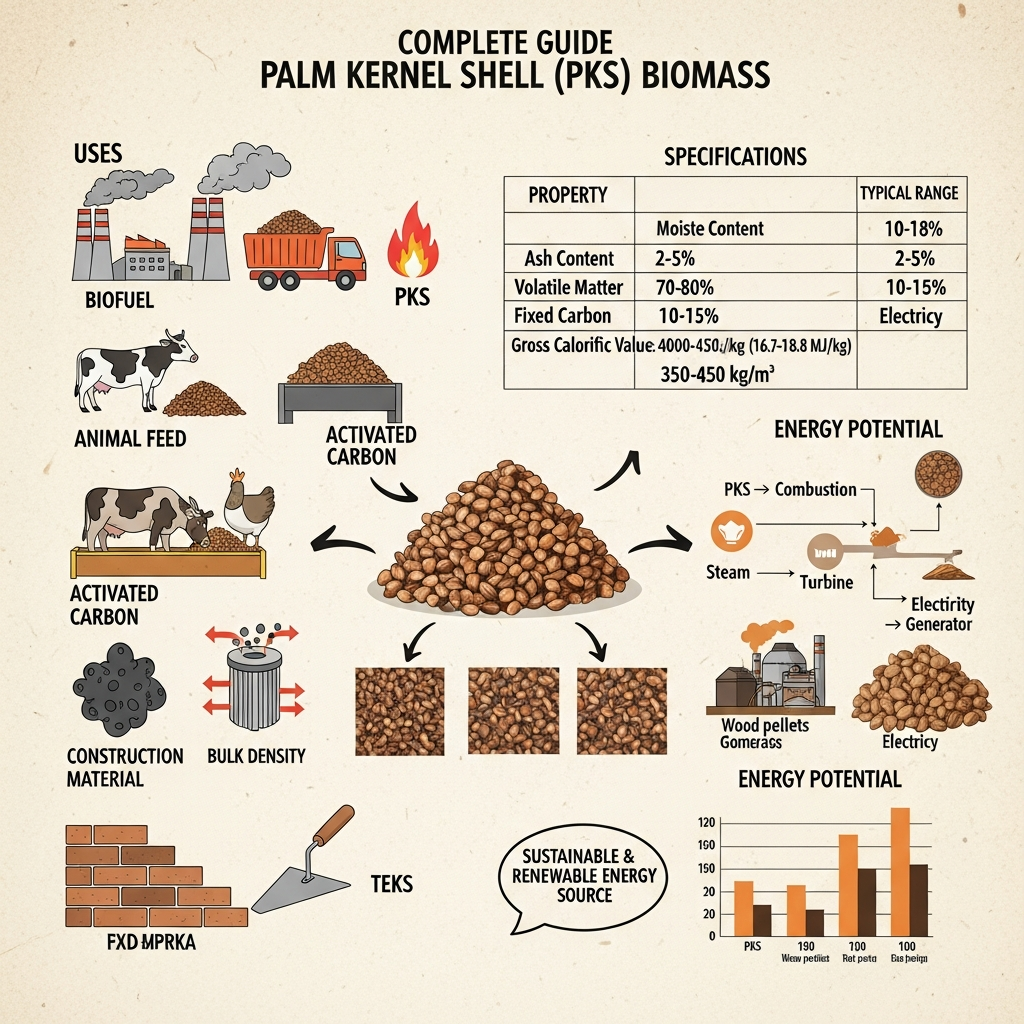
Palm Kernel Shell is rapidly emerging as the premier biomass fuel solution for industries seeking sustainable and high-calorific energy sources in 2026. As global environmental regulations tighten, the shift from fossil fuels to renewable agricultural residues has accelerated, positioning PKS as a critical commodity in the green energy transition. This comprehensive guide explores the technical specifications, versatile uses, and economic advantages of integrating this powerhouse biomass into your energy mix.
What is Palm Kernel Shell (PKS)?
Palm Kernel Shell (often abbreviated as PKS) is a fibrous, high-grade solid biofuel derived from the palm oil extraction process. It is the hard endocarp that surrounds the palm seed (kernel) and is obtained after the nut has been crushed to extract the kernel oil. Unlike other biomass residues that require extensive processing, PKS is a ready-to-use fuel source with high density and low moisture content.
Historically considered waste, it is now valued as a “green coal” substitute. In the context of the 2026 renewable energy landscape, Palm Kernel Shell stands out because it requires minimal processing before combustion, making it highly cost-effective for power plants and industrial boilers.
The Production Process from Palm Oil Mills
The journey of PKS begins at the palm oil mill. Fresh Fruit Bunches (FFB) are processed to separate the crude palm oil from the nuts. The nuts are then cracked to release the kernel (used for Palm Kernel Oil). The remaining hard shell fragments become the commercially valuable biomass known as PKS. This process ensures a consistent supply chain, particularly from major producers like Indonesia.
Key Specifications of High-Quality Palm Kernel Shell
Understanding the technical specifications is crucial for maximizing boiler efficiency. High-quality Palm Kernel Shell boasts properties that rival traditional fossil fuels while remaining carbon neutral.
| Parameter | Typical Value | Benefit |
|---|---|---|
| Calorific Value (LHV) | 4,000 – 4,200 kcal/kg | High energy output comparable to lignite coal. |
| Moisture Content | 15% – 20% (Received) | Ensures efficient combustion without pre-drying. |
| Ash Content | < 3.0% | Reduces boiler fouling and maintenance costs. |
| Sulfur Content | < 0.1% | Environmentally friendly; reduces SOx emissions. |
| Carbon Content | ~45% | Clean burning with lower smoke generation. |
| Volatile Matter | 65% – 70% | Promotes rapid ignition and steady combustion. |
These specifications make PKS superior to other biomass options like wood chips, which often have higher moisture content. For detailed lab reports on biomass energy potential, organizations like the International Energy Agency (IEA) provide extensive data on solid biofuels.
Screened vs. Unscreened Palm Kernel Shell
When purchasing PKS, buyers must choose between screened and unscreened varieties. Screened Palm Kernel Shell undergoes a cleaning process to remove foreign matter such as stones, sand, and dust, ensuring an ash content below 3%. This premium grade is ideal for sensitive boilers. Unscreened PKS is cheaper but may contain up to 5-10% impurities, suitable only for robust combustion systems with advanced ash handling capabilities.
7 Proven Uses of Palm Kernel Shell in 2026
The versatility of Palm Kernel Shell extends beyond simple burning. In 2026, innovative applications have expanded its market utility significantly.
- Industrial Boiler Fuel: The primary use remains as a feedstock for steam boilers in textile, food processing, and chemical industries. Its high volatility allows for quick steam generation.
- Power Plant Co-firing: Many coal-fired power plants now co-fire with PKS to meet renewable energy quotas. This practice reduces the plant’s overall carbon footprint without requiring expensive retrofits.
- Activated Carbon Production: Due to its high density and carbon content, PKS is an excellent raw material for producing high-quality activated carbon used in water filtration and air purification systems.
- Biomass Briquettes/Pellets: Compressed PKS dust and shells are formed into pellets for household heating and smaller industrial stoves, offering a cleaner alternative to firewood.
- Road Hardening Material: In rural plantations, raw shells are used to surface roads, providing a durable, non-slip layer during rainy seasons.
- Concrete Aggregate: Construction research indicates PKS can serve as a lightweight aggregate in non-structural concrete, reducing building dead weight while maintaining structural integrity.
- Biosyngas Production: Advanced gasification processes convert PKS into syngas for electricity generation or chemical synthesis, representing the cutting edge of biomass technology.
Palm Kernel Shell vs. Coal and Wood Pellets
One of the most frequent debates in the energy sector is the comparison between Palm Kernel Shell and coal. While coal has historically been the king of industrial fuel, PKS is usurping the throne in the sustainability era.
Environmental Impact & Carbon Neutrality
Coal is a fossil fuel that releases sequestered carbon dioxide, contributing heavily to global warming. In contrast, PKS is biogenic; the CO2 released during combustion was absorbed by the oil palm tree during its growth, making the cycle nearly carbon neutral. Furthermore, the sulfur content in PKS is negligible compared to coal, significantly reducing acid rain contributors.
Economic Feasibility
While the calorific value of PKS (approx. 4,200 kcal/kg) is slightly lower than high-grade bituminous coal, it is often cheaper per ton, especially in Southeast Asia. Additionally, using PKS eliminates carbon taxes in many jurisdictions, offering a hidden economic advantage. For industries looking to diversify their biomass intake, alternatives like Palm Kernel Expeller or Copra Meal can also be considered for different agricultural applications, though PKS remains king for energy.
According to research published in ScienceDirect, co-firing biomass like PKS with coal can increase overall boiler efficiency while reducing slagging issues common with other agricultural residues.
Sourcing and Exporting PKS from Indonesia
Indonesia is the world’s largest producer of palm oil, and consequently, the largest supplier of Palm Kernel Shell. Sourcing from this region guarantees availability throughout the year, unlike seasonal crops. The islands of Sumatra and Kalimantan are the primary hubs for high-volume exports.
When sourcing PKS, buyers must ensure the supplier adheres to strict quality controls regarding foreign matter (stones, sand) and moisture levels. Reputable suppliers screen their shells to remove impurities that could damage boiler grates. At Makmur Amanah Sejahtera, we prioritize these quality metrics. Whether you need Palm Kernel Shell for energy or Cocopeat for agriculture, trusting an experienced exporter is vital.
Logistics and Handling Best Practices
PKS is typically transported in bulk shipments. Due to its flowable nature, it is easy to handle with conveyors and grabs. However, proper storage is essential to prevent moisture re-absorption. Unlike liquid products like RBD CP8 (palm olein) which requires tank storage, PKS can be stored in covered open yards. Proper ventilation is critical to prevent self-heating in large stockpiles.
For more insights on global trade standards, the World Trade Organization outlines specific regulations for biomass transport that exporters must follow. Additionally, sustainability certifications such as the Roundtable on Sustainable Palm Oil (RSPO) are becoming increasingly important for buyers in the European and Japanese markets.
Future Outlook: The Global Biomass Market 2026
As we move through 2026, the demand for Palm Kernel Shell is projected to rise. Japan and South Korea continue to be major importers, driven by their Feed-in Tariff (FIT) schemes for renewable energy. The market is maturing, with standardized contracts becoming the norm.
Innovations in torrefaction (roasting biomass to improve fuel properties) are also making PKS an even more attractive commodity. Torrefied PKS has a higher energy density and is hydrophobic, allowing for outdoor storage without degradation. This processed form behaves more like coal, allowing for higher co-firing ratios in existing power plants.
Makmur Amanah Sejahtera provides high-quality palm products such as Palm Kernel Expeller, Palm Kernel Shell, Crude Palm Oil, Palm Kernel Oil, etc. Kindly contact us at WhatsApp +6282140002198 or email us at admin@makmuramanah.co.id.
Frequently Asked Questions
What is the calorific value of Palm Kernel Shell?
The calorific value of Palm Kernel Shell typically ranges from 4,000 to 4,200 kcal/kg (LHV). This high energy content makes it comparable to certain grades of thermal coal, allowing for efficient heat generation in industrial boilers.
Is Palm Kernel Shell environmentally friendly?
Yes, PKS is considered a carbon-neutral biomass fuel. The carbon dioxide emitted during combustion is roughly equivalent to the amount absorbed by the oil palm tree during its lifetime. Additionally, it contains very low sulfur, reducing harmful emissions.
Can PKS be used in standard coal boilers?
PKS can often be used in coal boilers with little to no modification, particularly for co-firing. Its combustion properties are similar enough to coal that it serves as an excellent drop-in replacement or supplementary fuel source.
How should Palm Kernel Shell be stored?
PKS should be stored in a dry, covered area to maintain its low moisture content. While it is more resistant to moisture than wood chips, keeping it dry ensures maximum combustion efficiency and prevents biological degradation.
What is the difference between PKS and Palm Kernel Expeller?
Palm Kernel Shell is the hard outer shell used primarily for fuel. Palm Kernel Expeller (PKE) is the byproduct of the kernel itself after oil extraction, primarily used as high-protein animal feed. They serve completely different market needs.
Conclusion
In conclusion, Palm Kernel Shell represents a critical component of the sustainable energy future in 2026. Its high calorific value, low impurities, and carbon-neutral profile make it the ideal choice for industries looking to optimize fuel costs while adhering to environmental standards. Whether used for direct combustion, co-firing, or activated carbon production, PKS offers reliability and efficiency.
By securing a high-quality supply of Palm Kernel Shell, businesses can ensure operational stability. For other palm derivatives like Calcium Salts of Palm Oil Fatty Acids or general biomass needs, always choose a trusted partner committed to excellence.
 English
  Indonesian
  Chinese
  Arabic