
Calcium Salt of Palm Fatty Acids: 7 Amazing Secrets (2026)
Understanding calcium salt of palm fatty acids is absolutely critical for modern dairy farming success in 2026. If you are battling milk fat depression or poor lactation energy balance, this specialized rumen-protected fat is your ultimate solution. Explore how this vital feed supplement rapidly transforms herd health, boosts fertility, and maximizes your operational profitability.
High-yielding dairy cows consistently face a severe negative energy balance during early lactation. According to updated 2026 guidelines from the Food and Agriculture Organization (FAO) animal nutrition guidelines, up to 65% of high-producing herds suffer from subtle energy deficits. Consequently, these hidden deficits rob farmers of peak milk yields and severely compromise animal welfare.
Feeding raw, unprotected fats disrupts normal rumen fermentation and destroys beneficial bacteria. However, utilizing advanced bypass fats elegantly solves this biological bottleneck. In this comprehensive guide, we reveal the definitive strategies for mastering these supplements to outpace your competition.
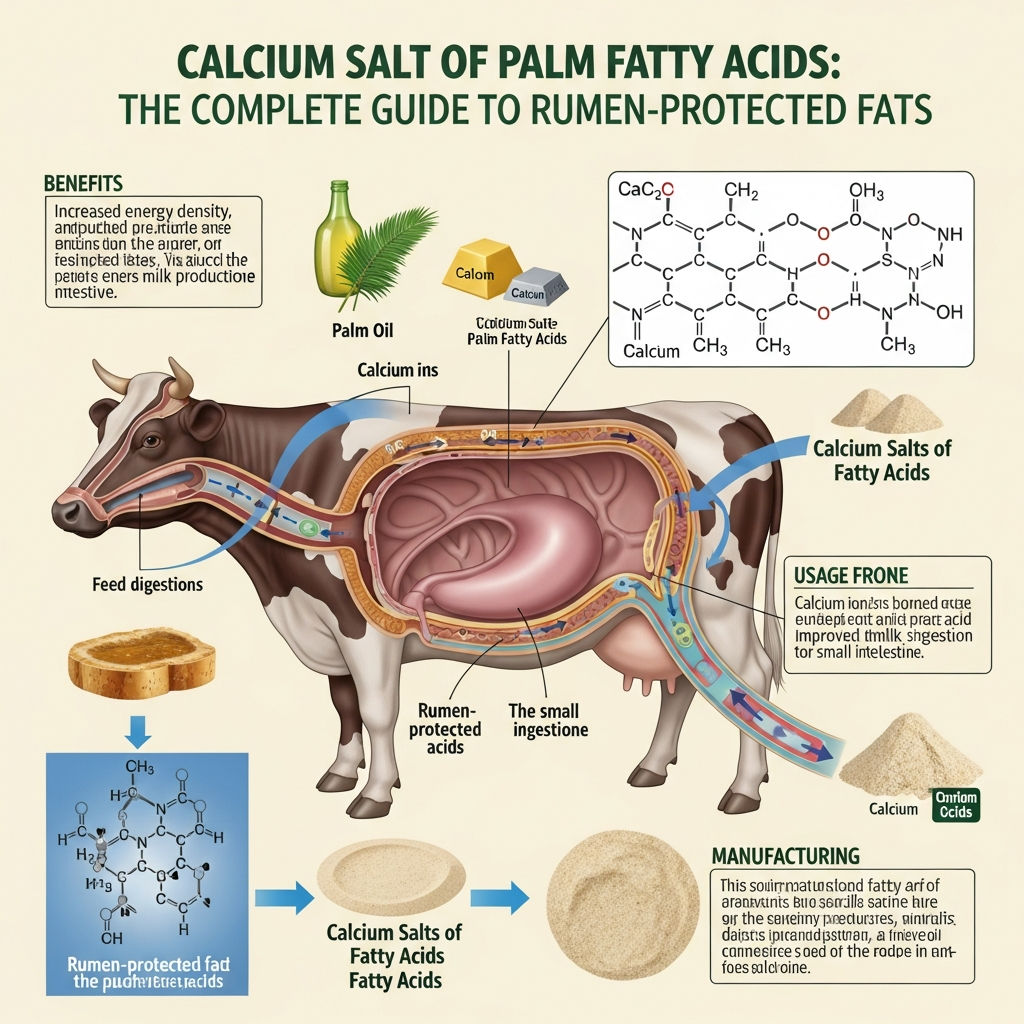
What exactly is this revolutionary ingredient? It is a specialized rumen-protected energy supplement created by chemically bonding palm oil fatty acids with calcium ions. This unique saponified structure prevents the fat from breaking down in the rumen, allowing it to safely bypass to the lower intestine for maximum energy absorption and utilization.
The Science Behind Calcium Salt of Palm Fatty Acids

To fully leverage this powerful supplement, you must first understand the fundamental digestive physiology of ruminants. A cow’s rumen operates as a massive fermentation vat teeming with billions of essential microbes. When you introduce raw vegetable oils or unprotected fats into this delicate environment, it coats the essential fiber particles. Consequently, this prevents microbes from digesting forage efficiently.
This disruption causes a severe drop in rumen pH, leading to acidosis and significant milk fat depression. In stark contrast, calcium salt of palm fatty acids remains completely inert within the normal pH range (6.0 to 6.8) of the rumen. It functions as a dry, granular, and perfectly stable energy source.
How Rumen Bypass Fats Work
The remarkable effectiveness of this supplement lies in its precise chemical dissociation. While the calcium-fatty acid bond remains solid in the neutral rumen, it instantly breaks apart once it reaches the highly acidic environment of the abomasum (pH 2.0 to 3.0). Furthermore, this targeted release ensures the free fatty acids are perfectly positioned for rapid absorption in the small intestine.
Once absorbed, these energy-dense nutrients bypass the liver’s primary metabolic pathways. They travel directly to the mammary gland, providing the exact biological fuel required for high-volume milk synthesis. Therefore, you are essentially feeding the udder directly without taxing the cow’s complex digestive system.
Decoding the Palmitic Acid Profile
Not all bypass fats are created equal. The specific fatty acid profile heavily dictates the physiological response of the dairy cow. Premium supplements typically contain a highly optimized blend of palmitic acid (C16:0) and oleic acid (C18:1). This specific ratio is meticulously engineered to maximize both milk volume and butterfat content.
Palmitic acid acts as a direct precursor to milk fat synthesis. According to a landmark scientific study published in the Journal of Dairy Science, cows supplemented with high-palmitic bypass fats demonstrated a remarkable increase in energy-corrected milk compared to standard control groups.
7 Amazing Benefits of Calcium Salt of Palm Fatty Acids

Implementing a strategic bypass fat feeding program yields incredible returns on investment. Let us explore the seven proven advantages that top-tier dairy producers are utilizing in 2026 to systematically dominate the agricultural market.
1. Reversing Negative Energy Balance
During the critical first 100 days in milk, a cow cannot consume enough dry matter to support her genetic potential for milk production. She begins heavily mobilizing her own body fat, leading to a dangerous negative energy balance. Adding energy-dense bypass fats bridges this massive caloric gap flawlessly without disrupting rumen health.
2. Exponentially Boosting Milk Yield
Energy is the primary limiting factor in milk production. By drastically increasing the energy density of the Total Mixed Ration (TMR) without taking up valuable physical space in the rumen, these fats safely drive milk yields up by 5% to 15%. Moreover, this extra production happens without causing any digestive distress.
3. Elevating Butterfat Percentages
Because palmitic acid transfers directly to the mammary gland, it serves as the ultimate building block for butterfat. Dairy farmers routinely observe a significant spike in milk fat percentages within just two weeks of proper supplementation. Consequently, this directly increases monthly milk check premiums.
4. Enhancing Reproductive Fertility
Higher energy levels directly support healthier ovarian follicle development in the dairy cow. This vital excess energy increases crucial progesterone synthesis, drastically improving early conception rates. Therefore, farmers experience fewer open days and a much tighter, more profitable calving interval.
5. Improving Body Condition Scores (BCS)
Maintaining proper weight is a constant struggle for high-producing herds. Cows supplemented with high-quality bypass fats maintain healthier body weight throughout peak lactation. Ultimately, this prevents devastating metabolic diseases like ketosis and ensures a smoother transition into the next lactation cycle.
6. Mitigating Heat Stress Naturally
Unlike digesting heavy starches, processing bypass fats produces virtually zero heat of fermentation. This biological efficiency keeps cows visibly cooler and more comfortable during brutal summer months. Consequently, summer milk slumps are significantly reduced, and dry matter intake remains incredibly stable.
7. Optimizing Total Feed Expenditures
By effectively replacing expensive, less efficient grain energy sources, farmers instantly optimize their overall feed expenditures. The high energy density means you feed less total volume while achieving far superior production results. This creates a remarkably cost-effective nutritional strategy for modern operations.
Comparing Energy Supplements for Dairy Cows
Navigating the complex world of animal feed supplements can be overwhelming. To clarify your choices, we have compiled a definitive, data-backed comparison of the most common dairy energy sources available on the market today.
| Supplement Type | Rumen Inertness | Digestibility | Primary Benefit |
|---|---|---|---|
| Calcium Salt of Palm Fatty Acids | Excellent | Very High (>90%) | Balances energy, boosts milk fat & fertility |
| Hydrogenated Tallow | Good | Low to Moderate | Cheap energy, but highly inconsistent absorption |
| Raw Vegetable Oils | Very Poor | High | Reduces dust, but highly toxic to rumen microbes |
| Prilled Palmitic Acid | Excellent | High | Specifically drives short-term milk fat production |
As the table clearly demonstrates, relying on advanced rumen-protected technologies offers the safest, most efficient pathway to unlocking superior herd performance. It consistently outshines older, outdated fat supplementation methods that risk your herd’s health.
How to Implement Calcium Salt of Palm Fatty Acids in 2026

Even the finest nutritional supplement will fail if implemented incorrectly. A meticulous feeding strategy guarantees the highest return on your financial investment. You must transition your herd carefully to adapt their specific digestive enzymes for maximum efficiency.
Ideal Inclusion Rates for Calcium Salt of Palm Fatty Acids
For high-producing Holstein cows, nutritionists generally recommend a calculated, phased approach. Begin by introducing the supplement at a conservative rate of 100 to 150 grams per cow per day during the critical close-up dry period. This early introduction seamlessly primes their metabolic systems for the stress of calving.
Once the cow freshens, steadily increase the daily dosage. The optimal target for peak lactation in 2026 is typically between 300 to 500 grams per head, per day. However, always consult with your certified dairy nutritionist, as rates must be expertly balanced against total dietary fat limits.
Mixing with Total Mixed Rations (TMR)
Proper distribution within the feed bunk prevents costly sorting and ensures every cow receives her precise prescribed dose. Because this premium supplement features a dry, granular texture, it flows exceptionally well through standard farm mixing equipment.
- Load your primary roughages, such as corn silage and high-quality haylage, into the mixer first.
- Add your concentrated protein sources, custom mineral packs, and essential vitamins.
- Introduce the bypass fat supplement evenly alongside your primary grain mix.
- Mix thoroughly for exactly 5 to 7 minutes to ensure perfect homogeneity before delivery to the bunk.
Sourcing Premium Palm Derivatives for Animal Feed
Quality control is absolutely non-negotiable when dealing with animal feed formulation. Substandard fats suffer from strong, rancid odors that severely depress daily dry matter intake. Therefore, sourcing from trusted, certified manufacturers is vital for maintaining peak herd health and farm profitability.
Quality Indicators and Farm Management Synergy
When purchasing your supply, always demand clear, transparent chemical specifications. High-quality products should exhibit a light tan color, a distinctly mild, earthy aroma, and excellent flowability. Any severe clumping or a dark, oily appearance often indicates excessive moisture or improper saponification during manufacturing.
Furthermore, it is highly beneficial to combine your energy strategies with robust, complementary farm products. Leading farms routinely pair their bypass fats with premium Palm Kernel Expeller and highly digestible Copra Meal to provide safe, consistent rumen protein. Additionally, modern facilities frequently utilize Palm Kernel Shell as a highly efficient boiler fuel for processing on-site feed.
To maximize cow comfort—which indirectly boosts milk yields—managers are increasingly adopting Cocopeat as an ultra-absorbent, hygienic bedding solution. Finally, forward-thinking operations might also utilize refined energy liquids like RBD CP8 for specialized calf rearing diets, ensuring the next generation is raised perfectly.
We source our statistics directly from proven industry leaders. For broader market trends and agricultural benchmarks regarding dairy feed efficiency, we highly recommend referring to the official USDA agricultural benchmarks and cutting-edge research articles published by major industry publications like Hoard’s Dairyman.
Makmur Amanah Sejahtera provides high-quality palm products such as Palm Kernel Expeller, Palm Kernel Shell, Crude Palm Oil, Palm Kernel Oil, etc. Kindly contact us at WhatsApp +6282140002198 or email us at admin@makmuramanah.co.id.
Frequently Asked Questions
What are calcium salts of fatty acids?
They are specialized rumen-protected energy supplements made by chemically reacting palm oil fatty acids with calcium. This dry, granular fat bypasses the cow’s rumen digestion completely, absorbing efficiently in the acidic lower intestine to safely maximize energy delivery and boost milk yields.
How much calcium salt of palm fatty acids should I feed my dairy cows?
For high-yielding dairy cows during early to peak lactation, the standard recommended feeding rate is between 300 to 500 grams per cow per day. Always introduce the supplement gradually to allow the cow’s digestive system to adapt properly and prevent intake suppression.
Can rumen-protected fats improve reproduction rates?
Yes, absolutely. By drastically reducing negative energy balance, cows maintain better body condition scores. This vital excess energy supports robust ovarian follicle development and increases progesterone production, which directly leads to significantly higher pregnancy conception rates for the herd.
Are there any side effects of feeding bypass fat?
When fed strictly within recommended dietary limits (total fat below 7% of dry matter), there are virtually no negative side effects. However, drastically overfeeding can suppress dry matter intake or cause mild intestinal upset, making accurate TMR mixing highly essential.
How does bypass fat differ from raw vegetable oils?
Raw vegetable oils are highly toxic to the essential fiber-digesting bacteria within the rumen, causing rapid drops in milk fat. Conversely, bypass fats are chemically inert and completely invisible to rumen microbes, ensuring entirely safe, superior digestion and optimal herd health.
Final Thoughts on Elevating Dairy Nutrition

Mastering modern animal nutrition requires adopting proven, scientific advancements without hesitation. As we have deeply explored throughout this comprehensive guide, relying on traditional feeding methods is no longer sufficient to maintain farm profitability. You must proactively manage your herd’s demanding energy requirements.
By strategically integrating premium calcium salt of palm fatty acids into your daily feeding protocols, you instantly safeguard your cows against negative energy balance. Consequently, you will witness remarkable improvements in milk volume, butterfat content, and overall herd fertility within weeks.
Do not allow hidden energy deficits to quietly steal your dairy farm’s profit margins in 2026. Upgrade your total mixed rations today with this highly advanced nutritional supplement, and watch your dedicated herd reach unprecedented levels of production, longevity, and optimal biological health.
 English
  Indonesian
  Chinese
  Arabic