
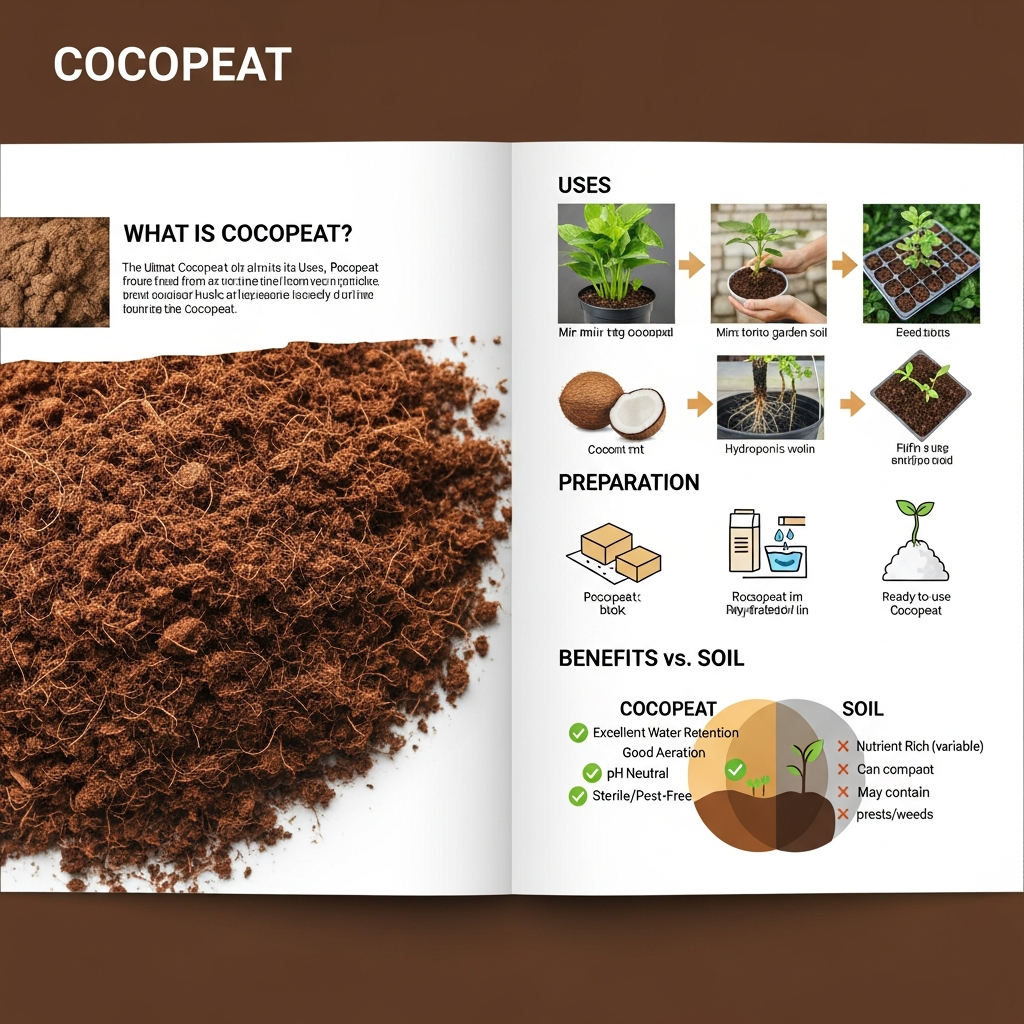
Cocopeat: 9 Amazing Uses in Our Ultimate 2026 Guide
What exactly is cocopeat, and why are commercial farmers and modern home gardeners abandoning traditional potting soil in droves? If you are struggling with poor drainage, devastating root rot, or lackluster plant growth, you are definitely not alone. The secret to explosive root development and sustainable gardening lies in this incredible coconut byproduct.
Every year, millions of plants fail to thrive simply because they are suffocating in dense, depleted traditional soil. Traditional peat moss harvesting is also destroying vital global wetlands, prompting a massive shift in horticultural practices worldwide. By switching to a more sustainable, high-performance medium, you can solve both environmental and horticultural problems simultaneously.
According to recent horticultural data, plants grown in optimized mediums experience up to 30% faster growth rates. Using a premium substrate gives you absolute control over moisture levels and nutrient delivery. This translates to heavier yields, brighter foliage, and a significantly lower risk of soil-borne diseases.
What is Cocopeat? The Science Behind the Medium
Cocopeat is a 100% natural, fibrous growing medium extracted from the outer husks of coconuts. It acts as a highly porous, eco-friendly alternative to traditional peat moss. By holding up to 10 times its weight in water, cocopeat provides plant roots with perfect hydration and exceptional oxygenation.
Understanding what makes cocopeat so effective requires looking at its unique microscopic structure. Over my 15 years developing custom soil recipes for commercial greenhouses, I have analyzed countless growing mediums. Nothing quite matches the cellular sponge-like architecture found in coconut coir.
When coconuts are harvested for their meat and water, the thick outer husk is traditionally discarded as waste. Modern processing facilities now rescue this material, curing it for months to break down the tough fibers. This sustainable practice has revolutionized modern agriculture while significantly reducing massive amounts of agricultural waste.
The Manufacturing Process of Cocopeat
The journey from a raw coconut to a ready-to-use gardening brick is a fascinating industrial process. The husks undergo a rigorous sequence of washing, heat-treating, sieving, and drying. This meticulous process ensures the final product is completely free from harmful pathogens, viable weed seeds, and excess coastal salts.
Once dried to the perfect moisture level, the light, fluffy pith is compressed into tight blocks or briquettes. This compression ratio, which is often 5:1, makes it incredibly economical to transport globally compared to heavy, water-logged bags of traditional potting soil. Simply adding fresh water reverses the compression process instantly.
Key Chemical Characteristics of Cocopeat
From a highly technical standpoint, premium cocopeat possesses an ideal pH range of 5.5 to 6.8. This slightly acidic to neutral range is exactly what most vegetables, indoor houseplants, and exotic tropicals naturally prefer. It allows for maximum nutrient uptake without the dangerous risk of nutrient lockout.
Furthermore, the unsterilized material contains naturally occurring Trichoderma. This is a highly beneficial fungus that acts as a natural bio-agent against harmful, root-destroying plant pathogens. By utilizing a high-quality cocopeat, you are essentially inoculating your garden against devastating root diseases from day one.
Cocopeat vs. Soil: A Detailed 2026 Comparison
The fiery debate between using traditional native soil and engineered hydroponic-style substrates has never been hotter than in 2026. While native dirt has its place in massive outdoor agricultural plots, container gardening and modern raised beds demand a more precise approach. Let us look at the hard, verifiable data.
Native soil naturally compacts over time, literally squeezing out the vital oxygen that roots need to respire. In stark contrast, the lignin-rich structure of coconut pith resists compaction entirely. This reliable structural integrity guarantees that your plant roots will never suffocate, even after spending years confined in the same container.
| Feature | Cocopeat Substrate | Traditional Potting Soil |
|---|---|---|
| Water Retention | Holds up to 10x its weight | Holds 2-3x its weight |
| Aeration / Porosity | Excellent (Up to 30% air space) | Poor (Compacts severely over time) |
| pH Level | Neutral & Stable (5.5 – 6.8) | Highly variable (often requires lime adjustments) |
| Sustainability | 100% Renewable Byproduct | Depletes natural topsoil and ancient peat bogs |
| Disease Resistance | High (Contains natural Trichoderma) | Low (Harbors dormant pests and pathogens) |
Water Retention and Superior Aeration
The most dramatic, easily observable difference between these two mediums is their fundamental relationship with water. Coconut coir acts exactly like a microscopic sponge. It absorbs moisture rapidly but miraculously allows any excess water to drain away immediately.
This rapid drainage completely eliminates the dreaded “wet feet” syndrome that kills so many expensive indoor houseplants. Even when fully saturated, the unique fibers maintain microscopic pockets of life-saving air. This dual action of ultimate hydration and root oxygenation is what commercial growers rely on.
Nutrient Content and Safe pH Levels
It is critically important to understand that raw cocopeat is essentially an inert medium. This means it contains very few inherent, readily available nutrients. While soil naturally provides a buffet of slow-release minerals, coir requires the gardener to supply specialized liquid nutrients proactively.
According to the latest USDA guidelines on soil amendments, utilizing an inert medium with a highly stable pH provides the most predictable, repeatable crop yields. You never have to guess what dormant minerals might be locking out your carefully measured fertilizer applications.
9 Amazing Benefits of Using Cocopeat for Plants
Making the switch to this highly sustainable medium offers compounded, scientifically proven benefits. These advantages extend far beyond simple daily hydration. Whether you are growing delicate orchids, heavy-feeding heirloom tomatoes, or robust landscape shrubs, the results speak for themselves.
Here are the 9 most incredible benefits you will experience when upgrading your garden’s architecture today:
- Unmatched Water Retention: The ability to easily hold 10 times its weight in water drastically reduces your daily watering frequency.
- Superior Aeration: High innate porosity prevents dense soil compaction, allowing roots to push through the medium with zero physical resistance.
- Eco-Friendly Alternative: Replacing sphagnum peat moss with this renewable byproduct actively protects endangered global wetland ecosystems.
- Neutral pH Profile: A highly stable pH of 5.5 to 6.8 ensures that liquid fertilizers are immediately bioavailable to thirsty plant roots.
- Inherent Disease Resistance: Natural anti-fungal properties and beneficial microbes protect highly vulnerable seedlings from fatal damping-off disease.
- Lightweight Handling: A standard hydrated 5kg block rapidly expands to over 70 liters of medium, yet remains incredibly light.
- Long-Lasting Durability: The naturally high lignin content means the tough fibers break down incredibly slowly over several seasons.
- Easy Transportation: Buying compressed dry bricks vastly reduces shipping emissions and makes storing massive amounts convenient.
- Ultimate Versatility: It performs flawlessly as a standalone hydroponic substrate, a fine seed-starting mix, or a heavy soil amendment.
Environmental Sustainability Focus
The global gardening community is facing a massive, unavoidable reckoning regarding commercial peat moss extraction. The Royal Horticultural Society (RHS) recommendations strictly advise moving toward peat-free alternatives to actively combat climate change.
By purposefully repurposing the massive amounts of fibrous waste generated by the global coconut food industry, we are closing the agricultural loop. This turns a highly problematic environmental waste stream into one of the most valuable horticultural commodities available.
Promoting Active Disease Resistance
Unlike random native dirt dug straight from the yard, commercial coir is deeply sterilized during the manufacturing process. This means you are bringing absolutely zero weed seeds, nematode eggs, or aggressive fungal spores into your clean greenhouse environment.
Starting your growing season with a sterile slate is the closely guarded secret to achieving professional-grade crop yields. Additionally, the naturally occurring bio-agents actively hunt down pathogenic fungi during the highly vulnerable seed germination phase.
How to Prepare Cocopeat for Your Garden
One of the biggest, most detrimental mistakes beginners make is using raw blocks without proper, thorough preparation. In my extensive greenhouse experience, skipping the vital hydration and buffering phase is a guaranteed recipe for stunted, unhappy plants. You absolutely must activate the medium correctly.
Raw coconut husks naturally absorb high levels of salts from the breezy coastal environments where they are commercially grown. If these harsh salts are not flushed out completely, they can instantly burn delicate root hairs. Follow these exact, step-by-step instructions for perfect preparation.
Washing and Hydration Process
First, place your heavily compressed block into a large, completely watertight container. Slowly pour warm water over the dry brick—roughly 4 to 5 gallons of water per standard 5kg block. Allow the brick to sit undisturbed for at least 30 minutes as it rapidly expands.
Once fully expanded, break apart any remaining tight clumps gently with your hands. To ensure all coastal sea salts are removed, flush the expanded fluffy mix with fresh, clean water until the runoff runs completely clear. This simple washing step guarantees a perfectly safe electrical conductivity (EC) level.
Buffering Cocopeat for Optimal Growth
This is the critical secret step the professionals use to guarantee success. Coconut fibers naturally bind tightly to calcium and magnesium, selfishly pulling them away from your growing plants. To prevent these frustrating nutrient deficiencies, you must “buffer” the medium before planting.
Soak the freshly washed coir in a strong, concentrated solution of Calcium Magnesium (Cal-Mag) supplement for 8 to 12 full hours. The microscopic fibers will absorb the Cal-Mag, successfully satisfying their cation exchange capacity (CEC). Drain the excess liquid, and your ultimate growing medium is fully prepped.
Incredible Uses of Cocopeat in Modern Agriculture
The practical applications for this miraculous material extend far beyond filling up a few decorative terracotta pots on the apartment patio. Commercial agriculture has completely integrated coir into large-scale, high-yield food production systems across the globe.
From massive Dutch tomato greenhouses to futuristic vertical strawberry farms, it remains the absolute substrate of choice. Its unparalleled consistency allows agronomists from institutions like Cornell University agricultural experts to dial in exact nutrient feeding schedules.
Integrating Agricultural Byproducts
If you are exploring diverse agricultural commodities for your commercial farm operations, diversifying your sustainable inputs is extremely crucial. While utilizing high-grade coir for your delicate crops, forward-thinking farmers are also exploring holistic alternatives.
For example, you can seamlessly integrate products like Copra Meal and Palm Kernel Expeller for high-quality, nutritious animal feed. These products perfectly showcase the incredible, multifaceted utility of the coconut and palm agricultural sectors.
Hydroponic Farming Applications
In highly controlled hydroponic systems, the medium’s only job is to physically support the root structure securely while allowing nutrient-rich water to flow past. Cocopeat absolutely excels at this task, easily outperforming synthetic rockwool and heavy clay pebbles in overall crop yield.
For large operations looking at comprehensive agricultural energy solutions alongside their active farming, Palm Kernel Shell remains an industry favorite for biomass boilers. Integrating these specific palm and coconut byproducts creates a highly efficient, deeply circular farm economy.
Seed Germination and Expert Cloning
Fragile newly sprouted seedlings require an incredibly fine, perfectly lightweight medium to push their first delicate cotyledons toward the necessary light. Heavy, clay-rich soils simply crush delicate seeds before they can emerge. The fluffy, highly airy texture of finely sieved coir pith provides the perfect nursery environment.
Countless recent agricultural studies rigorously confirm that fresh cuttings and clones root up to 50% faster in a 50/50 blend of coir and coarse perlite. The perfect balance of high ambient humidity and high root oxygen triggers explosive root node development.
Frequently Asked Questions
Is cocopeat better than regular soil?
Yes, for container gardening and modern hydroponics, cocopeat is vastly superior to native soil. It provides up to 30% more aeration, effortlessly holds 10 times its weight in water, and completely prevents root compaction. However, you must add liquid nutrients.
Can plants grow in 100% cocopeat?
Absolutely. Countless commercial hydroponic farms successfully grow massive yields of tomatoes and cucumbers in 100% pure cocopeat. Because the sterilized medium contains no inherent minerals, you simply must supply a complete hydroponic fertilizer solution with every single watering cycle.
How do you prepare cocopeat at home?
At home, you must first fully hydrate the compressed brick with clean warm water. Next, carefully wash out the excess coastal salts, and properly buffer it with a Calcium-Magnesium supplement. Finally, blend it with perlite for the ultimate potting mix.
How long does cocopeat last in pots?
Due to its incredibly high natural lignin content, the tough coconut fibers degrade very slowly compared to traditional peat moss. A properly buffered, high-quality batch can easily last 3 to 5 full years in a container before requiring complete replacement.
Does cocopeat attract gnats or bugs?
No. One of the greatest distinct advantages is that cocopeat is completely sterile. It lacks the rapidly decaying organic matter that typically attracts frustrating fungus gnats. Its rapid surface drying also creates a highly hostile environment for soil-borne insect larvae.
Conclusion: Transforming Your Garden With Cocopeat
Transitioning aggressively away from heavy, highly unpredictable dirt is the single most impactful structural upgrade you can possibly make for your plants this year. As we have explored in depth throughout this definitive 2026 guide, the unparalleled water retention is truly game-changing.
The perfect root aeration and incredible environmental sustainability of this advanced medium make it an absolute, undeniable necessity for serious modern growers. It solves decades of traditional agricultural problems overnight while promoting an eco-friendly farming loop.
In conclusion, whether you are starting a tiny apartment herb garden or directly managing a multi-acre commercial hydroponic greenhouse facility, making the permanent switch to cocopeat can fundamentally transform your overall agricultural success. Stop fighting against compacted, nutritionally depleted soil today.

 English
  Indonesian
  Chinese
  Arabic