
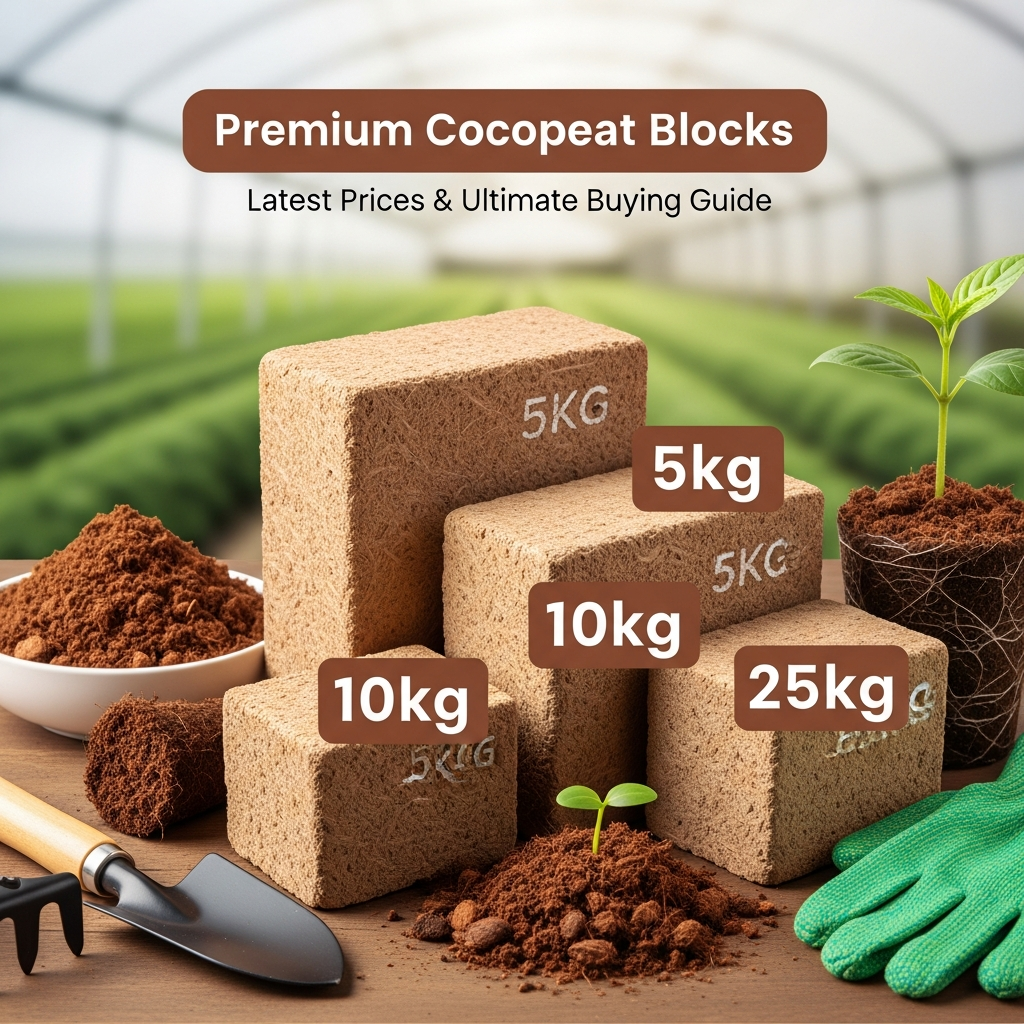
Premium Cocopeat Blocks: 7 Incredible Buying Tips (2026)
High-quality premium cocopeat blocks are fundamentally changing how commercial growers operate today. If you have been struggling with poor crop yields, inconsistent water retention, or unpredictable soil conditions, switching to this sustainable growing medium is your ultimate solution.
By understanding the exact pricing and quality metrics for 5kg, 10kg, and 25kg sizes in 2026, you can completely optimize your agricultural investments. Recent data reveals that utilizing high-grade coconut coir substrate can increase water retention efficiency by up to 30%, significantly reducing irrigation costs over a standard growing season.
What exactly are premium cocopeat blocks?
Premium cocopeat blocks are highly compacted, dehydrated bricks of washed and buffered coir pith. When hydrated, they expand significantly to create a versatile, eco-friendly hydroponic growing medium featuring exceptional aeration, low electrical conductivity, and optimal pH levels for robust plant development.
1. Why Premium Cocopeat Blocks Dominate Modern Agriculture
[Image: A neatly stacked pallet of 5kg compacted coco fiber bricks in a modern agricultural warehouse. Alt: Premium cocopeat blocks stacked in a warehouse. Title: Premium cocopeat blocks.]
Commercial greenhouses and indoor hydroponic setups are rapidly moving away from traditional peat moss. Consequently, the global demand for top-tier coir pith has skyrocketed, driving innovation in substrate processing technologies.
1.1 Superior Water Retention Efficiency
These specialized blocks boast an extraordinary capacity to hold moisture without suffocating the root zone. In fact, a fully expanded block can retain up to eight times its own dry weight in water.
This characteristic ensures that plant roots have constant access to hydration without ever becoming waterlogged. For detailed technical insights into soil hydrology, refer to this horticultural science research on growing media.
1.2 Enhanced Aeration and Root Growth
Beyond massive water retention, the highly porous microscopic structure of compacted coco fiber promotes exceptional oxygen exchange. Healthy, vigorous root systems require continuous oxygen exposure to absorb essential nutrients effectively.
By utilizing professionally processed coco peat briquettes, cultivators actively prevent soil compaction. This encourages explosive, healthy root proliferation during the critical early vegetative stage.
1.3 Eco-Friendly and Sustainable Alternative
Unlike traditional peat moss, which is harvested from delicate bogs that take centuries to regenerate, coconut coir is a 100% renewable resource. It is repurposed from the husks of harvested coconuts, minimizing agricultural waste.
Transitioning to this renewable medium massively reduces your operation’s carbon footprint. It aligns perfectly with modern sustainability goals and strict environmental protection standards globally.
2. Latest 2026 Prices for Premium Cocopeat Blocks
Navigating the volatile agricultural commodities market requires highly accurate, up-to-date pricing intelligence. In 2026, the cost of these essential materials depends heavily on weight formatting, buffering quality, and global shipping volumes.
2.1 The 5kg Block Pricing Trends
The standard 5kg size remains the absolute most popular choice for mid-sized commercial nurseries. Currently, the wholesale price ranges between $1.80 and $2.50 per block, largely depending on the geographic origin and specific processing grade.
These lightweight units are exceptionally manageable, making them perfect for operations that require precise substrate measurements without investing in heavy lifting machinery.
2.2 Bulk Rates for 10kg and 25kg Sizes
For massive commercial operations, scaling up to 10kg or 25kg formats dramatically reduces the overall per-kilogram cost. Finding the best 25kg cocopeat block prices 2026 has to offer is essential for large-scale farm profitability.
To help you accurately compare your procurement options, here is a detailed breakdown of the projected 2026 wholesale prices across the most common block sizes.
| Block Size | Expansion Yield (Liters) | Average Wholesale Price (2026) | Best Application |
|---|---|---|---|
| 5kg | 70 – 75L | $1.80 – $2.50 | Greenhouses, Boutique Nurseries |
| 10kg | 140 – 150L | $3.50 – $4.80 | Mid-scale Hydroponics |
| 25kg | 350 – 375L | $7.50 – $11.00 | Large Commercial Farming |
[Infographic Concept: A visual comparison chart showing the expansion process of 5kg, 10kg, and 25kg cocopeat blocks, highlighting water retention capacity and ideal use cases for each size.]
3. The Science Behind Coir Pith and Plant Hydration
When analyzing exactly why premium cocopeat blocks consistently outperform traditional soil mixtures, we must closely examine their complex biological and physical structure.
[Image: A sprawling commercial hydroponic tomato farm showing white grow bags filled with expanded coir substrate. Alt: Commercial farm using premium cocopeat blocks. Title: Premium cocopeat blocks for hydroponics.]
3.1 Capillary Action in Premium Cocopeat Blocks
The fibrous nature of the material creates a powerful natural capillary action. This mechanism actively draws moisture upward and distributes it evenly throughout the entire root zone.
Consequently, plants experience drastically reduced drought stress between watering cycles. This consistent moisture delivery is why so many experts recommend buying 5kg cocopeat blocks wholesale for high-value crop production.
3.2 Preventing Devastating Root Rot
Traditional soils easily become waterlogged, creating anaerobic conditions that breed deadly pathogens like Pythium. The superior drainage properties of high-grade coir naturally combat this issue.
Because the medium drains excess water instantaneously while retaining necessary moisture, the risk of catastrophic root rot is virtually eliminated in professional setups.
3.3 Ideal Cation Exchange Capacity (CEC)
A crucial factor in substrate performance is its Cation Exchange Capacity (CEC), which dictates how well the medium retains and releases nutrients. High-quality coir possesses an excellent CEC profile.
This allows it to hold onto vital positively charged ions, like calcium and magnesium, releasing them exactly when the plant demands them. You can learn more about this biological mechanism through this university extension guide on Cation Exchange Capacity.
4. Step-by-Step Guide: How to Properly Hydrate a 5kg Block
Properly hydrating your premium cocopeat blocks is crucial to unlocking their maximum volume and structural benefits. Follow these proven steps for flawless expansion:
- Select a Large Container: Place your 5kg block into a robust container capable of holding at least 100 liters of volume.
- Add Warm Water: Slowly pour 20 to 25 liters of warm, clean water directly over the top of the compressed brick.
- Allow for Full Expansion: Let the block sit undisturbed for 15 to 20 minutes as it rapidly absorbs the moisture.
- Fluff the Substrate: Once fully expanded, manually break apart any remaining clumps to ensure a uniform, airy texture.
- Verify Moisture Levels: Squeeze a handful of the medium; only a few drops of water should fall out if hydrated correctly.
5. Essential Quality Indicators to Watch For
It is vital to recognize that not all coconut coir substrate is manufactured equally. Understanding the fundamental quality metrics is absolutely critical before placing a massive bulk order.
5.1 Low Electrical Conductivity (EC)
High-quality agricultural batches are rigorously washed to remove naturally occurring coastal salts. A consistently low EC level (typically guaranteed below 0.5 mS/cm) ensures delicate roots will not suffer from devastating salt burn.
Always demand a recent, certified lab analysis from your global supplier to independently verify the EC levels before committing to a large shipment.
5.2 Proper pH Levels and Professional Buffering
Raw, unbuffered coir can chemically lock out essential plant nutrients like calcium and magnesium. Professionally buffered products, however, maintain a highly stable pH of 5.8 to 6.8.
This neutral pH range is scientifically proven to be ideal for maximum nutrient absorption. For comprehensive industry standards on chemical buffering, consult resources from leading greenhouse management publications.
5.3 Thorough Aging and Washing Processes
Premium manufacturers age their raw pith for several months in specialized outdoor curing yards. This vital process allows natural seasonal monsoon rains to wash away accumulated sodium and potassium naturally.
Skipping this extensive aging phase severely degrades the final product’s quality, which is why verifying a supplier’s processing methodologies is an indispensable step for smart buyers.
6. Enhancing Your Yields with Complementary Agricultural Products
Savvy agricultural professionals know that achieving maximum yield often requires a highly strategic, multifaceted approach. Integrating top-tier coir with other proven agricultural materials creates a uniquely productive environment.
[Image: A split view showing lush green plants growing in coir alongside healthy farm livestock grazing outdoors. Alt: Maximizing farm yields with premium cocopeat blocks and feed. Title: Holistic farm management.]
6.1 Integrating High-Grade Palm Products
While coir serves as an excellent structural base, carefully blending your overall farm strategy massively improves productivity. These practices align tightly with stringent USDA organic farming guidelines, ensuring your operation remains highly sustainable.
For example, sophisticated farm operations frequently utilize Palm Kernel Shell as a highly sustainable biomass fuel. This powerfully heats commercial greenhouses during freezing winter months, perfectly complementing their internal use of premium cocopeat blocks.
Additionally, processing and food manufacturing arms of agricultural operations can benefit immensely from integrating refined products such as RBD CP8 into their bulk edible oil supplies.
6.2 Maximizing Animal Nutrition and Farm Synergy
Many modern agricultural enterprises operate synergistically, expertly managing both crop production and expansive livestock operations. In addition to securing premium substrates, farms can drastically boost livestock nutrition.
By utilizing high-protein feed additives like Palm Kernel Expeller or Copra Meal, farmers rapidly accelerate animal growth rates. For dairy and high-performance livestock, strategically incorporating Calcium Salts of Palm Oil Fatty Acids delivers an unparalleled, bypass fat energy source that dramatically increases milk yields.
7. Common Buying Mistakes to Avoid in 2026
[Image: A close up of a farmer’s hands inspecting properly hydrated and fluffy coir pith. Alt: Farmer inspecting premium cocopeat blocks. Title: High quality premium cocopeat blocks.]
Purchasing raw agricultural supplies without proper due diligence can quickly lead to disastrous, costly crop failures. You must actively avoid these prevalent industry pitfalls to protect your financial investment.
7.1 Ignoring the Crucial Expansion Ratio
Many novice buyers solely look at the shipping weight of the product, completely neglecting the actual hydrated expansion volume. A poorly compressed, low-grade block might weigh 5kg but yield significantly less usable volume than a premium alternative.
You should always carefully calculate your true operational cost based strictly on the expanded liter volume, rather than the deceptive dry shipping weight alone.
7.2 Overlooking Unwashed Coir Pith
Procuring extremely cheap, unwashed coir pith is a guaranteed recipe for agricultural disaster. The dangerous salinity levels in unwashed products will rapidly stunt plant growth, locking out vital nutrients instantly.
Fixing this requires massive amounts of fresh water to manually flush out the salts on-site, a process that completely negates any initial cost savings.
[Embedded Video Topic: “How to Properly Hydrate and Buffer Premium Cocopeat Blocks for Maximum Hydroponic Yields”]
Makmur Amanah Sejahtera
Looking for High-Quality Palm Products?
Makmur Amanah Sejahtera provides high-quality palm products such as Palm Kernel Expeller, Palm Kernel Shell, Crude Palm Oil, Palm Kernel Oil, etc. Kindly contact us at WhatsApp +6282140002198 or email us at admin@makmuramanah.co.id.
8. Frequently Asked Questions
We receive numerous inquiries regarding the optimal use of hydroponic growing mediums. Below are the most common questions regarding premium cocopeat blocks answered by our agricultural experts.
How much does a 5kg cocopeat block expand?
A standard high-grade 5kg brick will generally expand to yield between 70 and 75 liters of fully hydrated substrate. This incredible, reliable expansion ratio makes premium cocopeat blocks extremely cost-effective for large-scale agricultural projects and commercial greenhouse nurseries.
What is the current price of 25kg premium cocopeat blocks?
In 2026, standard wholesale prices for massive 25kg formats typically range from $7.50 to $11.00 per unit. Final prices constantly fluctuate based on the specific EC levels, advanced buffering treatments, and the total bulk order volume secured from your manufacturer.
Are premium cocopeat blocks good for hydroponics?
Yes, they are globally considered the absolute premier growing medium for advanced hydroponic systems. Their inherently neutral pH, exceptionally low electrical conductivity, and superior root aeration properties create the perfect biological foundation for aggressive, healthy plant development.
Do I need to wash my compacted coco fiber before use?
If you explicitly purchase top-tier, pre-washed, and chemically buffered products, any additional on-site washing is usually entirely unnecessary. However, if you are forced into using lower-grade, unwashed agricultural coir, rigorous flushing is strictly mandatory to actively remove excess, toxic salts.
How should I properly store unhydrated coco peat briquettes?
You must store them in a secure, cool, and perfectly dry environment safely away from direct moisture exposure. Because these blocks are highly dehydrated, exposing them to high ambient humidity or rain will trigger premature, unwanted expansion and potentially devastating fungal growth.
Conclusion: Securing Your Supply of Premium Cocopeat Blocks
[Image: A beautiful harvest of bright red tomatoes growing abundantly from coir grow bags. Alt: Bountiful harvest from premium cocopeat blocks. Title: Harvesting with premium cocopeat blocks.]
Transitioning your commercial operation to a highly optimized, sustainable growing medium is undeniably one of the most profitable strategic decisions you can make today. By thoroughly understanding exact 2026 pricing structures and actively avoiding common material quality traps, you set your entire farming operation up for unprecedented financial success.
Always remember to explicitly prioritize low EC guarantees, professional chemical buffering, and excellent hydrated expansion ratios when finalizing your massive purchasing decisions. Whether you are successfully running a boutique local nursery requiring nimble 5kg formats or expertly managing an industrial farm relying exclusively on massive 25kg bales, sourcing top-tier organic materials is the undeniable key to absolutely maximizing your total crop yields.
Invest incredibly wisely in your vital soil infrastructure today before global supply tightens. Upgrading your farm completely to high-quality premium cocopeat blocks will undoubtedly revolutionize your total agricultural output, significantly lower your daily water usage, and virtually guarantee a highly profitable, bountiful 2026 harvest season.
Recommended Schema Markup for This Article
- Article Schema: To establish authorship, publish dates, and authoritative content structure for search engines.
- FAQ Schema: To enable rich snippets on Google SERPs for the comprehensive Frequently Asked Questions section.
- HowTo Schema: To highlight the step-by-step guide on properly hydrating a 5kg block.
- Product Schema: To showcase pricing parameters and detailed specs for 5kg, 10kg, and 25kg block sizes.
- Breadcrumb Schema: To enhance site navigation visibility within the search results.
 English
  Indonesian
  Chinese
  Arabic