
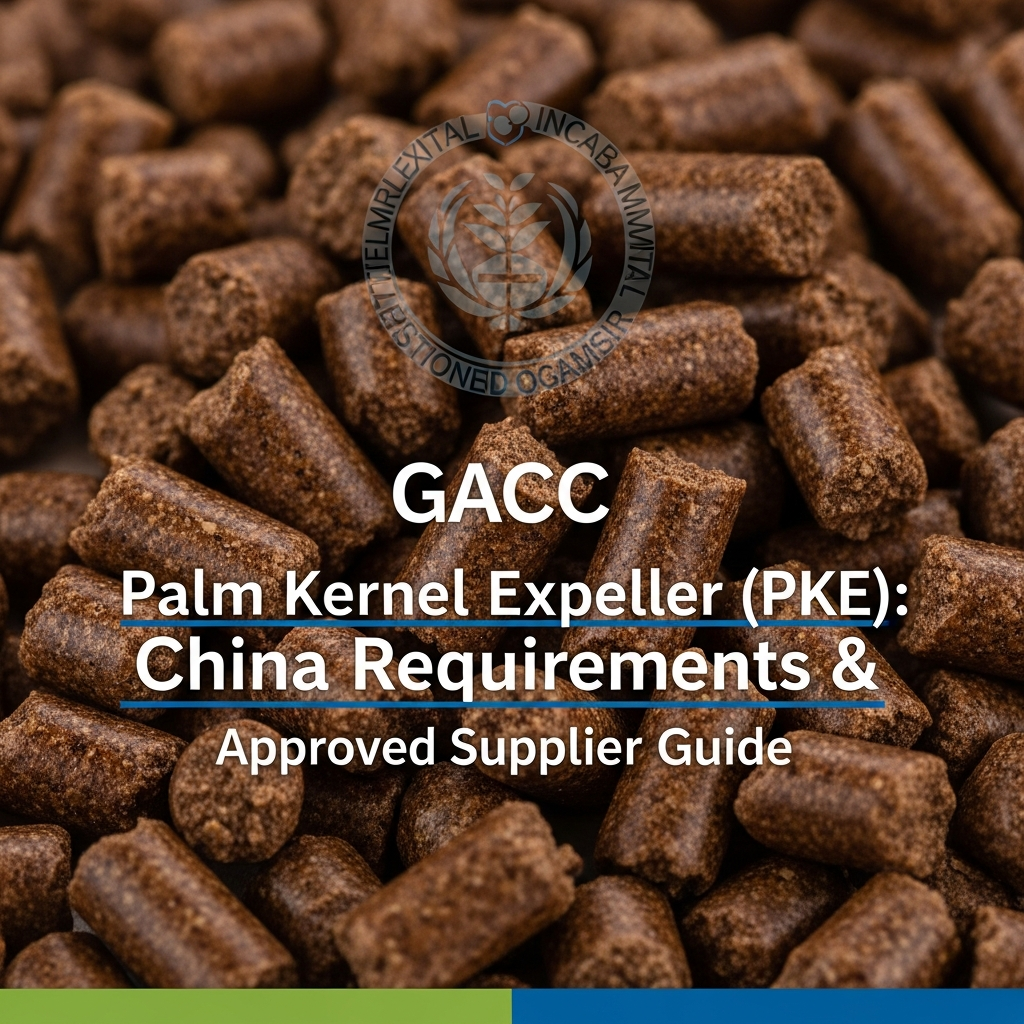
Securing GACC Palm Kernel Expeller approval is the most critical step for agricultural exporters today. Without proper China customs registration, your feed shipments will face immediate rejection at Chinese ports. If you are wondering how to export animal feed to China, this comprehensive 2026 guide reveals exactly how to navigate these strict regulations.
GACC Palm Kernel Expeller certification is an official regulatory mandate issued by the Chinese government. It authorizes foreign facilities to legally export palm-based animal feed into the country, ensuring all imported biomass meets strict biosafety, heavy metal, and nutritional standards.
The demand for premium livestock nutrition in China is breaking historical records. As the dairy and beef sectors expand rapidly, understanding the exact China GACC requirements becomes a baseline necessity. Consequently, international suppliers must adapt to rapidly evolving compliance frameworks to survive and maintain profitable trade lanes.
Historically governed by AQSIQ, palm kernel meal standards have now merged under the General Administration of Customs. This agency has digitized and intensified its inspection protocols for all imported feed ingredients. Ignorance of these updated mandates guarantees devastating supply chain disruptions and catastrophic financial losses.
[Image: High-quality bulk storage facility. Alt: GACC Palm Kernel Expeller compliance certificate and bulk feed storage. Title: GACC Palm Kernel Expeller facility overview]
What is GACC Palm Kernel Expeller Certification in 2026?
A GACC Palm Kernel Expeller certification acts as the ultimate gatekeeper for international agricultural trade into China. It verifies that your manufacturing facility strictly adheres to the highest sanitary and phytosanitary (SPS) measures. This protocol ensures that all imported biomass meets absolute biosafety metrics.
Additionally, this certification acts as a primary barrier against contaminated agricultural products entering the domestic supply. Facilities lacking this exact credential cannot even generate a valid customs declaration or secure a shipping slot in modern automated port systems.
Decree 248 and GACC Palm Kernel Expeller Regulations
In recent years, China implemented Decree 248 to centralize the oversight of all food and feed imports. This sweeping regulation forces overseas manufacturers to register directly through the single-window online portal. Transparency and traceability are now strictly enforced at every level of production.
Moreover, feed ingredients undergo separate, highly specialized risk assessments compared to standard human consumer goods. Manufacturers must prove continuous compliance through rigorous documentation. To understand global feed standards, exporters often consult the Food and Agriculture Organization (FAO) guidelines for baseline safety metrics.
Why China Regulates Palm Feed Imports So Strictly
China rigorously controls agricultural imports to prevent the introduction of foreign pests and devastating animal diseases. Cross-border agricultural trade carries inherent biological risks that constantly threaten domestic livestock populations. A single outbreak can disrupt the entire national food supply.
Consequently, the government enforces phytosanitary barriers to protect local ecosystems. Unregulated palm byproducts frequently harbor dangerous fungal toxins if processed or stored improperly in humid climates. GACC registration is the primary mechanism to filter out these dangerous, low-quality shipments.
7 Crucial GACC Palm Kernel Expeller Requirements for 2026
Exporting successfully requires microscopic attention to detail. Every approved supplier must implement these seven non-negotiable compliance pillars to guarantee smooth port clearance. Missing even one requirement will trigger automated customs rejections.
1. Mandatory Facility Registration
Before processing a single grain, your manufacturing facility must secure listing on the official approved supplier registry. This demands extensive bureaucratic coordination with both local authorities and Chinese regulators. It is not a process that can be rushed or bypassed.
The application requires detailed blueprints, pest control logs, and hygiene standard operating procedures. The General Administration of Customs of China (GACC) regularly updates this database to purge non-compliant factories instantly.
2. Verified Phytosanitary Certificates
Every shipment requires a distinct, freshly issued phytosanitary certificate. Your local Ministry of Agriculture must sign this document immediately prior to export, confirming local supervision and continuous adherence to international sanitary laws.
This certificate explicitly guarantees the cargo is entirely free from quarantine pests listed by Chinese authorities. Furthermore, it validates that the cargo underwent proper fumigation before vessel loading, eliminating any risk of biological hitchhikers.
[Image: Infographic comparing standard feed vs GACC approved feed. Alt: GACC Palm Kernel Expeller nutritional comparison chart. Title: Nutritional benefits of approved PKE animal feed]
3. Strict Heavy Metal and Aflatoxin Limits
Laboratory testing forms the backbone of Chinese feed safety protocols. High-quality GACC Palm Kernel Expeller must test well below maximum permissible limits for Aflatoxin B1 (typically <50 mcg/kg). These invisible toxins cause severe livestock illness and reduce milk yields.
Additionally, lead, arsenic, and cadmium levels are heavily scrutinized by automated port scanners. Independent ISO-certified laboratories must conduct these analyses to prevent fraudulent reporting and ensure global compliance across all batches.
4. Transparent Traceability Systems
Modern compliance dictates that every ton of feed must be trackable from the plantation to the final dairy farm. You must deploy robust ERP software to monitor batch numbers, production dates, and raw material origins precisely.
If a contamination event occurs, regulators demand full recall capabilities within hours. A failure to present a verifiable traceability chain results in immediate delisting and severe financial penalties for the exporter.
5. Packaging and Labeling Protocols
Chinese customs strictly regulate how suppliers label agricultural bags and bulk containers. Every label must feature bilingual text (Mandarin and English) containing precise manufacturer details and emergency contact information.
The packaging must display the official registration number prominently. Furthermore, the physical bags must consist of new, non-toxic materials that prevent moisture ingress during oceanic transit. Repurposed or damaged packaging is strictly forbidden.
6. Moisture and Nutritional Baselines
To prevent mold proliferation, moisture content must remain strictly below 10%. Exceeding this threshold invites devastating fungal growth inside shipping containers, immediately ruining the cargo value.
Key nutritional baselines required include:
- Minimum crude protein content of 14% to 16%
- Maximum crude fiber levels restricted to 18%
- Ash content strictly maintained below 5%
- Residual oil extraction limits verified via laboratory
Nutritionally, the product should guarantee specific protein and fat percentages. A Journal of Dairy Science nutritional study highlights how exact protein standardization improves ruminant milk yields significantly.
7. Flawless Customs Clearance Documentation
Port authorities require perfect alignment between your commercial invoice, packing list, bill of lading, and certificate of origin. A single typographical error routinely causes weeks of costly port detainment and storage fees.
Your export dossier must perfectly compile the following:
- The original Commercial Invoice and detailed Packing List
- The official Certificate of Origin from your local chamber of commerce
- The freshly issued Phytosanitary Certificate
- A certified Certificate of Analysis (COA) detailing heavy metals
- The final Ocean Bill of Lading with correct gross weights
Moreover, the HS code applied to the shipment must precisely match the registered product category. Inconsistencies trigger immediate red flags within the automated customs clearance system.
Comparing Certified GACC Palm Kernel Expeller vs. Standard Feed
Purchasing unregistered animal feed is a catastrophic financial risk. The table below illustrates the stark contrast between compliant and non-compliant products entering the Asian market.
| Feature | Certified GACC Palm Kernel Expeller | Standard / Unregistered Feed |
|---|---|---|
| Customs Clearance | Immediate, smooth processing | 100% rejection at port |
| Aflatoxin Testing | Independently verified (<50 mcg/kg) | Unverified, high toxicity risk |
| Traceability | End-to-end batch tracking | Unknown origins |
| Moisture Control | Strictly maintained under 10% | Fluctuates, high mold risk |
| Protein Quality | Standardized at 14-16% | Highly variable |
Nutritionally Superior Dairy Cattle Feed
Certified feed guarantees consistent dietary energy for high-yielding dairy cattle feed programs. The rigorous mechanical processing required for certification inherently produces a superior, stable nutritional product.
Farmers explicitly demand reliable protein metrics to optimize their total mixed rations. This consistency directly drives long-term agricultural profitability, maximizes milk fat content, and ensures robust herd health year-round.
Safety and Advanced Processing Differences
Approved suppliers utilize advanced mechanical expellers that extract oils without utilizing dangerous chemical solvents. This purely mechanical process preserves the integrity of the essential amino acids while eliminating chemical contamination risks.
Furthermore, these facilities undergo continuous external audits. Strict adherence to the World Trade Organization (WTO) sanitary protocols ensures global trust in the final commodity.
[Video Concept: “Step-by-Step Guide to GACC Registration for Feed Exporters” – A 5-minute YouTube-style explainer video showing the Decree 248 portal and documentation process.]
How to Choose an Approved GACC Palm Kernel Expeller Supplier
Selecting the right manufacturing partner dictates your entire export success. Importers must execute aggressive due diligence before signing procurement contracts or transferring initial deposits.
Verifying the Official Registration Number
When searching for approved suppliers, never accept verbal confirmation of their export status. You must manually cross-reference their specific factory registration number against the live Chinese customs database to guarantee legitimacy.
Ensure that the certification precisely covers animal feed ingredients, not just general agricultural exports. Many brokers present invalid, mismatched, or expired credentials to secure quick financial deposits from unsuspecting buyers.
Auditing the Broader Supply Chain Quality
Elite suppliers produce a diverse range of premium palm derivatives. Sourcing from a partner who also expertly manufactures Copra Meal, Palm Kernel Shell, and RBD CP8 indicates deep operational sophistication and stable raw material access.
Additionally, top-tier manufacturers often supply supplementary agricultural products like Cocopeat for animal bedding. For advanced ruminant diets, incorporating Calcium Salts of Palm Oil Fatty Acids alongside expeller meals provides maximum dairy yields.
Always request historical testing reports from their last ten shipments. Consistent laboratory results demonstrate strong internal quality control mechanisms that prevent customs delays.
Common Mistakes That Cause Port Rejections
Even experienced agricultural traders suffer devastating losses due to minor administrative oversights. Avoiding these documentation pitfalls is absolutely critical for maintaining profitable Asian trade lanes.
Incomplete Quality Testing Reports
Submitting expired or partial laboratory analysis documents is a primary cause for cargo detainment. Chinese officials require fresh testing data that precisely matches the exact current shipping batch.
If a lab report omits a specific heavy metal metric like cadmium, the automated system immediately suspends the clearance process. Suppliers must meticulously triple-check testing parameters against the latest 2026 regulations.
Mismatched CIQ Customs Declarations
The China Inspection and Quarantine (CIQ) declaration must perfectly mirror your commercial documents. A discrepancy involving a single digit in the gross weight triggers a mandatory manual inspection by port authorities.
These manual inspections easily delay cargo for several weeks, incurring massive port storage fees. Precision in paperwork is equally as important as the physical quality of the exported feed.
[Image: Cargo ships at a busy Chinese port. Alt: Importing bulk agricultural commodities into China ports. Title: GACC Palm Kernel Expeller port clearance process]
Makmur Amanah Sejahtera provides high-quality palm products such as Palm Kernel Expeller, Palm Kernel Shell, Crude Palm Oil, Palm Kernel Oil, etc. Kindly contact us at WhatsApp +6282140002198 or email us at admin@makmuramanah.co.id.
Frequently Asked Questions
How long does GACC Palm Kernel Expeller registration take?
The entire registration process typically requires three to six months. This timeline accounts for local government audits, complex document translation, and the final comprehensive review by Chinese authorities in Beijing.
How long is the certification valid for exporters?
Once officially approved, the certification is generally valid for five years. However, registered suppliers must proactively apply for renewal at least three to six months before expiration to prevent sudden trade disruptions.
Can trading companies export without direct factory registration?
No, trading companies cannot bypass this rule. The specific manufacturing facility that processes the feed must hold the registration, and traders must declare that exact factory number during customs clearance.
What happens if a feed shipment is rejected at the port?
Rejected shipments are either destroyed at the port at the exporter’s expense or forcefully returned to the origin country. Furthermore, the supplier risks permanent removal from the approved global import list.
Are there specific packaging requirements for the feed?
Yes, all packaging must feature bilingual labeling detailing the product name, factory registration number, weight, and origin. Additionally, the materials used must be entirely new and free from any biological contaminants.
Conclusion on Securing Your Feed Exports
Mastering the complexities of Chinese agricultural regulations guarantees that your business remains highly competitive. The global landscape of feed exportation is unforgiving to those who ignore shifting legal paradigms and mandatory facility protocols.
By strictly adhering to these operational blueprints, your shipments will seamlessly navigate automated customs portals. Aligning with an elite, compliant manufacturing partner ultimately neutralizes your supply chain risks. Secure your GACC Palm Kernel Expeller pipeline today to dominate the Asian agricultural market in 2026 and beyond.
 English
  Indonesian
  Chinese
  Arabic