
Copra Cake: 7 Ultimate Benefits & Incredible Uses (2026)
Copra cake is an incredible agricultural byproduct revolutionizing modern livestock nutrition across the globe. If you want to maximize your herd’s performance, understanding this powerhouse feed ingredient is absolutely essential. Countless farmers struggle daily to find cost-effective, high-protein feed supplements that deliver consistent results without breaking the budget. Fortunately, incorporating this highly palatable coconut oil extraction byproduct into your daily feeding strategy offers a scientifically proven solution.
For those new to advanced agricultural nutrition, this premium ingredient—often referred to interchangeably as coconut meal—is the highly nutritious solid byproduct remaining after extracting coconut oil from dried coconut kernels. It serves as a superior animal feed ingredient, providing an exceptional source of bypass protein, high-quality dietary fiber, and residual fat to significantly enhance ruminant, poultry, and swine diets.
According to the Food and Agriculture Organization (FAO), utilizing tropical agricultural byproducts significantly reduces global feed costs while promoting deeply sustainable farming practices. Furthermore, integrating this rich material reduces organic waste and supports a robust circular agricultural economy. Let us deeply explore exactly why this specific ingredient is absolutely dominating the global commercial feed market in 2026.
The Exceptional Nutritional Value of Copra Cake
[Image: Detailed macro photography of copra cake texture showing rich fibers]

To truly appreciate the immense value of this premium feed ingredient, we must closely examine its unique macronutrient profile. Unlike standard cereal grains, it provides a highly distinct balance of slow-release energy and highly digestible structural carbohydrates. This remarkable combination makes it particularly advantageous for maintaining a healthy, stable rumen environment in high-yielding dairy cattle and rapidly growing beef steers.
Additionally, the specific bypass protein content remains one of its most lucrative and highly sought-after features. Ruminants strictly require specialized proteins that escape immediate rumen degradation so they can be absorbed directly in the lower intestine. Extensive peer-reviewed research published by the National Center for Biotechnology Information (NCBI) continuously highlights the critical importance of undegradable dietary protein for maximizing peak milk production in modern dairy cows.
Let us rigorously review a direct nutritional comparison of popular livestock feed ingredients to definitively understand its fundamental superiority on the farm:
| Nutrient Profile | Copra Cake | Palm Kernel Expeller | Standard Soybean Meal |
|---|---|---|---|
| Crude Protein | 20% – 22% | 14% – 16% | 44% – 48% |
| Crude Fat | 8% – 10% | 6% – 8% | 1% – 2% |
| Crude Fiber | 12% – 15% | 15% – 18% | 5% – 7% |
| Safe Energy Level | Very High (Fat Based) | Moderate | High (Starch Based) |
7 Incredible Benefits of Copra Cake in Animal Feed
When systematically formulating commercial or private livestock diets, your direct ingredient selection heavily impacts your bottom line and overall animal welfare. Integrating copra cake fundamentally delivers profound physiological and economic advantages that traditional grains simply cannot match. Here are the top seven reasons industry leaders consistently choose this sustainable bypass protein source over older alternatives.
1. Exceptional Source of Bypass Protein
As previously noted, the unique protein composition fiercely resists immediate microbial breakdown within the complex rumen system. Consequently, livestock successfully absorb significantly more essential amino acids directly into their lower bloodstream. This biological advantage directly translates to increased peak milk yields, faster daily weight gains, and superior muscle development in commercial meat-producing herds.
2. High Palatability for Livestock Rations
Livestock naturally gravitate toward the pleasant, sweet, and distinctly roasted aroma of this tropical coconut byproduct. Mixing it strategically into dry, dusty, or unappetizing basal rations instantly encourages noticeably higher overall daily dry matter intake. Ultimately, better feed consumption directly ensures animals consistently meet their stringent daily nutritional requirements without leaving unnecessary, expensive waste in the feeding trough.
3. Rich in Digestible Energy and Safe Fats
The highly beneficial residual coconut oil left behind after the initial commercial extraction process provides a dense, remarkably safe energy source. Unlike traditional starch-heavy grains (such as cracked corn or rolled wheat) that can trigger deadly ruminal acidosis, these natural fats and highly digestible fibers offer sustained, slow-release energy. This characteristic is particularly vital for delicate late-gestation cows or highly stressed, heavy-producing dairy herds.
[Image: Dairy cows feeding aggressively on mixed rations in a modern, clean barn]

[Embedded Video Suggestion: “How to Properly Mix Coconut Byproducts into Dairy Rations for Maximum Yield”]
4. Enhances Milk Butterfat Content
Commercial dairy farmers actively seek highly reliable methods to organically boost the fat percentage of their bulk milk for significantly better market premiums. The specific medium-chain fatty acids explicitly found in residual coconut oil directly influence milk composition at a fundamental cellular level. Providing this specialized feed ingredient consistently elevates butterfat levels, dramatically improving overall dairy farm profitability and milk quality.
5. Cost-Effective Alternative to Soybean Meal
With global soybean, canola, and corn prices wildly fluctuating due to unpredictable climate shifts and international trade issues, alternative protein sources offer incredible financial stability. It reliably provides a highly competitive cost-per-gram of protein ratio compared to expensive traditional meals. Smart farm managers relentlessly utilize it to securely buffer against volatile commodity markets while maintaining premium diet quality.
6. Promotes Sustainable Agricultural Practices
By heavily utilizing a secondary agricultural extraction byproduct, the massive global livestock sector significantly reduces total organic waste and its environmental impact. Responsibly repurposing these organic materials keeps them out of landfills and explicitly reduces the overall carbon footprint of large-scale meat and dairy production. The World Wildlife Fund (WWF) actively advocates for highly sustainable feed practices to protect delicate global ecosystems.
7. Safe, Non-Toxic, and Easy to Integrate
Unlike certain raw legumes, seeds, or untreated cotton meals, it contains absolutely no natural anti-nutritional factors like dangerous trypsin inhibitors or gossypol. Farmers can safely incorporate it directly into daily feeding rations without complex pre-treatment, extensive soaking, or expensive cooking processes. This undeniable reliability strictly makes it a trusted, everyday staple for both novice hobby farmers and expert commercial nutritionists alike.
How Copra Cake is Produced: The Extraction Process
Understanding the exact journey from the tropical palm tree directly to your feeding trough significantly helps illuminate why this ingredient is so valuable. The specific manufacturing process directly influences the final nutritional density and residual oil content of the finished product. The modern extraction process generally follows three rigorous, highly standardized steps:
- Harvesting and Drying: Fresh, fully mature coconuts are properly harvested, split, and meticulously laid out to dry in the tropical sun or industrial heating kilns. This dried, concentrated coconut meat is known globally as raw copra.
- Mechanical Pressing: The deeply dried copra is forcefully fed into massive mechanical expeller presses. Extreme physical pressure squeezes out the valuable raw coconut oil for premium human consumption and international cosmetic use.
- Cake Formation: The solid, fibrous material left behind is compressed into hard slabs or dense pellets. The resulting copra cake is then meticulously cooled, carefully shattered into manageable pieces, and cleanly bagged for rapid global distribution.
In some modern processing facilities, a secondary chemical solvent extraction is utilized to selectively remove even more oil, transforming the cake into a much finer, drier meal. However, raw expeller-pressed varieties remain highly preferred for large livestock due to the tremendously beneficial residual energy left directly within the dense fibers.
Synergizing Copra Cake with Other Feed Supplements
Maximizing overall herd health and genetic potential often requires a highly multi-faceted, calculated approach to daily nutrition. While our primary focus ingredient shines brightly entirely on its own merits, it actively performs exceptionally well when strategically blended with other premium agricultural additives. For example, accurately balancing the basal diet with high-quality Copra Meal seamlessly ensures a highly uniform, comprehensive amino acid distribution throughout the entire digestive tract.
Moreover, when demanding absolute peak energy output from champion lactating cows, expert nutritionists frequently introduce highly specialized dietary fat supplements. Integrating advanced Calcium Salts of Palm Oil Fatty Acids strictly alongside the bypass protein creates a legendary, high-performance daily ration. This synergistic combination robustly supports incredibly rapid bodily recovery post-calving and sustains incredibly high fertility rates across the entire producing herd.
If you are meticulously optimizing intricate poultry or specialized swine housing environments concurrently, you must absolutely not overlook proper bedding quality. Utilizing strictly hygienic Cocopeat vastly improves individual stall sanitation and essential moisture control. This strictly indirect approach dramatically boosts actual feed conversion rates by drastically reducing environmental stress, toxic ammonia levels, and deadly respiratory disease.
Best Practices for Storage and Quality Control
To fiercely maintain the pristine nutritional quality of your expensive feed inventory, strict and absolutely proper storage protocols are entirely non-negotiable. Because it inherently contains rich residual oils, exposing the organic material to high ambient humidity or intense direct sunlight rapidly accelerates dangerous rancidity. Always relentlessly store the bulk product in a dark, incredibly cool, dry, and thoroughly well-ventilated warehouse facility.
Furthermore, definitively establishing routine, highly documented moisture checks completely prevents highly toxic mold growth. Preventing the deadly development of invisible aflatoxins—which can mercilessly devastate whole livestock health and permanently contaminate bulk milk supplies—is your primary, non-negotiable duty. According to an insightful, strictly peer-reviewed article published in Feed Strategy, perfectly managing dangerous mycotoxins requires rigorous, entirely uncompromising quality control from the supplier’s warehouse directly to the final feed trough.
Always rigorously inspect every single delivery for the following critical signs of poor quality before ever accepting a commercial shipment:
- Excessive moisture content (feeling noticeably damp or clumping aggressively upon touch).
- A highly sour, distinctly rancid, or aggressively musty odor instead of a pleasant, sweet, roasted smell.
- Visible white, vivid green, or deep black mold spores forming directly on the outer layers of the bags.
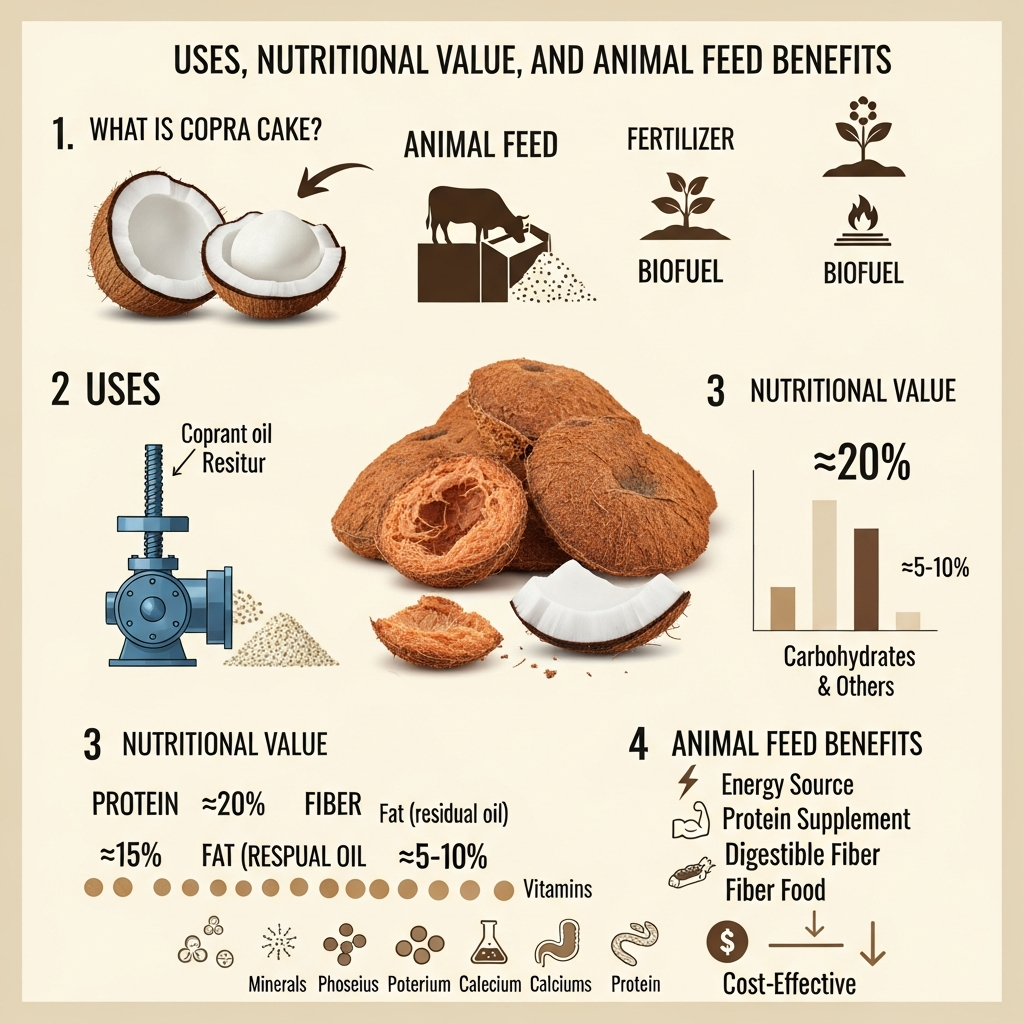
[Image: Infographic illustrating the extraction process and bypass protein benefits]

Common Mistakes to Avoid When Feeding Copra Cake
Despite its incredible, widely documented health benefits, correctly introducing any new, highly powerful ingredient into an animal’s strictly balanced diet requires extreme precision and calculated care. A remarkably common, highly detrimental mistake novice farm managers confidently make is aggressively transitioning diets entirely too rapidly. Sudden, shock inclusion of rich, high-fat byproducts can severely disrupt the incredibly delicate rumen microbes, leading to acute, severely temporary digestive upset, bloat, and dangerous diarrhea.
Always aggressively, yet carefully, phase in the new feed over a strictly monitored ten-to-fourteen-day transition period to actively allow internal biology to properly adapt. Additionally, terribly neglecting proper hydration protocols severely limits the vast, underlying nutrient absorption capabilities of the hungry animal. Because this specific organic ingredient is highly physically absorbent in the gut, livestock strictly require constant, absolutely unfettered access to pristine, freshly circulated drinking water.
Failing to continuously provide adequate, entirely continuous water intake completely negates the immense bypass protein benefits and can actively cause highly dangerous, sometimes fatal intestinal impaction. Always relentlessly prioritize perfectly clean water troughs as the fundamental, non-negotiable foundation of your highly advanced feeding program.
Frequently Asked Questions
What is the maximum inclusion rate of copra cake for adult ruminants?
For adult dairy and beef cattle, professional nutritionists typically strictly recommend a safe inclusion rate of 15% to 30% of the total daily dry matter intake. Exceeding this limit strictly leads to excessively soft body fat in finishing beef or disrupts rumen microflora.
Is copra cake perfectly suitable for modern poultry diets?
Yes, it can be safely fed to commercial poultry flocks, but in highly regulated quantities compared to large ruminants. Because chickens have a drastically shorter digestive tract, limit inclusion strictly under 10% and thoughtfully pair it with highly digestible energy like RBD CP8.
How does copra cake fundamentally compare to standard soybean meal?
While chemically extracted soybean meal undeniably offers a higher overall crude protein percentage, it severely lacks the specific, highly beneficial bypass protein advantages and rich residual fat energy found in coconut byproducts. Combining both distinct ingredients optimally maximizes rapid livestock growth.
Can pigs eat this specific feed ingredient safely and effectively?
Absolutely. Swine readily and aggressively consume it strictly due to its highly palatable, naturally sweet nature. However, feeding excessively right before slaughter can potentially result in overly firm pork fat. A balanced inclusion rate of 10% to 15% completely optimizes growth.
Does bulk copra cake expire or quickly go bad in storage?
Yes, like all completely organic, high-fat agricultural feedstuffs, it possesses a strict shelf life. If properly stored in perfectly dry, cool, and highly ventilated conditions away from direct light, it reliably maintains peak nutritional integrity for absolutely up to six full months.
Where can I reliably source premium quality agricultural feed byproducts?
Always strategically partner with fully certified, highly reputable agricultural suppliers with completely transparent, rigorous quality control processes. For related high-energy, completely sustainable operational solutions, modern farms enthusiastically utilize Palm Kernel Shell for brilliantly clean biomass energy.
Conclusion: Elevate Your Feed Strategy With Copra Cake Today
[Image: Farmer smiling while inspecting a handful of high-quality animal feed]

Properly navigating the immense, constantly evolving daily complexities of modern agricultural nutrition requires aggressively leveraging absolutely every single available biological and economic advantage. As we have deeply explored throughout this highly comprehensive guide, properly integrating this wildly versatile byproduct into your daily operational rations definitively offers scientifically validated, highly transformative benefits. From massively boosting overall daily milk production via highly specialized bypass proteins to providing a remarkably palatable, incredibly safe energy source, the undeniable, highly profitable results truly speak for themselves.
If you are finally, truly ready to permanently enhance your livestock’s fundamental, underlying health and aggressively maximize your entire farm’s bottom-line profitability, it is strictly time to upgrade your daily rations. High-quality copra cake undeniably stands out globally as the absolute ultimate, highly cost-effective nutritional solution for forward-thinking, remarkably successful agricultural professionals in 2026. Consult with your local certified expert nutritionist today, rigorously implement these exact proven strategies, and actively watch your entire commercial herd absolutely thrive like never before.
 English
  Indonesian
  Chinese
  Arabic