
Palm Kernel Expeller: The Ultimate #1 Guide for 2026
Palm Kernel Expeller is a critical component in the global animal feed industry, but navigating its specifications and pricing can be a major challenge. Sourcing a consistent, high-quality supply requires a deep understanding of the product, from its nutritional value to market dynamics. This guide provides the solution, offering a comprehensive look at everything you need to know in 2026 to make profitable, informed decisions.
The challenge for feed mill operators, livestock farmers, and international traders is securing PKE that meets precise nutritional needs while getting it at a competitive price. A misstep in either area can harm animal health and financial returns. This article is your single most valuable resource, empowering you with the expertise to master the PKE market.
What Exactly is Palm Kernel Expeller (PKE)?
Palm Kernel Expeller (PKE) is a nutrient-rich by-product from palm oil processing, created after oil is mechanically extracted from the palm kernel. Valued for its high protein and energy content, it serves as a cost-effective, palatable, and essential ingredient in compound feed formulations worldwide, especially for livestock.
Often called Palm Kernel Cake (PKC), this high-value ingredient comes from crushing the palm kernel and removing most of its oil with a screw press. The leftover solid material is the expeller. It is a highly palatable and energy-rich feed ingredient known for its balance of protein, fiber, and residual oil.
Furthermore, its widespread availability and cost-effectiveness have cemented its role as a staple in livestock diets. Unlike chemically extracted meals, the ‘expeller’ method ensures no solvents are present, resulting in a more natural and desirable product for feed.
PKE vs. Palm Kernel Cake (PKC): Are They Different?
In the industry, the terms Palm Kernel Expeller and Palm Kernel Cake are often used interchangeably. Both refer to the solid residue left after oil extraction from palm kernels. However, ‘expeller’ specifically denotes that the extraction was done through a mechanical press. The alternative, solvent extraction, results in a meal with a lower residual oil content. For all practical purposes in commercial trade, PKE and PKC refer to the same product.
The Importance of PKE in a Sustainable Context
PKE plays a vital role in the sustainability of the palm oil industry. By utilizing this by-product, the sector maximizes output and minimizes waste, contributing to a circular economy. Instead of being discarded, this process transforms the expeller into a valuable feed resource. This reduces the need for other dedicated feed crops and promotes efficient land use. Organizations like the Roundtable on Sustainable Palm Oil (RSPO) work to ensure this process is managed responsibly.
[Image: description=”A close-up shot of raw palm kernel expeller, showing its coarse, fibrous texture and brownish color.” title=”High-Quality Palm Kernel Expeller” alt_text=”A pile of high-quality Palm Kernel Expeller for animal feed.”]
The PKE Production Process: From Palm Fruit to Animal Feed
The journey to create Palm Kernel Expeller is a multi-stage process that demands precision to ensure quality. It begins at the plantation and ends with a nutrient-dense feed ingredient ready for global export.
- Harvesting & Sterilization: Fresh fruit bunches are harvested and sterilized with steam to halt enzymatic processes that increase free fatty acids (FFA).
- Threshing: A thresher tumbles the sterilized bunches to separate the palm fruit from the bunch stalk.
- Digestion & Pressing: Machines heat and press the fruit to extract Crude Palm Oil (CPO). The remaining nuts are separated from the fiber.
- Kernel Separation: The nuts are cracked, and the kernels are separated from the shells. These shells are often sold as Palm Kernel Shell, another valuable biofuel.
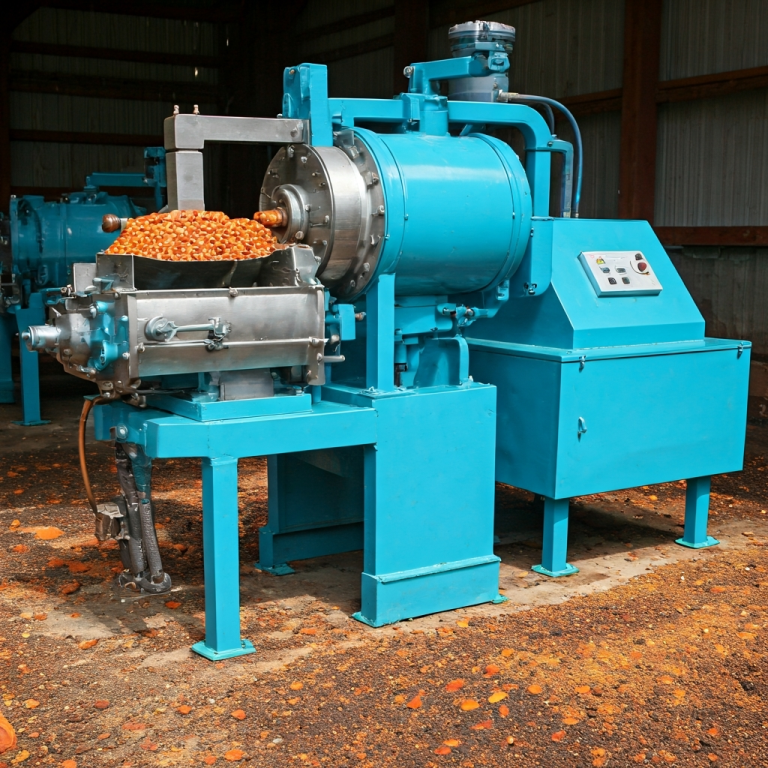
- Mechanical Extraction: The kernels are crushed and put through a large screw press (an expeller) to extract Palm Kernel Oil (PKO).
- Final Product: The solid, fibrous material that remains is the Palm Kernel Expeller. It is then cooled, stored, and prepared for shipment.
Key Specifications of High-Quality Palm Kernel Expeller
Not all PKE is created equal. Buyers must scrutinize the product’s specification sheet to ensure it meets their needs. Low-quality Palm Kernel Expeller can lead to poor animal performance and health issues.
Critical Nutritional Values to Check
The nutritional composition is the most critical factor. When sourcing PKE, pay close attention to these key metrics:
- Protein: 14-18% (Essential for growth and milk production)
- Crude Fat (Residual Oil): 8-12% (A key source of energy)
- Crude Fibre: 12-18% (Important for ruminant digestion)
- Moisture: Below 12% (Crucial for preventing mold and ensuring stability)
- Ash: 3-6% (Represents the mineral content)
Aflatoxin Levels in Palm Kernel Expeller: A Non-Negotiable Standard
Aflatoxins are toxic compounds from molds that can grow on agricultural commodities if not dried and stored correctly. High moisture content (>12%) in PKE creates a significant risk. These toxins can cause serious health problems in livestock, a fact established by extensive research, including studies from the National Institutes of Health.
Reputable suppliers must provide a Certificate of Analysis (COA) guaranteeing aflatoxin levels are within safe limits (typically below 20 ppb for most applications). Never compromise on this safety standard.
[Image: description=”An infographic visualizing the PKE journey from plantation to farm. It shows icons for harvesting, processing, lab testing (specs), shipping, and end-uses like dairy, beef, and poultry.” title=”The Global Palm Kernel Expeller Supply Chain” alt_text=”Infographic showing the global supply chain for Palm Kernel Expeller from farm to feed.”]
The Top 7 Proven Uses of Palm Kernel Expeller in 2026
The versatility of Palm Kernel Expeller makes it a sought-after commodity. Its unique nutritional profile is beneficial for a wide range of applications.
- Dairy Cattle Feed: It’s highly valued for its ability to increase milk butterfat content due to its high fiber and fat levels.
- Beef Cattle Feed: Provides a cost-effective source of energy and protein for fattening cattle, partially replacing more expensive grains like corn.
- Poultry Feed: Used in moderation, it serves as a nutrient source for broilers and layers, though its high fiber content limits inclusion rates.
- Swine Feed: Included in pig rations to provide energy and fiber, contributing to gut health.
- Aquaculture Feed: Serves as a binder and protein source in feed pellets for certain fish species.
- Biofuel & Biomass: The energy value of PKE also makes it a viable option for co-firing in biomass power plants as a renewable energy source.
- Organic Fertilizer Base: Due to its organic matter, it can be composted and used as a soil conditioner.
Palm Kernel Expeller vs. Other Feed Ingredients
Choosing the right feed ingredient depends on cost, availability, and the specific nutritional needs of the livestock. Here’s how PKE stacks up against common alternatives.
| Ingredient | Avg. Protein | Key Advantage | Best For |
|---|---|---|---|
| Palm Kernel Expeller | 14-18% | High energy, boosts milk fat | Ruminants (Cattle) |
| Soybean Meal | 44-48% | High protein, excellent amino acids | Poultry & Swine |
| Copra Meal | 20-24% | Highly palatable, good protein | Ruminants & Horses |
| Corn Gluten Meal | ~60% | Very high protein concentration | Poultry, Aquaculture |
[Video: description=”A short, 5-minute educational video titled ‘How to Test PKE Quality: A 5-Minute Guide’. It shows a lab technician performing key tests: checking moisture with a meter, visual inspection for mold under magnification, and preparing a sample for aflatoxin analysis.”]
Market Analysis: PKE Price, Trends, and Suppliers (2026)
The price of PKE is not static; it fluctuates based on a complex interplay of global and local factors. A savvy buyer stays informed on these trends to purchase at the right time.
What Drives the Palm Kernel Expeller Market?
Several key variables influence the price of Palm Kernel Expeller. These include the global price of Crude Palm Oil (CPO), weather in major producing countries like Indonesia and Malaysia, shifting government trade policies, and freight costs. As reported by industry publications like FeedNavigator, demand from major importers like New Zealand and the European Union also plays a pivotal role.
A Warning on “Too Good to Be True” Prices
Be cautious of offers that are significantly below the market rate. Such prices often indicate a compromise on quality, such as high moisture, shell contamination, or elevated aflatoxin levels. The ultimate cost of using inferior PKE in terms of poor animal health and performance far outweighs any initial savings. Always prioritize quality over the lowest price.
[Image: description=”A large cargo ship being loaded with agricultural commodities at a port, illustrating the global trade and logistics involved in PKE distribution.” title=”Global Shipping of Palm Kernel Expeller” alt_text=”Cargo ship being loaded with agricultural products like Palm Kernel Expeller.”]
How to Choose a Reliable PKE Supplier
Your supplier is your partner in ensuring a stable, high-quality feed supply. Choosing the right one is paramount to your operational success.
- Certifications and Traceability: Look for suppliers with recognized certifications (e.g., GMP+, ISO) and full traceability for their products.
- Transparent Specifications: A trustworthy supplier will provide a clear and detailed Certificate of Analysis (COA) for their Palm Kernel Expeller with every shipment.
- Proven Track Record: Choose a supplier with years of experience and positive testimonials from other buyers in your region.
- Logistics Expertise: The ability to handle documentation, shipping, and customs clearance smoothly is a hallmark of a professional supplier.
Frequently Asked Questions (FAQ)
Is PKE good for dairy cows?
Yes, Palm Kernel Expeller is excellent for dairy cows at proper inclusion rates (10-20% of the ration). Its high fiber is great for rumen health, and its residual fat content is well-known to help increase the butterfat percentage in milk, which can lead to higher milk payments.
What is the average protein content of PKE?
The protein content of good quality Palm Kernel Expeller typically ranges from 14% to 18%. This makes it a valuable source of protein for many types of animal feed, though it must be balanced with other ingredients for a complete amino acid profile in non-ruminants.
How is PKE different from copra meal?
The primary difference is the source. PKE comes from the kernel of the oil palm fruit, while copra meal comes from dried coconut flesh. While both are by-products of oil extraction used in feed, they have different nutritional profiles; copra meal generally has a higher protein content.
Can you store Palm Kernel Expeller for a long time?
Yes, PKE can be stored for several months under the right conditions. The key is ensuring moisture content is below 12% upon delivery and storing it in a cool, dry, well-ventilated area away from sunlight to prevent mold growth and rancidity.
What does the ‘expeller’ in the name mean?
The term ‘expeller’ refers to the method of oil extraction. It signifies that the oil was removed from the palm kernel through a mechanical process of crushing and pressing (using a machine called an expeller or screw press). This is a physical process, not a chemical one.
[Image: description=”A picture of healthy, robust dairy cows eating a total mixed ration (TMR) from a feeding trough in a clean barn.” title=”Healthy Livestock Fed with PKE” alt_text=”Dairy cows eating a nutritious meal containing palm kernel expeller.”]
Conclusion: Your Strategic Advantage in the PKE Market
In the competitive world of agricultural commodities, knowledge is power. By understanding the production process, key quality specifications, market drivers, and versatile uses of Palm Kernel Expeller, you can leverage it to its full potential. It is more than just a by-product; it’s a strategic ingredient that can lower feed costs and enhance animal performance when sourced correctly.
Ultimately, a deep understanding of this vital feed ingredient transforms you from a simple buyer into a strategic partner in your own supply chain. By prioritizing quality and partnering with a reliable supplier, you secure not just a product, but a consistent, safe, and effective foundation for your feed program. Ready to secure a high-quality supply? Don’t leave your profits to chance—partner with an expert.
 English
  Indonesian
  Chinese
  Arabic