
Palm Kernel Expeller for Egypt: 7 Proven 2026 Feed Secrets
Sourcing Palm Kernel Expeller for Egypt has become a game-changer for feed producers and livestock farmers seeking cost-effective, high-energy nutrition. As Egypt’s agricultural sector faces escalating costs for traditional feed grains, plant-based bypass protein sources offer a reliable way to maintain farm productivity. By integrating quality expeller meal into daily rations, feed mills across the Nile Delta can significantly optimize feed conversion ratios while managing tight operational budgets.
Egypt’s livestock sector relies heavily on imported feed components to satisfy expanding national demands for meat and dairy products. According to recent market intelligence reports from the USDA Foreign Agricultural Service, Egyptian importers continuously seek high-quality alternative feedstuffs to offset global grain price volatility. Consequently, demand for Indonesian palm co-products has surged across major regional distribution hubs.
Understanding quality parameters, import clearance protocols, and dietary benefits is essential for Egyptian buyers aiming to maximize returns on imported feed shipments. This guide provides an end-to-end breakdown of sourcing top-tier palm kernel meal specs to elevate your livestock operational efficiency in 2026.
What is Palm Kernel Expeller (PKE)?
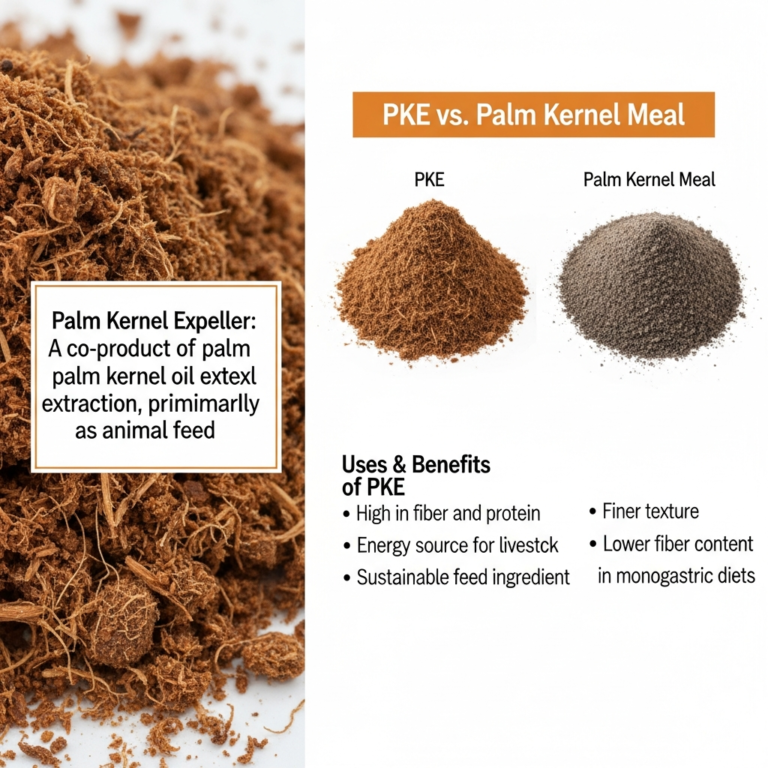
Palm Kernel Expeller (PKE) is a nutrient-dense co-product derived from the mechanical extraction of oil from the crushed kernel of the oil palm fruit (Elaeis guineensis). It serves as a superior, highly digestible energy and protein supplement primarily formulated for ruminant animal feed, including dairy cattle, beef cattle, sheep, and goats.

Unlike solvent-extracted meals, mechanically pressed PKE retains a higher residual oil content, typically between 6% and 8%. This residual oil delivers vital dietary energy through metabolic lipids without destabilizing the delicate balance of the rumen ecosystem.
Furthermore, its moderate crude protein content (14%–18%) and high level of dietary neutral detergent fiber (NDF) make it an ideal feed ingredient. It actively maintains rumen health while preventing metabolic disorders such as lactic acidosis during intensive feeding regimes.
Technical Specifications of Palm Kernel Expeller for Egypt
Securing premium commercial quality requires strict adherence to physical and chemical parameters. Importers purchasing Palm Kernel Expeller for Egypt must verify that every bulk shipment meets national regulatory guidelines established by the General Organization for Export and Import Control (GOEIC) and the Egyptian Ministry of Agriculture.
When finalizing contracts with an Indonesian PKE supplier, buyers must mandate verifiable Certificates of Analysis (CoA) issued by independent international inspection bodies such as SGS or Sucofindo prior to vessel departure.
Moisture control is paramount during maritime transit across warm shipping lanes. Moisture levels must strictly remain below 12% to eliminate the risk of mold growth, heating, and mycotoxin formation during sea transport.
- Crude Protein Content: 14.0% – 18.0% minimum (ideal for balanced protein loading)
- Crude Fat / Residual Oil: 6.0% – 8.0% maximum (supplies dense lipid energy)
- Crude Fiber: 16.0% – 20.0% maximum (promotes optimal rumination)
- Moisture Content: 10.0% – 12.0% maximum (prevents fungal deterioration)
- Ash Content: 3.0% – 5.0% maximum (indicates minimal mineral impurity)
- Aflatoxin Levels: Under 20 ppb (strictly compliant with Egyptian customs safety limits)
- Sand & Silica: Less than 2.5% (protects milling machinery and animal digestion)
Comparative Analysis: PKE vs. Alternative Egyptian Feed Ingredients
To evaluate economic feasibility, feed nutritionists in Egypt routinely compare palm co-products against traditional ingredients like yellow corn, wheat bran, and soybean meal. Evaluating full Palm Kernel Expeller specifications for Egyptian livestock reveals clear financial and nutritional advantages.
| Nutritional Parameter | Palm Kernel Expeller | Wheat Bran | Soybean Meal | Copra Meal |
|---|---|---|---|---|
| Crude Protein (%) | 14.5% – 17.5% | 14.0% – 16.0% | 44.0% – 48.0% | 20.0% – 22.0% |
| Crude Fat (%) | 6.5% – 8.5% | 3.5% – 4.5% | 1.0% – 2.0% | 6.0% – 8.0% |
| Crude Fiber (%) | 16.0% – 18.0% | 9.0% – 11.0% | 3.5% – 6.0% | 11.0% – 13.0% |
| Bypass Protein Value | High (~60-70%) | Low (~25-35%) | Moderate (~30-40%) | Moderate (~45-55%) |
| Relative Cost Efficiency | Excellent | Moderate | Low (Expensive) | High |
Formulators often combine PKE with high-protein coconut co-products like Copra Meal. This strategic blend balances essential amino acid profiles while reducing overall ration expenditure without sacrificing daily live weight gain.

Nutritional Benefits of Palm Kernel Expeller for Egypt Livestock
The primary advantage of incorporating Palm Kernel Expeller for Egypt into ruminant rations lies in its unique metabolic digestion breakdown. PKE features high bypass protein characteristics, allowing a major fraction of protein to pass through the rumen intact for direct absorption in the lower digestive tract.
Official technical publications from the Food and Agriculture Organization (FAO) confirm that bypass protein significantly enhances nitrogen utilization efficiency in commercial livestock operating under hot climate regimes.
Additionally, the carbohydrates in PKE consist primarily of digestible hemicellulose and complex mannans rather than rapid-fermenting starches. This fiber breakdown pattern yields a steady release of volatile fatty acids inside the rumen without triggering sudden pH drops.
Consequently, feeding PKE protects high-yielding cattle from acidosis during intensive production cycles. This stable fermentation profile makes PKE an indispensable component in formulated dairy cattle feed Egypt operations.
Key Advantages for Dairy and Beef Operations
- Milk Fat Enhancement: High natural lipid levels support elevated butterfat concentration in dairy cows.
- Rumen Buffer Capacity: Fibrous cell walls encourage active chewing and saliva generation, buffering rumen acidity.
- Lower Metabolic Heat: Digesting fiber-bound lipids generates less internal heat than burning heavy starch, keeping cows cool.
- Aflatoxin Safety: Sourced under rigorous quality protocols to prevent batch contamination risks.
Peer-reviewed clinical research archived on ScienceDirect demonstrates that replacing up to 30% of high-cost cereal grains with PKE maintains animal growth while optimizing dietary energy efficiency.
How to Import Palm Kernel Expeller for Egypt in 2026
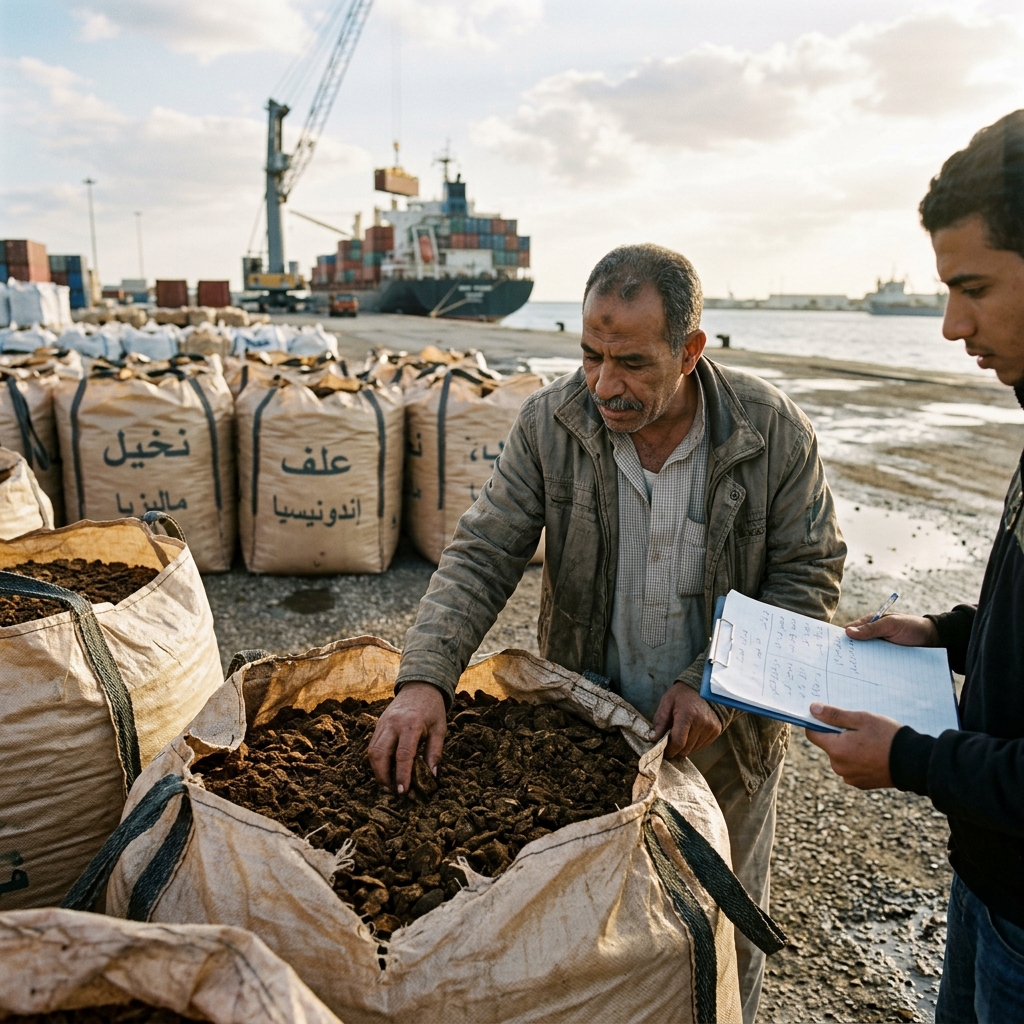
Successfully importing agricultural bulk cargo into Egyptian maritime destinations demands meticulous compliance with regional trade management systems. Importers targeting bulk PKE suppliers for Egyptian importers must align operations with updated customs procedures at Alexandria, Damietta, and Port Said.
- Supplier Vetting & Direct Contracting: Partner with established producers who provide strict moisture control and certified quality testing.
- Phytosanitary Certification: Ensure the origin nation issues official sanitary documentation declaring freedom from quarantine pests and weed seeds.
- Nafeza ACI Registration: Register shipment paperwork on the Egyptian Nafeza digital portal to secure a mandatory Advanced Cargo Information (ACID) number before departure.
- Customs & GOEIC Inspection: State agricultural authority officers inspect arriving vessels to conduct micro-biological, heavy metal, and moisture testing.
- Duty Clearance & Port Delivery: Process clear tariff entries under national feed code classifications to minimize port demurrage fees.
Navigating the protocol for importing Palm Kernel Expeller to Egypt with experienced freight handlers guarantees fast clearance and maintains feed quality straight to your processing facility.

Economic Advantage: Reducing Feed Costs in Egypt
Foreign exchange fluctuations and international market volatility make feed formulation cost management crucial for Egyptian agribusinesses. Because oil palms produce continuously year-round in Southeast Asia, supply stability remains high compared to seasonal grain harvests.
Integrating Palm Kernel Expeller for Egypt into commercial formulations enables mill operators to lock in competitive pricing. Substituting expensive yellow corn with PKE protects profit margins while maintaining ration caloric density.
Explore technical video guides detailing handling, storage, and mixing procedures for palm co-products in large-scale animal feed production facilities.
Furthermore, leading livestock enterprises combine PKE with concentrated bypass fat solutions like Calcium Salts of Palm Oil Fatty Acids to boost caloric density for peak milk output. Agribusiness groups also utilize energy co-products such as Palm Kernel Shell for bio-thermal boiler fueling.
For refined agricultural operations, incorporating vegetable fats like RBD CP8 and using natural growing mediums like Cocopeat showcases the immense scope of integrated palm supply chains for modern farm management.
Makmur Amanah Sejahtera provides high-quality palm products such as Palm Kernel Expeller, Palm Kernel Shell, Crude Palm Oil, Palm Kernel Oil, etc. Kindly contact us at WhatsApp +6282140002198 or email us at admin@makmuramanah.co.id.
Frequently Asked Questions
What is the typical inclusion rate of Palm Kernel Expeller in cattle feed?
In dairy cow formulations, inclusion rates typically range from 15% to 25% of total dry matter intake. For beef cattle feedlots, PKE inclusion can reach up to 30% to 40% when balanced with adequate roughage and essential mineral supplements.
Why is Palm Kernel Expeller suitable for Egyptian climate conditions?
PKE generates lower metabolic heat during rumen fermentation compared to high-starch grains like corn. This characteristic minimizes heat stress in livestock during hot summer months, keeping feed intake stable and preserving productivity.
What are the shipping options for exporting PKE to Egyptian ports?
PKE is shipped either in bulk charter vessels (5,000 to 15,000 metric tons) or packed in 50kg polypropylene bags or jumbo bags inside 20-foot sea containers, matching buyer volume preferences and port handling facilities.
How long can Palm Kernel Expeller be stored safely in Egypt?
Stored in dry, well-ventilated warehouses, high-grade PKE retains its full nutritional profile for 6 to 9 months. Maintaining moisture levels under 12% is crucial to prevent heating and fungal spoilage in warm climates.
What documentation is required to clear PKE at Egyptian customs?
Clearing cargo requires a Phytosanitary Certificate, Certificate of Origin, Certificate of Analysis (CoA), Bill of Lading, Commercial Invoice, Packing List, and a verified Nafeza Advanced Cargo Information (ACID) number.
Conclusion
Securing high-grade Palm Kernel Expeller for Egypt represents a strategic breakthrough for feed manufacturers and livestock producers aiming to control input costs while maximizing milk and meat yields. Its rich balance of bypass protein, digestible fiber, and metabolic lipids establishes PKE as an essential feed component for modern animal nutrition.
By establishing direct partnerships with reliable suppliers, adhering to strict quality parameters, and navigating customs requirements efficiently, Egyptian agribusinesses can build resilient, highly profitable feed supply chains for 2026 and beyond.

 English
  Indonesian
  Chinese
  Arabic