

Cocopeat has emerged as the ultimate sustainable growing medium for commercial horticulturists and home gardeners in 2026. If you are struggling with compacted clay soil, poor root development, or rapid moisture loss in your container plants, your root zones are likely suffering from severe oxygenation deficits and moisture imbalances.
In this definitive guide, you will discover how incorporating high-grade cocopeat dramatically restores soil biology, optimizes root zone aeration, and increases water holding capacity by up to 800%. We will break down everything from technical physical specifications to field-tested step-by-step soil mixing formulas.
According to horticultural research published by the Food and Agriculture Organization (FAO), coconut coir byproducts represent one of the fastest-growing renewable soil amendments worldwide. Transitioning from traditional peat to coconut coir protects vulnerable peatland carbon sinks while delivering superior long-term agricultural performance.
What is Cocopeat and How Is It Produced?
Cocopeat, commercially recognized as coco coir or coir dust, is a 100% natural growing medium derived from the fibrous outer husk of mature coconuts (Cocos nucifera). During industrial coconut husk processing for fiber extraction, fine spongy coir dust particles are sieved, separated, and systematically cured.
The raw coir material undergoes an extensive washing process using clean fresh water to leach out natural sea salts. After washing, the raw substrate undergoes controlled air drying, structural grading, and mechanical compression into compact blocks, bricks, or loose shipping bales.

High-quality compressed coir material expands up to five to six times its original volume when hydrated with warm water. This exceptional expansion ratio makes a compact coconut coir block exceptionally cost-effective to ship and store compared to pre-bagged commercial potting soil.
Chemically, this organic soil amendment features a naturally balanced baseline pH range of 5.8 to 6.8, making it instantly compatible with most horticultural crops. Its complex cellular matrix consists of microscopic tube-like cells that hold water while maintaining air-filled porosity between 15% and 25%.
7 Proven Cocopeat Benefits for Plants
Integrating high-grade coconut substrate into your agricultural soil mix provides massive physiological advantages for subterranean root networks. Below are the seven primary advantages confirmed by commercial agronomic trials.
- Unmatched Water Retention: A single block can absorb and hold up to 8 to 10 times its dry weight in water, reducing irrigation frequency by up to 50% during peak heat.
- Superior Oxygenation & Aeration: Even when fully saturated, high porous volume prevents soil compaction and allows continuous oxygen circulation directly to delicate root tissues.
- Eco-Friendly Peat Moss Alternative: Harvesting sphagnum peat destroys ancient wetland carbon sinks, whereas coconut substrate is a fully renewable byproduct of global coconut farming.
- High Cation Exchange Capacity (CEC): Possessing a CEC range of 40 to 100 meq/100g, coir efficiently retains essential plant nutrients and releases them steadily as roots require nutrition.
- Natural Pathogen Resistance: Elevated structural lignin content resists bacterial decay and inhibits aggressive soil fungi such as Pythium and Phytophthora species.
- Reusable Soil Conditioner: Unlike fragile peat moss that breaks down within one season, durable coconut fibers can be washed, disinfected, and reused for 3 to 5 growing seasons.
- Optimal Neutral Baseline pH: Maintains a stable pH (5.8–6.8), eliminating the need for heavy agricultural lime additions required by highly acidic sphagnum peat substrates.
A benchmark study indexed on ScienceDirect demonstrated that potted crops grown in processed coconut coir substrate developed 28% greater total root mass compared to standard topsoil control groups, directly attributing the gain to enhanced macro-pore space distribution.
Furthermore, trial data compiled by the United States Department of Agriculture (USDA) Extension confirms that utilizing coir as a primary growing substrate significantly enhances plant drought resilience in elevated summer temperatures.
Cocopeat vs Peat Moss Comparison: Physical & Chemical Traits
Selecting the ideal growing substrate requires understanding how key potting mix additives perform across physical and chemical spectrums. The comprehensive cocopeat vs peat moss comparison table below highlights critical metrics across popular commercial media options.
| Physical & Chemical Property | Cocopeat Substrate | Sphagnum Peat Moss | Perlite Additive | Standard Native Topsoil |
|---|---|---|---|---|
| Water Retention Capacity | Very High (800% dry weight) | High (600–700% dry weight) | Very Low (<50% dry weight) | Moderate (20–40% dry weight) |
| Air-Filled Porosity | High (15–25%) | Moderate (10–15%) | Extremely High (>50%) | Low (5–10%) |
| Natural pH Range | Neutral (5.8 – 6.8) | Acidic (3.5 – 4.5) | Neutral (6.5 – 7.5) | Variable (5.0 – 8.0) |
| Cation Exchange Capacity (CEC) | High (40–100 meq/100g) | High (90–140 meq/100g) | None (0 meq/100g) | Variable (10–30 meq/100g) |
| Reusability Lifespan | High (3–5 years) | Low (1–2 years) | Very High (Permanent) | N/A (Compacts quickly) |
| Ecological Footprint | Sustainable / Renewable | High Carbon Destruction | Energy Intensive Mining | Topsoil Depletion Risk |

As illustrated in the data above, modern container potting mixes achieve peak physical performance when blending moisture-retaining coconut coir fibers with coarse drainage aggregates like expanded perlite or pumice.
How to Mix Cocopeat with Soil: Step-by-Step Ratios
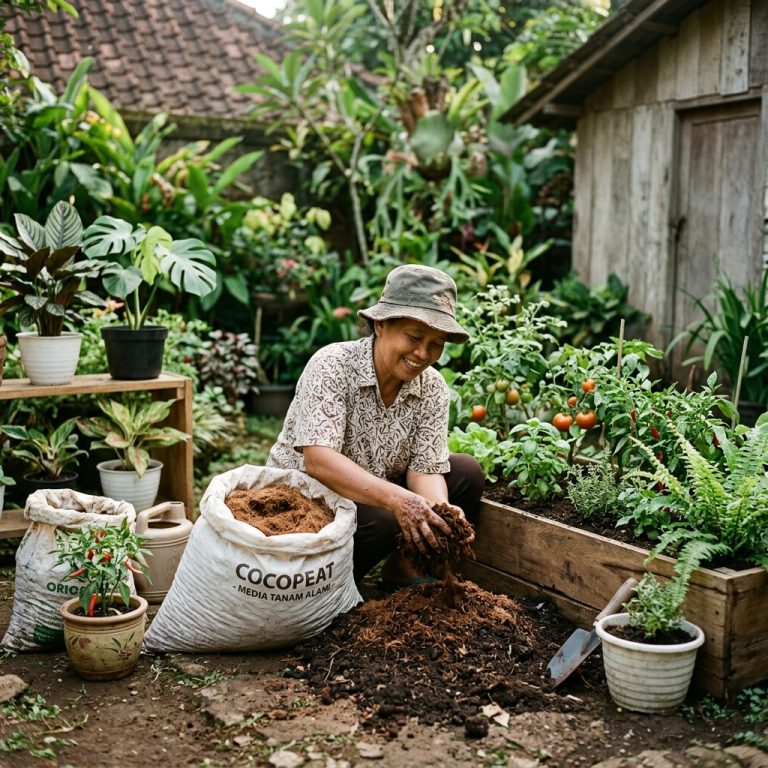
Using raw coconut fiber directly without strategic mixing ratios can cause physical media displacement or minor nutritional lockouts. Knowing exactly how to mix cocopeat with soil ensures ideal moisture distribution and air circulation.

1. Standard Container Gardening & Potted Houseplants with Cocopeat
For indoor foliage plants, outdoor patio pots, and ornamental garden flowers, prepare a balanced potting mix that retains water while venting surplus irrigation quickly:
- 40% Native Topsoil or Garden Soil: Provides structural weight, stability, and fundamental mineral content.
- 40% Hydrated Cocopeat: Increases micro-porosity and keeps root zones evenly moist between waterings.
- 20% Organic Compost or Worm Castings: Introduces active beneficial microbes and slow-release organic nutrients.
2. Seed Starting Trays Using Fine-Grade Cocopeat
Germinating seeds and fragile microgreen radicles demand lightweight, fine-textured substrate that offers minimal physical resistance to young roots:
- 70% Fine Sifted Cocopeat: Formulates a soft, highly absorbent germination bed for seeds.
- 20% Horticultural Perlite: Establishes tiny non-compacting drainage channels around delicate sprouts.
- 10% Screened Aged Compost: Offers minimal starter nutrition without scorching sensitive new roots.
3. Clay Soil Conditioning & Raised Bed Soil Mix with Coarse Cocopeat
To fracture heavy outdoor clay soils and prevent severe crusting during hot summer months, deploy this deep-bed soil amendment strategy:
- 30% Native Clay Soil: Preserves foundational trace minerals and local beneficial microorganisms.
- 40% Coarse Cocopeat & Coir Chips: Physically disrupts dense clay aggregates to install aeration space.
- 30% Aged Compost or Decomposed Manure: Nourishes beneficial earthworms and accelerates healthy organic decay.
For full specifications on high-grade coconut substrates engineered for agricultural applications, explore our premium cocopeat substrate product line.
How to Buffer Cocopeat Blocks for Optimal Soil Mixing
A vital technical step frequently overlooked by home gardeners is understanding how to buffer cocopeat blocks before blending them into container substrates. Raw unbuffered coconut husks naturally retain elevated sodium (Na+) and potassium (K+) ions bound to their cellular cation exchange sites.
If unbuffered coir is mixed directly into potting mix, the medium will adsorb dissolved calcium (Ca2+) and magnesium (Mg2+) from your fertilizers, releasing excess sodium and potassium into the root zone. This salt exchange causes acute blossom end rot in tomatoes and severe leaf margin scorching on sensitive crops.

Follow this standard commercial buffering protocol to prepare raw coir substrate safely:
- Hydrate: Submerge compact coir blocks in warm fresh water until fully expanded.
- Rinse: Flush expanded coir thoroughly until runoff electrical conductivity (EC) falls below 0.5 mS/cm.
- Prepare Buffer Solution: Mix 80–100 grams of Calcium Nitrate and 30 grams of Magnesium Sulfate per 10 liters of warm water.
- Soak: Submerge rinsed coir in the mineral buffer solution for 12 to 24 hours to replace sodium ions with calcium.
- Drain & Blend: Press out excess liquid completely. Your coir substrate is chemically stabilized and ready for soil mixing.
Commercial Applications of Cocopeat in Modern Agriculture
Beyond home garden beds, high-grade coconut coir forms the operational backbone for high-tech controlled environment agriculture (CEA) and commercial hydroponic operations around the world.
According to commercial farming records cataloged by the Wikipedia Coco Peat Repository, hydroponic greenhouse growers cultivate high-value crops like bell peppers, seedless cucumbers, and strawberries almost exclusively in automated coir grow bags.
Furthermore, leading agro-industrial producers combine substrate management with high-protein plant feed supplements such as Palm Kernel Expeller and Copra Meal for livestock nutrition, while utilizing biomass choices like Palm Kernel Shell and refined derivatives like RBD CP8 for eco-friendly industrial thermal energy.
Makmur Amanah Sejahtera provides high-quality palm products such as Palm Kernel Expeller, Palm Kernel Shell, Crude Palm Oil, Palm Kernel Oil, etc. Kindly contact us at WhatsApp +6282140002198 or email us at admin@makmuramanah.co.id.
Frequently Asked Questions
What is cocopeat used for in gardening?
It is primarily used as an organic soil conditioner, seed starting substrate, hydroponic growing medium, and potting mix component. It boosts soil water retention, prevents root compaction, and optimizes air circulation around subterranean root systems.
Do I need to wash or buffer cocopeat before using it?
Yes, buffering coir with calcium nitrate is strongly recommended. Washing flushes out excess sea salts, while calcium buffering prevents the medium from trapping critical calcium and magnesium nutrients away from your growing plants.
Can plants grow in 100% pure cocopeat?
While plants can grow in pure coconut coir under hydroponic drip systems, pure coir lacks natural plant nutrients. For standard soil gardening, it should be blended with organic compost or soil to provide nitrogen, phosphorus, and essential trace minerals.
How long does cocopeat last in garden soil?
Due to its high structural lignin content, coconut substrate decomposes extremely slowly compared to peat moss. It typically maintains its beneficial physical structure in container mixes and garden beds for 3 to 5 years before breaking down completely.
Is cocopeat better than peat moss for the environment?
Yes, coconut substrate is vastly superior environmentally. Sphagnum peat harvesting destroys delicate wetland habitats that store gigatons of carbon, whereas coconut coir utilizes abundant agricultural byproducts from existing coconut harvests.
Conclusion: Elevate Your Soil Strategy with Cocopeat
Mastering your physical root zone substrate is the single most effective action for maximizing harvest yields and sustaining plant health. Integrating high-grade coconut substrates solves persistent soil compaction, boosts water management efficiency, and encourages explosive root branching.
By properly rinsing, calcium-buffering, and blending your coir into customized ratios with topsoil and rich compost, you establish a professional substrate built for long-term growth. Elevate your horticultural results in 2026 by incorporating premium cocopeat into your container soil mix today.
 English
  Indonesian
  Chinese
  Arabic