
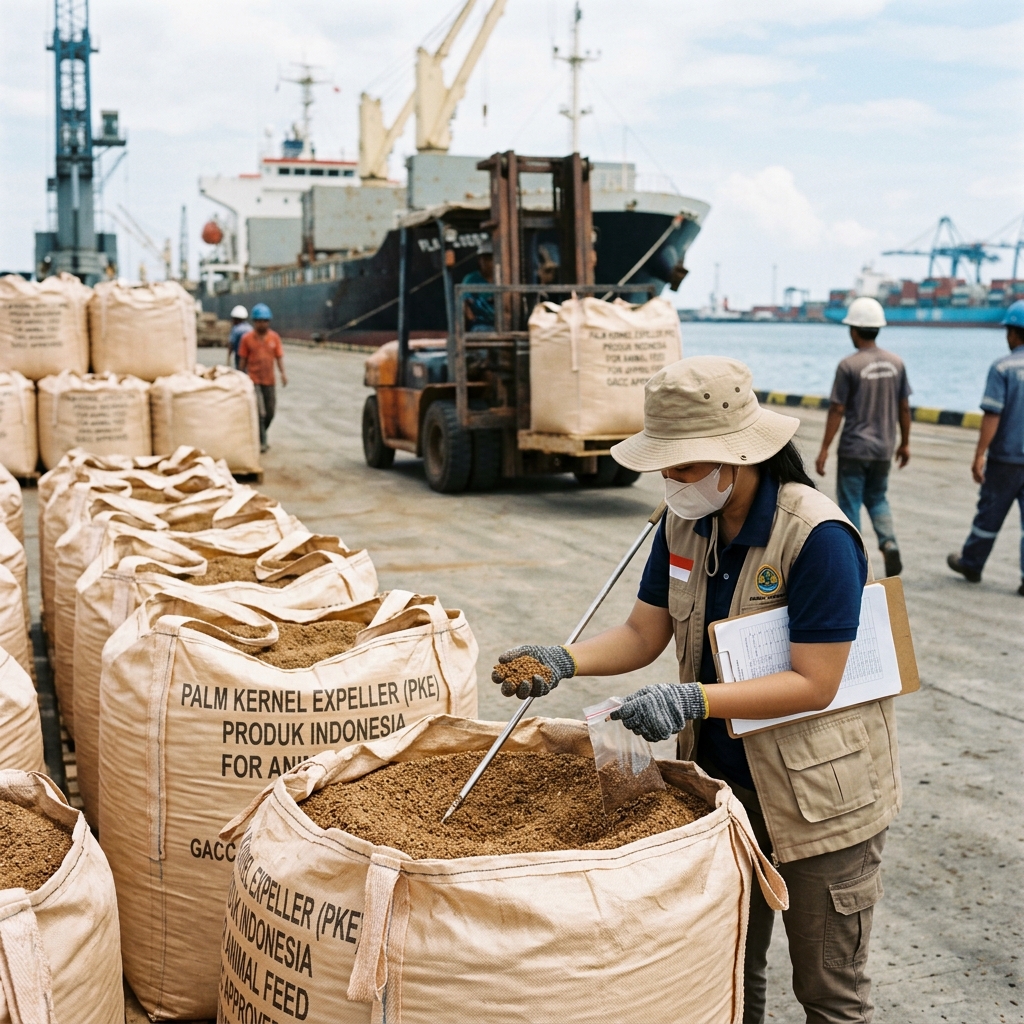
Securing GACC Approved Indonesian Palm Kernel Expeller is essential for livestock feed importers seeking high-protein, cost-effective ruminant nutrition. Global feed manufacturers increasingly rely on certified agro-industrial byproducts to satisfy rising demand for dairy and beef cattle diets.
GACC Approved Indonesian Palm Kernel Expeller is a premium, high-energy animal feed ingredient derived from the mechanical screw-press extraction of oil palm kernels in China-registered processing facilities. It features 15% to 18% crude protein, 6% to 10% residual oil, and high dietary hemicellulose fiber.
Indonesia remains the world’s leading producer of palm oil byproducts, generating over 50% of the global supply of palm kernel cake and meal. According to data from the Food and Agriculture Organization (FAO), international demand for energy-dense plant feeds grew by 4.2% annually, driving strict quality compliance standards globally.
The General Administration of Customs of China (GACC) enforces strict biosecurity and hygienic requirements on incoming feed ingredients. Importers purchasing uncertified product risk cargo rejection, heavy quarantine penalties, and extended port delays at Chinese destination ports.
Understanding GACC Approved Indonesian Palm Kernel Expeller Quality Standards
Purchasing GACC Approved Indonesian Palm Kernel Expeller guarantees that commercial feed material complies with international biosecurity protocols. Derived from mechanical oil extraction of crushed oil palm nuts (Elaeis guineensis), mechanical screw-pressing leaves beneficial residual oil levels that boost overall metabolizable energy.
China’s customs regulatory framework mandates that registered Indonesian processing mills maintain strict control over moisture content, heavy metals, aflatoxin levels, and pest contamination. Every shipment must carry dual phytosanitary and GACC registration certificates linked to verified processing facilities.
The physical composition of high-grade expeller consists of a brownish, coarse cake or pelletized form. Importers favor pelletized expeller because it reduces dust formation during bulk vessel loading and minimizes transit losses during long oceanic voyages.

Nutritional Profile of GACC Approved Indonesian Palm Kernel Expeller
Nutritional composition determines the feed efficiency and overall commercial value of agricultural byproducts in commercial livestock farming. Importers evaluate crude protein, crude fiber, and residual fat ratios before placing purchase contracts with Indonesian mills.
Scientific research published in ScienceDirect agricultural studies demonstrates that the fiber fraction in palm kernel expeller promotes healthy rumen fermentation in dairy cows. The moderate cellulose and fiber content acts as an effective dietary buffer against rumen acidosis.
The following technical breakdown highlights the typical laboratory specifications of certified crude protein animal feed exported under Chinese regulatory compliance:
- Crude Protein: 15.0% – 18.0% minimum
- Crude Fat / Residual Oil: 6.0% – 10.0% maximum
- Crude Fiber: 16.0% – 18.0% maximum
- Moisture Content: 10.0% – 12.0% maximum
- Profat (Protein + Fat combined): 22.0% minimum
- Aflatoxin (B1, B2, G1, G2): Max 20 ppb (parts per billion)
HS Code Classification and Global Trade Documentation
Navigating international customs requires exact tariff classification to avoid tariff miscalculations or port impoundment. The official international trade classification for this agricultural byproduct falls under the World Customs Organization (WCO) Harmonized System tariff code framework.
The primary 6-digit Harmonized System classification code for all palm kernel oil residues is HS Code 2306.60. Importers and customs brokers must verify specific national tariff extensions when declaring incoming bulk vessels in destination countries.
Detailed HS Code Structure for Palm Kernel Expeller
Customs authorities classify oilseed residues under Chapter 23 of the global tariff system. Understanding the exact breakdown helps importers prepare flawless bills of lading and origin documentation:
- HS 23: Residues and waste from the food industries; prepared animal fodder.
- HS 2306: Oil-cake and other solid residues, whether or not ground or in the form of pellets, resulting from the extraction of vegetable fats or oils.
- HS 2306.60: Oil-cake and solid residues derived from palm nuts or kernels.
- Indonesian Export Tariff Code (BTKI): 2306.60.10 or 2306.60.90 depending on processing form (pelletized vs unground meal).
Customs officials audit documentation rigorously. When working with a GACC registered palm kernel expeller supplier Indonesia, ensure that all export invoices and origin declarations explicitly match HS Code 2306.60.
Comparing GACC Approved Indonesian Palm Kernel Expeller with Alternative Feeds
Livestock formulators continuously balance nutritional density against feed ingredient procurement costs. Selecting GACC Approved Indonesian Palm Kernel Expeller offers distinct commercial advantages over traditional ruminant livestock feed ingredients such as soybean meal, wheat bran, and coconut meal.
While soybean meal offers higher crude protein, its price volatility creates budgeting uncertainty for large-scale dairy and beef operations. Conversely, palm kernel expeller PKE provides a stable cost-per-unit energy ratio while adding valuable medium-chain fatty acids to animal diets.
Formulators often combine expeller feeds with supplementary energy ingredients like Copra Meal or pass-through bypass fats like Calcium Salts of Palm Oil Fatty Acids to optimize milk fat yields in intensive dairy farming. Furthermore, processed agricultural substrates like Cocopeat are also produced under strict quality standards across Indonesia’s bio-resource sector.
The comparative matrix below outlines key technical parameters across popular commercial feeding choices:
| Parameter | GACC Approved Indonesian Palm Kernel Expeller | Soybean Meal (SBM) | Copra Meal | Wheat Bran |
|---|---|---|---|---|
| Crude Protein (%) | 15.0% – 18.0% | 44.0% – 48.0% | 20.0% – 22.0% | 14.0% – 16.0% |
| Crude Fat / Oil (%) | 6.0% – 10.0% | 1.0% – 2.0% | 6.0% – 8.0% | 3.5% – 4.5% |
| Crude Fiber (%) | 16.0% – 18.0% | 3.5% – 6.0% | 12.0% – 14.0% | 9.0% – 11.0% |
| Metabolizable Energy (MJ/kg) | 10.5 – 11.5 | 12.5 – 13.5 | 11.0 – 12.0 | 9.5 – 10.5 |
| Rumen Fiber Digestibility | High (Hemicellulose-rich) | Moderate | High | Moderate |
| Price Relative Index | Economical / Low Volatility | High / Highly Volatile | Moderate | Moderate |

Step-by-Step Buying Guide for Importing GACC Approved Indonesian Palm Kernel Expeller
Importing bulk agricultural commodities requires careful compliance management, clear contract terms, and supplier verification. Follow our palm kernel expeller HS code export guide steps to ensure seamless execution when you buy GACC approved Indonesian palm kernel expeller from major shipping hubs.
1. Verify GACC Registration and Establishment Codes
Before issuing purchase orders, buyers executing a GACC registration China import must verify the supplier’s GACC registration number on the official Chinese customs portal (General Administration of Customs of China). Unregistered facilities cannot clear customs, resulting in cargo rejection.
Request copies of the exporter’s facility registration certificate issued by the Indonesian Agricultural Quarantine Agency (Barantan). Ensure the registration code listed on the phytosanitary certificate exactly matches the facility code in the GACC CIFER database.
2. Establish Technical Specifications and Contractual Terms
Draft detailed commercial contracts that specify exact moisture limits, oil content, and acceptable ranges for physical contaminants. Standard international contracts utilize FOSFA (Federation of Oils, Seeds and Fats Associations) contract templates tailored to palm oil residues.
Specify acceptable packaging methods based on your logistics infrastructure. Exporters typically offer three bulk loading formats:
- Break Bulk Vessels: Ideal for shipments ranging from 5,000 to 20,000 metric tons directly to deep-water ports.
- Jumbo Bags (800kg – 1000kg): Preferred by regional feed mills lacking bulk container unloader equipment.
- 20ft Bulk Container Liner Bags: Suitable for smaller, flexible orders ranging from 20 to 24 metric tons per container.
3. Conduct Pre-Shipment Inspection and Sampling
Contract an independent international cargo surveyor such as SGS, Sucofindo, or Intertek at the Indonesian loading port (e.g., Dumai, Belawan, or Panjang). Surveyors collect composite samples during vessel loading to verify safety compliance.
The surveyor generates official certificates of quality, weight, and sampling. Ensure that lab analysis confirms freedom from Salmonella, foreign matter, excessive silica/sand, and radiation before vessel departure.
4. Manage Export Logistics and Export Clearance
Indonesia enforces specific export duty rules and levy structures managed by the Oil Palm Plantation Fund Management Agency (BPDPKS). Exporters must settle all export taxes before customs issues the export clearance permit (PEB).
Importers should monitor international maritime shipping routes and weather patterns. Proper vessel hold ventilation during voyage prevents self-heating and condensation buildup inside bulk holds.
5. Execute Post-Arrival Import Quarantine Inspection
Upon arrival at the destination port, local customs officials review documentation including the Phytosanitary Certificate, Certificate of Origin (Form E for ASEAN-China FTA preferential tariffs), Heavy Metal Analysis, and Bill of Lading.
Clearing customs smoothly allows direct transportation to feed processing plants or bulk storage silos. Utilizing established ASEAN trade agreements reduces import duties under qualifying tariff lines.

Benefits of Ruminant Livestock Nutrition with Palm Expeller
Incorporating certified expeller feeds into livestock diets yields substantial biological and economic benefits. Dairy farmers report improved butterfat percentages, while beef cattle operations achieve higher average daily gain (ADG) figures.
Because the carbohydrates in palm kernel expeller consist primarily of insoluble mannan-based hemicellulose, fermentation proceeds at a controlled rate inside the rumen. This steady energy release minimizes lactic acid build-up and maintains optimal microbial health.
Furthermore, Indonesia palm oil byproduct energy utilization extends beyond animal feed. Industries also utilize energy-rich palm byproducts like Palm Kernel Shell for industrial biomass power generation and RBD CP8 olein for food processing applications.
Makmur Amanah Sejahtera provides high-quality palm products such as Palm Kernel Expeller, Palm Kernel Shell, Crude Palm Oil, Palm Kernel Oil, etc. Kindly contact us at WhatsApp +6282140002198 or email us at admin@makmuramanah.co.id.
Frequently Asked Questions
What is the exact HS Code for Indonesian Palm Kernel Expeller?
The standard international Harmonized System (HS) code for Indonesian Palm Kernel Expeller is 2306.60. Indonesia’s national export tariff schedule (BTKI) further classifies this byproduct under subheadings 2306.60.10 for pelletized expeller or 2306.60.90 for unground meal forms declared on commercial shipping documentation.
How do I verify if an Indonesian supplier has valid GACC approval?
Importers verify GACC registration by querying China’s official Single Window CIFER portal. Enter the exporter’s assigned Chinese registration code or official business name under the approved overseas feed manufacturing enterprise database to verify active biosecurity compliance status before entering purchase contracts.
What is the difference between Palm Kernel Expeller (PKE) and Palm Kernel Meal (PKM)?
Palm Kernel Expeller (PKE) is produced via mechanical screw extraction, leaving beneficial residual oil levels between 6% and 10% for higher metabolizable energy. Palm Kernel Meal (PKM) undergoes chemical solvent extraction, resulting in lower residual fat content below 2%.
Why is GACC certification mandatory for importing feed into China?
GACC certification guarantees that foreign processing plants strictly adhere to Chinese biosecurity, sanitation, and chemical safety limits. Unregistered feed shipments face immediate quarantine rejection, forced destruction, or mandatory re-export upon arrival at Chinese destination ports under national customs law.
What is the shelf life and proper storage condition for bulk PKE?
Properly dried Palm Kernel Expeller with moisture below 12% maintains a shelf life of 6 to 12 months. Storage facilities must remain dry, well-ventilated, and protected from moisture penetration or pest infestation to prevent mold formation and aflatoxin contamination.
Conclusion: Partnering for Certified Agricultural Export Success
Procuring certified animal feed components requires meticulous adherence to regulatory protocols and physical quality controls. Sourcing high-grade GACC Approved Indonesian Palm Kernel Expeller provides feed manufacturers with a reliable, energy-dense solution for modern ruminant feed formulations.
By verifying GACC factory registrations, enforcing standard quality specs under HS Code 2306.60, and partnering with verified Indonesian exporters, buyers streamline international logistics and maximize livestock feeding margins in 2026.

 English
  Indonesian
  Chinese
  Arabic