
GACC Approved Palm Kernel Expeller: 7 Key Buyer Facts (2026)
Sourcing GACC approved palm kernel expeller is essential for international feed distributors seeking high-energy ruminant feed that meets strict Chinese customs standards. Navigating global supply chains requires verified regulatory clearance, consistent chemical composition, and dependable logistics. In this definitive guide, you will learn how purchasing certified plant meal guarantees quality while protecting your business against costly port rejections.
The global demand for high-grade animal feed ingredients has escalated significantly over the past decade. According to global agricultural trade reports by the Food and Agriculture Organization (FAO), international trade in oilseed byproducts has expanded by over 14% to meet the rising requirements of modern dairy and beef farming. Consequently, securing compliant raw materials has become a top commercial priority for commercial feed mills across Asia and beyond.
GACC approved palm kernel expeller is a premium, nutrient-rich feed ingredient produced by mechanically pressing oil from palm kernels, explicitly registered with the General Administration of Customs of China. It offers a balanced ratio of crude protein (14%–18%), digestible fiber, and residual energy, serving as a cost-effective benchmark in ruminant nutrition diets.
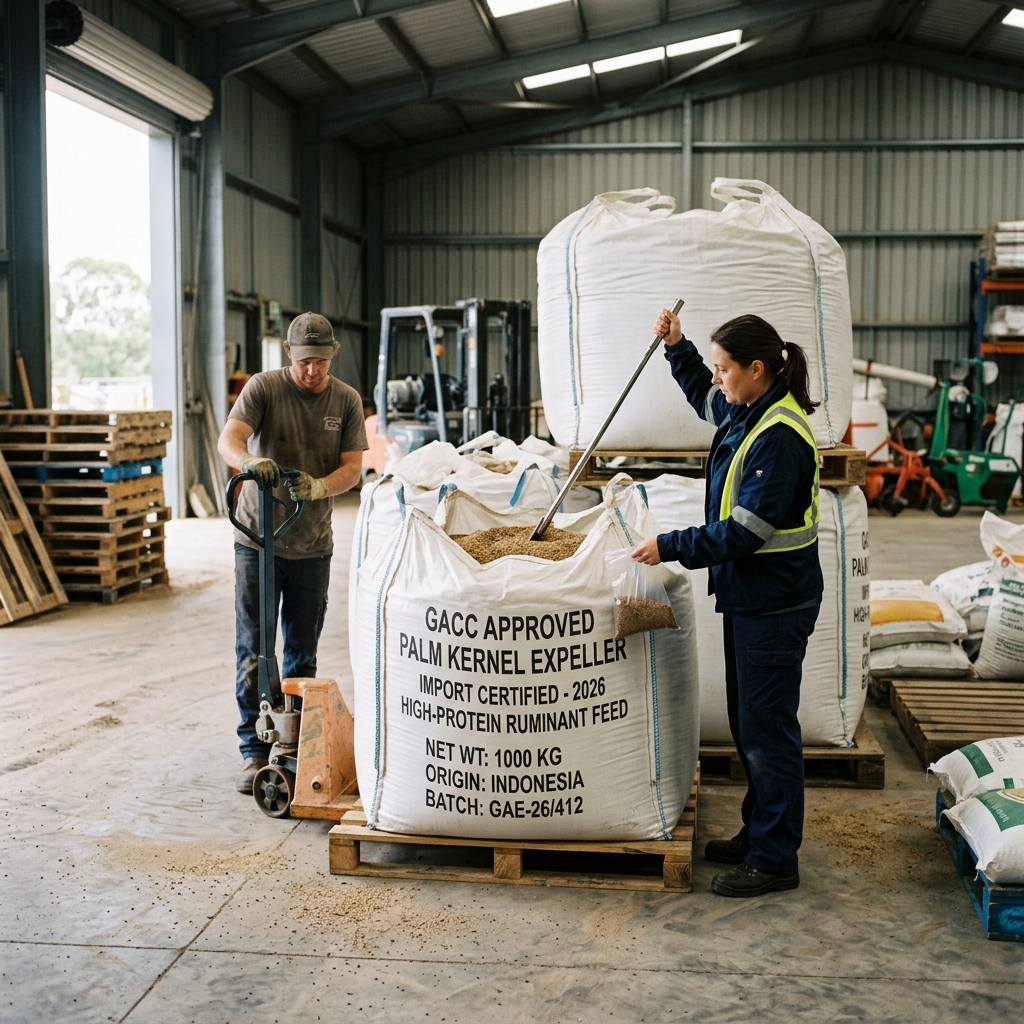
[Image: High-grade palm kernel expeller pellets inside a commercial feed mill storage warehouse | Alt: GACC Approved Palm Kernel Expeller feed pellets in warehouse | Title: GACC Approved Palm Kernel Expeller Quality Inspection]
Understanding GACC Approved Palm Kernel Expeller in Global Agriculture
The General Administration of Customs of China (GACC) enforces strict biosecurity and quality control measures on imported agricultural commodities. Sourcing GACC approved palm kernel expeller ensures that your cargo originates from certified mills adhering to internationally recognized phytosanitary protocols. Without proper registration, shipments face quarantine delays, fines, or complete customs rejection.
Furthermore, palm kernel expeller (PKE) represents a crucial byproduct of the palm oil extraction process. Extracted primarily through mechanical screw pressing rather than chemical solvent extraction, it retains a higher fat content (6% to 10%), providing essential metabolizable energy for dairy cattle, beef cattle, and small ruminants alike. For commercial buyers working with GACC Approved Palm Kernel Expeller suppliers, confirming certification credentials prior to shipment is the single best way to ensure smooth port entry.
In contrast to standard market offerings, certified PKE undergoes thorough lab evaluations to guarantee low moisture and minimal contaminant levels. For feed formulators, relying on registered processing facilities minimizes batch-to-batch nutritional variance, ensuring precise feed formulation and optimized feed conversion ratios (FCR).
Modern feed mills operating in high-demand Asian markets depend on certified plant meal to maintain consistent mill throughput. Using non-registered mechanical meal risks severe financial penalties, vessel detention at arrival ports, and catastrophic loss of buyer trust.
Technical Specifications & Digestibility of GACC Approved Palm Kernel Expeller
Understanding the exact biochemical layout of feed ingredients helps nutritionists build precise rations. When evaluating a batch of GACC Approved Palm Kernel Expeller, commercial buyers look for specific baseline criteria to maximize fiber digestibility and shelf life.
- Crude Protein Content: 14.5% – 18.0% minimum baseline
- Crude Fat / Residual Oil: 6.0% – 10.0% maximum
- Crude Fiber (CF): 16.0% – 20.0%
- Moisture Content: 8.0% – 11.0% maximum
- Profat (Protein + Fat): 21.0% minimum combined
- Aflatoxin Levels: Under 20 ppb (parts per billion)
Moreover, published research in ScienceDirect agricultural journal studies highlights that the neutral detergent fiber (NDF) in palm meal acts as a non-scratchy fiber source. This unique structural quality supports healthy rumen fermentation without triggering acute metabolic acidosis, which often occurs with high-starch cereal grains.
Scientific evaluations from the European Food Safety Authority (EFSA) also confirm that mechanical expeller pressings provide superior lipid stability compared to chemically extracted meals. This structural advantage gives feed manufacturers greater flexibility when formulating dense ruminant feed ingredient blends.
Regulatory & Compliance Framework: GACC Registration Standards 2026
The regulatory framework governing international agricultural imports into mainland China requires complete transparency. The General Administration of Customs of China mandates that all foreign processing plants obtain registration numbers prior to exporting plant-based ingredients.
To successfully import palm kernel expeller to China, buyers and suppliers must coordinate across strict compliance checkpoints. Importing unverified feed ingredients carries severe financial risks. Customs authorities routinely reject non-registered shipments at arrival ports, resulting in costly demurrage fees, mandatory destruction orders, or forced vessel re-routing.
- Full Traceability: Exporting processing facilities must maintain full records from fresh fruit bunch (FFB) reception to final packaging and loading.
- Biosecurity Control: Storage silos, processing lines, and conveyor systems must be free of pest infestations, bird droppings, and pathogenic microbes like Salmonella.
- Chemical Residue Testing: Heavy metals (lead, cadmium, arsenic) and mycotoxins (aflatoxin B1) must remain strictly within Chinese national hygienic standards (GB 13078 compliance).
- Facility Audits: Manufacturing facilities undergo periodic desk audits and remote video inspections by regulatory inspectors before GACC code renewal.
Consequently, working with an established feed mill supplier eliminates regulatory friction. Buyers can verify valid registration credentials directly through official GACC database portals before issuing letters of credit or approving shipping manifests.
[Infographic: Complete step-by-step GACC verification workflow and export shipment journey of palm kernel expeller from Indonesian processing mills to Chinese destination ports | Alt: GACC Approved Palm Kernel Expeller export compliance infographic | Title: GACC Approved Palm Kernel Expeller Supply Chain Process]
Nutritional Comparison: Palm Kernel Expeller vs. Alternative Feed Ingredients
Feed mill managers constantly calculate relative cost per unit of protein and energy when building commercial rations. Incorporating GACC approved palm kernel expeller into ruminant formulations allows formulators to partially replace more expensive components like soybean meal or corn gluten.
Additionally, combining PKE with complementary bypass fats, such as Calcium Salts of Palm Oil Fatty Acids, provides high-producing dairy cows with dense energy without disrupting fiber digestibility in the rumen. The comparative table below outlines the nutritional differences among common commercial feed meals:
| Nutrient Profile | GACC Approved PKE | Copra Meal | Soybean Meal |
|---|---|---|---|
| Crude Protein Content | 15.0% – 18.0% | 20.0% – 22.0% | 44.0% – 48.0% |
| Crude Fat | 7.0% – 9.5% | 8.0% – 11.0% | 1.0% – 2.0% |
| Crude Fiber | 16.0% – 18.0% | 12.0% – 14.0% | 3.5% – 6.0% |
| Metabolizable Energy (MJ/kg) | 10.5 – 11.8 | 11.2 – 12.2 | 12.5 – 13.5 |
| Rumen Degradable Protein | Moderate (30-40%) | High (60-70%) | High (65-75%) |
As demonstrated in the comparison, combining PKE with high-protein ingredients like Copra Meal balances dietary fat, fiber, and amino acid profiles while lowering total ration costs across commercial livestock operations.
Understanding these nutritional trade-offs enables formulators to adapt quickly to commodity price shifts. When protein prices fluctuate, leveraging mechanical palm byproducts provides vital dietary flexibility without sacrificing animal performance.
Key Advantages of GACC Approved Palm Kernel Expeller for Livestock Nutrition
Integrating GACC approved palm kernel expeller into commercial livestock feeds yields significant physical and economic benefits. Livestock producers worldwide utilize PKE because it stabilizes diet health while improving farm margins.
Furthermore, meeting premium PKE animal feed specifications ensures that physical handling, transport, and pelleting processes remain efficient across modern manufacturing facilities.
1. Rumen Stability and Acidosis Prevention
High-yielding milk cows fed elevated levels of cereal grains often suffer from subacute ruminal acidosis (SARA). Because palm expeller fiber ferments gradually, it supports stable rumen pH levels, promoting beneficial microbial populations and consistent dry matter intake (DMI).
2. Balanced Phosphorous-to-Calcium Profile
PKE naturally contains high amounts of organic phosphorus relative to calcium. This trace element structure makes it an effective supplement for pasture-raised cattle grazing on phosphorus-deficient grasses across tropical and sub-tropical farming zones.
3. Palatability, Feed Conversion Ratios (FCR), and Pelleting Quality
When mixed with liquid binders or molasses, PKE provides physical structure to compound feeds. Its natural oil residues act as an extrusion lubricant in pellet mills, reducing mechanical wear on die rings while producing firm, durable pellets with minimal fines.
4. Cost Efficiency for Bulk PKE Export Price 2026 Planning
Evaluating the bulk PKE export price 2026 matrix shows that mechanical palm kernel meal delivers an exceptional cost-per-unit ratio of energy and crude protein content. Strategic bulk procurement safeguards feed mills against volatility in competing oilseed byproduct markets.
[Video Embed Suggestion: Professional inspection video demonstrating laboratory moisture testing, aflatoxin screening, and bulk vessel loading of GACC Approved Palm Kernel Expeller | Title: Quality Control and Export Loading of GACC Certified Palm Kernel Expeller]
Logistics, Bulk Handling, and Storage Protocols for GACC Approved Palm Kernel Expeller Suppliers
Efficient ocean freight transport plays a crucial role in maintaining the physical quality of bulk animal feed ingredients. Transporting GACC approved palm kernel expeller across maritime routes requires active moisture management to avoid hot spots, molding, or self-heating inside vessel holds.
Additionally, palm-derived biomass products—ranging from animal feed components to industrial energy feeds like Palm Kernel Shell—demand specific handling procedures during bulk vessel loading to prevent cargo degradation.
Furthermore, agricultural processors often utilize agricultural co-products across various industrial sectors. For instance, soil enhancement applications utilize organic Cocopeat substrates, whereas food processing industries rely on refined fractions such as RBD CP8 palm olein.
Best Practices for Bulk Cargo Storage and Handling
To preserve product quality during long-distance maritime transit, procurement managers working with GACC approved palm kernel expeller suppliers should enforce strict chartering and warehouse protocols:
- Vessel Hold Inspection: Ensure holds are clean, dry, rust-free, and free of residue from prior cargoes.
- Moisture Monitoring: Test cargo moisture at loading to ensure it remains below 11.0% to suppress mold growth.
- Ventilation Management: Run hold ventilation systems constantly during voyage to manage surface sweat caused by temperature shifts.
- Aerated Warehouse Storage: Store bulk meal on clean concrete floors equipped with mechanical aeration systems upon arrival.
According to export market reports by the USDA Foreign Agricultural Service, strict adherence to post-harvest storage standards reduces storage losses by over 8% across global distribution channels.
[Image: Modern dairy herd eating a balanced total mixed ration (TMR) enriched with palm kernel expeller pellets | Alt: Dairy cattle eating GACC Approved Palm Kernel Expeller ration | Title: High Yield Livestock Nutrition with Palm Kernel Expeller]
Makmur Amanah Sejahtera provides high-quality palm products such as Palm Kernel Expeller, Palm Kernel Shell, Crude Palm Oil, Palm Kernel Oil, etc. Kindly contact us at WhatsApp +6282140002198 or email us at admin@makmuramanah.co.id.
Frequently Asked Questions About GACC Approved Palm Kernel Expeller
What is GACC approved palm kernel expeller?
GACC approved palm kernel expeller is a premium feed ingredient produced during mechanical palm oil extraction that is certified by China’s customs administration. It satisfies strict phytosanitary, biosecurity, and chemical residue criteria mandated for legal customs clearance into mainland China.
Why is GACC registration required to import palm kernel expeller to China?
GACC registration verifies that foreign manufacturing facilities comply with Chinese biosecurity, health, and traceability regulations. Unregistered shipments cannot clear customs and face immediate port seizure, financial penalties, or forced return to origin.
How does palm kernel expeller benefit livestock nutrition diets?
PKE provides a balanced mix of crude protein content, residual dietary fat, and digestible neutral detergent fiber. This structural composition stabilizes rumen pH, prevents metabolic acidosis, and optimizes overall milk fat yield in dairy cattle.
What is the difference between Palm Kernel Expeller (PKE) and Palm Kernel Meal (PKM)?
PKE is obtained through mechanical screw pressing, leaving residual fat (6%–10%). Solvent-extracted palm kernel meal uses chemical solvents, yielding lower residual fat (1%–2%). Mechanical PKE delivers higher overall metabolizable energy for ruminants.
What are the recommended inclusion rates for PKE in cattle feed?
Typical inclusion rates range from 15% to 30% of total dry matter intake for beef cattle, and 10% to 20% for lactating dairy cows, depending on target dietary energy density and forage quality.
How do buyers verify valid GACC approved palm kernel expeller suppliers?
Buyers can verify registration status directly on the official GACC database portal by searching the supplier’s unique facility code before signing sales contracts or issuing letters of credit.
Conclusion: Securing Premium GACC Approved Palm Kernel Expeller in 2026
In conclusion, procuring certified GACC approved palm kernel expeller guarantees that your feed milling operations receive consistent, compliant, and highly digestible nutrition for commercial livestock. By prioritizing registered processing partners, evaluating exact biochemical specifications, and establishing strict bulk transport management, global agricultural importers can maximize herd health while protecting commercial margins throughout 2026 and beyond.
 English
  Indonesian
  Chinese
  Arabic