
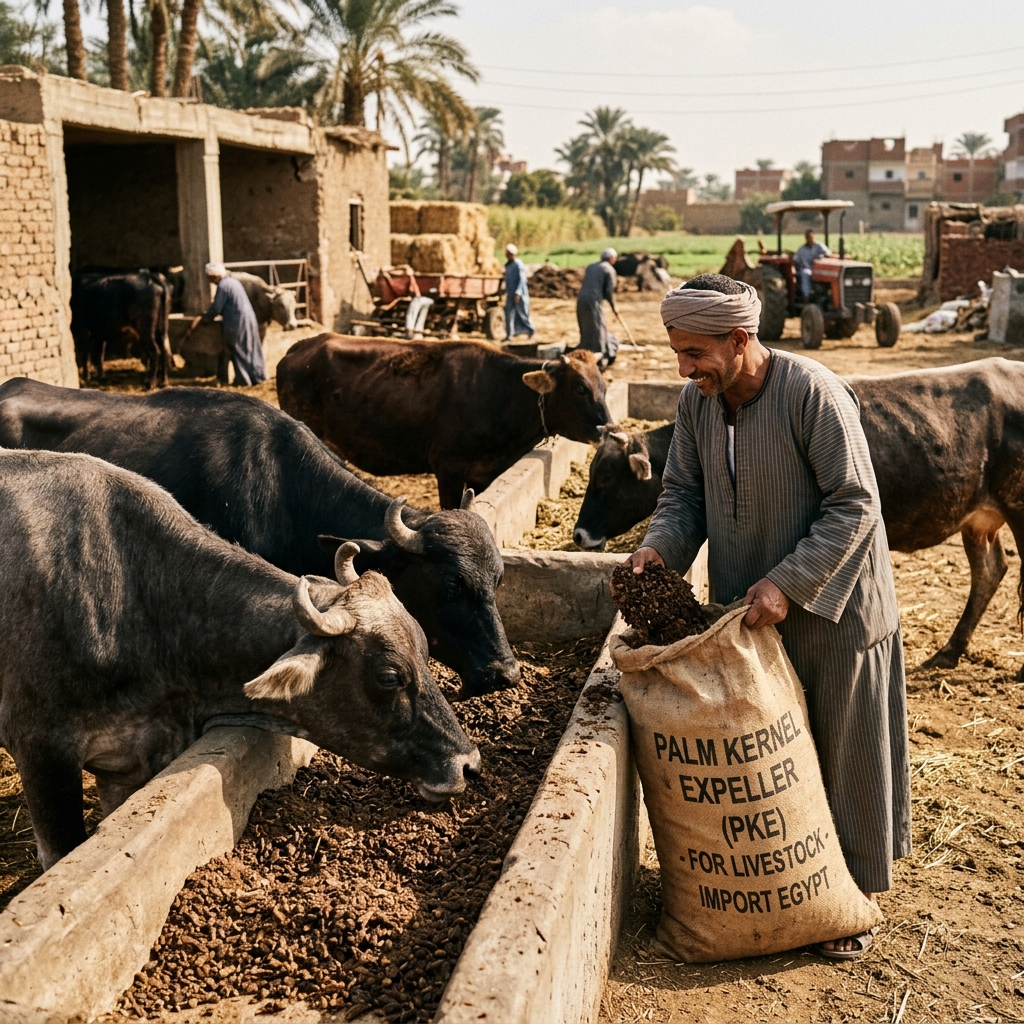
Palm Kernel Expeller in Egypt: 7 Essential 2026 Tips
Importing Palm Kernel Expeller in Egypt has become a game-changing strategy for modern livestock feed manufacturers looking to reduce overall ration costs without sacrificing nutritional performance. As global commercial grain markets experience price volatility, Egyptian dairy and beef producers face escalating expenditures for traditional feedstuffs such as yellow corn and solvent-extracted soybean meal. Fortunately, high-quality agricultural byproducts provide a sustainable, highly digestible alternative that stabilizes farm profitability across the region.
According to recent agricultural trade updates from the USDA Foreign Agricultural Service, Egypt’s commercial livestock and dairy sectors consume over 14 million metric tons of feed raw materials annually. As feed mill nutritionists actively work to optimize daily formulations for higher feed conversion ratios, alternative protein and digestible fiber sources are rapidly taking center stage across key agricultural governorates like Sharqia, Beheira, Gharbia, and Alexandria.
Whether you operate a commercial feed manufacturing facility, manage an agricultural import business, or oversee a large-scale dairy operation, understanding how to source, clear, and formulate with Palm Kernel Expeller in Egypt is critical for establishing a sustainable competitive advantage in 2026. This comprehensive guide reviews essential nutritional specifications, customs regulations, GOEIC inspection workflows, and high-efficiency feeding strategies.

What is Palm Kernel Expeller?
Palm Kernel Expeller (PKE)—frequently referenced in global commodity markets as palm kernel meal—is a nutrient-dense feed byproduct derived from the mechanical extraction of crude oil from the nut kernel of the oil palm tree (Elaeis guineensis). Highly regarded in commercial ruminant nutrition, PKE delivers a balanced chemical composition containing crude protein (14%–18%), neutral detergent fiber (53%–58%), and residual energy-bearing lipids, rendering it an exceptional cost-effective feed ingredient for cattle, sheep, and water buffaloes.
Unlike solvent-extracted oilseed meals that rely on chemical hydrocarbons for oil recovery, mechanical screw pressing leaves a residual crude fat content ranging between 6% and 8%. Consequently, this dietary fat increases the net energy density of total mixed rations (TMR) while remaining completely free from chemical solvent residues. This structural composition makes Palm Kernel Expeller a clean, safe, and dependable cornerstone for modern Egyptian livestock feed formulations.
Furthermore, because PKE is processed under high thermal and mechanical pressure during expeller pressing, the resulting meal exhibits low microbial counts and enhanced bypass protein characteristics. Nutritionists across North Africa increasingly rely on this natural processing stability when building year-round feed reserve inventories.
Nutritional Specifications of Palm Kernel Expeller in Egypt
When evaluating commercial shipments of Palm Kernel Expeller in Egypt, feed importers and nutritionists must verify chemical properties to ensure optimal animal health and predictable ration performance. Premium Indonesian PKE consistent with export-grade international quality parameters exhibits the following standard nutritional profile:
- Dry Matter (DM): 89.0% – 91.0%
- Crude Protein (CP): 14.5% – 17.5%
- Crude Fiber (CF): 12.0% – 15.5%
- Ether Extract (Fat): 6.0% – 8.5%
- Neutral Detergent Fiber (NDF): 53.0% – 58.0%
- Acid Detergent Fiber (ADF): 33.0% – 37.0%
- Ash Content: 3.5% – 5.0%
- Metabolizable Energy (Ruminants): 2.45 – 2.65 Mcal/kg
In addition to these structural macro-nutrients, PKE contains valuable bioavailable phosphorus and trace mineral elements. However, animal nutritionists planning a balanced ruminant feed formulation in Egypt should note that its calcium-to-phosphorus ratio requires balancing with limestone or dedicated mineral premixes during TMR batching.
To maximize total ration density and digestibility, many progressive Egyptian feed producers combine PKE with high-protein concentrates and supplemental lipids. For instance, pairing PKE alongside Copra Meal and specialized bypass fats such as Calcium Salts of Palm Oil Fatty Acids allows nutritionists to achieve precise dietary energy targets without increasing rumen acid loads.
Why Demand for Palm Kernel Expeller in Egypt is Surging in 2026
The market demand for alternative Egyptian livestock feed ingredients has expanded significantly over recent years. Specifically, the economic drivers behind the rising adoption of Palm Kernel Expeller in Egypt reflect macro-level agricultural shifts aimed at optimizing feed conversion ratios while mitigating foreign currency exposures.
First, traditional energy grains like yellow corn carry volatile ocean freight costs and heavy foreign currency requirements. By introducing high-quality PKE into dairy and beef fattening rations, feed manufacturers can substitute up to 20%–30% of high-cost grain components without reducing average daily weight gains or milk volume performance.
Second, extensive animal nutrition research published by the Food and Agriculture Organization (FAO) indicates that PKE contains non-starch polysaccharides (NSP) that undergo slow bacterial fermentation in the rumen. This extended degradation rate buffers rumen pH and drastically reduces the incidence of Subacute Ruminal Acidosis (SARA), a common condition in intensive dairy operations fed high-starch diets.
Third, national initiatives supported by global economic studies from the World Bank emphasize enhancing local meat and milk production efficiency across North Africa. Because local feed producers must meet strict production targets, securing reliable palm kernel meal import pipelines offers a predictable path to stabilizing input costs.
Additionally, Egypt’s extensive water buffalo (Bubalus bubalis) herd thrives exceptionally well on fiber-rich co-products. Independent trials cataloged in ScienceDirect agricultural journals demonstrate that buffaloes digest PKE structural fibers with high efficiency due to specialized microbial populations in their complex digestive systems.

Key Applications of Palm Kernel Expeller in Egyptian Livestock Feed
Commercial nutritionists utilize PKE across diverse livestock sectors throughout the Nile Delta and Upper Egypt. Because of its physical particle texture and balanced chemical breakdown, it serves as a versatile raw material for commercial feed mills and integrated farming enterprises.
PKE Nutritional Specifications for Dairy Cattle Formulations
In high-yielding Holstein and Fleckvieh dairy herds, PKE supplies both digestible neutral detergent fiber and valuable rumen-bypass protein. Maintaining appropriate fiber levels promotes rumination and saliva flow, which helps sustain milk butterfat content while maintaining daily milk volume yield throughout peak lactation cycles.
Beef Fattening Rations and Crude Protein Cattle Feed
For intensive beef feedlots finishing native and crossbred cattle, adding PKE delivers sustained metabolic energy from lipids and fermentable fiber. This balanced energy release reduces digestive stress during long fattening cycles while delivering economical daily live weight gain.
Sheep, Goat, and Camel Rations
Small ruminant systems across arid regions benefit from PKE’s appealing aroma and palatable flavor profile. Furthermore, commercial camel feed operations in Egypt regularly integrate PKE pellets into concentrated mixtures to support sustained endurance, growth performance, and meat yield.
To evaluate how PKE compares against alternative local feed ingredients, examine the structural comparative nutrient matrix below:
| Feed Ingredient | Crude Protein (%) | Crude Fiber (%) | Fat Content (%) | Relative Cost Index |
|---|---|---|---|---|
| Palm Kernel Expeller (PKE) | 14.5 – 17.5% | 12.0 – 15.5% | 6.0 – 8.5% | Economical / Low |
| Yellow Corn | 8.0 – 9.5% | 2.0 – 3.0% | 3.5 – 4.2% | High |
| Soybean Meal (44%) | 44.0 – 46.0% | 6.0 – 7.0% | 1.0 – 2.0% | Very High |
| Wheat Bran | 14.0 – 16.0% | 9.0 – 11.0% | 3.5 – 4.5% | Moderate |
As demonstrated in the comparison table, PKE effectively bridges the gap between low-protein energy grains and expensive protein meals. Beyond ruminant applications, agricultural operations expanding into sustainable soil conditioning and horticulture frequently utilize organic byproducts like Cocopeat alongside livestock co-products to optimize overall farm efficiency.
HS Code and Customs Tariff Classification for Palm Kernel Expeller in Egypt
Accurate international tariff classification is vital for ensuring smooth customs entry when clearing commercial animal feed cargoes at Egyptian maritime ports. The global Harmonized System (HS) code for Palm Kernel Expeller in Egypt is officially classified under Chapter 23 of international trade schedules.
Primary HS Code: 2306.60 — Oil-cake and other solid residues, whether or not ground or in the form of pellets, resulting from the extraction of palm nuts or kernels.
When processing import entries at major maritime hubs such as Alexandria Port, Damietta Port, or Sokhna Port, importers must adhere to standards managed by the World Customs Organization and Egyptian customs authorities. Key regulatory parameters include:
- Palm Kernel Expeller Tariff Rate in Egypt 2026: Standard basic customs duties for basic feed raw materials typically range from 0% to 5% under agricultural support schedules.
- Value Added Tax (VAT) Provisions: Essential raw feed ingredients used in animal feed production frequently qualify for preferential VAT treatment or exemptions under livestock production incentives.
- GOEIC Import Regulations Egypt: The General Organization for Export and Import Control (GOEIC) enforces physical sampling, phytosanitary checks, and laboratory clearance tests upon cargo arrival.

Step-by-Step Guide: How to Import Palm Kernel Expeller to Egypt
Managing the international logistics and regulatory requirements for importing agricultural commodities into North Africa demands diligent execution. Below is the proven 5-step operational framework detailing how to import palm kernel expeller to Egypt efficiently.
Step 1: Contract Best Palm Kernel Expeller Suppliers for Egyptian Market
Partner exclusively with established Indonesian palm oil producers who operate modern screw-pressing facilities capable of supplying consistent bulk quantities. Verify that your supplier provides certified Certificates of Analysis (COA) detailing crude protein, moisture, fat, crude fiber, and heavy metal parameters.
Step 2: Secure Ministry Import Permits and Registration
Prior to cargo loading at origin, the importing entity in Egypt must maintain an active commercial import registration with the Ministry of Agriculture and Land Reclamation. Securing official import pre-approval prevents unnecessary documentation delays once the vessel reaches Egyptian waters.
Step 3: Conduct Mandatory Pre-Shipment Inspection (PSI)
Require independent third-party survey inspections (such as SGS, Sucofindo, or Intertek) at the origin loading port. The issued inspection certificate must confirm that moisture levels remain strictly below 10.0% and that the product is free from mold, insect infestation, or foreign contaminants.
Step 4: Execute Ocean Logistics and Transit Management
Select breakbulk vessel chartering for large-volume industrial buyers (5,000 to 15,000 MT) or 20-foot dry FCL containers fitted with protective bulk liners for smaller orders. Transit times from major Indonesian loading ports (e.g., Belawan or Dumai) to Alexandria average 20 to 25 ocean days.
Step 5: Navigate GOEIC Port Clearance and Quarantine Inspection
Upon arrival at the destination port, present full documentation—including the original Bill of Lading, Phytosanitary Certificate, Certificate of Origin, Commercial Invoice, and PSI Certificate. GOEIC officers and Veterinary Quarantine authorities will take physical samples for laboratory analysis before authorizing final clearance.
Sourcing Premium Palm Kernel Expeller: What Importers Must Inspect
To avoid cargo degradation during extended ocean transit, Egyptian buyers must establish strict physical and chemical purchasing parameters. Quality factors directly impact feed palatability, storage stability, and animal performance.
First, evaluate physical presentation. PKE is traded either as loose meal or processed pellets. Pelletized PKE offers clear operational benefits, including improved handling density, minimal dust loss during pneumatic discharge, and enhanced shelf life in commercial storage silos.
Second, enforce moisture limits strictly. Moisture content exceeding 11.0% significantly increases the risk of heating, mold formation, and mycotoxin growth during ocean passage across tropical sea routes. Always insist on a contractually guaranteed maximum moisture level of 10.0%.
Finally, confirm that processing facilities follow rigid quality management protocols. If your commercial interests extend to industrial biomass energy generation alongside feed raw materials, you may also evaluate Palm Kernel Shell for industrial boiler applications.
Looking for Direct Bulk Shipments of Palm Kernel Expeller?
Makmur Amanah Sejahtera provides high-quality palm products such as Palm Kernel Expeller, Palm Kernel Shell, Crude Palm Oil, Palm Kernel Oil, etc. Kindly contact us at WhatsApp +6282140002198 or email us at admin@makmuramanah.co.id.
Frequently Asked Questions
What is the official HS Code for Palm Kernel Expeller in Egypt?
The official HS code for Palm Kernel Expeller in Egypt is 2306.60. This classification covers oil-cakes and solid residues derived from palm nut or kernel extraction, serving as the international standard for customs declarations, tariff calculations, and GOEIC import clearances.
How much Palm Kernel Expeller can be included in dairy cow diets?
Dairy nutritionists typically formulate between 15% and 25% Palm Kernel Expeller into total dry matter intake for lactating cows. This inclusion rate provides digestible fiber and residual fat while maintaining stable rumen microbial balance and overall dietary energy balance.
Is Palm Kernel Expeller suitable for poultry feed formulations in Egypt?
PKE has limited suitability for poultry diets due to its high fiber content (12%-15%) and non-starch polysaccharides. Small inclusion rates (3%-5%) are possible in mature layer rations with specialized enzyme supplementation, but PKE is primarily recommended for ruminants.
What documents are required to clear PKE shipments at Egyptian ports?
Clearing PKE cargo at ports like Alexandria or Damietta requires an original Bill of Lading, Commercial Invoice, Packing List, Certificate of Origin, Phytosanitary Certificate, and an independent Pre-Shipment Inspection Certificate verifying moisture, safety, and physical parameters.
What is the difference between Palm Kernel Expeller and Palm Kernel Cake?
While terms are often used interchangeably, “Expeller” specifically refers to material obtained via mechanical screw pressing, leaving 6%–8% residual lipid content. Solvent-extracted meals carry lower residual fat (1%–2%) and lower overall net energy density for ruminant nutrition.

Conclusion
Managing feed raw material costs remains a critical strategic priority for Egyptian livestock producers, feed mill operators, and commodity importers in 2026. As international grain markets continue to fluctuate, incorporating high-fiber, medium-protein alternative co-products provides a proven pathway toward long-term operational resilience.
By implementing proper customs classification under HS code 2306.60, observing GOEIC regulatory guidelines, and enforcing strict pre-shipment quality limits, Egyptian agricultural businesses can optimize feed efficiency while lowering feed cost per kilogram of meat or milk produced. Partnering with established Indonesian suppliers guarantees a consistent supply chain of premium feed ingredients tailored to North African market demands.
Whether you require full breakbulk chartering or containerized ocean freight, sourcing high-grade Palm Kernel Expeller in Egypt represents a practical investment that yields immediate financial and nutritional returns for your agricultural business.
 English
  Indonesian
  Chinese
  Arabic