
Table of Contents
- What is Palm Kernel Expeller (PKE)?
- How is Palm Kernel Expeller (PKE) Produced?
- Nutritional Specifications of Palm Kernel Expeller (PKE)
- Key Uses of Palm Kernel Expeller (PKE) in Modern Agriculture
- The Top Benefits of Using Palm Kernel Expeller (PKE)
- Potential Limitations and Considerations of Palm Kernel Expeller (PKE)
- Frequently Asked Questions
- Conclusion
What is Palm Kernel Expeller (PKE)?
Palm Kernel Expeller (PKE) is a highly valuable co-product derived from the palm oil industry, a process that also yields essentials like Crude Palm Oil. It is the solid residue that remains after the oil has been mechanically extracted from the kernel of the palm nut. Rich in protein, fiber, and energy, PKE has become a globally recognized and cost-effective ingredient, primarily for animal feed formulations.
Often referred to as Palm Kernel Cake (PKC), this feed material is an excellent example of sustainable agriculture. By utilizing the leftover material from oil production, the industry minimizes waste and creates an affordable nutritional source for livestock. The quality and nutritional profile of Palm Kernel Expeller (PKE) can vary depending on the oil extraction process and the amount of shell remaining.

How is Palm Kernel Expeller (PKE) Produced?
The production of Palm Kernel Expeller (PKE) is an integral part of the palm oil milling process. It begins after the Oil Palm Fruit Bunch has been harvested and processed.
The process continues as follows:
- Nut Cracking: The hard palm nut is separated from the fruit and cracked, which separates the valuable Palm Kernel from the fibrous Palm Kernel Shell, another useful byproduct.
- Kernel Crushing: These kernels are then crushed and cooked to prepare them for oil extraction.
- Mechanical Extraction (Expelling): The cooked kernels are fed into a mechanical screw press that applies immense pressure, “expelling” the valuable Palm Kernel Oil.
- The Co-Product: The solid, fibrous material left behind is the Palm Kernel Expeller (PKE). It is then dried to a safe moisture level for storage and transport.
Nutritional Specifications of Palm Kernel Expeller (PKE)
The nutritional value of Palm Kernel Expeller (PKE) makes it a staple in feed rations worldwide. While figures can vary based on the processing method, a typical analysis provides a balanced profile of essential nutrients. This makes PKE a versatile component for various types of animal diets.
Here is a table outlining the typical nutritional specifications of a standard-grade Palm Kernel Expeller (PKE):
| Nutrient | Typical Range (%) |
|---|---|
| Crude Protein | 14 – 17% |
| Crude Fibre | 16 – 20% |
| Crude Fat (Ether Extract) | 8 – 12% |
| Ash | 3 – 5% |
| Moisture | < 10% |
The high fiber and residual oil content make Palm Kernel Expeller (PKE) an excellent source of energy, particularly for ruminant animals that can efficiently digest fibrous materials. For more detailed analysis, research from institutions like the Food and Agriculture Organization (FAO) provides extensive data on its composition.
Key Uses of Palm Kernel Expeller (PKE) in Modern Agriculture
The versatility of Palm Kernel Expeller (PKE) allows it to be used across various sectors of the agricultural industry. Its primary application remains in animal nutrition due to its favorable cost and nutrient density.
PKE for Ruminant Feed (Cattle, Goats)
Ruminants, such as dairy and beef cattle, sheep, and goats, are the largest consumers of PKE. Their unique digestive systems are well-equipped to handle the high fiber content. For them, Palm Kernel Expeller (PKE) serves as a reliable source of protein and metabolizable energy, supporting milk production and weight gain. Scientific studies have consistently shown its effectiveness in ruminant diets, as detailed in journals like the Journal of Dairy Science.

PKE for Monogastric Animals (Poultry, Swine)
The use of Palm Kernel Expeller (PKE) in monogastric diets (like poultry and pigs) is more nuanced. Its high fiber content can limit digestibility for these animals. However, with the addition of specific feed enzymes, its inclusion in their diets is possible and can help reduce overall feed costs. Typically, it is included at lower rates (5-10%) in their rations compared to ruminants.
Other Emerging Uses for PKE
Beyond traditional livestock feed, PKE is finding new applications. It is being explored as a feedstock for producing biofuels and as a base for organic fertilizers. These uses further enhance the sustainability profile of the palm oil industry.
The Top Benefits of Using Palm Kernel Expeller (PKE)
Incorporating Palm Kernel Expeller (PKE) into agricultural operations brings several key advantages for farmers and feed manufacturers.
- Cost-Effectiveness: PKE is often more affordable than other protein sources like soybean meal or corn, helping to lower feed production costs significantly.
- High Energy Content: The residual oil in PKE provides a concentrated source of energy, which is crucial for high-production animals.
- Sustainable and Eco-Friendly: As a co-product, PKE reduces waste from the palm oil industry, promoting a circular economy. Its use aligns with global efforts for sustainable consumption and production patterns.
- Good Palatability: Most ruminants find PKE palatable, which encourages feed intake and minimizes waste.
Potential Limitations and Considerations of Palm Kernel Expeller (PKE)
While Palm Kernel Expeller (PKE) is a fantastic resource, users should be aware of some potential challenges. Quality can vary between suppliers, so it’s important to source from reputable producers. The high fiber content, while beneficial for ruminants, limits its use in poultry and swine feeds.
Proper storage is also critical. Like any organic feedstuff, PKE can be susceptible to mold and mycotoxins if exposed to moisture. Storing it in a cool, dry place is essential to maintain its quality and safety. For more information on this risk, resources from the World Health Organization (WHO) on mycotoxins are highly valuable.
Conclusion
Palm Kernel Expeller (PKE) stands out as a premier co-product of the palm oil industry, offering a winning combination of affordability, nutritional value, and sustainability. Its role as a staple in ruminant feed is well-established, and its applications continue to expand. By understanding its benefits and specifications, farmers and feed producers can leverage this remarkable ingredient to optimize animal nutrition and promote more sustainable agricultural systems.
Makmur Amanah Sejahtera provides high-quality palm products such as Palm Kernel Expeller, Palm Kernel Shell, Crude Palm Oil, Palm Kernel Oil, etc. Kindly contact us at WhatsApp +6282140002198 or email us at admin@makmuramanah.co.id. 1. What is the difference between Palm Kernel Expeller (PKE) and Palm Kernel Meal (PKM)? 2. Is Palm Kernel Expeller (PKE) safe for all livestock? 3. How should I store PKE to ensure its quality?Looking for High-Quality Palm Products?
Frequently Asked Questions
Though often used interchangeably, PKE specifically refers to the product from mechanical screw press extraction. PKM can sometimes refer to the product of solvent extraction, which typically has a lower residual oil content.
PKE is very safe and effective for ruminants like cattle. For monogastric animals like chickens and pigs, it should be used at lower inclusion rates and preferably with feed enzymes to aid digestion.
Store it in a dry, well-ventilated area away from direct sunlight and moisture to prevent mold growth and preserve its nutritional value.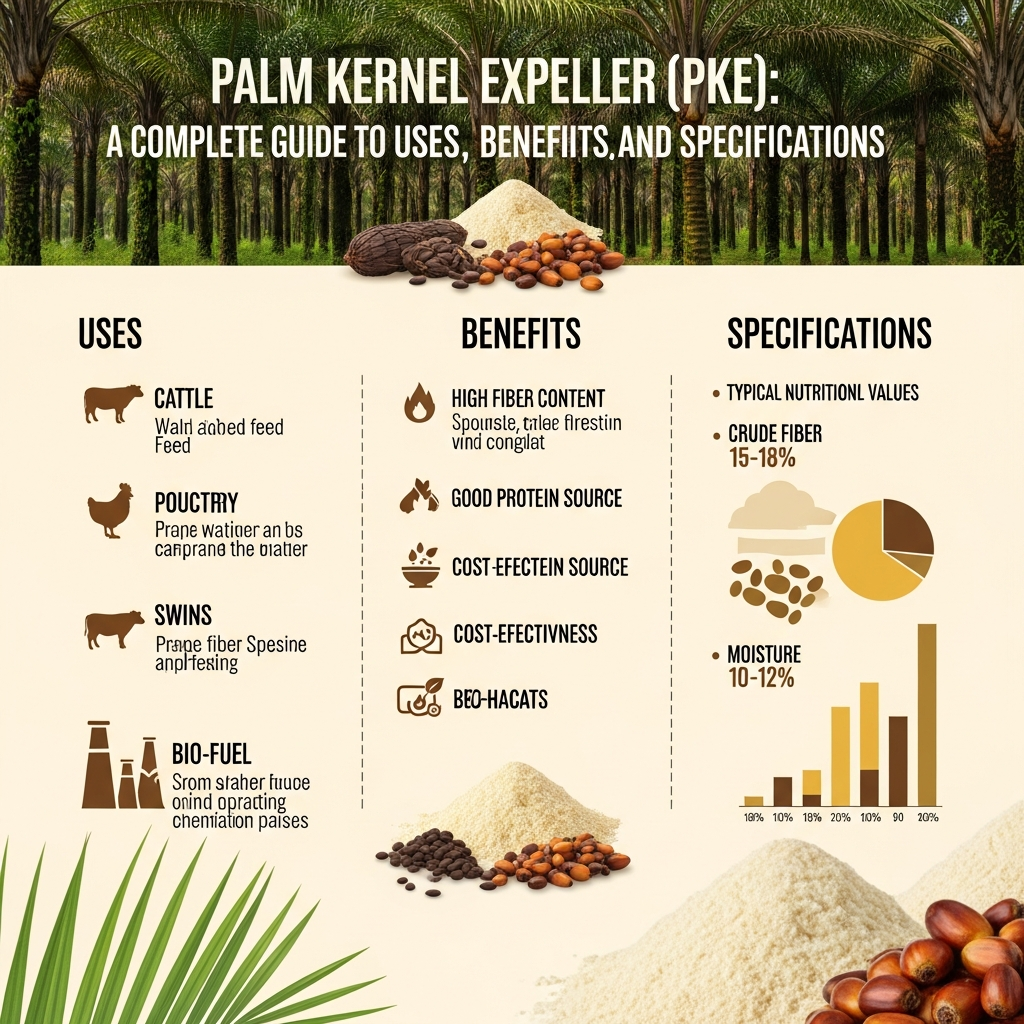

 English
  Indonesian
  Chinese
  Arabic