
Table of Contents
- What Is Coconut Shell Charcoal?How Is Coconut Shell Charcoal Made?Top 5 Benefits of Using Coconut Shell CharcoalCommon Uses of Coconut Shell CharcoalCoconut Shell Charcoal vs. Traditional CharcoalThe Surprising Environmental AdvantagesThe Broader World of Sustainable BiomassHow to Choose the Best Coconut Shell CharcoalFrequently Asked Questions (FAQ)
Have you ever considered what happens to a coconut shell after its contents are used? Often discarded, these shells hold immense potential. They are the primary ingredient for coconut shell charcoal, a remarkable and sustainable alternative to traditional charcoal that is rapidly gaining popularity for its efficiency and eco-friendly properties. This guide will explore everything you need to know about this amazing resource.
What Is Coconut Shell Charcoal?
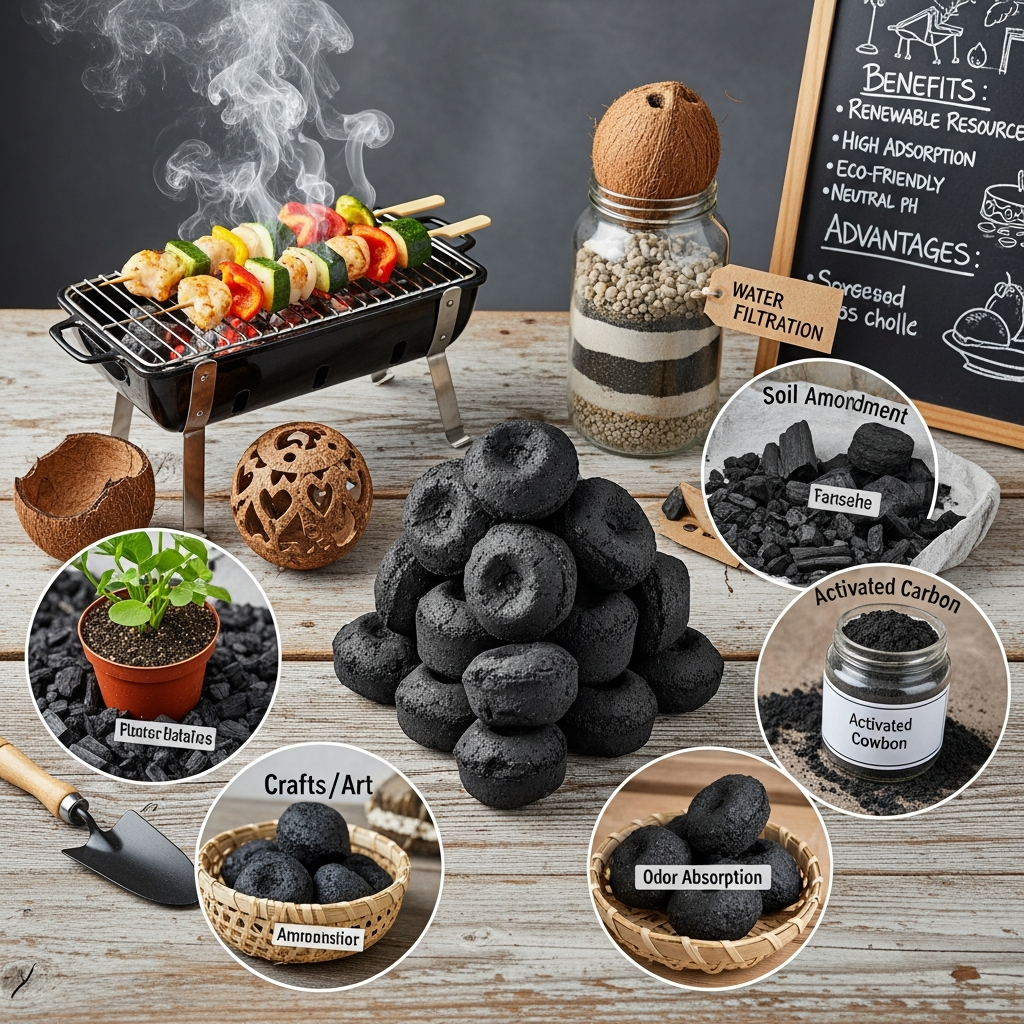
Coconut shell charcoal is a type of charcoal produced by carbonizing coconut shells in a kiln with a limited supply of air. This process removes moisture and volatile compounds, resulting in a product that is almost pure carbon. Its unique microporous structure makes it highly efficient and versatile.
Unlike lump charcoal or traditional briquettes made from wood and chemical binders, this product is completely natural. The high carbon content and density of coconut shell charcoal allow it to burn hotter and last significantly longer, making it a premium choice for various applications.
How Is Coconut Shell Charcoal Made?
The creation of coconut shell charcoal is a fascinating process that transforms waste into value. It begins with collecting mature coconut shells, which are then cleaned and dried. The shells are then placed into a specialized kiln for a process called pyrolysis.
During pyrolysis, the shells are heated to very high temperatures (over 500°C) in an oxygen-deprived environment. This controlled burning process ensures they don’t turn to ash, but instead carbonize into a dense, black, and highly porous material. The resulting charcoal is then cooled and often compressed into briquettes.

Top 5 Benefits of Using Coconut Shell Charcoal
1. Eco-Friendly and Sustainable
Coconut shells are a byproduct of the coconut industry. Using them to create charcoal prevents them from ending up in landfills, turning agricultural waste into a valuable resource. This makes coconut shell charcoal a highly sustainable and renewable energy source.
2. Burns Hotter and Longer
Thanks to its high density and carbon content, coconut charcoal can burn up to twice as long as traditional wood charcoal. It also maintains a consistent, high temperature, providing a reliable and even heat source perfect for grilling or industrial applications. You use less product for a better result.
3. Produces Less Smoke and Ash
One of the biggest advantages is the minimal smoke and ash production. It contains no additives or binders that cause flare-ups and thick smoke. Furthermore, it produces very little ash (less than 5% of its original weight), making cleanup incredibly easy and hassle-free.
4. Natural and Chemical-Free
High-quality coconut shell charcoal is 100% natural. It does not contain nitrates, borax, or other chemical additives often found in standard briquettes. This means no unwanted flavors are imparted to your food, ensuring a clean and authentic taste when grilling.
5. Excellent for Filtration
When “activated,” coconut shell charcoal becomes an incredibly effective filter. Its vast network of micropores gives it a massive surface area, ideal for adsorbing impurities. According to a study in the Journal of Urban and Environmental Engineering, its properties make it superior for removing contaminants from water and air.
Common Uses of Coconut Shell Charcoal
The versatility of coconut shell charcoal extends far beyond the backyard grill. Its unique properties lend themselves to a wide range of applications across different industries.
Grilling and Barbecuing (BBQ)
This is its most popular use. The long, consistent burn and low smoke make it a favorite among professional chefs and BBQ enthusiasts. It ensures food is cooked evenly without the harsh, chemical taste that can come from lesser-quality briquettes.
Activated Carbon for Water and Air Purification
As mentioned, activated charcoal from coconut shells is a powerhouse filter. It’s used globally in residential and municipal water filtration systems, air purifiers, and even in emergency poison treatment. The U.S. EPA also notes the effectiveness of activated carbon for removing contaminants from drinking water.
Horticulture and Soil Improvement
When used as biochar, coconut shell charcoal improves soil structure, aeration, and water retention. Its porous nature provides a habitat for beneficial microbes, enhancing soil fertility and promoting healthier plant growth without the need for chemical fertilizers.
Coconut Shell Charcoal vs. Traditional Charcoal
| Feature | Coconut Shell Charcoal | Traditional Charcoal (Lump/Briquettes) |
|---|---|---|
| Source | Renewable (coconut shells) | Wood (often from non-renewable sources) |
| Burn Time | Long (up to 3-4 hours) | Shorter (1-2 hours) |
| Heat Output | High and consistent | Variable, can have hot spots |
| Ash Content | Very Low (<5%) | High (10-20%) |
| Smoke & Odor | Minimal, no chemical smell | Can be smoky, may contain chemical binders |
| Sustainability | Excellent (uses waste product) | Varies (can contribute to deforestation) |
The Surprising Environmental Advantages
Choosing coconut shell charcoal is a direct vote for a healthier planet. By utilizing a waste product, it reduces the burden on landfills and provides an economic incentive for farmers. Most importantly, it helps combat deforestation, as no trees are cut down for its production, a crucial step in preserving our forests as noted by organizations like the World Wildlife Fund (WWF). This makes coconut shell charcoal a truly circular-economy product.
The Broader World of Sustainable Biomass
While coconut shell charcoal is a fantastic product, it’s part of a larger family of eco-friendly biomass fuels derived from agricultural industries. For instance, the palm oil industry yields several valuable resources beyond the oil itself. Byproducts like the durable Palm Kernel Shell are widely used as a high-grade biofuel in industrial boilers. From the Palm Kernel, we not only get versatile Palm Kernel Oil but also Palm Kernel Expeller, a nutrient-rich material used in animal feed. Similarly, after the primary extraction of Crude Palm Oil, the leftover Oil Palm Fruit Bunch serves as another vital source of renewable energy. Understanding these materials highlights the growing global shift toward utilizing every part of our agricultural output sustainably.
How to Choose the Best Coconut Shell Charcoal
When shopping, look for products labeled “100% natural” or “made from pure coconut shells.” Avoid brands that list fillers or chemical accelerants. The best briquettes are uniformly shaped and dense. Reading user reviews on trusted sites can also provide insight into a brand’s performance and quality, much like a Consumer Reports analysis would.
Frequently Asked Questions (FAQ)
Is coconut shell charcoal better than regular charcoal?
For most applications, yes. It burns longer, hotter, and cleaner with less ash and smoke. Its environmental benefits also make it a superior choice for conscious consumers.
Can I use it in any type of grill?
Absolutely. Coconut shell charcoal works perfectly in kettle grills, kamado-style cookers, and any other grill designed for charcoal.
Is it completely safe for cooking?
Yes, as long as you purchase a reputable brand that is 100% natural. The lack of chemical additives means no harmful compounds are transferred to your food.
Makmur Amanah Sejahtera provides high-quality palm products such as Palm Kernel Expeller, Palm Kernel Shell, Crude Palm Oil, Palm Kernel Oil, etc. Kindly contact us at WhatsApp +6282140002198 or email us at admin@makmuramanah.co.id. From backyard barbecues to large-scale filtration, coconut shell charcoal proves to be a superior product in every aspect. It offers unmatched performance, efficiency, and a powerful environmental advantage. By making the switch to coconut shell charcoal, you not only elevate your grilling experience but also contribute to a more sustainable world. Embrace this incredible resource and see the difference for yourself.Looking for High-Quality Palm Products?
Conclusion: The Clear Choice
 English
  Indonesian
  Chinese
  Arabic