
Table of Contents
In a world increasingly focused on sustainability, the search for eco-friendly alternatives has led to the rise of an incredible resource: coconut shell charcoal. This natural powerhouse is more than just a fuel; it’s a testament to how we can repurpose waste into something valuable, efficient, and better for our planet. Whether you’re a barbecue enthusiast, a gardener, or someone interested in natural purification, this guide will illuminate the amazing world of this unique charcoal.
Coconut shell charcoal is revolutionizing industries from cooking to cosmetics. Its unique properties provide a clean, long-lasting energy source that significantly outperforms traditional wood or lump charcoal. Let’s dive into what makes it so special.
What Is Coconut Shell Charcoal?
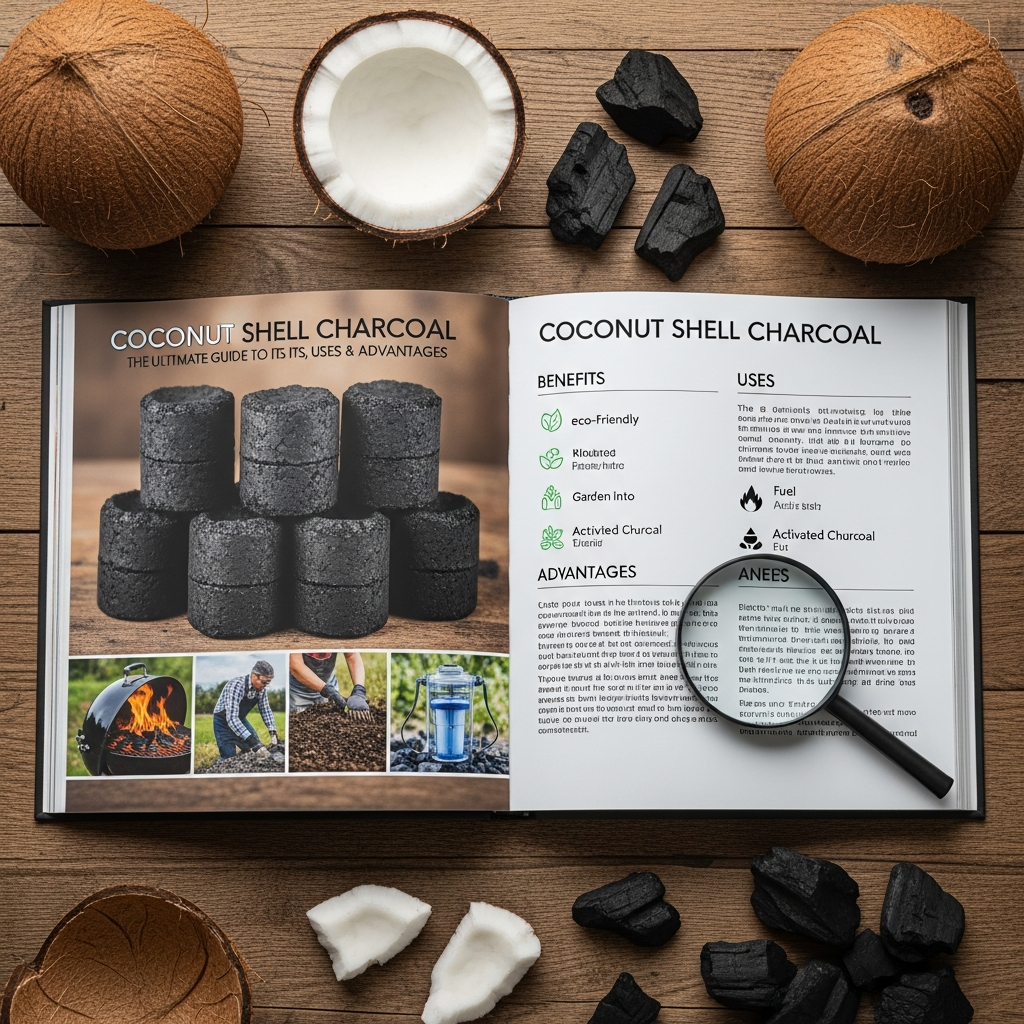
Coconut shell charcoal is a type of charcoal produced by burning the hard, outer shells of coconuts in a controlled environment with limited oxygen. This process, known as carbonization or pyrolysis, removes moisture and volatile compounds, leaving behind a pure carbon substance with a high density and porous structure.
Unlike traditional charcoal that contributes to deforestation, coconut shell charcoal is made from a byproduct of the coconut industry. Billions of coconuts are harvested annually for their oil, water, and meat, and the shells are often discarded. Similar to how the palm industry utilizes every part of its fruit—from producing Crude Palm Oil and Palm Kernel Oil from the Palm Kernel—the coconut industry repurposes these shells. This approach mirrors the use of other biomass fuels like Palm Kernel Shell, turning agricultural waste into a valuable energy source.
Top 7 Benefits of Coconut Shell Charcoal
The advantages of using coconut shell charcoal extend far beyond its green origins. It offers superior performance that makes it a top choice for various applications.

1. Eco-Friendly and Sustainable
This is perhaps its most significant benefit. Since it’s made from a renewable resource that is a byproduct of another industry, it doesn’t require cutting down trees. This helps combat deforestation and promotes a circular economy. Using coconut shell charcoal is a simple switch that supports a healthier planet. This circular economy model also applies to other agricultural byproducts, such as Palm Kernel Expeller used for animal feed and the Oil Palm Fruit Bunch for biomass energy, all contributing to a more sustainable industrial ecosystem. You can learn more about sustainable resources from environmental authorities like the U.S. Environmental Protection Agency (EPA).
2. Burns Hotter and Longer
Due to its high carbon content and density, coconut shell charcoal burns at a higher temperature and for a longer duration than most traditional wood charcoals. This consistent, high heat is perfect for searing meats and ensures your barbecue runs efficiently without needing frequent refueling.
3. Minimal Smoke and Odor
Nobody likes a grill that billows acrid smoke. Coconut shell charcoal is known for producing very little smoke and no unpleasant odors. This creates a more enjoyable cooking experience and is ideal for balconies, crowded events, or any setting where excessive smoke is a concern.
4. High Purity and Low Ash Content
The production process results in a very pure form of carbon. This means it leaves behind significantly less ash—often less than 5% of its original weight. Less ash makes cleanup a breeze and ensures better airflow in your grill for a more consistent burn.
5. Excellent for Water and Air Filtration
When “activated,” coconut shell charcoal becomes a powerful filtering agent. The activation process creates millions of tiny pores, dramatically increasing its surface area. This activated carbon is a master at trapping impurities, making it a key component in water and air purification systems. Its effectiveness is well-documented in scientific studies, like those found on ScienceDirect.
6. Versatile Applications
The use of coconut shell charcoal is not limited to grilling. It’s used in horticulture as biochar to improve soil health, in the cosmetic industry for detoxifying skincare products, and for industrial processes like gold recovery. Its versatility makes it an invaluable resource across multiple sectors.
7. Cost-Effective in the Long Run
While the initial price might be slightly higher than some low-quality charcoals, its long burn time means you use less of it per session. This efficiency makes coconut shell charcoal a more economical choice over time, saving you money while delivering premium results.
Common Uses of Coconut Shell Charcoal
- Barbecuing and Grilling: Its primary use due to high, consistent heat and low smoke.
- Activated Carbon: Used globally in water filters, air purifiers, and for medical purposes.
- Horticulture (Biochar): When added to soil, it improves water retention and nutrient levels. The USDA has explored its benefits for agriculture.
- Shisha/Hookah: It’s the preferred choice for hookah coals because it is odorless and provides a clean, long-lasting burn.
- Art: Artists use it as a high-quality drawing medium.
Coconut Shell Charcoal vs. Traditional Charcoal: Which Is Better?
When comparing coconut shell charcoal to traditional lump wood charcoal or briquettes, the differences are clear. Here’s a quick breakdown:
| Feature | Coconut Shell Charcoal | Traditional Wood Charcoal |
|---|---|---|
| Source | Renewable byproduct (coconut shells) | Hardwood trees (contributes to deforestation) |
| Burn Time | Longer (2-3 hours) | Shorter (around 1 hour) |
| Heat Output | High and consistent | Can be inconsistent with hotspots |
| Smoke & Odor | Very low smoke, no odor | Smoky, can have a strong odor |
| Ash Content | Low (2-5%) | High (can be up to 15-20%) |
How to Choose the Best Coconut Shell Charcoal
When shopping for coconut shell charcoal, keep these tips in mind:
- Check for 100% Natural Ingredients: Ensure there are no fillers, binders, or chemical accelerants. The best products are made purely from coconut shells.
- Consider the Form: Briquettes are uniformly shaped and excellent for most grills, providing a stable, even heat source.
- Read Reviews: See what other users are saying about the burn time, heat consistency, and overall quality.
Frequently Asked Questions (FAQs)
1. Is coconut shell charcoal safe for cooking?
Yes, absolutely. High-quality, 100% natural coconut shell charcoal is perfectly safe for cooking. It contains no harmful chemicals and produces food that tastes clean and pure. For expert advice on grilling safety, you can refer to resources like Weber’s grilling blog.
2. Does it make food taste like coconut?
No. Despite its origin, coconut shell charcoal is completely odorless and does not impart any coconut flavor to your food. It provides a neutral heat source that lets the natural flavor of your ingredients shine.
3. How do you light coconut shell charcoal?
You can light it just like regular charcoal. A charcoal chimney starter is the most effective and chemical-free method. Avoid using lighter fluid, as it can add unwanted chemical flavors to your food.
Conclusion
From sustainability to superior performance, coconut shell charcoal stands out as the ultimate choice for modern consumers. Its eco-friendly production, long-lasting heat, and clean-burning properties make it an investment in better cooking and a healthier planet. By choosing this amazing fuel, you are not just upgrading your barbecue—you are supporting a smarter, more sustainable future.
So, the next time you fire up the grill, make the switch to coconut shell charcoal and experience the remarkable difference for yourself. It’s a small change that delivers powerful benefits.
Contact Us for Premium Palm Products
Looking for High-Quality Palm Products?
Makmur Amanah Sejahtera provides high-quality palm products such as Palm Kernel Expeller, Palm Kernel Shell, Crude Palm Oil, Palm Kernel Oil, etc. Kindly contact us at WhatsApp +6282140002198 or email us at admin@makmuramanah.co.id.


 English
  Indonesian
  Chinese
  Arabic