
Table of Contents
- What is Palm Kernel Expeller (PKE)?
- How is Palm Kernel Expeller (PKE) Produced?
- Nutritional Specifications of Palm Kernel Expeller (PKE)
- Key Benefits of Using PKE in Animal Feed
- Common Uses of Palm Kernel Expeller (PKE) in Livestock
- Potential Drawbacks of Using Palm Kernel Expeller (PKE)
- Frequently Asked Questions about PKE
- Source High-Quality Palm Kernel Expeller
In the world of livestock nutrition, finding cost-effective, sustainable, and nutrient-rich feed ingredients is a constant pursuit. This guide delves into Palm Kernel Expeller (PKE), a significant by-product of the palm oil industry that has become a staple in animal diets worldwide. Understanding its properties is key to optimizing livestock health and farm profitability.
What is Palm Kernel Expeller (PKE)?
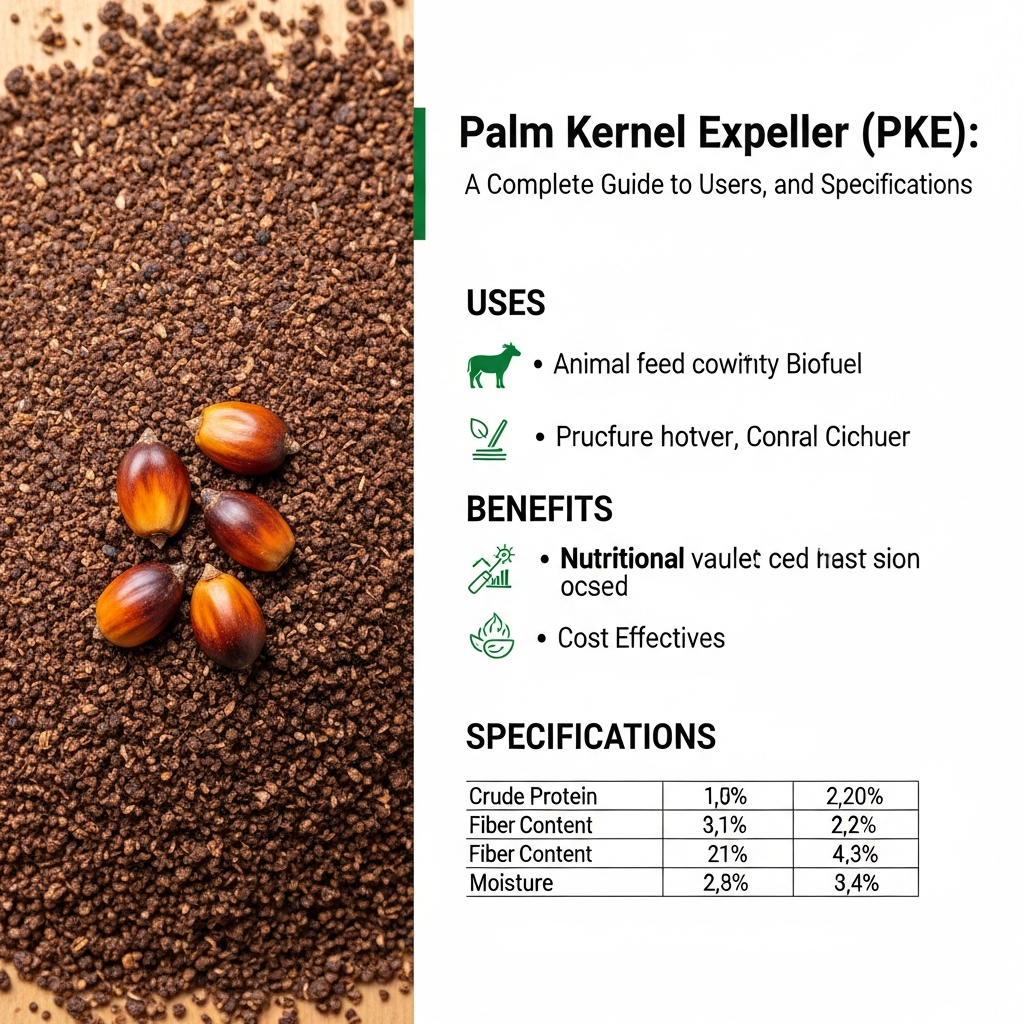
Palm Kernel Expeller (PKE) is a co-product created during the extraction of oil from the Palm Kernel. After the kernel is crushed to release its valuable oil using a mechanical press (an expeller), the leftover solid, fibrous material is the PKE. It is also sometimes referred to as Palm Kernel Cake (PKC).
This material is rich in fiber and has a moderate content of protein and energy, making it a valuable ingredient for animal feed, particularly for ruminants like cattle and sheep. Its widespread availability and competitive pricing have cemented its role in the global feed supply chain, offering a sustainable way to utilize every part of the palm fruit.
How is Palm Kernel Expeller (PKE) Produced?
The production of Palm Kernel Expeller (PKE) is a straightforward mechanical process that begins after the Oil Palm Fruit Bunch is processed. After the fruit’s flesh is pressed to produce Crude Palm Oil, the remaining nut is cracked. This separates the valuable kernel from by-products like Palm Kernel Shell, which is often used for biofuel.
- Crushing: The kernels are broken down to increase the surface area for oil extraction.
- Pressing: The crushed kernels are fed into a large mechanical screw press, known as an expeller. This machine applies immense pressure, forcing the oil out.
- Separation: The liquid, Palm Kernel Oil, is collected, while the remaining solid, de-oiled material is the Palm Kernel Expeller.
This process avoids the use of chemical solvents, making it a clean and natural method. The resulting PKE is then typically dried to a safe moisture level for storage and transport.

Nutritional Specifications of Palm Kernel Expeller (PKE)
The nutritional profile of Palm Kernel Expeller (PKE) can vary based on the efficiency of the oil extraction process. However, a typical analysis provides a solid foundation for its use in feed formulation. For detailed specifications, resources like Feedipedia offer extensive data.
- Crude Protein: Typically ranges from 14-18%. While not as high as soybean meal, it provides a valuable source of amino acids.
- Crude Fiber: High in fiber, often around 15-20%. This is highly beneficial for the digestive health of ruminant animals.
- Fat (Residual Oil): Usually contains 5-10% fat, which serves as a dense source of energy.
- Minerals: PKE is a good source of phosphorus, copper, zinc, and manganese, vital for bone development and metabolic functions.
Key Benefits of Using PKE in Animal Feed
1. Exceptional Cost-Effectiveness of PKE
One of the primary advantages of PKE is its affordability. As a by-product, it is often more economically priced than primary feed crops like corn or soybean meal. This allows farmers to lower overall feed costs without significantly compromising on nutritional value.
2. High Digestible Fiber in Palm Kernel Expeller
The high fiber content is particularly beneficial for ruminants such as dairy and beef cattle. This fiber supports healthy rumen function, promotes cud-chewing, and helps maintain optimal pH. Research published in journals like the Journal of Dairy Science frequently highlights the importance of fiber for ruminant health.
3. PKE as a Sustainable and Eco-Friendly Feed
Incorporating Palm Kernel Expeller (PKE) into feed is a form of upcycling. It utilizes a resource that would otherwise be considered waste, contributing to a more circular economy. Sourcing from certified suppliers also supports responsible land use, a principle advocated by organizations like the Roundtable on Sustainable Palm Oil (RSPO).
Common Uses of Palm Kernel Expeller (PKE) in Livestock
Feed for Dairy and Beef Cattle
This is the largest market for Palm Kernel Expeller (PKE). In dairy cows, it provides the necessary fiber for good rumen health and butterfat production. For beef cattle, it serves as an excellent energy and protein source in finishing rations.

Sheep and Goat Nutrition
Like cattle, sheep and goats are ruminants and can efficiently digest the high fiber in PKE. It is often included in supplementary feed pellets to support growth and milk production.
Limited Use in Poultry and Swine
The high fiber content makes PKE less suitable for monogastric animals like chickens and pigs, who cannot digest it as effectively. However, it can be included at low levels (typically under 10% of the diet) with the help of feed enzymes.
Potential Drawbacks of Using Palm Kernel Expeller (PKE)
While Palm Kernel Expeller (PKE) is an excellent resource, a few factors require consideration:
- Quality Variation: Nutritional content can differ between suppliers. Sourcing from a reputable supplier is crucial to ensure consistency.
- Palatability: Some animals may need a gradual introduction to PKE. Mixing it into a total mixed ration (TMR) often solves this.
- Storage: Like any feedstuff with residual oil, PKE should be stored in a dry, cool place to prevent it from becoming rancid.
Frequently Asked Questions about PKE
1. Is Palm Kernel Expeller (PKE) safe for all animals?
PKE is very safe for ruminants (cattle, sheep, goats). Its use should be limited in monogastric animals like poultry and swine unless specific feed enzymes are used to aid digestion.
2. What is a good inclusion rate for Palm Kernel Expeller (PKE) in cattle feed?
For dairy and beef cattle, PKE can often make up 20-30% of the total diet concentrate, but this can go as high as 50% in certain formulations. Always consult an animal nutritionist to determine the optimal rate, a point often emphasized by agricultural bodies like the Food and Agriculture Organization (FAO).
3. How does PKE compare to soybean meal?
PKE has lower protein (14-18% vs. 44-48%) and higher fiber than soybean meal. It is not a direct replacement but serves as an excellent complementary ingredient, providing fiber and energy while soybean meal provides high-quality protein.
In summary, Palm Kernel Expeller (PKE) stands out as a versatile, economical, and sustainable feed ingredient for the modern livestock industry. Its unique balance of fiber, protein, and energy makes it an invaluable tool for farmers aiming to enhance animal health and operational efficiency.
Source High-Quality Palm Kernel Expeller
Looking for High-Quality Palm Products?
Makmur Amanah Sejahtera provides high-quality palm products such as Palm Kernel Expeller, Palm Kernel Shell, Crude Palm Oil, Palm Kernel Oil, etc. Kindly contact us at WhatsApp +6282140002198 or email us at admin@makmuramanah.co.id.

 English
  Indonesian
  Chinese
  Arabic