
Table of Contents
- What is RBD Palm Olein?
- Understanding Cloud Point (CP): The Core Difference
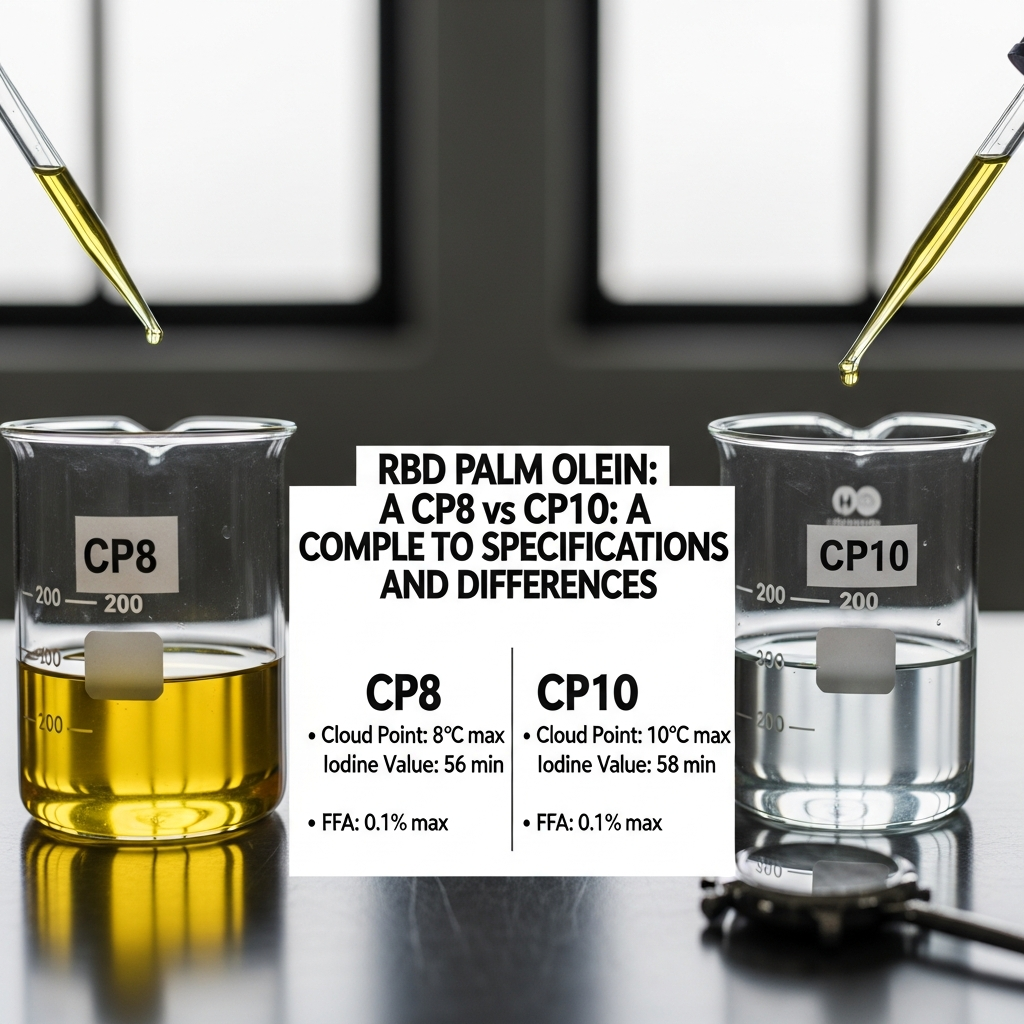
- The Ultimate Showdown: RBD Palm Olein CP8 vs CP10 Specifications
- Key Application Differences: When to Use CP8 vs CP10
- Market Trends and Cost Implications in the CP8 vs CP10 Debate (2025)
- Frequently Asked Questions (FAQ)
- Conclusion: Making the Right Choice
When selecting the right cooking oil for commercial food production, the details matter immensely. The debate over RBD Palm Olein CP8 vs CP10 is a prime example of how a small difference in specifications can have a big impact on final product quality. This guide breaks down everything you need to know to make an informed decision for your specific needs.
RBD Palm Olein is one of the world’s most popular and versatile vegetable oils, prized for its stability and affordability. But not all palm olein is created equal. The designations CP10 and CP8 refer to their Cloud Point, a critical factor that determines their performance in different climates and applications. This guide dives deep into the RBD Palm Olein CP8 vs CP10 debate to clarify which is best for you.
What is RBD Palm Olein?
First, let’s break down the name. RBD stands for Refined, Bleached, and Deodorized. This is a standard purification process for Crude Palm Oil that removes impurities, color pigments, and odors, resulting in a bland, stable, and light-yellow oil ready for consumption. It’s important not to confuse palm oil, which comes from the fruit’s flesh, with Palm Kernel Oil, an oil extracted from the inner Palm Kernel.
Palm oil is unique because it’s naturally semi-solid at room temperature. To create the liquid portion (olein), it undergoes a process called fractionation. The oil is heated and then slowly cooled, causing the solid fat (stearin) to crystallize. The remaining liquid is then separated, yielding RBD Palm Olein. The level of cooling and fractionation determines the final Cloud Point.

Understanding Cloud Point (CP): The Core Difference in the RBD Palm Olein CP8 vs CP10 Debate
The Cloud Point is the most significant differentiator in the RBD Palm Olein CP8 vs CP10 comparison. It refers to the temperature at which the oil begins to look cloudy or hazy as certain fatty acids start to crystallize. This is a physical property and does not indicate spoilage.
- CP10 (Cloud Point 10°C): This oil will remain clear at temperatures above 10° Celsius (50°F). It is the most common and standard specification for palm olein.
- CP8 (Cloud Point 8°C): This variety, also known as “Super Olein,” undergoes further fractionation to remain clear at temperatures above 8° Celsius (46.4°F).
This two-degree difference is crucial. CP8’s lower cloud point makes it more suitable for temperate or cooler climates, where CP10 might become cloudy and thick, which is undesirable for applications like salad dressings or liquid cooking oils.
The Ultimate Showdown: RBD Palm Olein CP8 vs CP10 Specifications
While Cloud Point is the headline difference, other specifications also vary slightly. The Iodine Value (IV), for instance, measures the degree of unsaturation in the oil. A higher IV generally correlates with a lower melting point. Here’s a direct comparison based on typical industry standards from the Codex Alimentarius Commission.
| Specification | RBD Palm Olein CP10 | RBD Palm Olein CP8 (Super Olein) |
|---|---|---|
| Cloud Point (°C, max) | 10 | 8 |
| Iodine Value (IV) | 56 min | 58 – 62 |
| Free Fatty Acid (FFA, % max) | 0.1% | 0.1% |
| Moisture & Impurities (M&I, % max) | 0.1% | 0.1% |
| Color (Lovibond 5.25″ Cell) | 3 Red max | 3 Red max |
As the table shows, the primary variations in the RBD Palm Olein CP8 vs CP10 battle are Cloud Point and Iodine Value, which are critical for processors to understand. Other quality parameters like FFA and M&I are typically identical, ensuring high purity for both products.
Key Application Differences: When to Use CP8 vs CP10
The choice between these two oils comes down to three factors: application, climate, and cost. Each oil excels in different areas based on its physical properties.
Applications for RBD Palm Olein CP8
Thanks to its lower cloud point, CP8 is the premium choice for applications where clarity at cooler temperatures is essential. Its higher Iodine Value also makes it slightly less viscous.
- Liquid Cooking Oil: Bottled as a consumer cooking oil in temperate regions to prevent cloudiness on the shelf.
- Salad Dressings & Mayonnaise: Ensures the product remains liquid and homogenous when refrigerated.
- Pharmaceuticals & Cosmetics: Used where product stability and clarity at lower temperatures are required.
Applications for RBD Palm Olein CP10
CP10 is the workhorse of the global food industry, especially in tropical climates. Its incredible heat stability and cost-effectiveness make it the number one choice for frying, cementing its role in the RBD Palm Olein CP8 vs CP10 choice for industrial users.
- Industrial Frying: Perfect for large-scale production of instant noodles, potato chips, donuts, and other snack foods.
- General Cooking: Widely used in restaurants and homes in warmer climates where clouding is not a concern.
- Ingredient in Margarines & Confectionery: Blended with other fats to achieve specific textures.

Market Trends and Cost Implications in the CP8 vs CP10 Debate (2025)
In the commodities market, price is always a key factor in the RBD Palm Olein CP8 vs CP10 decision. RBD Palm Olein CP8 consistently commands a higher price than CP10. This premium is due to the additional fractionation required to lower the cloud point, which results in a lower yield and higher production cost.
As of 2025, businesses must weigh this extra cost against the performance benefits. For a snack food manufacturer in Southeast Asia, the stability and affordability of CP10 make it the logical choice. However, for a salad dressing producer in Europe, using CP10 could lead to quality issues, making the premium for CP8 a necessary investment. For live commodity prices, resources like IndexMundi offer valuable insights.
Frequently Asked Questions (FAQ)
Is there a nutritional difference between RBD Palm Olein CP8 vs CP10?
No, the nutritional profiles are nearly identical. Both are sources of Vitamin E and are free of trans fats. The primary difference is the ratio of saturated to unsaturated fatty acids, which is only slightly altered during the additional fractionation for CP8. The World Health Organization provides general guidelines on fat consumption.
Can I substitute CP10 for CP8?
It depends on the application. For deep frying, substitution is generally acceptable. However, if you are making a product that needs to remain clear at lower temperatures (like a dressing), substituting CP10 for CP8 is not recommended as it will likely result in solidification and clouding.
Which is better for home cooking?
In warmer climates, CP10 is perfectly suitable and more economical. In cooler climates, CP8 is often sold as “vegetable cooking oil” and is a better choice to ensure the oil remains liquid in the pantry.
Why is palm olein so popular in the food industry?
Its popularity stems from high thermal stability (high smoke point), a neutral flavor profile, and its cost-effectiveness compared to other oils like sunflower or soybean oil. Research from journals like the Journal of Food Science confirms its functional benefits.
Conclusion: Making the Right Choice
The choice in the RBD Palm Olein CP8 vs CP10 discussion is not about which oil is “better” overall, but which is right for your specific purpose. CP10 is the cost-effective industry standard for frying and general use in warm climates. CP8 is the premium, specialized option for applications requiring fluidity and clarity at lower temperatures.
Beyond just liquid oils, the entire oil palm plant offers immense value. The processing of the Oil Palm Fruit Bunch yields not only oil but also other valuable co-products. These include biomass fuel like Palm Kernel Shell and nutritious animal feed such as Palm Kernel Expeller, showcasing a zero-waste approach in the industry.
By understanding the key differences in cloud point, iodine value, and cost, food manufacturers and consumers can select the perfect oil to ensure optimal product quality and performance in 2025 and beyond.
Makmur Amanah Sejahtera provides high-quality palm products such as Palm Kernel Expeller, Palm Kernel Shell, Crude Palm Oil, Palm Kernel Oil, etc. Kindly contact us at WhatsApp +6282140002198 or email us at admin@makmuramanah.co.id.Looking for High-Quality Palm Products?
 English
  Indonesian
  Chinese
  Arabic