
Table of Contents
Table of Contents
The Palm Kernel Expeller (PKE) is a cornerstone ingredient in the global animal feed industry, valued for its unique nutritional profile and cost-effectiveness. As farmers and livestock managers seek sustainable and economical feed solutions, understanding the specifics of PKE has become more critical than ever. This guide explores its uses, benefits, and specifications for 2025 and beyond.
Derived from the oil palm tree (Elaeis guineensis), which also gives us the Oil Palm Fruit Bunch, PKE is a by-product of the mechanical extraction of oil from the Palm Kernel. What remains is a nutrient-dense meal that serves as an excellent feed component for various types of livestock, especially ruminants. Its widespread availability makes it a staple in many feed formulations worldwide.

What Exactly is Palm Kernel Expeller (PKE)?
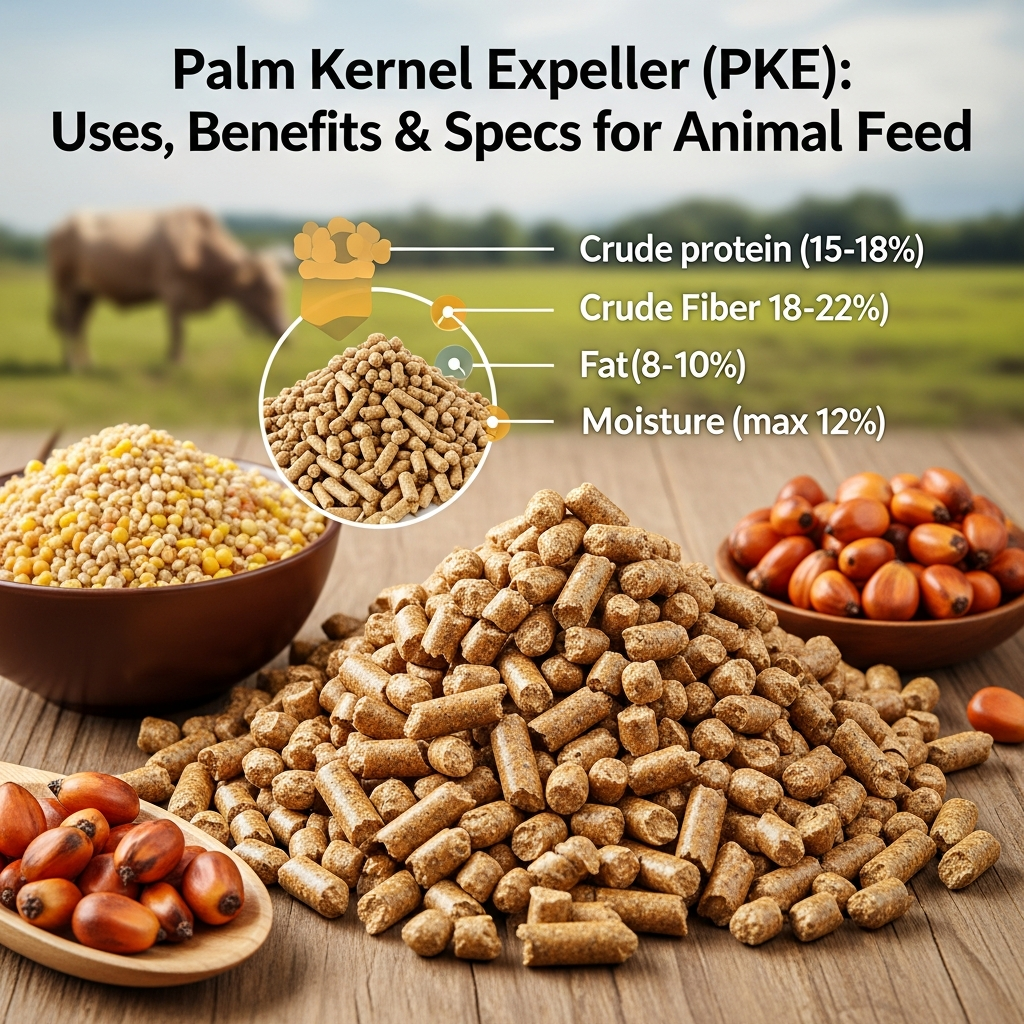
Palm Kernel Expeller (PKE) is produced after the palm kernel has been crushed and the valuable Palm Kernel Oil has been extracted using a mechanical screw press (an expeller). This process leaves behind a solid, protein-rich substance. It is one of several key products derived from the palm fruit, alongside Crude Palm Oil (from the fruit’s flesh) and other by-products like Palm Kernel Shell.
The quality of PKE can vary depending on the efficiency of the oil extraction process. A higher residual oil content means more energy, while lower oil content increases the concentration of protein and fiber. This variability makes it crucial for buyers to source from reputable suppliers who provide consistent product specifications.
Nutritional Specifications of Palm Kernel Expeller (PKE): A Deep Dive
The true value of Palm Kernel Expeller (PKE) lies in its nutritional composition. While figures can vary slightly based on the processing method, a typical analysis provides a balanced profile of protein, fiber, energy, and minerals. Understanding these components is key to effective ration formulation.
Here is a table outlining the typical nutritional specifications of PKE:
| Nutrient | Average Percentage (%) |
|---|---|
| Crude Protein (CP) | 14-18% |
| Crude Fiber (CF) | 15-22% |
| Crude Fat / Ether Extract (EE) | 5-12% |
| Metabolizable Energy (Ruminants) | 10-12 MJ/kg |
| Ash | 4-6% |
| Phosphorus | 0.5-0.7% |
The high fiber content makes Palm Kernel Expeller (PKE) particularly suitable for ruminants, as their digestive systems are well-equipped to break down fibrous materials. For more detailed data on feed composition, the Feedipedia database by the FAO offers extensive information on PKE.
The 5 Ultimate Benefits of Using Palm Kernel Expeller (PKE) in Animal Feed
Incorporating PKE into livestock diets offers several compelling advantages that contribute to both animal performance and farm profitability. Its balanced profile and economic value make it a smart choice for modern agriculture.
1. A Remarkably Cost-Effective Feed Solution
Compared to other common protein and energy sources like soybean meal or corn, Palm Kernel Expeller (PKE) is often significantly more affordable. This price advantage allows farmers to lower overall feed costs without compromising essential nutrient delivery, directly boosting their bottom line. For insights into feed market economics, a resource like the USDA’s Feed Price reporting provides valuable context.
2. High in Digestible Fiber for Ruminants
The high concentration of crude fiber in PKE is a major benefit for ruminant animals such as cattle, sheep, and goats. This fiber supports healthy rumen function, stimulates rumination (cud-chewing), and helps maintain proper gut pH. This leads to improved digestion and better overall herd health.
3. A Balanced, Moderate Energy Source
The residual oil in Palm Kernel Expeller (PKE) provides a good source of metabolizable energy. This slow-release energy is ideal for sustaining livestock throughout the day and is less likely to cause the metabolic issues associated with high-starch feeds. It perfectly complements high-energy forages and grains in a total mixed ration (TMR).
4. Promotes Agricultural Sustainability
PKE is a by-product of the palm oil industry. By utilizing it as animal feed, we contribute to a more circular economy, reducing waste and making the most of agricultural resources. This sustainable approach is increasingly important to consumers and regulators, as highlighted by organizations like the Roundtable on Sustainable Palm Oil (RSPO).
5. Versatility Across Multiple Livestock Species
While it is most famous for its use in dairy and beef cattle diets, PKE is also incorporated into feed for poultry, swine, and even aquaculture. Its role as a filler and nutrient source makes it a flexible ingredient in the hands of a skilled animal nutritionist.
Primary Uses of Palm Kernel Expeller (PKE) in Modern Farming
The application of Palm Kernel Expeller (PKE) varies by animal type due to differences in digestive systems and nutritional needs. Formulating the right inclusion rate is key to maximizing its benefits.
Palm Kernel Expeller (PKE) for Ruminants (Cattle, Goats)
This is where PKE truly shines. For dairy cows, it provides a balance of protein and fiber that supports milk production and butterfat content. For beef cattle, it’s an excellent and affordable component in backgrounding and finishing rations, promoting steady weight gain.
Palm Kernel Expeller (PKE) for Poultry
In poultry diets, PKE is used more sparingly. Its high fiber content can be difficult for chickens (broilers and layers) to digest. However, at lower inclusion rates (typically under 10%), it serves as a cost-effective filler and protein source. Research published in journals like Poultry Science often explores methods to improve its digestibility for birds.
Palm Kernel Expeller (PKE) for Swine
Similar to poultry, pigs have a limited capacity to digest the high fiber levels in Palm Kernel Expeller (PKE). It is most commonly used in sow diets or during the finisher phase at conservative levels. Proper formulation is necessary to avoid impacting growth rates.
Potential Limitations and Key Considerations
While PKE is an excellent resource, users should be aware of a few factors. The quality can be inconsistent, particularly regarding shell content. High shell content can reduce digestibility and energy value. Additionally, due to its oil content, PKE must be stored properly in a cool, dry place to prevent rancidity and mycotoxin growth.
How to Safely Incorporate PKE into Animal Rations
The key to success with PKE is balanced formulation. It should not be used as a sole feed ingredient but rather as part of a complete diet. Always introduce it into an animal’s diet gradually over 7-10 days to allow the digestive system to adapt.
Consulting with an animal nutritionist is the best way to determine the optimal inclusion rate for your specific livestock and production goals. They can help you balance the ration with other ingredients to meet all nutritional requirements.
Your Trusted Source for High-Quality Palm Products
To ensure you receive consistent, high-quality ingredients for your feed formulations, sourcing from a reliable supplier is crucial.
Makmur Amanah Sejahtera provides high-quality palm products such as Palm Kernel Expeller, Palm Kernel Shell, Crude Palm Oil, Palm Kernel Oil, etc. Kindly contact us at WhatsApp +6282140002198 or email us at admin@makmuramanah.co.id. The Palm Kernel Expeller (PKE) has rightfully earned its place as a valuable ingredient in the global feed industry. Its unbeatable combination of cost-effectiveness, high fiber, and moderate protein/energy content makes it an ideal choice, particularly for ruminant diets. By understanding its nutritional profile and working with trusted suppliers, farmers can leverage PKE to lower feed costs, support animal health, and contribute to a more sustainable agricultural system in 2025 and for years to come.Looking for High-Quality Palm Products?
Conclusion: The Proven Value of PKE
 English
  Indonesian
  Chinese
  Arabic