
Table of Contents
- What Exactly is Coconut Shell Charcoal?
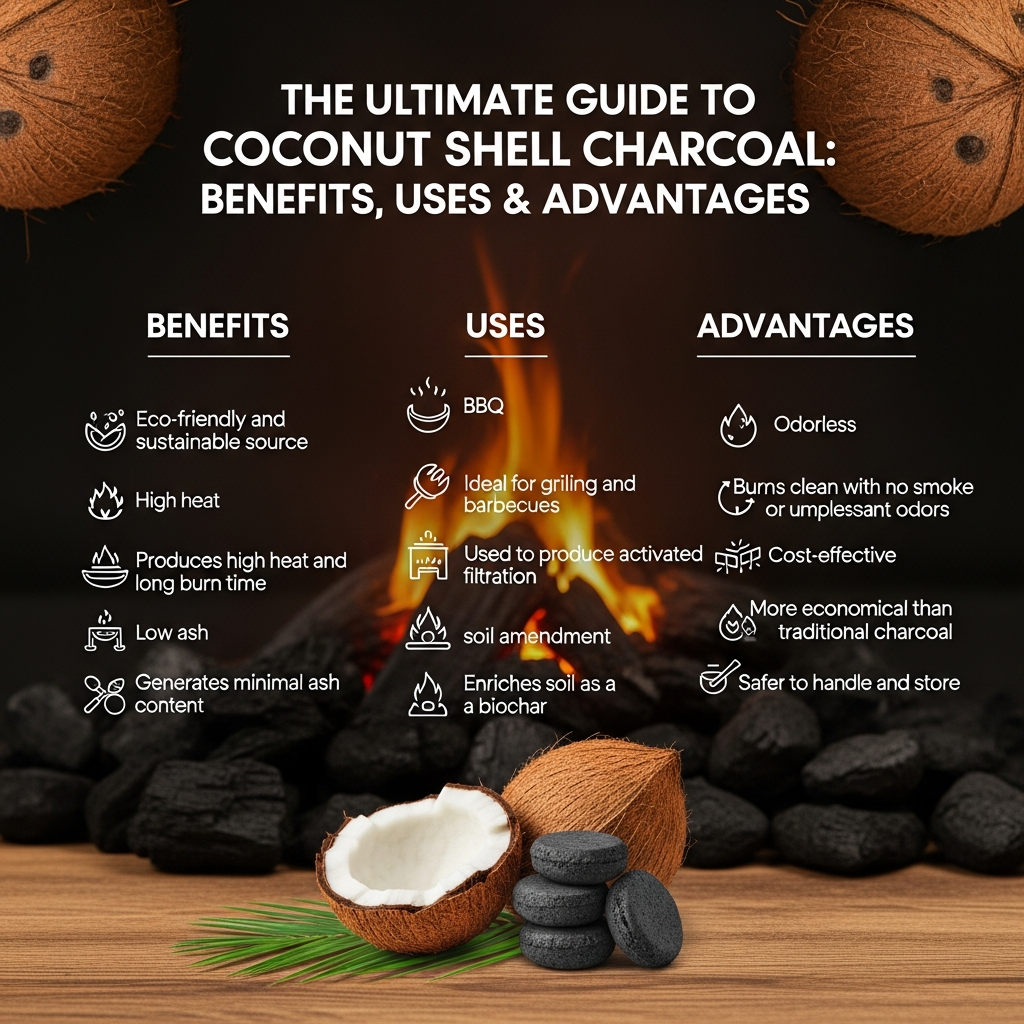
7 Key Benefits of Using Coconut Shell Charcoal
- 1. It’s Eco-Friendly and Sustainable
2. Delivers High, Consistent Heat
3. Exceptionally Long Burn Time
4. Produces Minimal Smoke and Odor
5. A Powerful Natural Purifier
6. Leaves Behind Very Little Ash
7. Incredibly Versatile
Have you ever considered what happens to coconut shells after the fruit is harvested? Often discarded, these shells are the key to a powerful, sustainable resource: coconut shell charcoal. This eco-friendly alternative to traditional charcoal is gaining massive popularity for its efficiency, versatility, and green credentials. Whether you’re a barbecue enthusiast or passionate about sustainable living, understanding this amazing product is a game-changer.
What Exactly is Coconut Shell Charcoal?
Coconut shell charcoal is a product created by burning coconut shells in a low-oxygen environment, a process known as pyrolysis. This method removes volatile compounds like water and methane, leaving behind pure carbon. The resulting charcoal is dense, clean-burning, and packed with energy.
Unlike traditional wood charcoal, which contributes to deforestation, this product utilizes an agricultural byproduct. This transforms waste into a valuable commodity, making it an excellent example of a circular economy. The process ensures that every part of the coconut is put to good use, minimizing waste and environmental impact.
In many ways, this mirrors the broader palm industry’s commitment to efficiency, where no part of the harvest goes to waste. The process begins with the Oil Palm Fruit Bunch, from which valuable oils like Crude Palm Oil (CPO) are extracted. The remaining Palm Kernel is then processed to produce Palm Kernel Oil (PKO). Even the final byproducts have significant value; solids like Palm Kernel Expeller become nutritious animal feed, while the hardy Palm Kernel Shell is used as a high-grade biomass fuel. This holistic approach ensures maximum value and minimal environmental footprint.
7 Key Benefits of Using Coconut Shell Charcoal
The advantages of switching to coconut shell charcoal are numerous, ranging from environmental perks to superior performance. Here’s why it stands out.

1. It’s Eco-Friendly and Sustainable
As mentioned, coconut shell charcoal is made from a renewable resource that is a byproduct of the coconut industry. This prevents the need for cutting down trees, helping to preserve forests and biodiversity. Its use as a biomass energy source is recognized as a significant step towards sustainable energy solutions. For more on biomass, see this overview from the U.S. Energy Information Administration.
2. Delivers High, Consistent Heat
One of the most significant performance advantages is its ability to burn hotter and more evenly than many traditional charcoals. It can reach high temperatures quickly, providing a perfect sear for meats and vegetables while maintaining a consistent heat source for even cooking.
3. Exceptionally Long Burn Time
Thanks to its high density, coconut shell charcoal burns for a significantly longer time than its wood-based counterparts. A single batch can last for hours, making it both cost-effective and convenient for long grilling sessions, smoking, or large gatherings without needing to constantly refuel.
4. Produces Minimal Smoke and Odor
This type of charcoal is virtually free of the chemicals and fillers often found in conventional briquettes. As a result, it produces very little smoke and no unpleasant odors. This means your food tastes like food, not fuel, preserving its natural flavors.
5. A Powerful Natural Purifier
When processed further, coconut shell charcoal becomes “activated carbon,” a substance with an incredibly porous surface. This structure is highly effective at adsorbing impurities, making it a key component in water and air filtration systems. The Environmental Protection Agency (EPA) recognizes activated carbon as a proven technology for removing contaminants.
6. Leaves Behind Very Little Ash
Another practical benefit is the low ash content. Coconut charcoal burns so efficiently that it leaves behind only about 2-4% of its original weight in ash. This makes cleanup incredibly easy and reduces the amount of airborne particles during and after your cookout.
7. Incredibly Versatile
From grilling and barbecuing to gardening and industrial processes, the applications for this product are vast. This versatility makes it a valuable resource in numerous sectors, which we explore below.
Common Uses for Coconut Shell Charcoal Beyond the Grill
While perfect for your weekend barbecue, the utility of coconut shell charcoal extends far beyond cooking.

- Activated Carbon: As mentioned, it’s a superstar in filtration. It’s used in everything from home water pitchers to large-scale municipal water treatment plants and air purifiers.
Horticulture (Biochar): When added to soil, it acts as “biochar,” which improves soil structure, water retention, and nutrient absorption for plants. This can lead to healthier gardens and increased crop yields. The Royal Horticultural Society details its benefits for gardeners.
Health & Beauty: The purifying properties of its activated form are used in toothpaste for whitening, face masks for drawing out impurities, and even in medical settings for treating certain poisonings.
Industrial Fuel: Due to its high heat value and low emissions, it serves as an excellent energy source in forges, boilers, and other industrial applications.
Coconut Shell Charcoal vs. Other Types
How does it stack up against the competition? Here’s a quick comparison.
| Feature | Coconut Shell Charcoal | Lumpwood Charcoal | Standard Briquettes |
|---|---|---|---|
| Source | Renewable (coconut shells) | Trees/Wood Scraps | Wood dust, fillers, binders |
| Heat Output | High & Consistent | Very High, can be uneven | Medium & Consistent |
| Burn Time | Very Long (3-5 hours) | Short (1-2 hours) | Medium (2-3 hours) |
| Smoke | Very Low | Low to Medium | Medium to High |
| Ash Content | Very Low | Low | High |
How to Choose the Best Coconut Shell Charcoal
When shopping for coconut shell charcoal, look for brands that specify their product is 100% natural. Avoid those with added fillers, binders, or chemical accelerants. The best products are typically formed into uniform briquettes, which ensures a consistent burn rate and even heat distribution across your grill.
Frequently Asked Questions
Is coconut shell charcoal better than regular charcoal?
For most applications, yes. It is more sustainable, burns longer, hotter, and cleaner (less smoke and ash) than most traditional lumpwood or briquette charcoals.
Is it safe for cooking?
Absolutely. High-quality coconut charcoal is 100% natural and contains no harmful chemicals, making it one of the safest options for grilling. According to the USDA, using any charcoal in a well-ventilated area is key to grilling safety.
Does it make food taste like coconut?
No. The carbonization process removes all traces of coconut flavor and aroma. It is a completely neutral fuel source that won’t interfere with the taste of your food.
The Final Word
Coconut shell charcoal is more than just a trend; it’s a superior, sustainable, and highly efficient fuel source. Its benefits—from environmental responsibility to outstanding performance—make it the clear winner for conscious consumers and grill masters alike.
By choosing coconut shell charcoal, you’re not only getting a better grilling experience but also supporting a system that turns waste into a valuable resource. Make the switch today and feel the difference in your cooking and for the planet.
Looking for High-Quality Palm Products?
Makmur Amanah Sejahtera provides high-quality palm products such as Palm Kernel Expeller, Palm Kernel Shell, Crude Palm Oil, Palm Kernel Oil, etc. Kindly contact us at WhatsApp +6282140002198 or email us at admin@makmuramanah.co.id.

 English
  Indonesian
  Chinese
  Arabic