
Table of Contents
- What Exactly Is Coconut Shell Charcoal?
- The Core Benefits of Coconut Shell Charcoal
- 7+ Amazing Uses for Coconut Shell Charcoal
- How to Choose the Best Coconut Shell Charcoal
- Frequently Asked Questions (FAQ)
Have you ever wondered if there’s a more sustainable, efficient, and versatile alternative to traditional charcoal? The answer lies in a remarkable resource derived from the humble coconut. This guide explores everything you need to know about coconut shell charcoal, an eco-friendly powerhouse with a surprising range of applications. From firing up your grill to purifying your water, prepare to be amazed by this incredible material.
What Exactly Is Coconut Shell Charcoal?
Coconut shell charcoal is a type of charcoal produced by burning coconut shells in a low-oxygen environment, a process known as pyrolysis. Unlike traditional wood charcoal, which contributes to deforestation, this method utilizes a waste product from the thriving coconut industry, making it a stellar example of upcycling.
The result is a product that is significantly harder and denser than standard charcoal. It contains a higher concentration of fixed carbon and very little ash, which means it burns hotter, longer, and cleaner. This makes it a superior choice for a variety of applications, which we will explore below.
The Core Benefits of Coconut Shell Charcoal
1. Truly Eco-Friendly and Sustainable
The most significant advantage of coconut shell charcoal is its sustainability. It is made from a renewable resource that is a byproduct of the coconut harvesting process. By using shells that would otherwise be discarded, it reduces waste and prevents the need to cut down valuable trees. This directly combats deforestation, a major environmental concern highlighted by organizations like the World Wildlife Fund (WWF).
The use of agricultural byproducts isn’t unique to coconuts. The palm oil industry, for example, produces a range of valuable, sustainable resources. These include biomass fuels like Palm Kernel Shell, nutritious animal feed like Palm Kernel Expeller, and even raw materials like the Palm Kernel itself. This zero-waste approach also yields valuable commodities such as Crude Palm Oil and Palm Kernel Oil, with even the fibrous Oil Palm Fruit Bunch finding use. This model highlights a global shift towards sustainable resource management.
2. A Superior Fuel Source
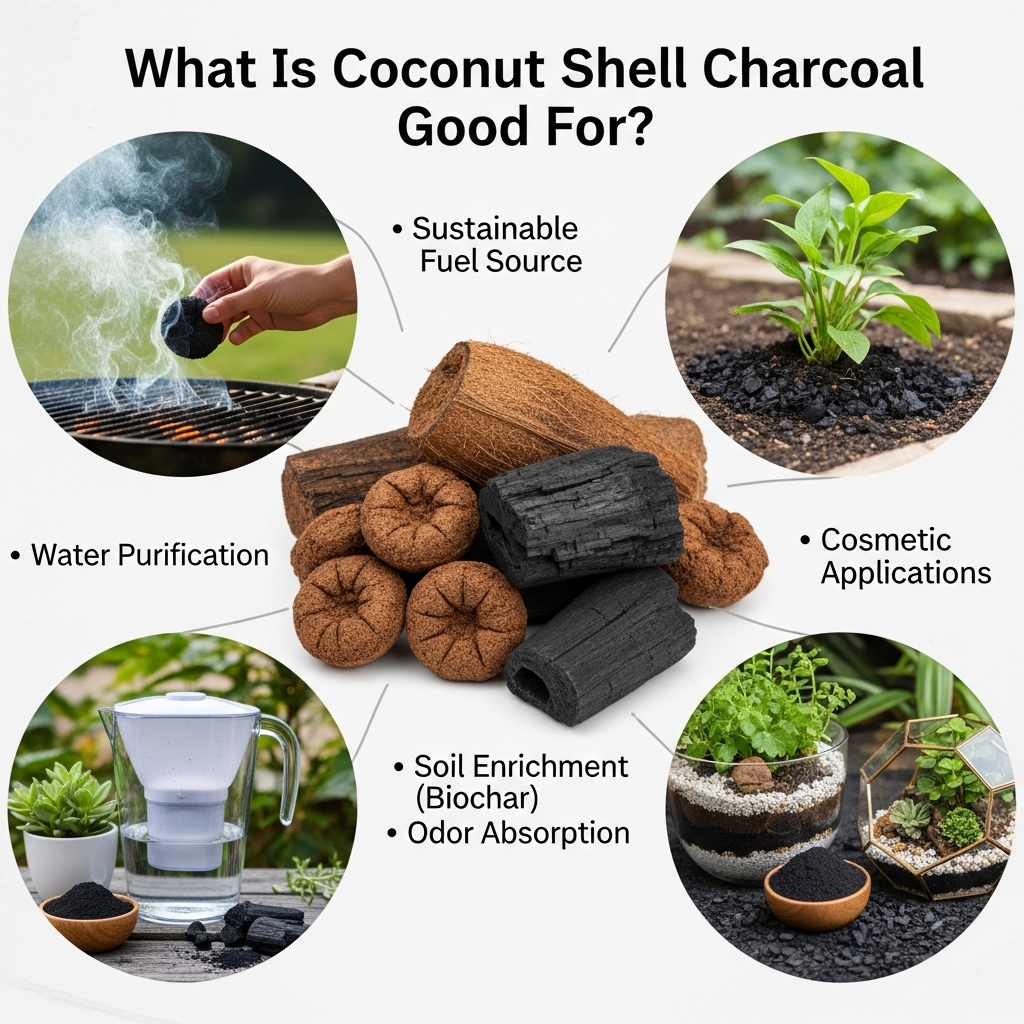
When it comes to fuel, performance matters. Coconut shell charcoal burns at a consistently high temperature without producing significant smoke, sparks, or unpleasant odors. It generates very little ash, simplifying cleanup after a barbecue. Its long burn time means you use less product over time, making it both efficient and cost-effective.
3. Incredible Natural Filtration Properties
The unique microstructure of coconut shell charcoal makes it incredibly porous. When “activated,” these pores are opened up, creating a massive surface area that can trap and absorb impurities. This is the principle behind activated charcoal, a powerful substance used for purification. The coconut shell variant is considered one of the best for this purpose.

7+ Amazing Uses for Coconut Shell Charcoal
Beyond its basic benefits, the applications for this versatile material are extensive. Here are seven of the most common and impactful uses.
1. Barbecuing and Grilling
This is the most popular use for coconut shell charcoal. Chefs and grill masters love it because it provides a steady, high heat that cooks food evenly without imparting a strong, smoky flavor. This allows the natural taste of the food to shine through. Its low smoke output also makes it ideal for urban or balcony grilling.
2. Water Purification
Activated charcoal from coconut shells is a key component in many home and industrial water filtration systems. It excels at removing chlorine, organic compounds, pesticides, and unpleasant tastes and odors from drinking water. Its effectiveness is well-documented in water treatment studies, such as those referenced by the Environmental Protection Agency (EPA).
3. Air Purification
Just as it traps impurities in water, coconut shell charcoal can absorb odors and pollutants from the air. You will often find it in fabric pouches sold as natural air fresheners for homes, cars, closets, and refrigerators. They are a fragrance-free, non-toxic way to combat mold, mildew, and stale smells.
4. Health and Wellness Products
In its activated form, coconut charcoal is a staple in the wellness industry. It’s used in toothpaste and powders for teeth whitening, in face masks to draw out skin impurities, and as a dietary supplement for detoxification. However, it’s crucial to consult a healthcare professional before ingesting activated charcoal, as confirmed by medical resources like WebMD, as it can interfere with medications.
5. Soil Enhancement (Biochar)
When added to soil, a practice known as creating “biochar,” coconut shell charcoal can dramatically improve agricultural outcomes. Its porous nature helps the soil retain water and nutrients, reduces soil acidity, and fosters the growth of beneficial microbes. This leads to healthier plants and increased crop yields, as detailed in research published in journals like the Journal of Agronomy.
6. Industrial Applications
The high purity and large surface area of activated coconut charcoal make it valuable in various industrial processes. It is commonly used in precious metal recovery, particularly for extracting gold from solutions. It’s also used for solvent purification and as a catalyst in the chemical industry.
7. Art and Drawing
For artists, coconut shell charcoal provides a deep, rich black pigment. It can be processed into sticks or pencils, offering a high-quality medium for sketching and drawing that is both effective and sustainably produced.
How to Choose the Best Coconut Shell Charcoal
When shopping for this product, especially for grilling, look for brands that are labeled “100% natural” or “all-natural.” This ensures there are no chemical binders, fillers, or accelerants that could affect your food’s flavor or your health. Choose between lump charcoal for a more traditional burn or briquettes for a uniform shape and consistent heat.
Frequently Asked Questions (FAQ)
Is coconut shell charcoal better than regular charcoal?
In most aspects, yes. It is more sustainable, burns hotter and longer, produces less smoke and ash, and doesn’t contain the additives often found in conventional charcoal briquettes. It offers a cleaner and more efficient experience.
Is it safe to use for grilling?
Absolutely. Pure coconut shell charcoal is one of the safest and cleanest options for grilling. Because it doesn’t produce a lot of smoke, it reduces the creation of polycyclic aromatic hydrocarbons (PAHs) on your food.
Can I use it in a fireplace?
While it could be used, it’s not ideal. It’s designed for the high-heat, controlled environment of a grill. It burns much hotter than wood, which may not be suitable for all fireplaces and won’t produce the same aesthetic flame.
Conclusion: The Ultimate Sustainable Choice
From the backyard grill to advanced filtration systems, coconut shell charcoal proves to be an incredibly valuable and versatile material. Its eco-friendly origins, combined with its superior performance, make it a smart choice for conscious consumers worldwide. By opting for products derived from this renewable resource, you are not only getting a high-quality result but also supporting a cleaner, more sustainable future. The next time you fire up the grill or look for a natural purifier, remember the power packed inside the humble coconut shell.
Looking for High-Quality Palm Products?
Makmur Amanah Sejahtera provides high-quality palm products such as Palm Kernel Expeller, Palm Kernel Shell, Crude Palm Oil, Palm Kernel Oil, etc. Kindly contact us at WhatsApp +6282140002198 or email us at admin@makmuramanah.co.id.
 English
  Indonesian
  Chinese
  Arabic