
Table of Contents
- What is Palm Kernel Expeller (PKE)?
- How is Palm Kernel Expeller (PKE) Produced?
- The Impressive Nutritional Profile of Palm Kernel Expeller (PKE)
- Top 5 Remarkable Uses of Palm Kernel Expeller (PKE)
- Potential Limitations and Considerations
- The Future of Palm Kernel Expeller (PKE) in the Circular Economy
- Contact Us for Your Palm Product Needs
- Frequently Asked Questions
In the global push for sustainability, industries are transforming waste into wealth. The palm oil sector is a prime example, offering valuable byproducts from the Oil Palm Fruit Bunch that champion a circular economy. A standout among these is the Palm Kernel Expeller (PKE), a versatile and nutrient-rich material with a surprisingly vast range of applications. This guide explores its journey from a simple byproduct to a cornerstone of modern agriculture and renewable energy.
This comprehensive guide for 2025 will delve into the incredible uses and benefits of Palm Kernel Expeller (PKE), showcasing why it has become an indispensable resource for farmers, manufacturers, and environmental advocates alike. Read on to discover how this humble expeller is making a significant impact.
What is Palm Kernel Expeller (PKE)?
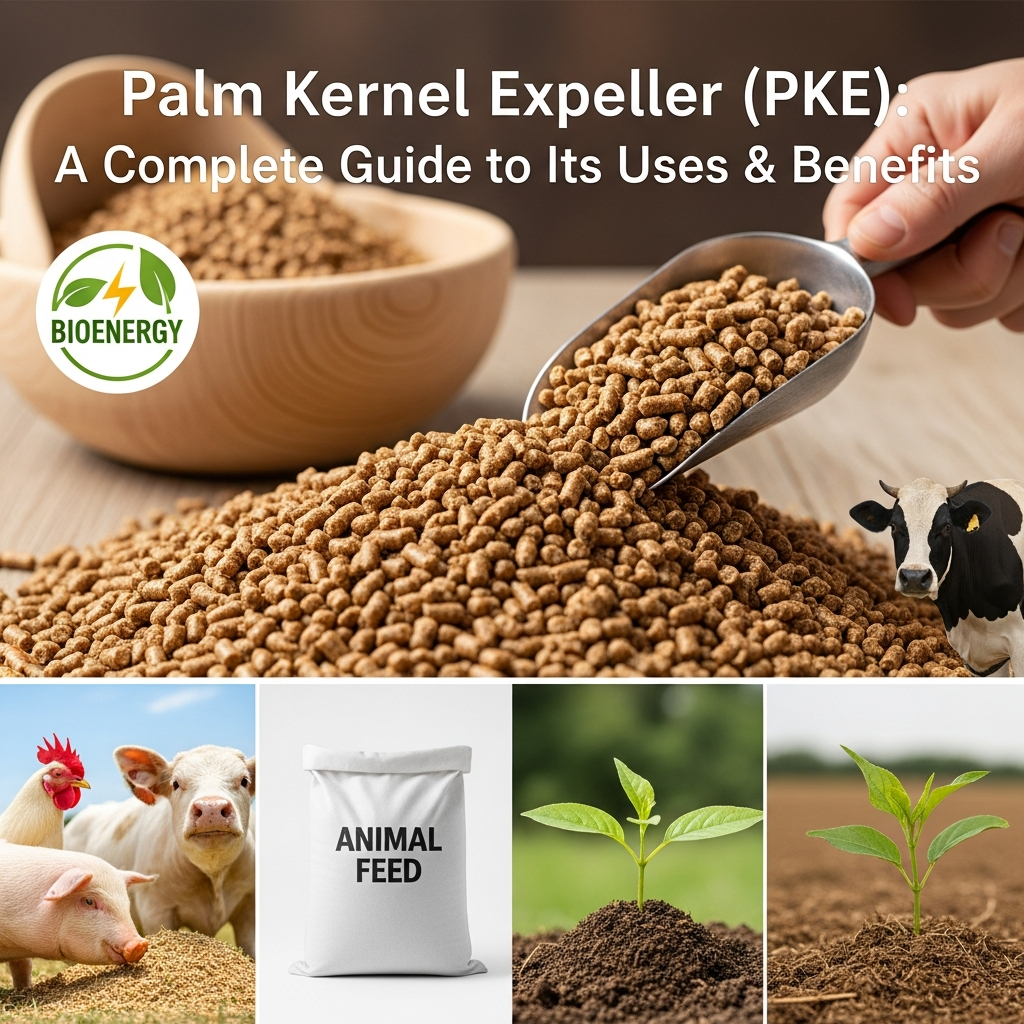
Palm Kernel Expeller (PKE) is the solid residue left behind after the mechanical extraction of oil from the kernel of the palm fruit. It’s a high-fiber, medium-protein commodity that is celebrated for its economic and nutritional value. Often confused with Palm Kernel Cake (PKC), PKE specifically refers to the material processed via mechanical pressing, which leaves a higher residual oil content compared to solvent extraction methods.
This residual oil makes PKE an excellent source of energy, particularly in animal feed formulations. Its coarse, gritty texture and brownish color are characteristic features. As a byproduct, it represents a significant step in maximizing the output of palm fruit processing, ensuring that almost no part of the harvest goes to waste.

How is Palm Kernel Expeller (PKE) Produced?
The production of Palm Kernel Expeller (PKE) is a straightforward yet crucial mechanical process. It begins after the palm fruit’s flesh has been pressed to extract Crude Palm Oil. The remaining nut is then cracked to separate the hard Palm Kernel Shell from the valuable inner Palm Kernel.
These kernels are then crushed and fed into a screw press or expeller. This machine applies immense pressure to squeeze out the Palm Kernel Oil. The solid, compressed mass that is ‘expelled’ from the machine is the Palm Kernel Expeller (PKE). This process avoids the use of chemical solvents, making it a purely mechanical and often preferred method for producing animal feed ingredients.
The Impressive Nutritional Profile of Palm Kernel Expeller (PKE)
The value of Palm Kernel Expeller (PKE) lies in its robust nutritional composition. While the exact values can vary based on the efficiency of the oil extraction process, it generally offers a balanced profile of energy, protein, and fiber. This makes it a highly sought-after ingredient in the animal feed industry.
Here’s a typical breakdown of its key components:
- Crude Protein: 14-18%
- Crude Fiber: 16-22%
- Crude Fat (Residual Oil): 8-12%
- Essential Minerals: Rich in phosphorus, magnesium, iron, and zinc.
This combination makes PKE particularly suitable for ruminant animals, whose digestive systems can efficiently break down the high fiber content. For more detailed analysis, you can explore scientific data from resources like the Feedipedia entry on Palm Kernel Meal.
Top 5 Remarkable Uses of Palm Kernel Expeller (PKE)
From farms to power plants, Palm Kernel Expeller (PKE) has proven its worth in numerous sectors. Its versatility and sustainable origins are driving its adoption worldwide. Here are five of its most significant applications.

1. A Powerhouse Ingredient in Animal Feed
The primary use of Palm Kernel Expeller (PKE) is in compound animal feed, especially for dairy and beef cattle. Its high fiber content supports healthy rumen function, while the residual oil provides a concentrated source of energy essential for milk production and growth. The moderate protein level also contributes to the overall dietary needs of livestock.
While it is a staple for ruminants, PKE is also incorporated into the diets of poultry and swine, though typically in smaller quantities due to its high fiber. Research from institutions like the Journal of Animal Science continues to explore methods to improve its digestibility for non-ruminants, further expanding its potential in the feed market.
2. A Sustainable Biofuel Source
As the world seeks cleaner energy alternatives, biomass has emerged as a leading contender. Palm Kernel Expeller (PKE), with its good calorific value, serves as an excellent biomass feedstock. It can be burned directly in boilers to generate steam and electricity for industrial processes, often at the palm oil mills themselves.
This not only provides a renewable energy source but also reduces the carbon footprint of the palm oil industry. Organizations like the International Renewable Energy Agency (IRENA) highlight the importance of agricultural residues like PKE in the global bioenergy mix.
3. An Effective Component in Organic Fertilizers
The rich organic matter and mineral content in Palm Kernel Expeller (PKE) make it a valuable ingredient for soil enrichment. When composted, it decomposes to release essential nutrients like nitrogen, phosphorus, and potassium back into the soil. This improves soil structure, enhances water retention, and promotes healthy microbial activity.
Using PKE as a fertilizer base helps create a closed-loop system where nutrients from the palm plantation are returned to the earth. This practice aligns perfectly with the principles of regenerative agriculture and reduces the reliance on synthetic fertilizers.
4. A Cost-Effective Solution for Farmers
One of the most significant benefits of Palm Kernel Expeller (PKE) is its affordability. As a byproduct, it is often more competitively priced than primary feed crops like soybean meal or corn. This allows farmers to lower their feed costs without compromising on essential energy and fiber content.
By incorporating PKE into their feed formulations, farmers can achieve a more stable and economical operation, especially in regions where other feed ingredients are imported. This is a key aspect of building resilient and sustainable farming practices for the future.
5. A Champion of Agricultural Waste Reduction
Every ton of PKE used is a ton of agricultural material diverted from landfills. Its widespread application is a testament to the success of the circular economy model. By finding value in what was once considered waste, the palm oil industry can significantly improve its environmental credentials.
This approach of upcycling byproducts is celebrated by environmental think tanks like the Ellen MacArthur Foundation, which advocates for business models that eliminate waste and regenerate natural systems.
Potential Limitations and Considerations
Despite its many benefits, there are a few considerations to keep in mind when using Palm Kernel Expeller (PKE). The quality can vary between suppliers, so it’s important to source it from reputable producers. Its high fiber content can also limit its inclusion rate in the diets of monogastric animals like chickens and pigs.
Proper storage is also crucial. Like any organic material, PKE can be susceptible to mold and mycotoxin contamination if exposed to moisture. Ensuring it is stored in a dry, well-ventilated area is essential to maintain its quality and safety.
The Future of Palm Kernel Expeller (PKE) in the Circular Economy
The future for Palm Kernel Expeller (PKE) is bright. Ongoing research is focused on enhancing its nutritional value through processes like fermentation and enzyme treatment, which could improve its digestibility for a wider range of animals. Its role as a consistent and reliable biomass fuel is also set to expand as more industries transition to renewable energy.
Ultimately, Palm Kernel Expeller (PKE) stands as a powerful example of sustainable innovation. It demonstrates that economic viability and environmental responsibility can go hand in hand, paving the way for a more resourceful and less wasteful future in global agriculture.
Secure Your Supply of High-Quality Palm Products
Looking for High-Quality Palm Products?
Makmur Amanah Sejahtera provides high-quality palm products such as Palm Kernel Expeller, Palm Kernel Shell, Crude Palm Oil, Palm Kernel Oil, etc. Kindly contact us at WhatsApp +6282140002198 or email us at admin@makmuramanah.co.id.
Frequently Asked Questions
What is the main use of Palm Kernel Expeller (PKE)?
The primary and most common use of PKE is as an ingredient in animal feed, particularly for ruminant animals like cattle, due to its high energy and fiber content.
Is PKE the same as palm kernel cake?
They are very similar, but the terms often describe the extraction method. PKE typically refers to residue from mechanical pressing, while palm kernel cake (PKC) can also refer to residue from solvent extraction, which results in a lower fat content.
Is Palm Kernel Expeller (PKE) good for all animals?
PKE is excellent for ruminants (cattle, goats, sheep). It can be used for non-ruminants (poultry, swine) but in limited quantities because its high fiber content can be difficult for them to digest.
 English
  Indonesian
  Chinese
  Arabic