
Table of Contents
- What Exactly is RBD Palm Olein CP8?
- Key Specifications for CP8 Olein
- Versatile Applications of RBD Palm Olein CP8
- CP8 vs. CP10: A Core Comparison
- 4 Key Benefits of Choosing RBD Palm Olein CP8
- Sourcing and Sustainability: A Responsible Approach
- Your Trusted Palm Products Supplier
- Frequently Asked Questions (FAQ)
In the vast world of edible oils, few are as ubiquitous yet misunderstood as palm oil. A key player in this market is RBD Palm Olein CP8, a premium liquid fraction of palm oil prized for its stability and versatility. This comprehensive guide will walk you through everything you need to know, from its detailed specifications and widespread applications to how it stacks up against its close relative, CP10.
What Exactly is RBD Palm Olein CP8?
Let’s break down the name. “RBD” stands for Refined, Bleached, and Deodorized, a purification process that neutralizes the oil’s flavor and color, making it suitable for a wide range of applications. “Palm Olein” refers to the liquid fraction obtained when Crude Palm Oil is separated, a process known as fractionation.
The entire process originates from the Oil Palm Fruit Bunch. Inside the fruit’s nut lies the Palm Kernel, which is crushed to produce Palm Kernel Oil. The remaining pulp is processed into Palm Kernel Expeller, a valuable component in animal feed. Additionally, the hard Palm Kernel Shell is utilized as a high-grade solid biofuel.
The most crucial part of the name is “CP8.” The “CP” stands for Cloud Point, which is the temperature at which the oil starts to become cloudy or solidify. Therefore, RBD Palm Olein CP8 has a maximum cloud point of 8° Celsius. This low cloud point is its defining feature, ensuring it remains liquid even in cooler, temperate climates.
Key Specifications for CP8 Olein
The quality of RBD Palm Olein CP8 is determined by a strict set of technical parameters. These specifications ensure consistency and performance in its various applications. While slight variations can occur between suppliers, the industry standards are generally uniform.

Here’s a look at the key specifications for high-quality CP8 olein:
| Parameter | Value |
| Free Fatty Acids (FFA) (as % Palmitic) | 0.1% max |
| Iodine Value (Wijs) | 57.5 min |
| Moisture & Impurities (M&I) | 0.1% max |
| Cloud Point | 8°C max |
| Color (5.25″ Lovibond cell) | 3 Red max |
| Slip Melting Point | 24°C max |
These parameters are critical for quality control. For instance, a low FFA value indicates a well-refined oil with less tendency to smoke or break down. The Iodine Value measures the degree of unsaturation, which affects the oil’s stability. For a deeper dive into edible oil standards, you can refer to the Codex Alimentarius Commission, which sets international food standards.
Versatile Applications of RBD Palm Olein CP8
The unique properties of RBD Palm Olein CP8 make it a preferred choice across numerous industries, primarily in food production. Its high stability and neutral taste profile ensure it enhances food without altering its flavor.
1. Premium Cooking and Frying Oil
Thanks to its high smoke point (around 235°C or 455°F), this cooking oil is an excellent choice for deep-frying. It resists oxidation and thermal breakdown, which means it can be used for longer periods in industrial fryers without degrading. This leads to crispier, less greasy food products like instant noodles, potato chips, and frozen french fries.
2. Food Manufacturing
Beyond frying, this oil is a key ingredient in manufacturing a wide array of products. It’s used to create margarines, shortenings, and vegetable ghees. In the confectionery industry, it provides the perfect texture and gloss for coatings, while its stability extends the shelf life of baked goods and snacks. Research published in journals like the Food Chemistry journal often highlights the functional benefits of specific palm oil fractions in food systems.
3. Salad Dressings and Mayonnaise
Because this olein remains liquid at cooler temperatures, it’s an effective component in salad dressings and mayonnaise, preventing solidification when refrigerated and ensuring a smooth, pourable consistency.

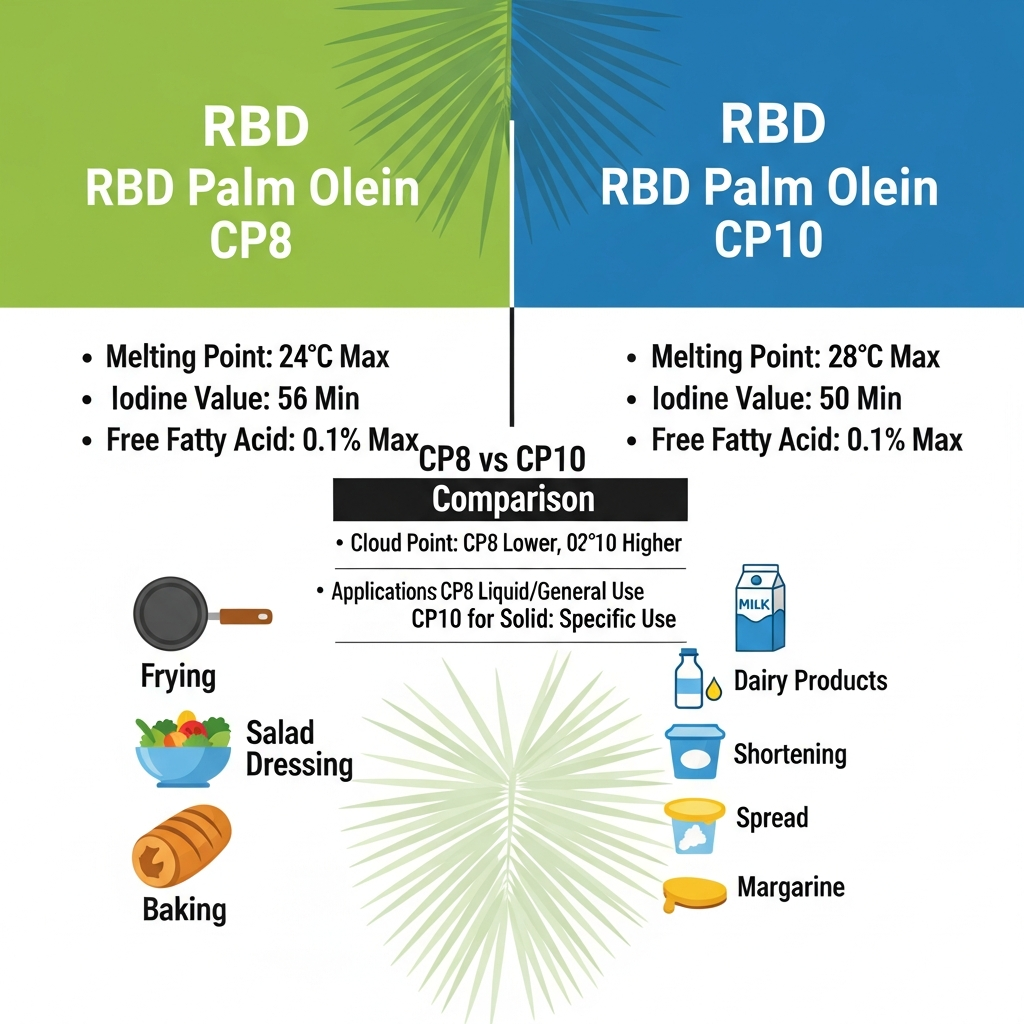
CP8 vs. CP10: A Core Comparison
One of the most common questions revolves around the difference between RBD Palm Olein CP8 and its sibling, CP10. While they are very similar, the two-degree difference in cloud point creates distinct advantages for each.
| Feature | RBD Palm Olein CP8 | RBD Palm Olein CP10 |
|---|---|---|
| Cloud Point | 8°C Max | 10°C Max |
| Cold Stability | Higher (Stays liquid at lower temperatures) | Standard (May cloud in temperate climates) |
| Primary Use Case | Temperate and cooler climates; refrigerated products | Tropical and warmer climates; general-purpose frying |
| Cost | Slightly more expensive | More common and cost-effective |
The main takeaway is climate and application. CP8 is the superior choice for countries with cooler seasons or for products that will be stored in a refrigerator. Its enhanced cold stability prevents the cloudiness and thickening that can occur with CP10, ensuring better product appearance and consistency. For a detailed market analysis of palm oil products, resources from organizations like the Malaysian Palm Oil Council (MPOC) are invaluable.
4 Key Benefits of Choosing RBD Palm Olein CP8
- Superior Cold Stability: Its primary advantage is its ability to resist crystallization at lower temperatures, making it reliable for products sold in diverse climates.
- High Oxidative Stability: Like other palm olein products, it is naturally resistant to oxidation, which translates to a longer shelf life for both the oil and the final food products.
- Neutral Flavor: The RBD process removes any strong taste or odor, ensuring it doesn’t interfere with the natural flavor of the food being cooked.
- Cost-Effective Versatility: It offers premium performance characteristics at a competitive price point, making it a go-to choice for large-scale food manufacturers.
Sourcing and Sustainability: A Responsible Approach
No discussion about palm oil is complete without addressing sustainability. The industry has faced scrutiny for its environmental impact. Reputable suppliers of RBD Palm Olein CP8 are now increasingly committed to responsible sourcing through certification bodies.
The most recognized standard is the Roundtable on Sustainable Palm Oil (RSPO). Sourcing RSPO-certified palm oil ensures that it comes from plantations that adhere to strict environmental and social criteria, helping to protect biodiversity and local communities. When purchasing, always look for suppliers who can provide certified sustainable products.
Your Trusted Palm Products Supplier
Looking for High-Quality Palm Products?
Makmur Amanah Sejahtera provides high-quality palm products such as Palm Kernel Expeller, Palm Kernel Shell, Crude Palm Oil, Palm Kernel Oil, etc. Kindly contact us at WhatsApp +6282140002198 or email us at admin@makmuramanah.co.id.
Frequently Asked Questions (FAQ)
What does CP8 in RBD Palm Olein CP8 stand for?
CP8 stands for Cloud Point 8° Celsius. This is the maximum temperature at which the oil will start to appear cloudy as it begins to solidify, guaranteeing its liquid state in cooler conditions above this temperature.
Is RBD Palm Olein CP8 a healthy choice?
RBD Palm Olein CP8 is a stable cooking oil that is trans-fat-free. It has a balanced composition of saturated and unsaturated fatty acids. Like any edible oil, it should be consumed in moderation as part of a balanced diet.
Can I substitute CP10 with RBD Palm Olein CP8?
Yes, absolutely. You can use CP8 in any application where CP10 is used. It is considered an upgrade, especially if your product will be exposed to cooler temperatures, as it provides better cold stability and aesthetic appeal.
In conclusion, RBD Palm Olein CP8 is a high-quality, versatile, and functional edible oil that serves a critical role in the global food industry. Its low cloud point provides a distinct advantage in temperate climates, while its stability and neutral flavor make it an invaluable ingredient for food manufacturers worldwide. By understanding its specifications and benefits, you can make an informed choice for your cooking and production needs.
 English
  Indonesian
  Chinese
  Arabic