
Table of Contents
- What Exactly Is Coconut Shell Charcoal?
7 Proven Benefits & Uses of Coconut Shell Charcoal
- 1. Superior Water and Air Purification
2. A Cleaner, Hotter Barbecue Experience
3. Natural Teeth Whitening & Oral Health
4. A Powerful Skincare Ingredient
5. An Effective Gardening & Soil Amendment
6. A Natural Odor Eliminator
7. Emergency Toxin Adsorption
Have you ever wondered what happens to coconut shells after the delicious fruit is harvested? While many are discarded, a growing number are transformed into a powerhouse product with incredible versatility. We’re talking about coconut shell charcoal, an eco-friendly material that is much more than just fuel for your barbecue. Its unique properties make it a valuable ingredient in everything from water filters to beauty products.
This guide explores exactly what coconut shell charcoal is good for, uncovering seven surprising benefits and uses that showcase why it’s a superior choice for your health, home, and garden in 2025. Let’s dive in and see what this sustainable wonder can do.
What Exactly Is Coconut Shell Charcoal?
Coconut shell charcoal is a type of carbonaceous material made by burning coconut shells in a limited-oxygen environment. This process, known as pyrolysis, removes volatile compounds like water, methane, and hydrogen, leaving behind pure carbon with a highly porous structure.

Often, this material is further processed to create “activated” coconut shell charcoal. This activation process involves treating the charcoal with steam or hot air to erode its internal surfaces, which dramatically increases its surface area and adsorption capabilities. This makes it incredibly effective at trapping impurities.
7 Proven Benefits & Uses of Coconut Shell Charcoal
From the kitchen to the garden, the applications for this renewable resource are vast. Here are seven of the most impactful ways you can use coconut shell charcoal.
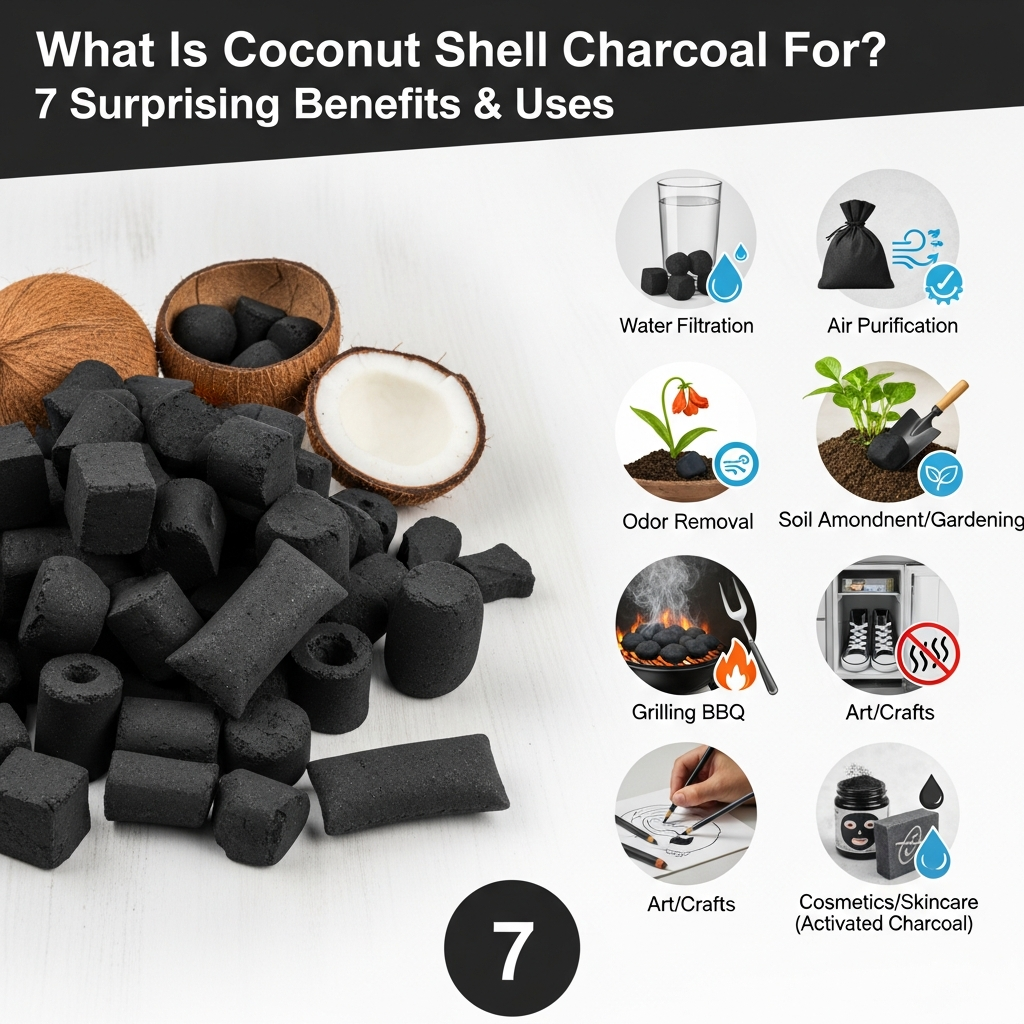
1. Superior Water and Air Purification
One of the most well-known uses for coconut shell charcoal is in filtration. Its microporous structure is perfectly designed for adsorption, a process where molecules of a gas, liquid, or dissolved solid adhere to a surface. The massive surface area of activated charcoal provides countless bonding sites for impurities.
It effectively removes chlorine, volatile organic compounds (VOCs), pesticides, and unpleasant tastes and odors from drinking water. Similarly, it’s used in air purifiers to trap airborne contaminants, allergens, and toxic fumes. According to a study published in the Journal of Chemistry, activated carbon is a highly effective adsorbent for removing pollutants from water.
2. A Cleaner, Hotter Barbecue Experience
If you’re serious about grilling, coconut shell charcoal briquettes are a game-changer. Unlike traditional lump charcoal or briquettes made from wood scraps and chemical binders, coconut charcoal offers a superior grilling experience for several reasons:
- Burns Hotter & Longer: It can reach high temperatures and maintain them consistently, giving you a better sear on your food. A single batch often lasts longer than conventional charcoal, making it more efficient.Minimal Smoke & Ash: It produces significantly less smoke and ash, which means less cleanup and a cleaner-tasting meal without the overpowering smoky flavor that can mask the taste of your food.No Chemical Additives: High-quality coconut shell charcoal is made from 100% natural shells, with no fillers, binders, or petroleum-based additives that can be found in cheap briquettes.
3. Natural Teeth Whitening & Oral Health
Activated charcoal has become a popular ingredient in natural toothpaste and whitening powders. The principle is the same as in water filtration: the porous surface of the coconut shell charcoal binds to tannins—the compounds found in coffee, tea, and wine that cause surface stains on teeth.
While effective for surface stains, it’s important to use it carefully. The American Dental Association (ADA) notes that more long-term studies are needed and advises consumers to choose products with the ADA Seal of Acceptance. It can be abrasive, so gentle use is key to avoid damaging enamel.
4. A Powerful Skincare Ingredient
The detoxifying properties of activated coconut shell charcoal extend to skincare. When used in face masks, soaps, and cleansers, it acts like a magnet to draw dirt, bacteria, and excess oil out of pores. This can help reduce acne, prevent breakouts, and leave your skin feeling deeply cleansed and refreshed.

Its gentle exfoliating properties also help to remove dead skin cells, promoting a brighter, more even complexion. For those building a natural skincare routine, charcoal-based products are a great addition.
5. An Effective Gardening & Soil Amendment
When used in the garden, coconut shell charcoal is often referred to as biochar. Adding it to your soil offers remarkable benefits for plant health and growth. It acts like a sponge, improving the soil’s ability to retain water and essential nutrients, making them more available to plant roots.
The porous structure also improves soil aeration and drainage, preventing compaction and creating a healthier environment for roots and beneficial microbes. According to the Cornell University College of Agriculture and Life Sciences, biochar can enhance soil fertility and help sequester carbon, making your garden more resilient and eco-friendly.
6. A Natural Odor Eliminator
Forget chemical sprays that just mask unpleasant smells. Activated coconut shell charcoal eliminates them. You can buy small porous bags filled with charcoal granules to place in refrigerators, closets, gym bags, shoes, or near litter boxes.
The charcoal adsorbs the odor-causing molecules from the air, trapping them within its pores. It’s a completely natural, fragrance-free, and non-toxic way to keep your living spaces smelling fresh and clean. To “recharge” them, you simply place the bags in direct sunlight for a few hours once a month.
7. Emergency Toxin Adsorption
In a clinical setting, activated coconut shell charcoal is a critical tool for emergency medicine. It is used to treat certain types of poisonings and drug overdoses. When ingested, it can bind to toxins in the stomach and intestines, preventing them from being absorbed into the bloodstream.
Important Disclaimer: Activated charcoal should only be administered by medical professionals in an emergency. It is not a home remedy for poisoning and should never be used without consulting a doctor or poison control center. As the Mayo Clinic explains, it is a prescribed treatment for specific situations.
How to Choose the Best Coconut Shell Charcoal Products
When shopping for coconut shell charcoal, quality matters. For grilling, look for briquettes that are 100% natural and free of chemical binders or fillers. For purification or cosmetic uses, ensure the product is listed as “activated” and is food-grade or medical-grade, depending on the application.
Frequently Asked Questions about Coconut Shell Charcoal
What is the difference between coconut shell charcoal and regular charcoal?
Coconut shell charcoal is made from a renewable resource (coconut husks) and burns hotter, cleaner, and longer than most wood-based charcoals. Its activated form also has a higher density of micropores, making it more effective for filtration.
Is coconut shell charcoal sustainable?
Yes, it is highly sustainable. It is made from a byproduct of the coconut industry that would otherwise go to waste. This upcycling process helps reduce waste and provides a renewable alternative to charcoal made from cutting down trees.
Is it safe to use?
For its intended purposes, yes. Using coconut shell charcoal for grilling is perfectly safe. For cosmetic or health applications, use products as directed and consult a professional if you have concerns. Never ingest activated charcoal unless directed by a medical professional.
Coconut Shell Charcoal vs. Palm-Based Biomass
While coconut shell charcoal is a powerful resource, it’s part of a larger family of sustainable biomass fuels derived from agriculture. The palm oil industry, for instance, produces several high-value byproducts. Palm Kernel Shell, much like coconut shells, is a fantastic, high-calorie fuel source for industrial boilers. Similarly, the leftover pulp after oil extraction, known as Palm Kernel Expeller, is a sought-after ingredient in animal feed due to its rich protein and fiber content.
These industries are built around maximizing every part of the harvest. The process starts with the Oil Palm Fruit Bunch, from which the valuable Palm Kernel is extracted. This kernel is then processed to create two distinct oils: Crude Palm Oil from the fruit’s flesh and Palm Kernel Oil from the kernel itself, each with unique applications in food and industry. Understanding these different materials highlights the broad potential of agricultural biomass in creating a sustainable future.
Makmur Amanah Sejahtera provides high-quality palm products such as Palm Kernel Expeller, Palm Kernel Shell, Crude Palm Oil, Palm Kernel Oil, etc. Kindly contact us at WhatsApp +6282140002198 or email us at admin@makmuramanah.co.id. From purifying your water to boosting your garden’s health, coconut shell charcoal is a truly remarkable and sustainable material. By choosing products made from this resource, you are opting for an effective, natural, and environmentally responsible solution for a wide range of everyday needs.Looking for High-Quality Palm Products?

 English
  Indonesian
  Chinese
  Arabic