
Contents
Have you ever wondered about the black briquettes you use for your summer barbecue? While traditional wood charcoal has long been the standard, a superior and sustainable alternative is rapidly gaining popularity. The focus of this shift is Coconut Shell Charcoal, and its uses extend far beyond what you might imagine.
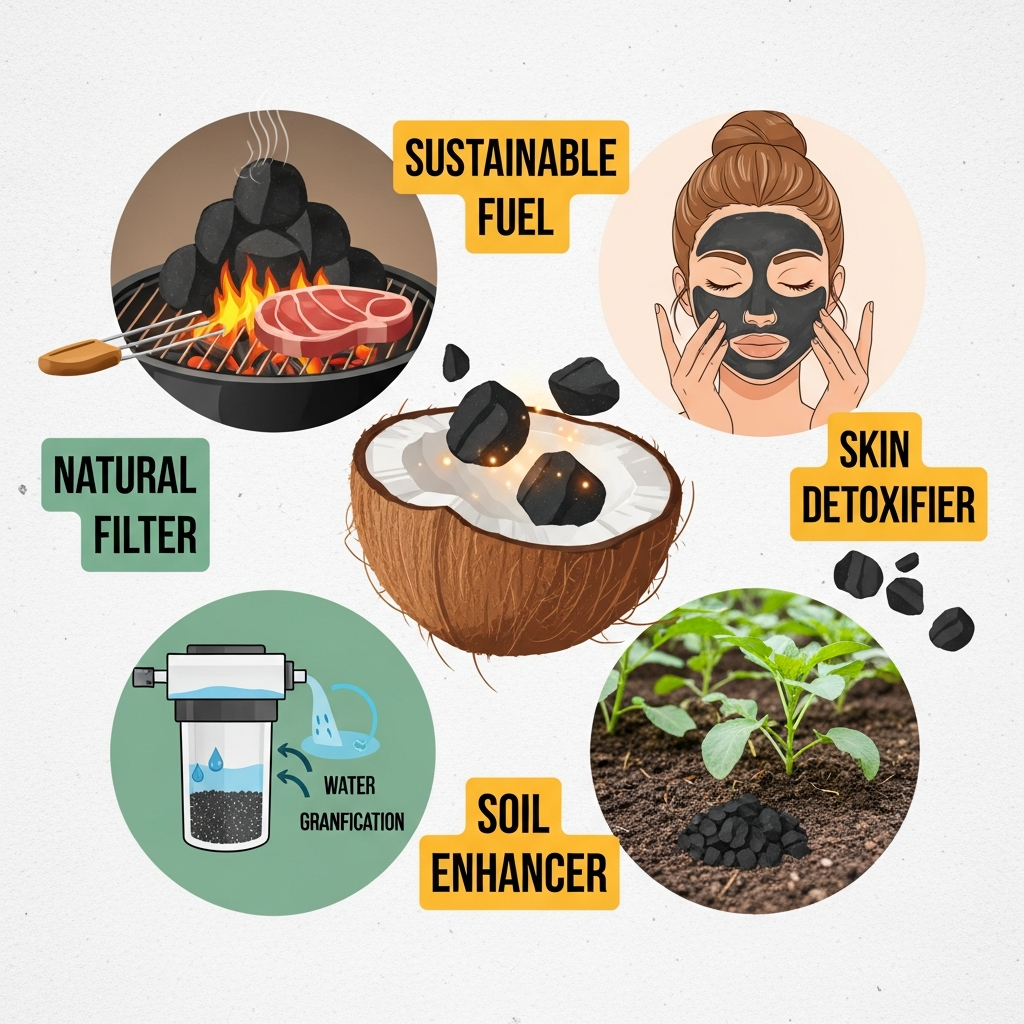
From grilling the perfect steak to purifying your water, this eco-friendly powerhouse is changing the game. It’s crafted from a resource that would otherwise be discarded, offering a clean, efficient, and versatile solution. Let’s dive into the incredible benefits and applications of this amazing product.

What Is Coconut Shell Charcoal?
Coconut shell charcoal is a type of charcoal produced by burning the hard shells of coconuts in a controlled environment with limited oxygen. This process, known as carbonization, removes moisture and volatile compounds, leaving behind a pure carbon substance with a remarkably dense and porous structure.
Unlike traditional charcoal, which can contribute to deforestation, this material is made from a recycled byproduct of the thriving coconut industry. This makes it an incredibly sustainable choice that helps reduce waste and protect our forests. Its unique composition gives it superior properties for many applications.
7 Ultimate Benefits of Coconut Shell Charcoal (2025)
The advantages of using this eco-friendly fuel extend far beyond just being green. Its physical properties make it a more effective and efficient product for consumers and industries alike.
1. Eco-Friendly and Sustainable
The most significant benefit is its positive environmental impact. Billions of coconuts are harvested annually, leaving the shells as a waste product. By converting these shells into high-quality charcoal, we give them a new purpose, reducing landfill waste and our reliance on timber. This practice helps combat deforestation, a critical issue highlighted by organizations like the World Wildlife Fund.
2. Burns Hotter and Longer
When it comes to grilling, heat is everything. This sustainable charcoal has a higher calorific value than most wood-based alternatives, meaning it burns significantly hotter and for a longer duration. This provides a consistent, reliable heat source perfect for searing meats and reducing the need to refuel during a long barbecue.
3. A Powerful Natural Purifier
When “activated,” coconut shell charcoal becomes an exceptional filtration medium. The activation process creates a vast network of microscopic pores, dramatically increasing its surface area. This allows it to adsorb impurities from water and air. It’s a key component in many high-end water filters, effectively removing chlorine, sediment, and VOCs, as detailed in studies on activated carbon for water treatment.
4. Health and Beauty Applications
The absorptive properties of activated coconut carbon have made it a trendy ingredient in health and beauty. It’s used in toothpaste to help whiten teeth by binding to tannins—the compounds in coffee and wine that cause stains. You can also find it in face masks and soaps, where it helps draw out dirt and oil from pores.
5. Odorless and Smokeless
Tired of your barbecue being a smoky affair? This briquette type produces very little smoke and is virtually odorless. This creates a more pleasant grilling experience and ensures your food tastes authentic, not like heavy smoke. The pure flavor of your ingredients can truly shine through.
6. Agricultural and Horticultural Gold
In the form of biochar, coconut-based charcoal serves as a fantastic soil amendment. Adding it to garden soil can improve aeration, increase water retention, and enhance nutrient availability for plants. This leads to healthier root systems and more robust growth. Research from institutions like Cornell University has explored the extensive benefits of biochar for creating fertile soils.
7. Safe for Various Applications
Because it’s made from a natural food product and contains no chemical additives, high-quality coconut shell charcoal is very safe. It produces minimal sparks and flare-ups, making grilling sessions safer. Its clean-burning nature also makes it a popular choice for hookahs and shishas.
Common Uses of Coconut Shell Charcoal
The versatility of this material means you can find it in a surprising number of places. Here are its most common applications.
Grilling and Barbecuing
This is its most popular consumer use. The high, steady heat is ideal for a wide range of foods, from quick-searing steaks to slow-cooking ribs. Its low smoke output makes it perfect for both open grills and ceramic kamado-style cookers.
Water Filtration Systems
As activated carbon, it is a crucial element in residential and industrial water purifiers. It excels at removing bad tastes, odors, and harmful chemicals, delivering clean, safe drinking water. According to the EPA, activated carbon is a recognized method for treating various drinking water contaminants.
Air Purification
Its porous nature makes it excellent for trapping airborne impurities. You can find it in home air purifiers, refrigerator deodorizers, and even in fabric pouches designed to absorb odors in closets or cars.
How to Choose the Best Quality Charcoal
When shopping for coconut shell charcoal, quality matters. Look for products that are labeled as 100% natural and free from fillers or chemical accelerants. Briquettes are often preferred for their uniform shape and consistent burn, while lump charcoal offers a more “natural” form. Always read reviews to ensure you’re buying a product known for its performance and purity.
Exploring Other Sustainable Bio-Products
Just as coconut shells are repurposed into a valuable energy source, the palm oil industry also offers a range of eco-friendly byproducts. These materials provide sustainable solutions for energy and agriculture, reducing waste and promoting a circular economy. For instance, the hard covering of the palm fruit, known as the Palm Kernel Shell, is an excellent biofuel. The leftover fibrous material after oil extraction, Palm Kernel Expeller, serves as a nutrient-rich animal feed.
The industry leverages every part of the palm fruit, from the Palm Kernel itself to the processed oils like Crude Palm Oil and Palm Kernel Oil. Even the Oil Palm Fruit Bunch that’s left after harvesting is utilized. Exploring these resources is key to building a more sustainable future.
Frequently Asked Questions (FAQ)
Is coconut shell charcoal better than regular charcoal?
For most uses, yes. It is more sustainable, burns hotter and longer, produces less ash and smoke, and is made from a renewable resource. Its performance and environmental benefits make it a superior choice.
Can you use this charcoal for anything other than grilling?
Absolutely. Its most significant uses beyond grilling are in activated form for water and air purification. It’s also used in cosmetics, skincare products, and as a soil conditioner in agriculture.
Is coconut shell charcoal safe for health?
Yes, food-grade charcoal from coconut shells is very safe for grilling. It’s clean-burning and doesn’t contain the binders or additives found in some low-quality briquettes, resulting in fewer potentially harmful emissions.
Your Source for High-Quality Palm Products
Looking for High-Quality Palm Products?
Makmur Amanah Sejahtera provides high-quality palm products such as Palm Kernel Expeller, Palm Kernel Shell, Crude Palm Oil, Palm Kernel Oil, etc. Kindly contact us at WhatsApp +6282140002198 or email us at admin@makmuramanah.co.id.

 English
  Indonesian
  Chinese
  Arabic