
Understanding the specifics of cooking oils is crucial for industrial food producers and home cooks alike. Among the most versatile and widely used is RBD Palm Olein CP8, a high-quality edible oil prized for its stability, affordability, and performance. This ultimate guide explores everything you need to know about this popular palm oil fraction, from its journey from the fruit bunch to its detailed specifications, common applications, and how it stacks up against its close relative, CP10.
Table of Contents
- 1. What Exactly is RBD Palm Olein CP8?
- 2. The Process Behind the Name: Refined, Bleached, and Deodorized
- 3. Key Benefits of Choosing RBD Palm Olein CP8
- 4. Key Specifications of RBD Palm Olein CP8
- 5. Common Uses and Applications
- 6. RBD Palm Olein CP8 vs. CP10: A Direct Comparison
- 7. The Complete Palm Product Ecosystem
- 8. Sustainability and Health Notes
- 9. Your Trusted Supplier of High-Quality Palm Products
- 10. Conclusion
What Exactly is RBD Palm Olein CP8?
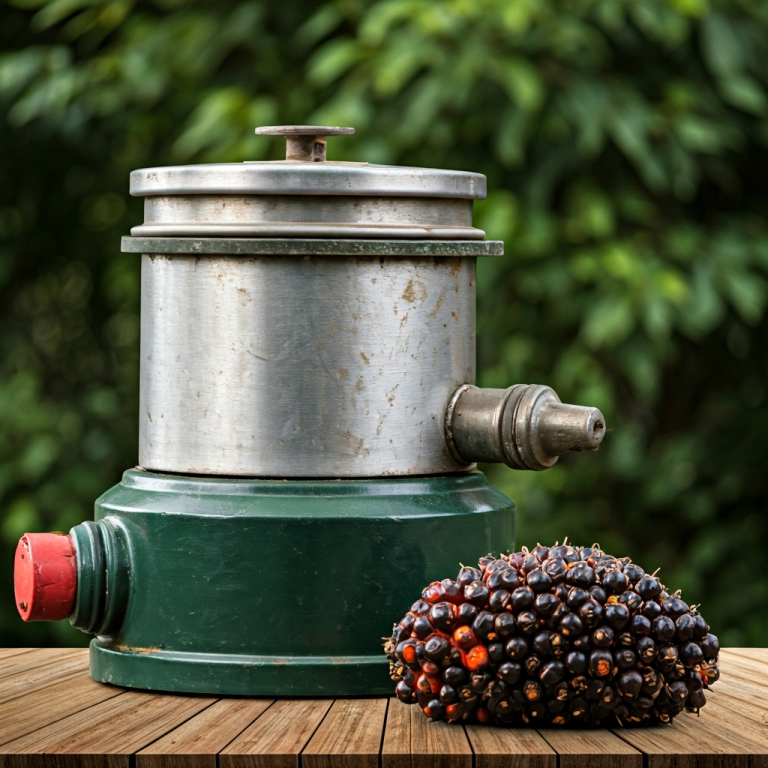
RBD Palm Olein CP8 refers to a specific type of palm oil that has undergone a full refining process and is characterized by its cloud point. The journey starts with the oil derived from the mesocarp of the Oil Palm Fruit Bunch. Let’s break down the name:
- RBD: This acronym stands for Refined, Bleached, and Deodorized. This multi-stage process removes impurities, pigments, and odors, resulting in a bland-tasting, light-yellow oil perfect for various food applications.
- Palm Olein: Palm oil is separated into two fractions through a process called fractionation. The liquid portion is Palm Olein, while the solid portion is Palm Stearin. Olein is the more common choice for liquid cooking oil due to its lower melting point.
- CP8: This is the most critical specification. “CP” stands for Cloud Point, which is the temperature at which the oil starts to become cloudy or solidify. A value of CP8 means this oil will remain clear and liquid at temperatures above 8° Celsius (46.4° Fahrenheit).
The Process Behind the Name: Refined, Bleached, and Deodorized
The “RBD” process is essential for transforming Crude Palm Oil (CPO) into a stable, consumable product. It enhances the oil’s stability, shelf life, and neutrality, ensuring it doesn’t interfere with the taste of food.
Refining
The first step involves removing Free Fatty Acids (FFAs) and other impurities like gums. High FFA levels can cause the oil to smoke at lower temperatures and spoil faster. This process, often called neutralization, is critical for creating a stable final product.
Bleaching
Next, the oil is treated with natural bleaching earths (like bentonite clay) under a vacuum. This step absorbs and removes color pigments, such as carotenoids, giving the RBD Palm Olein CP8 its characteristic light-yellow, transparent appearance.
Deodorizing
In the final stage, the oil is steam-distilled under high temperature and vacuum. This process strips away any remaining odors and tastes, resulting in a completely bland oil. This neutrality is a key benefit, making it a versatile ingredient in countless food applications. For more on this, you can review literature on edible oil processing from authoritative sources like ScienceDirect.

Key Benefits of Choosing RBD Palm Olein CP8
The popularity of RBD Palm Olein CP8 isn’t just due to its availability. It offers several distinct advantages:
- High Oxidative Stability: It resists oxidation, which means it has a long shelf life and doesn’t go rancid quickly. This stability also makes it an excellent choice for deep frying.
- High Smoke Point: With a smoke point of around 235°C (455°F), it remains stable at high temperatures, preventing burnout and the formation of harmful compounds.
- Cost-Effectiveness: Palm oil is one of the most efficiently produced vegetable oils, making RBD Palm Olein CP8 an affordable option for both industrial and household use.
- Neutral Flavor: The RBD process removes any distinct taste or smell, ensuring that the oil doesn’t alter the flavor of the food it’s used to cook.
Key Specifications of RBD Palm Olein CP8
Producers and buyers rely on a standard set of technical specifications to ensure quality and consistency. Here are the most important parameters for RBD Palm Olein CP8:
| Parameter | Typical Value | What it Means |
|---|---|---|
| Free Fatty Acids (FFA) as Palmitic | 0.1% Max | Measures the oil’s freshness and quality. A lower value is better. |
| Moisture & Impurities (M&I) | 0.1% Max | Indicates the purity of the oil, free from water and foreign particles. |
| Iodine Value (Wijs) | 56 Min | Measures the degree of unsaturation. Higher values are typical for liquid olein. |
| Cloud Point (CP) | 8°C Max (CP8) | The defining feature: the temperature at which the oil begins to solidify. |
| Color (5.25” Lovibond cell) | 3 Red Max | A measure of the oil’s color, ensuring it is a light, appealing yellow. |
Common Uses and Applications
The unique properties of RBD Palm Olein CP8 make it an incredibly versatile and cost-effective choice for the food industry. Its high smoke point and excellent oxidative stability make it a world-class frying oil.
- Deep Frying: It is the go-to oil for industrial frying of products like instant noodles, potato chips, doughnuts, and french fries.
- Cooking Oil: It is widely bottled and sold as a general-purpose cooking oil, especially popular in Asian and African countries.
- Margarine and Shortening: It serves as a key ingredient in manufacturing trans-fat-free margarines, shortenings, and other bakery fats.
- Confectionery and Baked Goods: It’s used to provide texture, mouthfeel, and stability in various baked goods and sweets.

RBD Palm Olein CP8 vs. CP10: A Direct Comparison
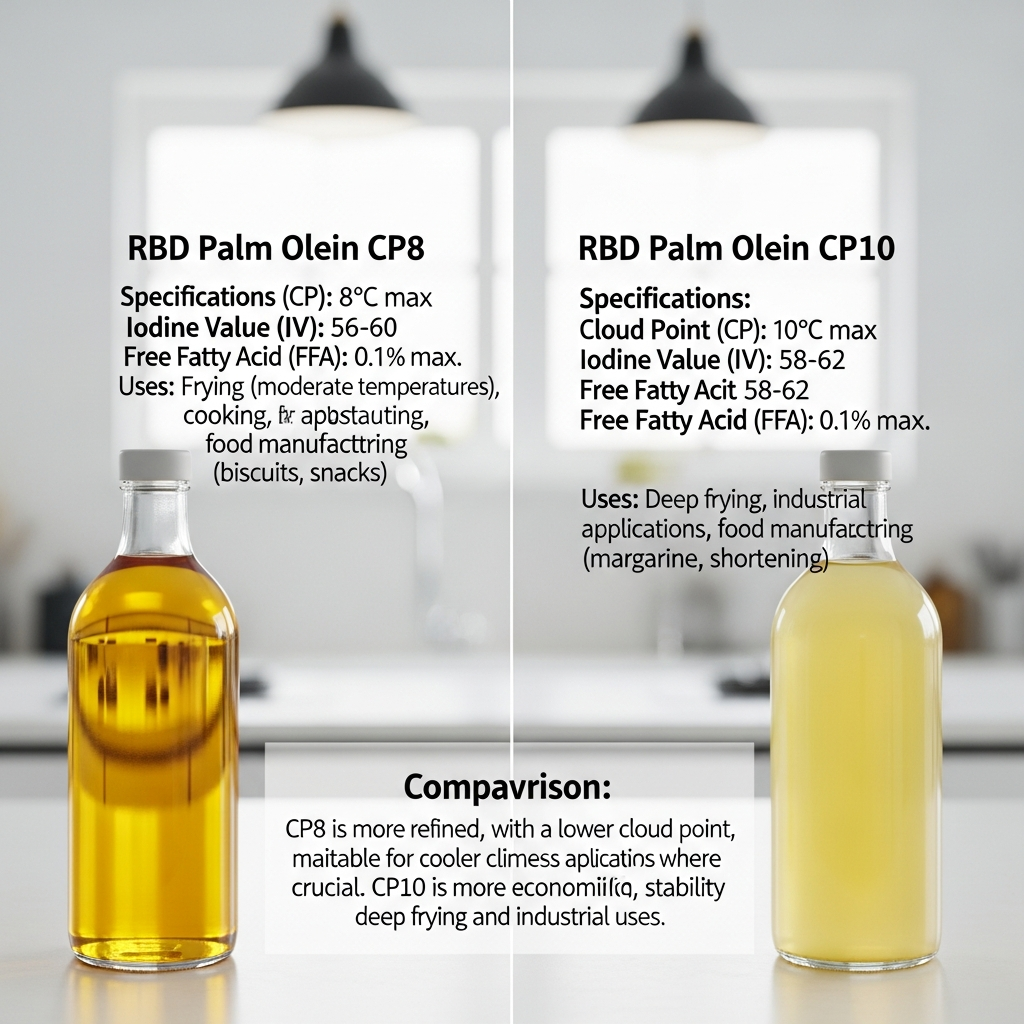
The primary difference between CP8 and CP10 is the cloud point. RBD Palm Olein CP8 has a maximum cloud point of 8°C, while CP10 has a maximum of 10°C.
The lower cloud point of CP8 means it remains liquid at slightly colder temperatures. This makes RBD Palm Olein CP8 a more desirable option in temperate or cooler climates, as it is less likely to solidify during storage and transport. In tropical regions, the difference is less significant, and CP10 is often used interchangeably.
The Complete Palm Product Ecosystem
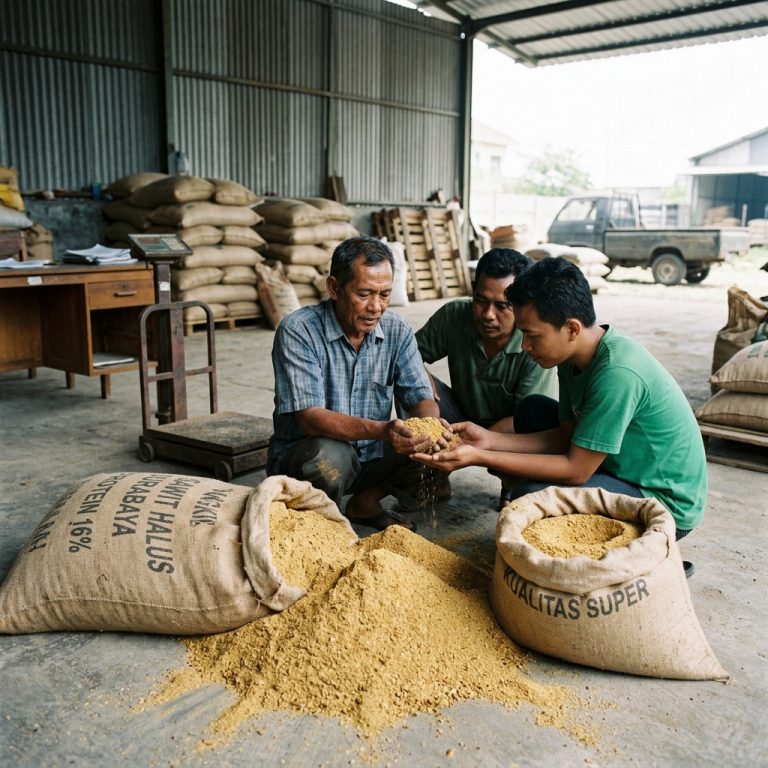
The oil palm fruit is remarkable for its efficiency, yielding multiple valuable products. Beyond the palm oil used to create olein, the fruit’s kernel is also processed. The Palm Kernel is crushed to produce Palm Kernel Oil, an oil with different properties often used in confectionery and soap making. The solid residue left behind is Palm Kernel Expeller (PKE), a protein-rich ingredient for animal feed. Even the hard Palm Kernel Shell is utilized as a clean, efficient biomass fuel.
Sustainability and Health Notes
The palm oil industry has faced scrutiny over environmental and social issues. In response, sustainable practices have become a major focus. When sourcing any palm product, look for suppliers committed to certifications like the Roundtable on Sustainable Palm Oil (RSPO). This ensures the palm oil was produced without causing deforestation or harming local communities.
Nutritionally, RBD Palm Olein CP8 is a balanced source of saturated and unsaturated fats, is rich in Vitamin E, and is naturally free of trans fats. Like all fats, it should be consumed in moderation as part of a balanced diet.
Your Trusted Supplier of High-Quality Palm Products
Looking for High-Quality Palm Products?
Makmur Amanah Sejahtera provides high-quality palm products such as Palm Kernel Expeller, Palm Kernel Shell, Crude Palm Oil, Palm Kernel Oil, etc. Kindly contact us at WhatsApp +6282140002198 or email us at admin@makmuramanah.co.id.
Conclusion
RBD Palm Olein CP8 is more than just a simple cooking oil; it is a highly refined product engineered for performance, stability, and versatility. Its neutral taste, high smoke point, and specific cloud point make it an indispensable ingredient in the global food supply chain. By understanding its specifications and the benefits it offers, consumers and industrial buyers can make informed decisions tailored to their specific needs. For a reliable supply of this and other premium palm products, choosing an experienced and sustainable supplier is key.
 English
  Indonesian
  Chinese
  Arabic