
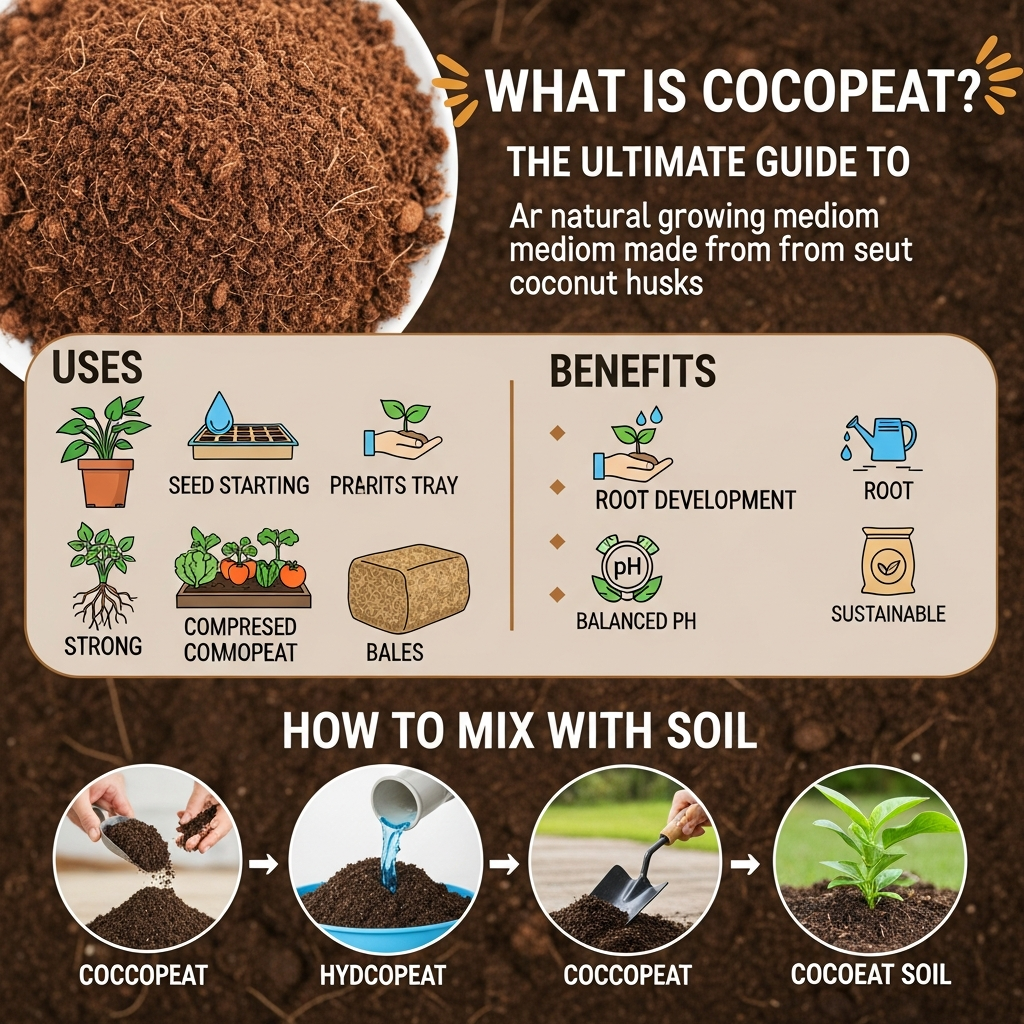
Cocopeat is the secret weapon that professional horticulturists and home gardeners are using to revolutionize plant growth in 2026. If you have struggled with compacted soil, root rot, or unsustainable gardening practices, this renewable byproduct of the coconut industry is the ultimate solution. In this comprehensive guide, we will explore exactly how this powerful growing medium can transform your garden into a thriving oasis.
Global agricultural trends in 2026 indicate a massive shift toward sustainable substrates, with Cocopeat leading the charge due to its incredible water retention capabilities—holding up to 10 times its weight in water. Whether you are running a hydroponic farm or potting a simple houseplant, understanding the mechanics of this material is essential for success. Let’s dig into the details and unlock the full potential of your plants.
What is Cocopeat? (The Ultimate Soil Conditioner)
At its core, Cocopeat (also known as coir pith, coir dust, or coco coir) is a multi-purpose growing medium made from the coconut husk dust that is separated during the fiber extraction process. Historically considered waste, it is now recognized as one of the most versatile organic substrates on the planet.
Unlike traditional soil which can harbor pathogens, high-quality Cocopeat is sterile, naturally anti-fungal, and offers a perfect balance of aeration and moisture retention. It acts like a microscopic sponge, releasing water slowly to plant roots only when they need it, effectively preventing both underwatering and overwatering.
How is It Produced?
The production process is fascinating and entirely organic. Coconut husks are soaked (retted) in fresh or salt water to soften the fibers. During the extraction of long fibers for rope or mats, the spongy, cork-like particles fall away. This “dust” is then washed, heat-treated, screened, and graded into various texture profiles before being compressed into blocks or sold loose. This renewable cycle ensures that unlike peat bogs, which take centuries to regenerate, our supply of coir is constant and eco-friendly.
Key Chemical Properties
Understanding the chemistry of Cocopeat is vital for advanced gardening:
- pH Balance: Generally ranges between 5.5 and 6.8, which is the “sweet spot” for most nutrient absorption, requiring less lime than peat moss.
- High Cation Exchange Capacity (CEC): It holds onto positively charged nutrients (cations) like calcium and magnesium and releases them slowly to the roots.
- High Lignin Content: High lignin levels mean it decomposes slowly, providing long-term soil structure improvements for up to 5 years.
9 Proven Benefits of Using Cocopeat in Gardening
Why are growers switching to Cocopeat en masse in 2026? The benefits go far beyond simple sustainability. Here are the top reasons to incorporate it into your gardening strategy:
- Superior Water Retention: As mentioned, it holds 8-10x its weight in water. This hydrophilic nature reduces irrigation frequency by up to 50%, saving both water and labor costs in large-scale operations.
- Enhanced Aeration: Even when fully saturated, it maintains excellent porosity (air-filled porosity), ensuring roots get the oxygen they need to breathe. This prevents the “suffocation” common in dense clay soils.
- Root Growth Promotion: The loose, friable structure allows delicate roots to spread rapidly without physical resistance, leading to a denser root ball and healthier vegetative growth.
- Disease Resistance: It is naturally resistant to bacterial and fungal growth, specifically pathogens like Pythium (root rot) and other soil-borne diseases that plague traditional potting mixes.
- Eco-Friendly & Renewable: Unlike peat moss, which involves the destruction of ancient carbon sinks (bogs), coconuts are harvested continually (every 45-60 days), making coir a truly renewable resource.
- Reusable Durability: Can be sterilized and reused for up to 4 years in hydroponic cycles. Its high lignin content prevents it from breaking down into muck quickly.
- Compaction Prevention: Mixing it with heavy clay soil breaks up the earth and prevents hardening. It adds organic matter that keeps soil fluffy and workable.
- Nutrient Buffering: It stores essential nutrients and releases them on demand, acting as a buffer against fertilizer burn and nutrient lock-out.
- Versatility: Works for seed starting, bedding plants, hydroponics, worm bins, and even as bedding for reptiles and livestock.
Furthermore, for those managing large-scale agricultural projects, integrating other organic byproducts can amplify these benefits. For instance, combining coir with Palm Kernel Shell can significantly improve drainage in larger containers, creating a robust structure for tree saplings that require stability.
Cocopeat vs. Peat Moss vs. Soil: The Showdown
To truly understand the value, we must compare it to the traditional alternatives. Below is a detailed comparison of the three most common growing media used by professionals.
| Feature | Cocopeat | Peat Moss | Garden Soil |
|---|---|---|---|
| Sustainability | High (Renewable Waste) | Low (Destroys Bogs) | Variable |
| pH Level | Neutral (5.5–6.8) | Acidic (3.5–4.5) | Variable (usually 6.0–7.0) |
| Water Retention | Excellent (1000%+) | Good (hydrophobic when dry) | Moderate to Poor |
| Aeration | High | Moderate | Low (prone to compaction) |
| Reusability | High (3-5 years) | Low (Decomposes fast) | Moderate |
According to research by the Royal Horticultural Society, shifting away from peat-based products is critical for environmental conservation. Cocopeat offers the perfect functional alternative without the ecological guilt.
How to Treat and Buffer Cocopeat (Critical Step)
One common mistake beginners make is using raw coir directly without checking its salinity. Coconut palms often grow in saline coastal areas, meaning raw dust can contain high levels of sodium and potassium, which blocks nutrient uptake (specifically Calcium and Magnesium).
The Buffering Process:
- Hydration: Soak the compressed block in fresh water until it expands fully. A 5kg block can expand to over 70 liters of substrate.
- Washing: Rinse the expanded material thoroughly to leach out excess salts (Sodium). You may need to repeat this until the runoff water is clear.
- Buffering: Treat the wet coir with a Calcium Magnesium solution (Cal-Mag). The calcium displaces the sodium and potassium bonds in the fiber cation exchange sites. Soak for 8-24 hours.
- Testing: Check the Electrical Conductivity (EC) of the runoff water. An EC below 0.5 mS/cm indicates it is safe for sensitive plants.
While this sounds technical, buying pre-buffered, high-quality Cocopeat saves you this trouble. However, if you are sourcing raw material, this step is non-negotiable for plant health.
How to Mix Cocopeat with Soil: The Golden Ratios
Using 100% coir is possible for hydroponics (often called “coco coir hydroponics”), but for traditional gardening, mixing it is often best. Here are the proven recipes for different applications.
1. The “Ultimate Potting Mix” Recipe
This mix provides the perfect balance of drainage, retention, and nutrition for 90% of houseplants and vegetables.
- 30% Cocopeat (for moisture and structure)
- 30% Perlite or Pumice (for aeration)
- 20% Compost or Worm Castings (for nutrition)
- 20% Garden Soil (for trace minerals)
You can also enhance the nutritional profile by adding organic amendments. For example, Copra Meal is an excellent organic fertilizer that pairs naturally with coir-based mixes to provide slow-release nitrogen, promoting leafy growth.
2. The Seed Starter Mix
Seeds need a sterile, fine environment to germinate. Large particles can obstruct tiny roots.
- 70% Fine Cocopeat (Screened)
- 30% Perlite (Fine grade)
This sterile mix prevents “damping off” disease, which frequently kills seedlings in standard soil. The high air porosity ensures high germination rates.
3. The Aroid & Tropical Mix
Monstera, Philodendrons, and other aroids hate wet feet. They need chunkier mixes.
- 40% Coco Chips (Larger chunks of husk)
- 30% Cocopeat
- 30% Perlite and Charcoal
Common Mistakes to Avoid
Despite its “miracle” status, you can fail with Cocopeat if you aren’t careful. Avoid these critical errors:
- Not adding nutrients: Remember, coir is inert. It has no N-P-K value. You must fertilize from day one or mix it with compost.
- Letting it dry out completely: While it re-wets easier than peat, letting it become bone dry can stress roots. Keep it consistently moist like a wrung-out sponge.
- Using low-quality blocks: Cheap blocks often have high salt content. Always source from reputable suppliers like verified industry exporters or trusted local brands.
- Forgetting Calcium: Coir loves to bind with Calcium. If you don’t supplement Cal-Mag, your plants might show calcium deficiency (browning leaf tips) even if calcium is present in the soil.
Beyond Gardening: Industrial and Agricultural Uses
The versatility of coconut and palm byproducts extends far beyond the garden. In the livestock industry, coir is becoming a preferred bedding material due to its absorbency and hygiene properties. This is often compared to other agricultural residues.
For example, while Cocopeat excels as bedding, products like Palm Kernel Expeller (PKE) serve a completely different but equally vital role as a high-protein animal feed supplement. Similarly, in the energy and chemical sectors, derivatives like RBD CP8 are crucial for manufacturing industrial lubricants and biofuels.
Understanding the full ecosystem of these commodities allows businesses to optimize their supply chains. For instance, dairy farmers might use coir for bedding and supplement their feed with Calcium Salts of Palm Oil Fatty Acids to boost milk production, showcasing the synergy between coconut and palm industry byproducts.
Makmur Amanah Sejahtera provides high-quality palm products such as Palm Kernel Expeller, Palm Kernel Shell, Crude Palm Oil, Palm Kernel Oil, etc. Kindly contact us at WhatsApp +6282140002198 or email us at admin@makmuramanah.co.id.
Frequently Asked Questions (FAQ)
Is Cocopeat good for all types of plants?
Yes, it is excellent for most plants including vegetables, flowers, and tropicals. However, because it holds moisture well, succulents and cacti require a mix with more drainage material like perlite (50% or more) to ensure they do not sit in water for too long.
Can I reuse Cocopeat?
Absolutely. One of the major benefits is its durability. To reuse it, simply remove old root balls, wash the medium with fresh water, and sterilize it using solarization or a mild peroxide solution. It can be reused effectively for 3-4 years.
Does Cocopeat expire?
In its dry, compressed block form, it does not expire and can be stored indefinitely if kept dry. Once expanded and wet, it should be used within a few months to prevent anaerobic bacteria growth, though it is resistant to rot.
How is Cocopeat different from Coco Chips?
Cocopeat is the fine dust/pith used for moisture retention, while coco chips are larger, chunkier pieces of the husk. Chips are used for plants that need massive airflow, like Orchids, whereas peat is better for general potting mixes.
Is it cheaper than soil?
While the upfront cost might be slightly higher than cheap topsoil, it is more economical in the long run. Its reusable nature, light weight (lower shipping costs), and ability to prevent plant death make it a cost-effective investment.
Conclusion
As we navigate 2026, the shift towards sustainable, high-performance gardening inputs is undeniable. Cocopeat stands out not just as an eco-friendly alternative to peat moss, but as a superior growing medium that enhances root health, water efficiency, and yield. By understanding how to buffer, mix, and maintain this powerful substrate, you are setting your garden up for unprecedented success.
Whether you are repotting a rare aroid or managing a commercial nursery, the versatility of coir is unmatched. Remember to choose high-quality, low-EC sources to avoid salinity issues and always buffer your medium. Start experimenting with Cocopeat today, and watch your plants thrive like never before.
 English
  Indonesian
  Chinese
  Arabic