
Palm Kernel Expeller: #1 Expert Guide & Benefits (2026)
Palm Kernel Expeller has emerged as a revolutionary solution for maximizing livestock productivity while managing feed costs efficiently. As global agricultural demands rise in 2026, farmers and nutritionists are increasingly turning to this byproduct to optimize herd health and profitability.
The rising cost of traditional feeds like soybean meal and corn has forced the industry to seek sustainable alternatives. Palm Kernel Expeller (PKE) offers a unique combination of energy, fiber, and protein that is hard to match. Whether you manage a dairy farm in New Zealand or a beef feedlot in Europe, understanding the strategic application of PKE is critical for staying competitive.
In this comprehensive guide, we will explore the nutritional mechanics of PKE, its specific advantages over other meals, and how to integrate it into a balanced diet for superior results.
What is Palm Kernel Expeller?
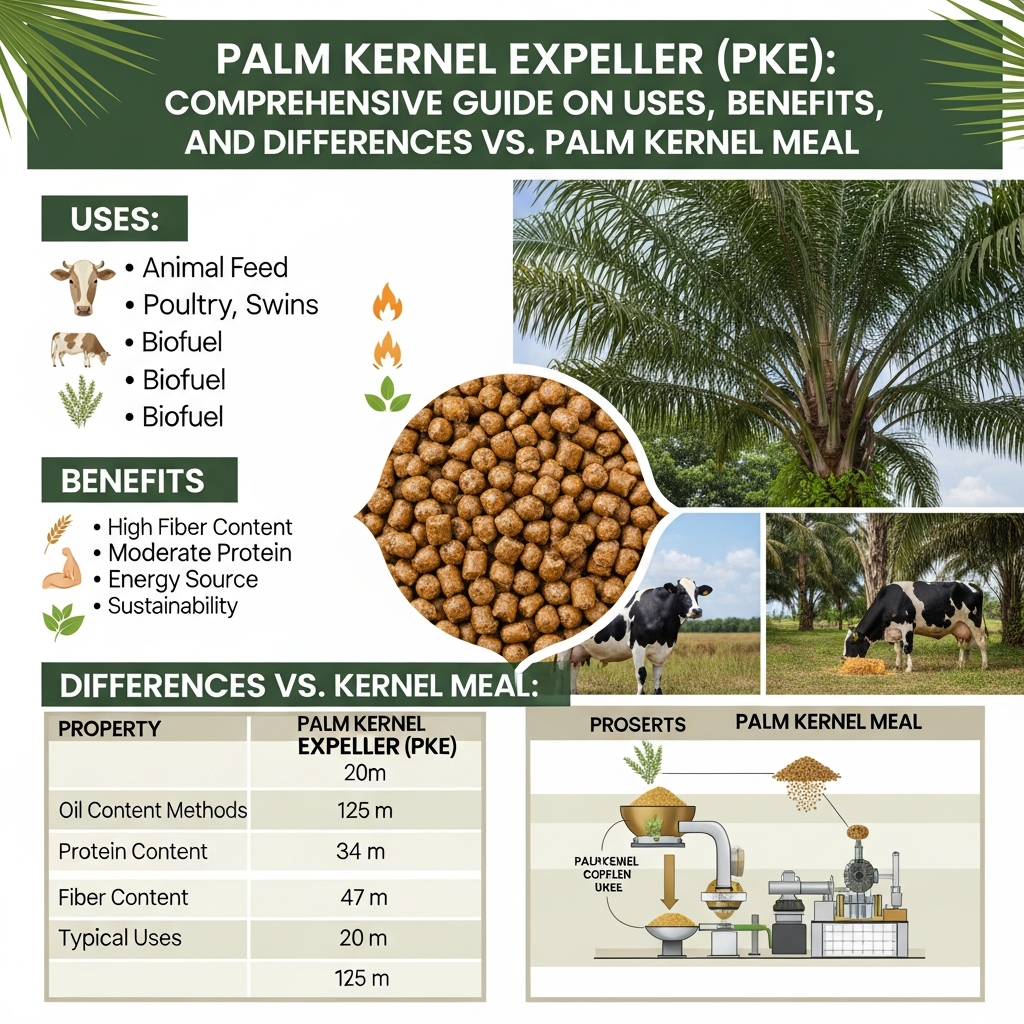
Palm Kernel Expeller is the high-fiber, protein-rich byproduct obtained from the mechanical extraction of palm kernel oil from the nut of the oil palm fruit (Elaeis guineensis). Unlike solvent-extracted meals, the expeller process uses mechanical pressure (screw presses), which leaves a higher residual oil content in the cake—typically between 6% to 10%.
The production process begins with the crushing of palm kernels. While the primary goal is to extract oil for culinary and industrial uses—such as the production of RBD CP8 cooking oil—the remaining solid residue becomes a valuable feed ingredient. This residual oil provides a dense source of metabolic energy, making it an invaluable ingredient for ruminants.
The product is widely produced in Southeast Asia, particularly Indonesia and Malaysia, which command the global supply chain. According to FAO agricultural data, the export volume of palm byproducts has seen a steady increase, solidifying its status as a staple global feed commodity.
[Image Suggestion: A diagram illustrating the palm oil extraction process, highlighting where PKE is separated from the oil.]
Nutritional Profile of Palm Kernel Expeller
To understand why Palm Kernel Expeller is so effective, we must look at its nutritional composition. It is characterized by a balanced ratio of protein to energy, making it safe for high-volume feeding without the risk of acidosis often associated with starch-heavy grains.
The nutritional value can vary slightly depending on the efficiency of the oil extraction process, but high-quality Indonesian PKE typically adheres to the following specifications:
| Parameter | Typical Value | Nutritional Function |
|---|---|---|
| Crude Protein | 14% – 16% | Supports muscle growth and milk production. |
| Crude Fat (Oil) | 6% – 10% | Provides high metabolic energy (approx. 11 MJ/kg). |
| Neutral Detergent Fiber (NDF) | 60% – 70% | Promotes rumen health, cud chewing, and saliva production. |
| Metabolizable Energy (ME) | 10.5 – 11.5 MJ/kg | Fuels daily activity and lactation. |
| Moisture | Max 10% | Ensures long shelf life and prevents mold growth. |
| Calcium / Phosphorus | Low Ca / High P | Requires balancing with calcium supplements. |
This profile highlights why PKE is superior for ruminants. The high fiber content buffers the rumen, while the fat content boosts energy density. However, because PKE is relatively low in specific amino acids like lysine, farmers looking to optimize growth often mix PKE with nutrient-dense Copra Meal to enhance the amino acid profile of the total mixed ration (TMR).
7 Key Benefits of Palm Kernel Expeller for Livestock
Integrating Palm Kernel Expeller into your feeding strategy offers multifaceted benefits. From economic savings to physiological improvements in the herd, the advantages are proven by decades of agricultural use.
1. Superior Cost-Effectiveness
In the volatile market of 2026, PKE remains one of the most cost-efficient sources of energy and protein. It typically trades at a discount relative to soybean meal and corn. By calculating the cost per Megajoule of energy, farmers often find that PKE offers a better return on investment, allowing for reduced daily feed costs per head without compromising nutritional intake.
2. Enhanced Milk Solids Production
For dairy farmers, PKE is a “secret weapon” for boosting milk fat. The specific fatty acid profile of the residual palm oil—rich in C12:0 (Lauric) and C16:0 (Palmitic) acids—promotes the synthesis of milk fat. This leads to higher milk solids, a key metric for payout in many dairy markets. Research published in the Journal of Animal Science confirms that moderate inclusion of PKE can significantly improve milk composition.
3. Reduced Risk of Acidosis
One of the biggest challenges in intensive feeding is Sub-Acute Ruminal Acidosis (SARA). Unlike grain-based feeds that ferment rapidly and drop rumen pH, PKE ferments slowly due to its high NDF content. This stimulates chewing and saliva production, acting as a natural buffer that maintains a stable rumen pH. For more on preventing rumen disorders, refer to the Merck Veterinary Manual.
4. High Palatability
Once acclimated, cattle find Palm Kernel Expeller highly palatable. It has a savory, nutty aroma derived from the palm oil. While there may be a short transition period of 2-3 days, animals generally take to it greedily, which encourages dry matter intake even during periods of heat stress when appetite usually suppresses.
5. Excellent Shelf Life
Due to its lower moisture content and the antioxidant properties of Vitamin E naturally present in palm oil, PKE stores well. It resists spoilage better than many wet byproducts like brewers’ grains, reducing waste on the farm. Proper storage in dry, concrete bays ensures it lasts for months without quality degradation.
6. Versatility in Feeding Systems
PKE is incredibly versatile physically. It is available as meal, pellets, or chips, allowing it to be fed in feed bins, mixed into wagons, or used in automated feeding systems (in-shed feeding). Its flowability makes it compatible with modern farm infrastructure, preventing clogging in silos.
7. Complementary to Pasture
In pasture-based systems, fresh grass can often be low in dry matter and high in soluble protein, leading to rapid passage rates and loose manure. PKE balances this by providing dry solids and “bypass protein” (undegradable dietary protein), optimizing the animal’s overall nutrient absorption and firming up manure consistency.
[Image Suggestion: An infographic displaying the 7 benefits of Palm Kernel Expeller, with icons representing cost savings, milk production, and rumen health.]
Palm Kernel Expeller vs. Palm Kernel Meal: The Differences
A common point of confusion is the difference between Palm Kernel Expeller (PKE) and Palm Kernel Meal (PKM). While they come from the same source, the extraction method dictates their final nutritional value and energy levels.
- Extraction Method: PKE is produced via mechanical screw presses (expeller), whereas PKM is usually produced via solvent extraction (using hexane).
- Oil Content: PKE retains more oil (6-10%), making it higher in metabolic energy. PKM has very little oil (1-2%).
- Protein Content: PKM often has slightly higher protein percentages simply because the oil has been removed, concentrating the remaining nutrients.
- Application: PKE is preferred for ruminants needing energy for lactation or finishing. PKM is often used where lower fat is desired, though PKE is generally more popular in the dairy sector due to the energy boost.
Choosing the right product depends on your herd’s energy requirements. For high-performance dairy cows, the extra energy in our premium Palm Kernel Expeller is often the deciding factor for superior yields.
Strategic Feeding Recommendations
To maximize the benefits of Palm Kernel Expeller, it must be introduced correctly. Sudden changes in diet can cause digestive upset, so a gradual transition is essential.
For Dairy Cattle
Start with 0.5 kg per cow per day and gradually increase to 3–6 kg over 10 days. Monitor milk solids and manure consistency. PKE works exceptionally well when paired with high-starch supplements or energy supplements like Calcium Salts to balance the energy release rates in the rumen.
For Beef Cattle
Beef cattle can tolerate higher inclusion rates, sometimes up to 30-40% of the total diet, depending on the availability of forage. It is particularly effective for backgrounding cattle or maintaining condition scores during winter months when pasture quality drops.
Comparative Feed Analysis
The table below compares PKE with other common feed ingredients:
| Feed Type | Protein (%) | Energy (MJ/kg) | Primary Use |
|---|---|---|---|
| Palm Kernel Expeller | 14 – 16% | 11.0 | Balanced Energy & Fiber Source |
| Soybean Meal | 44 – 48% | 13.0 | High Protein Supplement |
| Corn Gluten Feed | 20 – 22% | 11.5 | Protein & Energy |
Sourcing High-Quality PKE from Indonesia
Indonesia is the world’s largest producer of palm oil, and consequently, the premier source for Palm Kernel Expeller. However, quality varies significantly between mills. Factors such as shell contamination, moisture levels, and storage conditions play a huge role in the final feed quality.
When sourcing PKE, ensure that the supplier guarantees:
- Low Shell Content: Excess shell reduces digestibility and can cause impaction. High-quality PKE should be free from large shell fragments. (If you require pure shell for biomass energy, consider Palm Kernel Shell specifically).
- Consistent Color and Aroma: It should be dark brown with a fresh, nutty smell. Black color indicates burning during pressing (low protein digestibility), while a musty smell indicates mold.
- Sustainability and Traceability: Reliable suppliers comply with international sustainability standards, such as those outlined by the Roundtable on Sustainable Palm Oil (RSPO).
Leading exporters follow strict quality control measures to ensure that the PKE reaching your farm is safe, nutritious, and free from contaminants like salmonella. Always verify certifications and ask for recent lab analyses before purchasing.
[Image Suggestion: A cargo ship being loaded with bulk Palm Kernel Expeller at an Indonesian port, symbolizing global trade and supply availability.]
Conclusion
As we navigate the agricultural landscape of 2026, Palm Kernel Expeller stands out as a robust, economical, and high-performance feed ingredient. Its ability to lower feed costs while boosting milk solids and maintaining rumen health makes it indispensable for modern livestock management.
Whether you are formulating a TMR for a high-yield dairy herd or supplementing pasture-fed beef cattle, PKE provides the energy and fiber backbone necessary for success. By understanding the differences between expeller and meal, and sourcing from reputable Indonesian suppliers, you can secure a competitive edge in your farming operations.
Don’t let rising feed costs cut into your profits. Leverage the power of Palm Kernel Expeller today to build a more resilient and productive future for your livestock business.
Makmur Amanah Sejahtera provides high-quality palm products such as Palm Kernel Expeller, Palm Kernel Shell, Crude Palm Oil, Palm Kernel Oil, etc. Kindly contact us at WhatsApp +6282140002198 or email us at admin@makmuramanah.co.id.
Frequently Asked Questions
What is the main difference between PKE and Palm Kernel Cake?
The terms are often used interchangeably in the industry. However, “cake” usually refers to the solid slab form immediately after pressing, while “expeller” refers to the ground, pelletized, or meal form that is ready for animal feed. Both refer to the same mechanical extraction byproduct rich in energy and fiber.
Is Palm Kernel Expeller safe for all livestock?
Palm Kernel Expeller is safest and most effective for ruminants like cows, sheep, and goats due to their ability to digest high fiber. It should be used with caution and in limited quantities for monogastrics like pigs and chickens, as they cannot digest the fiber as efficiently.
How should PKE be stored to prevent spoilage?
PKE should be stored in a dry, well-ventilated area, away from direct moisture. Concrete bays or silos are ideal. Properly stored PKE has a long shelf life, but if it gets wet, it can mold quickly, producing mycotoxins that are harmful to livestock.
Does PKE affect the taste of milk?
When fed in recommended amounts (typically up to 3-4 kg per cow per day), PKE does not negatively affect milk taste. In fact, it tends to increase milk fat content, which is desirable. Excessive feeding without balance might alter milk fatty acid profiles slightly, but this is rare with proper nutrition management.
Why is Indonesian PKE preferred globally?
Indonesia is the largest producer of palm oil, ensuring a steady, fresh, and large-volume supply of Palm Kernel Expeller throughout the year. The mature industry infrastructure ensures consistent quality standards that meet international import regulations for markets in New Zealand, Europe, and East Asia.

 English
  Indonesian
  Chinese
  Arabic