
Copra Meal: 7 Powerful Feed Benefits & Nutritional Uses (2026)
Copra meal is widely recognized as one of the most cost-effective and nutritious feed ingredients available for modern livestock production. If you are struggling to find a high-energy protein source that improves herd health without breaking the bank, this tropical byproduct is your ultimate solution.
In the increasingly competitive landscape of animal agriculture, efficiency is everything. Farmers and feed millers often overlook the incredible potential of coconut byproducts, relying instead on fluctuating commodity crops. With the global animal feed market projected to face new volatility in 2026, understanding the strategic advantage of including coconut meal in your rations is crucial for maximizing profitability and animal performance.
This comprehensive guide explores the nutritional profile, economic benefits, and specific feeding strategies for this powerhouse ingredient.
What is Copra Meal?
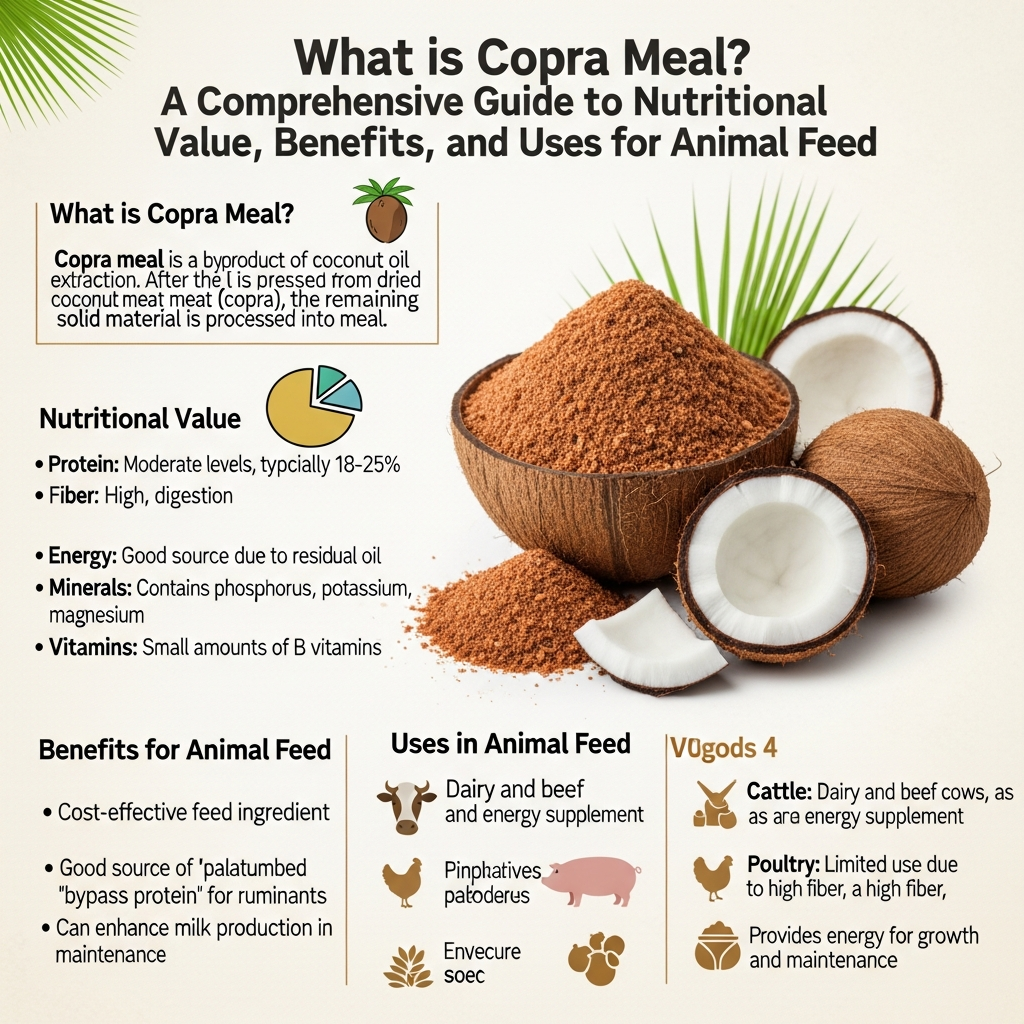
Copra meal, often referred to as coconut meal, coconut oil cake, or copra cake, is the highly nutritious residue left over after the extraction of oil from dried coconut kernels (copra). It is a brownish, highly palatable feed ingredient that serves as an excellent source of energy and protein for various livestock species, from dairy cows to equine athletes.
Unlike other protein meals that are merely fillers, this ingredient offers a unique combination of bypass protein and digestible fiber. It is produced through two primary methods:
- Mechanical Expulsion: This method uses physical pressure to squeeze oil out. It typically yields a meal with higher residual oil content (8-12%), providing valuable extra energy for animals.
- Solvent Extraction: Chemical solvents remove nearly all the oil, resulting in a lower fat product (1-3%) with slightly higher protein concentration but less metabolizable energy.
According to data from Feedipedia, a leading resource on animal feed, coconut meal is particularly valued for ruminants because its protein is relatively resistant to rumen degradation. This “bypass” quality allows for better absorption of amino acids in the small intestine, directly supporting muscle growth and milk production.
Nutritional Profile of Copra Meal
Understanding the detailed nutritional breakdown is essential for formulating balanced diets. Copra meal is not just a bulk ingredient; it is a nutrient-dense powerhouse that can replace more expensive concentrates.
The table below outlines the typical nutritional composition found in high-quality mechanical extracted meal compared to other common feed ingredients.
| Nutrient Component | Average Value (Dry Matter Basis) | Key Benefit |
|---|---|---|
| Crude Protein | 20% – 25% | Supports muscle development and milk synthesis |
| Crude Fat (Oil) | 8% – 12% | High energy density for weight gain and conditioning |
| Crude Fiber | 10% – 14% | Promotes healthy rumen function and digestion |
| Metabolizable Energy | ~11-12 MJ/kg | Sustained energy release without hyperactivity |
| NDF (Neutral Detergent Fiber) | 45% – 55% | High digestibility for ruminants |
It is important to note that while the protein level is lower than soybean meal, the energy value is often higher due to the oil content. For even higher energy density specifically for rumen bypass, some farmers supplement with Calcium Salts of Palm Oil Fatty Acids, but coconut meal remains the most balanced single-ingredient option.
7 Powerful Copra Meal Benefits for Livestock Health
Integrating this ingredient into your feed strategy offers tangible benefits that go beyond simple cost savings. Here is why industry experts and veterinarians recommend copra meal for 2026 feed formulations.
1. Excellent Source of Bypass Protein
One of the standout features of copra meal is its high content of bypass protein. Unlike some vegetable proteins that are degraded immediately in the rumen, a significant portion of coconut protein passes directly to the abomasum (the true stomach).
Here, it is broken down into essential amino acids that the animal can utilize more efficiently for tissue growth and milk protein synthesis. This makes it structurally similar to heat-treated soy but at a fraction of the cost.
2. High Energy from Residual Oil
The residual coconut oil remaining in the meal provides a concentrated source of non-fermentable energy. This is particularly beneficial for dairy cows in early lactation who often suffer from negative energy balance (ketosis).
The specific fatty acids, such as lauric acid, also possess natural antimicrobial properties, which can help modulate gut flora and reduce the burden of pathogenic bacteria.
3. Superior Palatability and Intake
Animals generally love the sweet, nutty aroma of coconut. Including it in a Total Mixed Ration (TMR) can mask the flavor of less palatable ingredients or mineral supplements, thereby increasing overall dry matter intake.
Consistent intake is the key to performance; if animals refuse feed, production drops. The natural aroma ensures your livestock consume the necessary nutrients for optimal performance every day.
4. Cost-Effective Feed Alternative
Compared to expensive protein sources like soybean meal or canola meal, coconut byproducts offer a significant economic advantage. By substituting a portion of expensive concentrates with our premium Copra Meal, farmers can lower production costs per kilogram of gain or liter of milk without compromising nutritional quality.
5. Improved Butterfat Content in Dairy
Dairy farmers have long observed that feeding coconut meal tends to increase the butterfat content of milk. The saturated fatty acids (medium-chain triglycerides) in the coconut oil are directly utilized by the mammary gland for milk fat synthesis.
This leads to higher quality milk yields and better milk pay checks, especially in markets where butterfat percentage commands a premium price.
6. Safe for Various Species
While primarily used for ruminants, it is also suitable for horses, pigs, and poultry when used within appropriate limits. Its versatility makes it a staple inventory item for feed mills producing multispecies feeds, simplifying inventory management.
7. Rich in Galactomannan
Recent studies suggest that the galactomannan polysaccharides found in coconut meal may have prebiotic effects. These compounds support gut health and immune function, particularly in monogastric animals, by promoting the growth of beneficial bacteria like Lactobacillus.
Copra Meal Feeding Guidelines by Species
To maximize the benefits of copra meal, it must be introduced correctly into the diet. Sudden changes can cause digestive upset, so a gradual transition over 7 to 10 days is always recommended.
Ruminants (Cattle and Sheep)
Ruminants are the primary consumers of this byproduct. They can tolerate high inclusion rates due to their ability to digest fiber effectively.
- Dairy Cows: Can be fed up to 1.5 – 3.0 kg per head per day. It is excellent for boosting milk fat and maintaining body condition score during peak lactation.
- Beef Cattle: Inclusion rates of 20-30% in the concentrate ration are common for fattening. It helps produce firm white fat, which is desirable in many markets.
- Sheep: Can be included at up to 20% of the total diet. Note: See risks regarding copper below.
For deep research on ruminant digestion of coconut byproducts, the Food and Agriculture Organization (FAO) provides extensive archives on tropical feed resources.
Horses and Ponies
Copra meal has gained massive popularity as a “cool feed” for horses. It provides energy via oil and fiber rather than starch, avoiding the “hot” or hyperactive behavior associated with grain-based feeds.
It is low in Non-Structural Carbohydrates (NSC), making it ideal for horses prone to tying up, laminitis, or ulcers. Crucial Tip: Always soak the meal before feeding. It absorbs water and expands significantly, which helps hydration but can cause choke if fed dry.
Poultry and Swine
For monogastric animals, usage is limited by the high fiber content. However, small inclusion rates (5-10%) can be beneficial. It provides essential amino acids but should be balanced with lysine and methionine supplements, as coconut protein is slightly deficient in these specific amino acids compared to soy.
Copra Meal vs. Palm Kernel Expeller
A common question in the feed industry is how coconut meal compares to other tropical byproducts like Palm Kernel Expeller (PKE).
While both are excellent sources of fiber and energy, coconut meal generally boasts a higher protein content (20-25% vs. 14-16% for PKE). PKE is often more abundant and cheaper, making it a great bulk filler, whereas coconut meal is used for more concentrated nutritional boosts.
Many successful feed strategies utilize a blend of both to balance cost and nutrition. For example, a base of PKE supplemented with copra meal provides a complete fiber and protein profile. Additionally, byproducts like Palm Kernel Shell are often used for energy generation (biomass) on farms, highlighting the zero-waste utility of these tropical crops.
Potential Risks and Management of Copra Meal
Like any feed ingredient, quality control is paramount. The primary concern with coconut byproducts is the potential for rancidity and mycotoxins if stored improperly.
Aflatoxin Management
Coconut meat is susceptible to mold growth (Aspergillus) during the drying process if not handled correctly. It is critical to source meal from reputable suppliers who ensure low moisture content (below 12%) and proper storage conditions.
Scientific studies, such as those found on ScienceDirect, highlight that maintaining low moisture is the single most effective way to prevent mycotoxin formation. High-quality meal should have a fresh, sweet smell and be free from visible mold or clumping.
Rancidity and Storage
Because of the high oil content, the meal can become rancid if stored for extended periods in hot, humid conditions (oxidative rancidity). This affects palatability and can reduce Vitamin E availability in the animal.
Storage Tips:
- Store in cool, dry, well-ventilated areas.
- Keep bags off the concrete floor using pallets to prevent moisture wicking.
- For bedding in storage areas to manage moisture, some farmers utilize absorbent materials like Cocopeat to keep the environment dry.
- Use stock within 3-6 months of production.
Copper Toxicity in Sheep
Sheep are unique in their sensitivity to copper. Coconut meal can sometimes contain elevated copper levels depending on the soil composition where the coconuts were grown. Always test a new batch before feeding it to sheep, or restrict inclusion rates to safe levels to avoid toxicity.
Sourcing High-Quality Copra Meal
The global supply chain for coconut products is vast. Sourcing from experienced exporters ensures you receive a product that meets international safety standards. Look for suppliers who provide detailed product specifications and guarantee consistent protein and oil levels.
Authoritative bodies like the International Feed Industry Federation (IFIF) advocate for strict safety standards in the global trade of feed ingredients to ensure animal health and food safety. At Makmur Amanah, we adhere to these rigorous standards to deliver only the best.
Makmur Amanah Sejahtera provides high-quality palm products such as Palm Kernel Expeller, Palm Kernel Shell, Crude Palm Oil, Palm Kernel Oil, etc. Kindly contact us at WhatsApp +6282140002198 or email us at admin@makmuramanah.co.id.
Frequently Asked Questions
Is copra meal suitable for all types of cattle?
Yes, it is highly suitable for both dairy and beef cattle. It is particularly effective for lactating dairy cows to improve milk fat and for beef cattle to increase weight gain due to its high energy and bypass protein content.
Does copra meal need to be soaked before feeding?
For horses, it is strongly recommended to soak the meal as it absorbs moisture and expands, which can cause choke. For ruminants like cattle and sheep, it can generally be fed dry as part of a mixed ration without issues.
What is the maximum shelf life of copra meal?
When stored in a cool, dry place with low humidity, it can last for 3 to 6 months. However, due to its residual oil content, it is more prone to rancidity than solvent-extracted meals and should be monitored for freshness.
How does copra meal compare to soybean meal?
Soybean meal has higher protein (44-48%) compared to coconut meal (20-25%). However, coconut meal provides higher energy from oil and is often more cost-effective. It is an excellent partial substitute but not a 1:1 replacement for high-protein needs.
Can copra meal cause copper toxicity in sheep?
Coconut meal can sometimes contain higher levels of copper depending on the soil where the coconuts were grown. Since sheep are sensitive to copper, it is advisable to test the batch or limit inclusion rates to avoid toxicity issues.
Conclusion
Incorporating copra meal into your animal nutrition strategy is a smart, forward-thinking move for 2026. Its unique combination of bypass protein, metabolizable energy, and gut-friendly fiber makes it a superior choice for farmers looking to optimize herd health and reduce feed costs.
By understanding the nutritional profile and following species-specific feeding guidelines, you can unlock the full potential of this tropical resource. Whether you are managing a high-production dairy farm or a boutique equine stable, high-quality coconut meal provides the results you need.
Always ensure you are sourcing from trusted suppliers to guarantee safety and consistency. Make the switch today and witness the improvement in your livestock’s condition and productivity.
 English
  Indonesian
  Chinese
  Arabic