
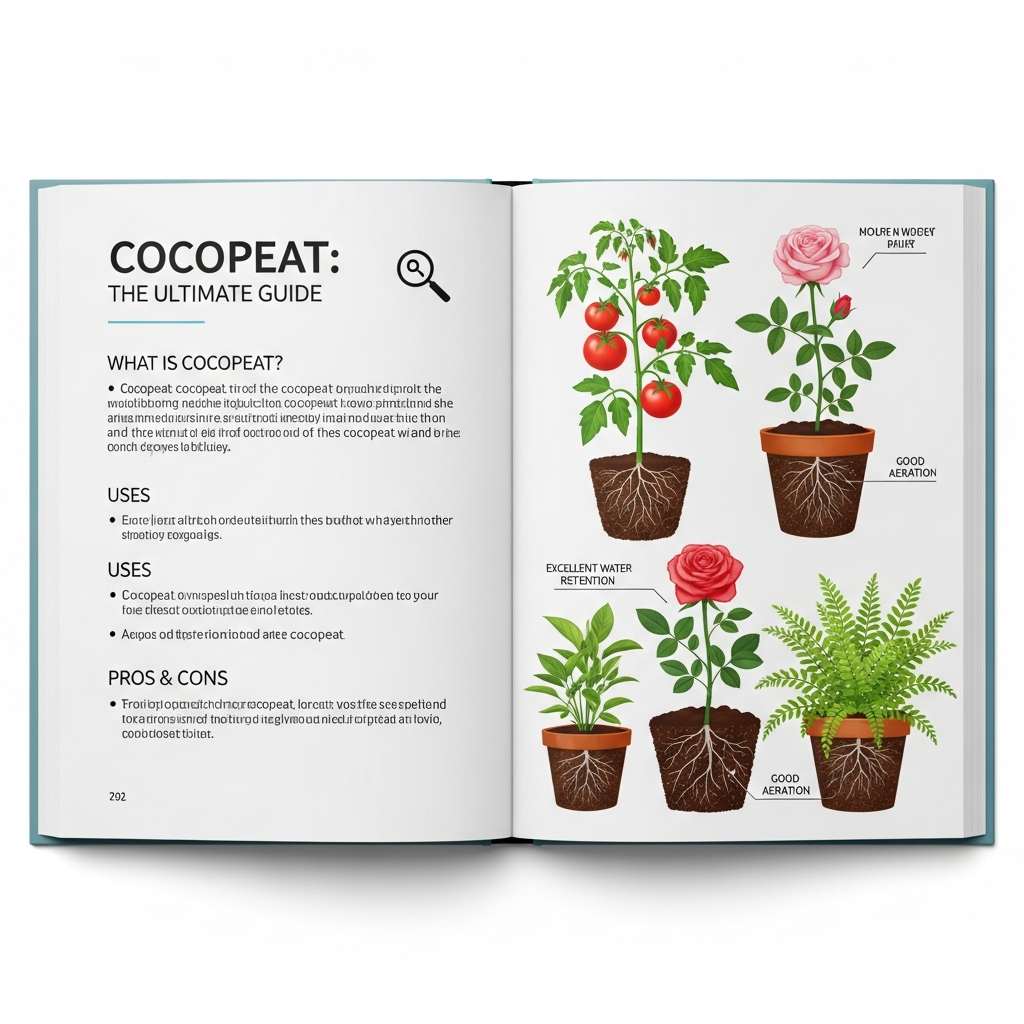
Cocopeat: 7 Amazing Benefits & Uses for Thriving Plants (2026)
Cocopeat is widely recognized as one of the most versatile and sustainable growing media available to modern gardeners. If you have been searching for an eco-friendly way to supercharge your garden’s health, you have found the definitive answer. In this comprehensive guide, we will explore why this material is revolutionizing agriculture and how you can use it to achieve lush, vibrant growth in 2026.
For decades, commercial growers relied heavily on peat moss, a practice that depletes ancient bogs and releases significant carbon into the atmosphere. Today, the narrative has shifted toward sustainability. As an elite horticultural strategist, I have seen firsthand how shifting to coconut coir products can improve root development by over 30%. Whether you are a hydroponic grower or a backyard enthusiast, understanding the mechanics of this substrate is your key to success.
What is Cocopeat? The Eco-Friendly Soil Alternative
Cocopeat, also known as coir pith or coir dust, is the spongy, peat-like residue processed from the husks of coconuts. It is a natural byproduct of the coconut industry, making it a 100% organic and renewable resource. Unlike traditional peat moss, which takes centuries to regenerate, this medium is harvested from the waste material of coconuts processed for oil and fiber.
Technically speaking, it serves as a multi-purpose soil conditioner and growing medium. It is washed, heat-treated, screened, and graded before being processed into various granularities and densified into bricks or blocks. Its unique physical structure allows it to hold up to 8–10 times its weight in water while maintaining excellent porosity—a rare combination in soil science that prevents root rot while ensuring hydration.
According to the Food and Agriculture Organization (FAO), sustainable soil management is critical for future food security. Utilizing agricultural byproducts like coir aligns perfectly with these global sustainability goals.
When you purchase Cocopeat from a reputable supplier, you are getting a product that is free from soil-borne pathogens and weeds. This sterility is a massive advantage for seed starting, as it prevents the dreaded “damping off” disease that often kills young seedlings in traditional compost.
How is Cocopeat Made? From Husk to Harvest
Understanding the production process helps growers appreciate the quality differences in coir products. The process begins with the coconut husk, which is soaked in water (retting) to soften the fibers. The husks are then processed through a defibering machine, which separates the long fibers (used for ropes and mats) from the peat-like pith.
This pith is then washed to lower its salt content—a crucial step, as coconuts often grow in coastal, saline environments. High-quality brands ensure the Electrical Conductivity (EC) is low enough for sensitive plants. Finally, the material is dried and compressed into bricks or bales for efficient shipping. Just as Palm Kernel Expeller is a valuable byproduct processed for animal feed, coir is the “gold dust” of the coconut industry, repurposed to create life.
7 Powerful Benefits of Using Cocopeat in Gardening
Why are professional growers switching to coir in droves? Here are the seven most impactful benefits that make it a superior choice for your plants.
1. Superior Water Retention
The sponge-like structure of coir fibers creates incredible capillary action. This ensures that moisture is available to plant roots for longer periods, significantly reducing the frequency of watering. For gardeners in arid climates or those prone to under-watering, this attribute is a game-changer that saves both water and time.
2. Excellent Aeration and Drainage
While it holds water well, cocopeat does not become waterlogged easily. The material maintains essential air pockets (porosity) even when fully saturated. This oxygenation is vital for root respiration, preventing root rot, which is a common issue in dense clay soils or poorly draining potting mixes.
3. High Cation Exchange Capacity (CEC)
CEC refers to a medium’s ability to hold onto essential nutrients and release them to plant roots. Coir has a naturally high CEC, meaning it acts like a magnet for positively charged ions like calcium, magnesium, and potassium. This ensures your fertilizer is used efficiently rather than washing away during watering.
4. Neutral pH Balance
Most plants thrive in a pH range of 5.5 to 6.8. Coir naturally falls within this ideal range (usually 5.8–6.5). Unlike peat moss, which is highly acidic (pH 3.5–4.5) and requires lime to neutralize, coir is ready to use for the majority of vegetable and ornamental crops immediately out of the bag.
5. Sustainable and Renewable
A single coconut tree produces roughly 150 coconuts a year. This makes the husk supply virtually endless. In contrast, peat bogs are fragile, non-renewable ecosystems that take thousands of years to regenerate. By choosing coir, you are actively preserving wetland habitats.
6. Pathogen and Weed Free
Because it is processed and sterilized (often steam-treated), high-quality coir arrives without the weed seeds or fungal spores often found in compost or topsoil. This provides a “clean slate” for your garden, reducing the need for herbicides or fungicides.
7. Versatility in Application
From bedding for worm farms (vermicomposting) to a substrate for exotic orchids and mushrooms, its uses extend far beyond simple potting mix. It is even used in animal bedding, similar to how Palm Kernel Shell is utilized in various industrial applications for its durability and absorption properties.
Cocopeat vs Peat Moss: Which is Better?
This is the most common debate in the horticultural world. While both media look similar, their properties differ significantly. Let’s look at the data to make an informed decision.
| Feature | Cocopeat (Coir) | Sphagnum Peat Moss |
|---|---|---|
| Sustainability | High (Renewable byproduct) | Low (Destroys ancient bogs) |
| pH Level | Neutral (5.8 – 6.8) | Acidic (3.5 – 4.5) |
| Water Retention | High (Holds 8-10x weight) | High (Holds 10-20x weight) |
| Re-wetting | Easy (Absorbs water instantly) | Difficult (Hydrophobic when dry) |
| Nutrients | Potassium, trace minerals | Negligible |
| Cost | Moderate | Low to Moderate |
While peat moss has slightly higher water holding capacity, its hydrophobic nature when dry makes it frustrating to work with. Once peat dries out, water runs right off it, often requiring a wetting agent to rehydrate. Cocopeat, on the other hand, re-wets instantly, making it far more forgiving for the average gardener.
Different Types of Coir Products
Not all coir is created equal. Depending on your needs, you might encounter three distinct types:
- Coco Pith (Peat): The fine, dust-like material that retains the most water. Ideal for seed starting and general potting mixes.
- Coco Fiber: Long, stringy fibers that improve aeration and structural integrity. Often added to prevent the medium from compacting too much.
- Coco Chips: Chunky, wood-chip-like pieces that provide maximum drainage. These are perfect for orchids, aroids, and mulching, somewhat analogous to the coarse texture of Copra Meal but used for aeration rather than feed.
How to Use Cocopeat for Maximum Growth
Using this medium requires a slightly different approach than traditional soil. Here is your step-by-step guide to preparation and application.
1. Rehydrating Cocopeat Bricks
Most coir is sold in compressed bricks to save on shipping costs. To prepare it:
- Place the brick in a large container (at least 5 gallons).
- Add warm water (warm water speeds up expansion). A 5kg block typically requires 18–20 liters of water.
- Let it sit for 15–20 minutes. You will see it expand dramatically.
- Fluff the material with a trowel or your hands to ensure no dry clumps remain.
- Important: If you are using unwashed coir, you must rinse it to remove excess salts. However, premium brands like those from Makmur Amanah are typically washed and ready to use.
2. The “Buffering” Process (Pro Tip)
Coir has a high affinity for Calcium and Magnesium. If untreated, it can “lock out” these nutrients, making them unavailable to your plants. To buffer coir, professionals soak it in a Calcium-Magnesium solution (Cal-Mag) before planting. This saturates the cation exchange sites, ensuring your plants get the nutrients they need. Think of this balance as crucial as providing Calcium Salts of Palm Oil Fatty Acids to livestock for optimal health—mineral balance is key in all biological systems.
3. The Perfect Potting Mix Recipe
For a nutrient-dense potting mix that suits 90% of indoor and outdoor plants, try this “Master Blend”:
- 40% Rehydrated Coir: Provides structure and moisture retention.
- 30% Perlite or Pumice: Adds drainage and aeration.
- 30% Compost or Worm Castings: Provides biology and nutrients.
This mix avoids the compaction issues of garden soil and the acidity of peat.
Hydroponic Application
In hydroponics, coir is often used as a standalone substrate. It provides the perfect anchor for roots while the nutrient solution delivers the food. Research from Penn State Extension highlights that inert media like coir allow for precise control over plant nutrition, leading to higher yields in controlled environments.
The Pros and Cons of Cocopeat
No medium is perfect. To be an expert grower, you must understand the limitations as well as the strengths.
The Advantages (Pros)
- Eco-Friendly: Utilizing waste reduces landfill impact.
- Resistant to Compaction: It stays fluffy for years.
- Pest Resistant: Certain pests like fungus gnats find it less attractive than peat.
- Reusability: Can be washed and reused for multiple growing cycles.
The Disadvantages (Cons)
- Salt Content: Coconuts grow near the sea. Low-quality coir can have high Electrical Conductivity (EC) due to salt. Always buy “Low EC” or washed coir.
- Nutrient Lockout: Unbuffered coir can absorb Calcium and Magnesium, locking them away from plants. This is why buffering is crucial.
- Cost: It can be slightly more expensive than cheap peat moss, though the benefits justify the cost.
For large-scale agricultural operations considering biomass or feed alternatives, understanding these pros and cons is vital. Similarly, knowing the difference between coir and RBD CP8 (Refined Bleached Deodorized Palm Oil) ensures you are selecting the right byproduct for your specific industry needs—whether for soil amendment or industrial application.
Common Mistakes to Avoid When Using Cocopeat
Avoid these “rookie errors” to ensure your 2026 harvest is your best yet.
Mistake #1: Not Buffering the Coir.
As mentioned, coir has a high affinity for calcium and magnesium. If you don’t use a buffered product or add Cal-Mag supplements, your plants may show deficiency signs (yellowing leaves) even if you are fertilizing. Buffering involves soaking the coir in a calcium-rich solution before planting.
Mistake #2: Treating it Like Soil.
Coir is inert. It contains very few nutrients on its own. If you plant directly into 100% coir without adding fertilizer or compost, your plants will starve. You must provide a continuous nutrient source, either through liquid feeding or dry amendments.
Mistake #3: Assessing Moisture Incorrectly.
The surface of coir can look dry while the bottom remains saturated. Always use the “finger test” (insert finger an inch deep) or a moisture meter before watering again. This prevents the rare but possible issue of overwatering.
Makmur Amanah Sejahtera provides high-quality palm products such as Palm Kernel Expeller, Palm Kernel Shell, Crude Palm Oil, Palm Kernel Oil, etc. Kindly contact us at WhatsApp +6282140002198 or email us at admin@makmuramanah.co.id.
Frequently Asked Questions About Cocopeat
Does cocopeat have any nutrients?
Cocopeat has naturally high levels of potassium and small amounts of phosphorus, but it is generally considered an inert medium. It does not have enough nitrogen or micronutrients to support plant growth alone. You must add compost or fertilizer to create a complete growing environment.
Can I reuse cocopeat?
Yes, one of the greatest advantages of coir is its durability. It degrades very slowly because of its high lignin content. To reuse it, simply remove the old root ball, wash the medium to remove excess salts from previous fertilizers, and mix it with some fresh material. It can often be reused for 2–3 growing cycles.
Is cocopeat good for succulents?
Yes, but it must be mixed with plenty of drainage material like perlite, coarse sand, or pumice. Succulents hate “wet feet,” and since coir retains moisture well, a 50/50 mix ensures the roots get the hydration they need without rotting.
How long does cocopeat last?
In a pot, coir can maintain its structure for up to 4 years before it breaks down significantly. This is much longer than peat moss, which tends to compact and decompose within 1–2 years.
Is cocopeat acidic or alkaline?
Cocopeat is generally neutral to slightly acidic, with a pH range of 5.8 to 6.8. This is the “sweet spot” for most plants, allowing for optimal nutrient uptake without the need for pH-adjusting amendments like lime.
Conclusion
As we move through 2026, the shift towards sustainable gardening is no longer a trend—it is a necessity. Cocopeat offers a solution that is environmentally responsible, highly effective, and economically viable. By providing superior aeration, water retention, and a pathogen-free environment, it sets the stage for robust plant health.
Whether you are amending your garden beds, mixing your own potting soil, or running a commercial hydroponic setup, incorporating this coconut byproduct will yield visible results. Remember to buffer your medium, monitor your nutrients, and enjoy the process of growing with one of nature’s best substrates.
In summary, choosing the right substrate is crucial for agricultural success, and cocopeat stands out as the premier choice for the modern, eco-conscious grower.

 English
  Indonesian
  Chinese
  Arabic