
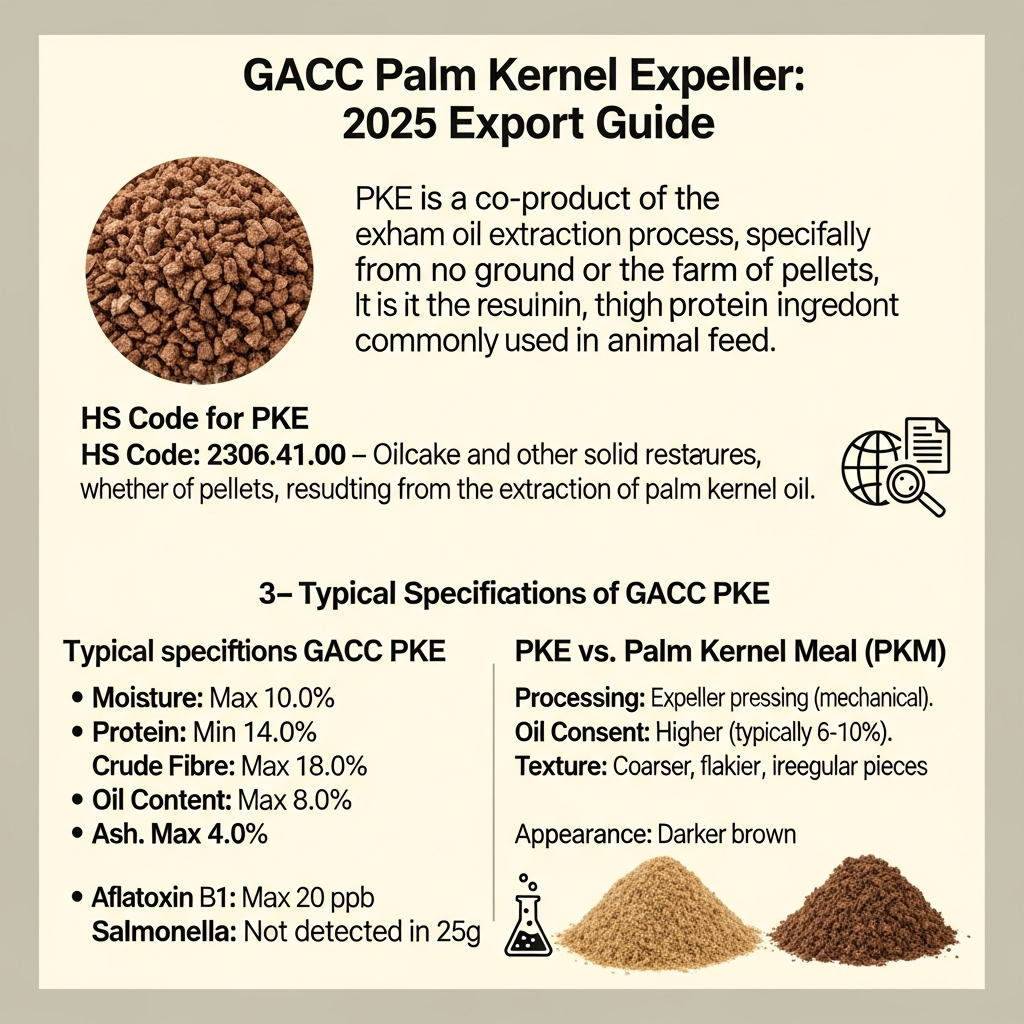
GACC Palm Kernel Expeller: 7 Vital Specs & Export Guide (2026)
GACC Palm Kernel Expeller is rapidly becoming the gold standard for global animal feed exports, particularly for businesses targeting the massive Chinese market in 2026. As international trade regulations tighten and the demand for high-quality livestock nutrition grows, understanding the specific General Administration of Customs China (GACC) requirements is no longer optional—it is a survival necessity for exporters.
This comprehensive guide will demystify the complex specifications, HS codes, and crucial differences between expeller and meal, ensuring your shipments sail through customs without delay. In the competitive landscape of agricultural commodities, GACC Palm Kernel Expeller represents a premium segment of the palm byproduct market. With China importing millions of tons of feed ingredients annually, compliance with GACC standards guarantees not just market access but also a reputation for reliability and safety.
Whether you are a seasoned trader or a new entrant, this guide provides the tactical knowledge needed to dominate the sector this year. From strict moisture controls to the nuances of registered facilities, we cover it all.
Key Takeaways for 2026
- Strict Compliance: GACC registration is mandatory for exporting PKE to China; non-listed facilities face immediate rejection.
- Nutritional Value: PKE offers superior fat content compared to solvent-extracted meal, making it ideal for energy-dense rations.
- HS Code Mastery: Using the correct code (2306.60) prevents costly border delays and customs audits.
What is GACC Palm Kernel Expeller?
GACC Palm Kernel Expeller refers to Palm Kernel Expeller (PKE) that has been produced, processed, and certified according to the stringent sanitary and phytosanitary standards set by the General Administration of Customs China (GACC). PKE itself is a valuable byproduct of the palm oil extraction process, specifically derived from the mechanical crushing of palm kernels to extract oil.
Unlike generic byproducts found in unregulated markets, GACC Palm Kernel Expeller must be demonstrably free from specific quarantine pests, regulated pathogens, and toxic impurities. The “GACC” designation serves as a seal of quality assurance, indicating that the supply chain—from the plantation to the loading port—adheres to China’s rigorous food safety laws.
The GACC standard ensures that the feed is safe for animal consumption, preventing the transmission of diseases across borders. For exporters in Indonesia and Malaysia, achieving this status involves rigorous facility inspections, traceability implementation, and adherence to specific chemical parameters. It transforms a standard commodity into a high-value asset trusted by Chinese feed millers.
The Role of GACC in Global Trade
The General Administration of Customs China (GACC) acts as the gatekeeper for one of the world’s largest agricultural markets. Their protocols are not merely bureaucratic hurdles; they are quality assurance benchmarks. A shipment labeled as GACC Palm Kernel Expeller signals to buyers that the product has undergone strict quality control measures regarding moisture content, aflatoxin levels, and pest freedom.
GACC Palm Kernel Expeller Specifications & HS Code (2026)
Navigating international trade requires precision with Harmonized System (HS) codes. For 2026, the primary HS Code for Palm Kernel Expeller remains 2306.60. This code covers “Oil-cake and other solid residues, resulting from the extraction of palm nuts or kernels.” Misclassification here can lead to seized cargo, heavy fines, or long-term blacklisting of the exporter.
Below are the industry-standard specifications for export-grade GACC Palm Kernel Expeller. Note that GACC often enforces tighter tolerances for specific impurities than the general global standard, particularly regarding mycotoxins and moisture.
| Parameter | Standard Export Spec | GACC/China Preference |
|---|---|---|
| Profat (Protein + Fat) | Min 21.0% | Min 22.0% (Preferred) |
| Crude Protein | 14.0% – 16.0% | Min 15.0% |
| Crude Fat | 6.0% – 8.0% | Max 10.0% |
| Moisture | Max 10.0% | Max 10.0% (Strict Enforced) |
| Dirt/Shell | Max 15.0% | Max 12.0% |
| Color | Dark Brown | Dark Brown |
| Aflatoxin Total | Max 50 ppb | Max 20-30 ppb |
Adhering to these specs is critical. High moisture levels, for instance, can lead to fungal growth during transit, causing the shipment to be rejected upon arrival. Reliable suppliers like Makmur Amanah Sejahtera ensure rigorous testing before shipment to meet these exact parameters.
Difference Between Palm Kernel Expeller and Meal
A common source of confusion in the industry is the distinction between Palm Kernel Expeller (PKE) and Palm Kernel Meal (PKM). While often used interchangeably in casual conversation, they are technically different products resulting from different extraction methods. Understanding this distinction is vital when marketing GACC Palm Kernel Expeller to nutritionists who care about energy values.
1. Production Process: Mechanical vs. Solvent
Palm Kernel Expeller (PKE) is produced via the mechanical extraction method using screw presses. This physical pressure squeezes the oil out of the kernels. Because it is a mechanical process, it leaves a higher residual oil content in the byproduct (typically 6-10%). This is the standard product exported from Indonesia.
In contrast, Palm Kernel Meal (PKM) is usually the result of solvent extraction (often using hexane). This chemical process is highly efficient at stripping oil, leaving a residue with very low oil content (often 1-2%). Consequently, PKE is higher in energy density due to the extra fat, making it a superior choice for certain livestock applications.
2. Nutrient Profile & Application
The higher fat content in GACC Palm Kernel Expeller provides a significant energy boost for ruminants like cattle and buffalo. This makes it an excellent ingredient for fattening rations. Conversely, the lower fat content of solvent-extracted meal might be preferred for formulations where energy density needs to be strictly controlled or where high fat might disrupt rumen fermentation.
Additionally, the mechanical process of PKE production is often viewed as more “natural” by some organic or eco-conscious buyers compared to solvent extraction. For a deeper dive into related byproducts, you can explore the differences in fiber content with Copra Meal or the energy applications of Palm Kernel Shell.
Why GACC Registration Matters for 2026 Exports
Exporting to China without GACC registration is impossible in 2026. The GACC Palm Kernel Expeller protocol requires that the processing plant in the country of origin (e.g., Indonesia) be approved and listed by the Chinese authorities. This list is updated regularly, and non-listed facilities will have their cargo turned away at the port of entry.
The Registration Verification Process
The registration process validates that the facility has implemented robust safety measures. To obtain approval to export GACC Palm Kernel Expeller, a facility must demonstrate:
- Pest Control: Effective systems against storage pests like Trogoderma granarium and various weevils.
- Storage Hygiene: Warehouses must be dry, ventilated, and segregated to prevent cross-contamination with non-certified goods.
- Traceability: Systems linking the final product back to the raw material source (Palm Kernel Crushing Plants).
- Laboratory Testing: Regular testing for salmonella, heavy metals (Lead, Arsenic, Cadmium), and mycotoxins.
According to recent agricultural trade reports from the Food and Agriculture Organization (FAO), non-tariff barriers like sanitary registrations are becoming the primary tool for regulating global grain flow. Ensuring your supply chain utilizes GACC-approved sources is the only way to mitigate this risk.
Benefits of GACC Palm Kernel Expeller in Animal Feed
Why is the demand for GACC Palm Kernel Expeller soaring? It comes down to cost-effectiveness and nutritional performance. As global grain prices fluctuate, PKE remains a stable, economical alternative to corn or soy.
- Ruminant Health: The fiber profile of PKE is highly digestible for ruminants. It stimulates saliva production and maintains healthy rumen pH, reducing the risk of acidosis.
- Fat Boosting: The residual oil is rich in medium-chain fatty acids, which can improve the butterfat content in dairy milk production, a key metric for milk pricing.
- Palatability: When fresh, PKE has a pleasant, nutty aroma that animals find attractive, encouraging feed intake even during heat stress.
For specialized energy requirements, feed formulators often combine PKE with high-energy supplements like RBD CP8 or rumen-protected fats such as Calcium Salts of Palm Oil Fatty Acids to create a balanced diet for high-yielding dairy cows.
How to Choose a Reliable Supplier
Selecting a supplier for GACC Palm Kernel Expeller requires due diligence. You are not just buying a commodity; you are buying compliance assurance. A trustworthy supplier should provide transparent evidence of their ability to meet Chinese standards.
- Documentation: Full Bill of Lading, Certificate of Origin, and Phytosanitary Certificates issued by the quarantine agency.
- GACC Registration Number: A valid registration code that matches the Chinese customs database. Always verify this independently.
- Lab Reports: Recent independent analysis (Sucofindo, Intertek, etc.) confirming the specifications, particularly regarding aflatoxin and moisture.
- Supply Consistency: The ability to fulfill long-term contracts without quality variation.
Research published in the Journal of Cleaner Production highlights that supply chain transparency is the number one predictor of long-term trade relationship success in the agricultural sector. Don’t compromise on verification. Furthermore, for those interested in soil amendments, understanding the logistics of bulk shipping is similar to that of Cocopeat exports.
Makmur Amanah Sejahtera provides high-quality palm products such as Palm Kernel Expeller, Palm Kernel Shell, Crude Palm Oil, Palm Kernel Oil, etc. Kindly contact us at WhatsApp +6282140002198 or email us at admin@makmuramanah.co.id.
Frequently Asked Questions
What is the main difference between PKE and Copra Meal?
PKE is a byproduct of palm oil extraction from the oil palm fruit, while Copra Meal is a byproduct of coconut oil extraction. PKE typically has higher fiber content and a different amino acid profile compared to Copra Meal. Both are excellent feed ingredients but serve slightly different nutritional roles in livestock diets.
Is GACC Palm Kernel Expeller safe for poultry?
Yes, but in limited quantities. Due to its high fiber content and gritty texture, GACC Palm Kernel Expeller is best suited for ruminants (cows, sheep, goats). For poultry and swine, it should be included at lower inclusion rates (typically 5-15%) to prevent digestion issues and maintain growth rates.
How do I verify a GACC registration number?
You can verify a supplier’s registration status by checking the official list published on the GACC website under the “Import and Export Food Safety” section. Always ask your supplier for their specific registration code before signing a contract to ensure they are authorized to export to China.
What is the shelf life of Palm Kernel Expeller?
When stored properly in dry, ventilated conditions, PKE has a shelf life of approximately 6 to 12 months. High moisture or humidity can accelerate spoilage and mold growth, so proper warehousing is essential. Using GACC-certified storage practices helps maximize this shelf life.
Can PKE be used as fertilizer?
While primarily used as feed, PKE can be used as an organic fertilizer due to its nitrogen and phosphate content. However, materials like Cocopeat are often preferred for soil conditioning and moisture retention in horticulture applications.
Conclusion
As we move through 2026, the strategic importance of GACC Palm Kernel Expeller in the global feed supply chain cannot be overstated. From its robust nutritional profile—rich in energy and fiber—to the stringent quality standards enforced by Chinese customs, this commodity offers immense value for those who navigate the landscape correctly. Remember that the difference between profit and loss often lies in the details: the correct HS code, the moisture percentage, and the validity of the GACC registration.
By partnering with a verified supplier and understanding the technical nuances between expeller and meal, you position your business for long-term success. Secure your supply of high-grade GACC Palm Kernel Expeller today and ensure your exports meet the highest international benchmarks.

 English
  Indonesian
  Chinese
  Arabic