
Cocopeat: 10 Ultimate Uses & Shocking Flaws (2026 Guide)
When it comes to sustainable agriculture, cocopeat has completely revolutionized how we approach soil management and plant growth in 2026. If you are struggling with poor soil aeration, rapid water loss, or unsustainable growing media, this comprehensive guide will absolutely transform your daily agricultural practices.
The global shift towards eco-friendly farming has made finding the perfect growing medium a top priority for both commercial growers and hobbyists. According to a Food and Agriculture Organization (FAO) report, sustainable soil amendments are projected to reduce agricultural water usage by up to 30% this decade.
Simply put, cocopeat is a 100% natural, eco-friendly soil amendment extracted directly from the fibrous husk of coconuts. Acting as a highly porous organic sponge, it provides exceptional water retention and optimal aeration for plant roots. This unique combination makes it the premier substrate for modern hydroponic farming, robust seed germination, and intensive soil conditioning.
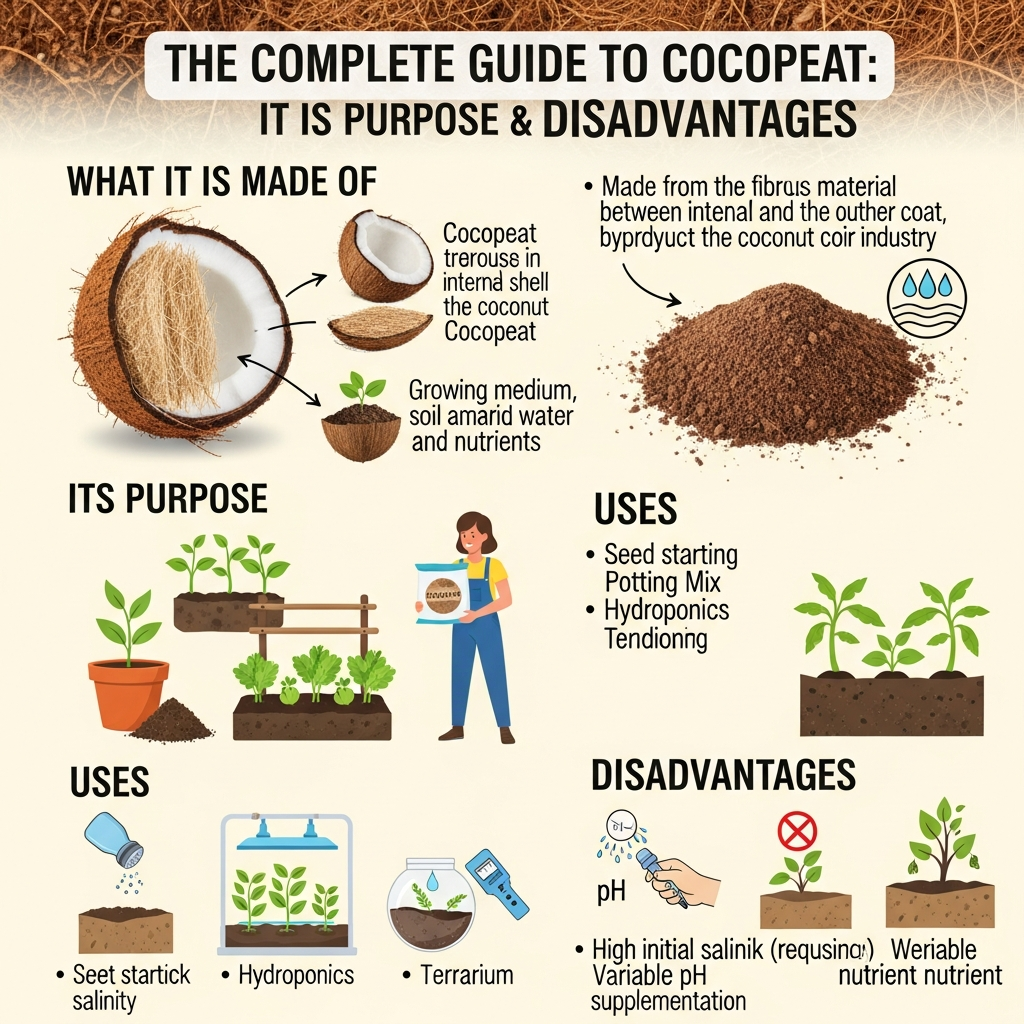
What is Cocopeat Made Of? (The Science Behind It)
Understanding what cocopeat is made of requires looking closely at the anatomy of a harvested coconut. It is essentially the dust, pith, and short fibers left behind after processing facilities extract the long fibers from coconut husks.
Historically considered a useless waste product, this remarkable byproduct undergoes a rigorous aging and washing process before it ever reaches your garden. This transformation from waste to agricultural gold is a triumph of sustainable engineering.
[Image: High-quality photo of raw coconut husks being processed into coir pith, placed after the first H2]

From Coconut Husk to Cocopeat Growing Medium
Extraction begins by soaking the thick coconut husks in water for several months, a vital process known as retting. Once the husks soften, automated machines separate the long, rigid fibers—typically used for ropes and doormats—from the spongy, lightweight pith.
This resulting pith is the raw foundation of the substrate. It is incredibly dense and must be dried in the sun before being compressed into the familiar bricks and bales sold globally.
Processing and Strict Sterilization
Freshly extracted coir naturally contains incredibly high levels of sodium and potassium salts. Therefore, reputable manufacturers age the raw material for over six months.
They thoroughly wash the substrate with fresh water to drastically reduce its electrical conductivity (EC). According to exhaustive studies published by the American Society for Horticultural Science, proper chemical buffering with calcium nitrate is crucial to prevent devastating nutrient lockout.
The Core Purpose of Coir in Modern Agriculture
The primary purpose of cocopeat is to serve as an optimized, highly sterile growing medium that dramatically enhances root development. Unlike traditional garden dirt, which heavily compacts and suffocates roots over time, coir provides a permanent structure.
It maintains a delicate, structured balance of atmospheric air and liquid water. This prevents the common pitfalls of overwatering and underwatering that plague novice gardeners.
How Cocopeat Differs from Traditional Soil
Traditional topsoil relies heavily on organic matter decomposition to maintain its structure, which inevitably breaks down and compresses. In stark contrast, cocopeat contains high levels of lignin.
Lignin is a naturally occurring polymer that actively resists rapid decomposition. This structural integrity guarantees that the growing medium remains loose, airy, and oxygen-rich for several years.
Unmatched Water Retention and Aeration
One of the most remarkable traits of this hydroponic substrate is its profound ability to hold up to 10 times its own dry weight in water. Furthermore, it releases this stored moisture to the plant roots very slowly.
This completely prevents root rot while ensuring consistent hydration. When considering how to use this medium effectively, its dual-action porosity is undeniably its greatest asset, trapping oxygen in macropores while storing water in micropores.
[Image: Infographic concept – A visually appealing chart breaking down the water-to-air ratio of coir pith vs regular soil, placed in the middle section]

10 Essential Cocopeat Uses in Agriculture
The sheer versatility of this material extends completely across various horticultural and industrial applications. Here are the top 10 cocopeat uses in agriculture that heavily dominate successful 2026 farming strategies:
- Commercial Hydroponic Substrate: In 2026, the shift toward soilless farming is absolute. Commercial growers rely on this medium for cultivating high-yield greenhouse crops like tomatoes, bell peppers, and cucumbers. Its neutral pH ensures precise nutrient delivery control.
- Seed Germination Dominance: The incredibly fine, uniform texture ensures maximum seed-to-substrate contact. This optimal contact results in rapid, uniform sprouting and explosive early root development for delicate, high-value seedlings.
- Heavy Soil Amendment: Landscapers heavily blend coir into sandy or heavy clay soils. This drastically improves the physical texture, absolutely prevents nutrient leaching in sand, and breaks up dense clay to immediately promote proper drainage.
- Exotic Mushroom Farming: The substrate serves as an excellent, highly sterile casing layer for cultivating exotic mushrooms. Its pathogen-free nature entirely eliminates the severe contamination risks frequently associated with standard compost.
- Specialty Reptile Bedding: Zookeepers and exotic pet hobbyists use the coir to provide a safe, moisture-retaining habitat for terrariums. It maintains high ambient humidity levels naturally without growing toxic, dangerous molds.
- Advanced Worm Bins: It acts as an ideal, fluffy bedding material for intensive vermiculture. The stable pH and excellent moisture-wicking properties easily create the perfect environment for composting worms to rapidly thrive and reproduce.
- Premium Potting Mixes: It currently forms the foundational ingredient in top-tier commercial potting soils. Modern garden centers have completely replaced environmentally damaging alternatives with this sustainable, renewable base ingredient.
- Professional Golf Course Greens: Turf managers actively incorporate the pith to drastically enhance turf quality and moisture management on professional golf greens, keeping grass incredibly lush during extreme, prolonged drought conditions.
- Erosion Control Solutions: Geotechnical engineers weave the longer fibers into protective, completely biodegradable mats. These specialized mats safely stabilize steep slopes and prevent catastrophic topsoil loss during severe heavy monsoons.
- Livestock Bedding Alternative: While coconut coir mostly dominates plant cultivation, it also absorbs animal waste effectively. However, for actual animal nutrition, global supply chains strictly rely on high-quality Copra Meal and nutrient-dense Palm Kernel Expeller to feed livestock efficiently.
Cocopeat vs. Peat Moss: A 2026 Comparison
For several decades, destructively mined peat moss served as the unquestioned gold standard for potting mixes worldwide. However, the severe environmental impact of destroying ancient, carbon-rich peat bogs has changed everything.
Global environmental regulators, alongside the Environmental Protection Agency (EPA), heavily mandate sustainable alternatives. Here is a detailed, side-by-side comparison of why the entire agricultural industry is permanently shifting toward cocopeat:
| Key Feature | Coir Substrate | Traditional Peat Moss |
|---|---|---|
| Environmental Impact | 100% Renewable coconut byproduct | Destroys critical natural carbon sinks |
| Water Absorption | Absorbs water instantly, even when dry | Severely hydrophobic when completely dry |
| Native pH Level | Naturally Neutral (5.5 – 6.8 pH) | Highly Acidic (3.5 – 4.5 pH) |
| Effective Lifespan | Lasts 3-4 years before breaking down | Breaks down rapidly within 1-2 years |
| Pathogen Resistance | Naturally sterile and completely weed-free | Often harbors dormant weed seeds and pests |
Step-by-Step Guide: How to Properly Buffer Cocopeat
Before adding this incredible medium to your sophisticated garden setup, proper chemical preparation is entirely non-negotiable. Using raw, unbuffered coir will violently pull heavy calcium away from your plants’ root systems.
Cornell University extension specialists strongly recommend following these crucial, scientific steps to ensure optimal performance from your cocopeat:
- Deep Rehydration: Place the compressed brick into a large, highly sanitized container. Add warm water very slowly, allowing the hard block to expand entirely to its full volume. A standard 5kg block will easily absorb up to 25 liters of water.
- The Initial Rinsing: Flush the expanded, wet material with clean, fresh water repeatedly until the runoff water runs completely clear. This crucial mechanical step physically leaches out the excess sodium and potassium salts immediately.
- Applying the Buffer Solution: Submerge the rinsed coir completely in a strong, concentrated liquid solution of calcium nitrate and magnesium. Let the mixture soak completely undisturbed for a strict minimum of 8 to 12 hours.
- The Final Flush: The beneficial calcium ions will violently displace the remaining harmful sodium, chemically stabilizing the substrate. Drain the heavy buffering solution and rinse the material one final time with fresh water, squeezing out the excess moisture vigorously.
The Disadvantages of Coir You Must Avoid
Despite its incredible, world-class benefits, you must be acutely aware of the explicit disadvantages of using coir to actively avoid catastrophic crop failures. Ignoring these critical factors is a scientifically proven recipe for disaster.
- High Salinity in Unwashed Coir: Low-quality, cheap sources often contain highly toxic levels of sodium chloride due to poor coastal processing. Always purchase premium, lab-tested Cocopeat that has been adequately washed and strictly EC-tested.
- Severe Nutrient Lockout: The raw material naturally binds tightly to calcium and magnesium. Consequently, if it is not buffered properly prior to planting, your valuable crops will inevitably suffer from severe, irreversible mineral deficiencies.
- Zero Inherent Nutrients: Unlike nutrient-rich organic compost, this is a completely sterile, biochemically dead medium. You must supplement the soil heavily with specialized hydroponic liquid fertilizers to sustain biological plant life.
- Highly Variable Quality: The massive global market is unfortunately flooded with highly inconsistent, poorly processed bricks and bales. Always source your critical agricultural inputs directly from trusted, established industrial suppliers.
Additionally, for industrial energy and massive agricultural solutions, modern commercial growers often look beyond coir substrates entirely. Massive greenhouse operations now utilize advanced materials like Palm Kernel Shell for highly sustainable, low-emission biomass heating systems.
In the broader global commodity market, true operational sustainability also extends to edible oils such as RBD CP8 and specialized dairy feed supplements like Calcium Salts of Palm Oil Fatty Acids.
[Image: Visual comparison of washed vs unwashed coir pith, placed before the FAQ section]

Frequently Asked Questions
What is the exact purpose of cocopeat?
The primary purpose is to radically improve soil aeration and maximize water retention simultaneously. It acts as a powerful, organic sponge that keeps plant roots optimally hydrated while completely preventing dangerous soil compaction and fatal root rot.
Is cocopeat good for indoor houseplants?
Yes, it is absolutely phenomenal for indoor houseplants. Because it is highly sterile and completely free of weed seeds, it dramatically reduces the risk of indoor pests like fungus gnats while ensuring perfect, long-lasting moisture control.
How long does cocopeat typically last?
High-quality coir pith breaks down extremely slowly due to its high natural lignin content. It can last anywhere from three to four full years in a potting mix before it completely decomposes, making it highly cost-effective and reusable.
Does cocopeat attract bugs or pests?
No, its naturally sterile nature makes it highly resistant to common pests, harmful fungi, and destructive bacterial growth. However, overwatering the medium without providing proper drainage holes can eventually attract unwanted insects to the stagnant moisture.
Can I use cocopeat without mixing it with soil?
Absolutely. Pure cocopeat is widely used as a standalone substrate in commercial hydroponics. However, because it lacks inherent nutrients, you must strictly supplement it with liquid fertilizers to ensure your plants survive and thrive.
Conclusion: Maximizing Your Yields with Cocopeat
Navigating the sheer complexities of modern agriculture requires relentlessly leveraging the absolute best sustainable materials available on the market today. By mastering exactly how to properly hydrate, scientifically buffer, and smartly implement this highly versatile growing medium, you can effortlessly unlock unprecedented plant growth.
Whether you are currently running a massive, automated hydroponic greenhouse or merely perfecting your personal indoor urban garden, making the permanent switch to this sustainable substrate will absolutely yield incredible, long-lasting dividends year after year.
To achieve true agricultural dominance in 2026, you simply cannot afford to ignore the hard science behind proper soil amendments and water retention strategies. Avoid the common, devastating pitfalls of unwashed coir, source your essential materials reliably from true industry experts, and let the superior water retention of cocopeat elevate your farming success to the absolute next level.
[Image: High-resolution photo of lush, healthy roots growing through premium coir pith, placed in the conclusion area]


 English
  Indonesian
  Chinese
  Arabic