
Palm Kernel Expeller: 7 Ultimate GACC Export Secrets (2026)
If your Palm Kernel Expeller supply chain lacks efficiency, your agricultural business risks losing significant profit margins. Securing reliable feed ingredients is a critical challenge for global livestock manufacturers today. Navigating the complexities of international trade, especially with stringent GACC regulations, can quickly become overwhelming for unprepared exporters.
This comprehensive guide will transform how you source, manage, and export this vital agricultural commodity. In 2026, the global demand for sustainable animal feed ingredients is skyrocketing at unprecedented rates. Plant-based protein sources are under immense scrutiny for their environmental impact, carbon footprint, and nutritional consistency.
What is Palm Kernel Expeller?
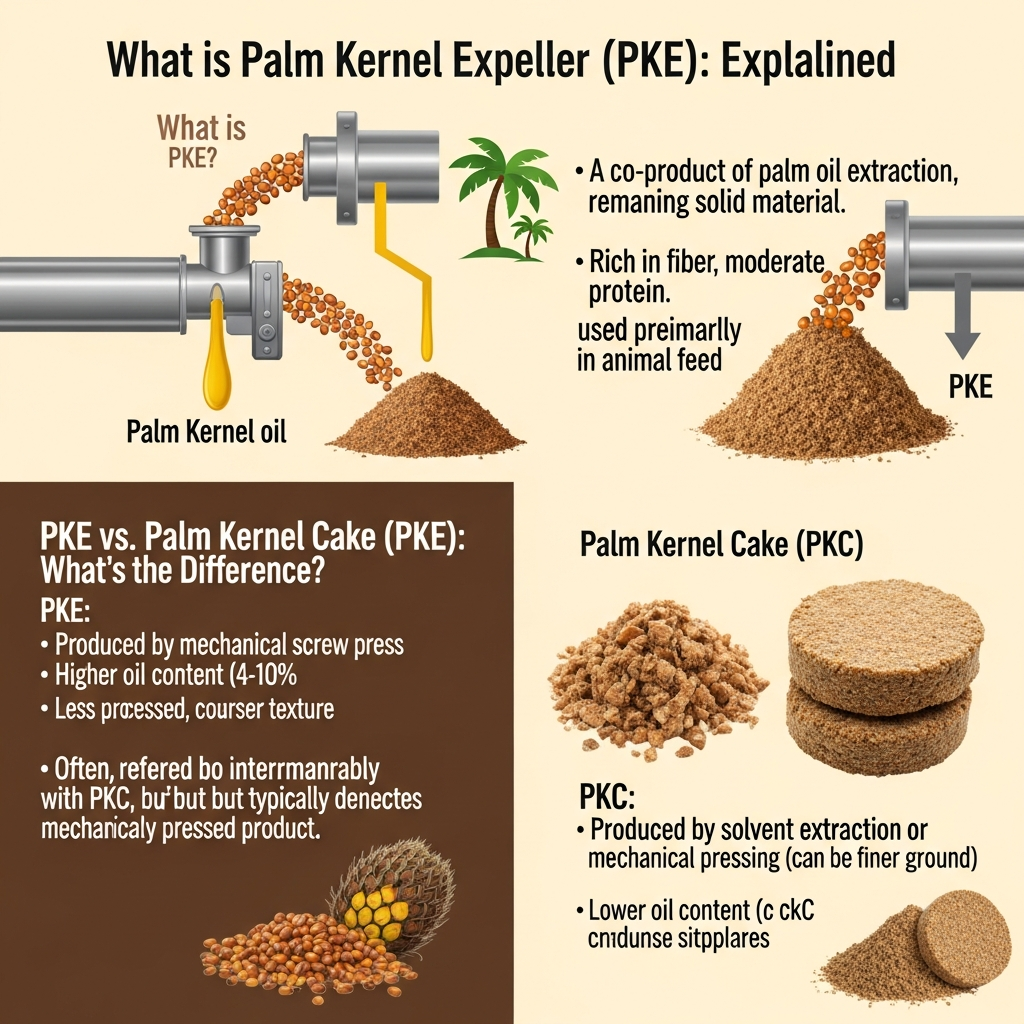
Palm Kernel Expeller is a highly nutritious byproduct of the palm oil extraction process, produced by mechanically pressing the palm seed kernel. It serves as a premium dairy cattle feed ingredient due to its optimal balance of crude protein, residual oil, and high dietary fiber.
According to recent data from the Food and Agriculture Organization (FAO), utilizing agricultural byproducts significantly reduces the overall carbon footprint of livestock farming. As sustainability becomes legally mandated in many countries, shifting towards eco-friendly feed solutions is no longer optional. It is an absolute business necessity.
What is Palm Kernel Expeller (PKE)? (Definition & Production)

[Image: High-resolution photo of a modern mechanical screw press extruding golden-brown PKE pellets.]
Understanding exactly what this feed ingredient is requires a detailed look into the modern palm milling process. When palm fruits are freshly harvested, the fleshy outer mesocarp yields crude palm oil, leaving behind the hard seed or nut in the center.
Inside this protective shell lies the nutrient-dense kernel, which undergoes rigorous processing to extract high-value palm kernel oil. The fibrous, protein-rich residue left behind after this heavy mechanical extraction is the resulting byproduct.
The Mechanical Extraction Process Explained
Modern extraction facilities rely on heavy-duty screw presses to carefully crush the dried kernels at controlled temperatures. This entirely mechanical method ensures that no harsh chemical solvents are introduced into the final feed product, maintaining its organic integrity.
Because it deliberately avoids chemical processing, this mechanically pressed cake retains a healthy amount of residual oil, typically ranging from 6% to 9%. This energy-dense fat content makes it exceptionally valuable for ruminant diets, particularly in cold climates where livestock require higher caloric intake.
Nutritional Profile for Animal Feed
Livestock nutritionists heavily favor Palm Kernel Expeller when formulating precision diets for high-yielding dairy cattle and sheep flocks. Its naturally high phosphorus-to-calcium ratio supports robust bone health and stimulates increased milk production without causing digestive upset.
The core nutritional benefits include:
- High Crude Protein: Averaging 14% to 16%, it provides an excellent amino acid profile for herd growth and muscle development.
- Optimal Fat Content: The 6% to 9% residual oil delivers dense, slow-release energy throughout the day.
- Digestible Fiber: Promotes superior rumen function, stabilizes gut pH, and encourages healthy chewing activity in cattle.
Furthermore, research published extensively on ScienceDirect confirms that ruminants digest these fibrous carbohydrates highly efficiently, significantly maximizing feed conversion ratios.
Palm Kernel Expeller vs. Palm Kernel Cake: Key Differences
Many international traders incorrectly use the terms Palm Kernel Expeller and Palm Kernel Cake (PKC) interchangeably in their documentation. However, recognizing the fundamental difference between palm kernel expeller and cake is crucial for accurate feed formulation and customs declaration.
The primary distinction lies entirely in the extraction methodology utilized at the mill. This technical difference directly impacts the nutritional profile, shelf life, and commercial market value of the final feed commodity.
Mechanical Pressing vs. Chemical Solvent Extraction
As previously established, genuine PKE is strictly the result of mechanical pressing. In sharp contrast, Palm Kernel Cake is produced using a chemical solvent extraction method, typically utilizing industrial hexane to chemically strip away the fats from the kernel.
Solvent extraction is highly efficient at removing almost all the oil, leaving PKC with a very low residual fat content (usually well under 2%). Consequently, PKC is much drier, dustier, and significantly less energy-dense than its mechanically pressed counterpart.
| Feature | Palm Kernel Expeller (PKE) | Palm Kernel Cake (PKC) |
|---|---|---|
| Extraction Method | Mechanical Screw Press | Chemical Solvent (Hexane) |
| Residual Oil Content | High (6% – 9%) | Very Low (Under 2%) |
| Energy Density | Superior (Ideal for Dairy Cattle) | Lower (Requires Fat Supplements) |
| Chemical Residue | None (100% Natural) | Trace Amounts Possible |
Economic Advantages Over Traditional Feed Grains

[Image: Infographic concept comparing the cost per ton of PKE against traditional soybean meal and corn over the last 5 years.]
The international market for this robust feed has expanded rapidly, driven primarily by the escalating and volatile costs of traditional grains like corn and soy. Commercial farmers are actively seeking cost-effective, high-quality alternatives to protect their profit margins against erratic weather patterns affecting grain harvests.
Countries like New Zealand, Australia, and the European Union remain the top global importers, utilizing millions of tons annually to sustain their massive dairy sectors. The USDA Foreign Agricultural Service continually monitors these shifting trade flows as global feed demands evolve rapidly.
Formulating Cost-Effective Ruminant Diets
Integrating premium Palm Kernel Expeller into your agricultural supply chain ensures consistent livestock weight gain without breaking the budget. It acts as an excellent bulk filler that still delivers substantial nutritional value, high palatability, and excellent satiety for ruminants.
Many progressive feed mills also strategically blend it alongside highly nutritious Copra Meal to create robust, multi-source protein pellets. Additionally, incorporating Calcium Salts of Palm Oil Fatty Acids can further bypass rumen degradation, delivering energy directly to the cow’s intestine for maximum absorption.
Global Market Demand and Supply Chain Synergy
The international trade of palm derivatives is not limited to animal feed alone. Diversifying your agricultural supply chain can provide immense logistical and financial benefits. Modern farms are now integrating multiple byproducts to enhance overall operational efficiency and sustainability.
For example, while utilizing Palm Kernel Expeller for dietary needs, many advanced agricultural facilities also import premium Cocopeat to serve as highly absorbent, eco-friendly animal bedding. This improves stall hygiene and significantly reduces the risk of hoof diseases in dairy cattle.
Furthermore, the industrial sector frequently sources high-quality RBD CP8 (Refined Bleached Deodorized Palm Olein) for specialized food manufacturing and advanced fatty acid applications. Combining these commodities into a single export strategy dramatically lowers maritime shipping overheads.
Storage and Handling Best Practices for Palm Kernel Expeller
Proper storage of the material is absolutely paramount to maintaining its nutritional integrity from the mill to the feed trough. Because it naturally contains a higher percentage of residual oil, improper handling can quickly lead to rancidity, auto-oxidation, and costly spoilage.
Key storage guidelines include:
- Elevated Storage: Always keep bulk bags on wooden pallets to prevent floor moisture absorption and condensation.
- Temperature Monitoring: Conduct daily probe checks to ensure internal pile temperatures remain entirely safe and stable.
- First-In, First-Out (FIFO): Strictly rotate your warehouse inventory to prevent localized rancidity over extended periods.
Moisture Control and Warehouse Ventilation
Storage facilities must maintain excellent cross-ventilation and keep relative humidity well below 70%. When moisture levels within the product exceed 10%, the risk of dangerous fungal growth and toxic aflatoxin contamination multiplies exponentially, rendering the feed unusable.
Always store the bulk product away from direct sunlight and environmental elements. Regularly auditing the warehouse conditions is a mandatory safety protocol for any serious international supplier dealing in organic byproducts.
Decoding the HS Code for Palm Kernel Expeller
Navigating complex international trade regulations requires pinpoint accuracy in all your customs documentation. Using the incorrect HS code for your shipment can lead to severe delays, cargo impoundment, or extremely heavy financial penalties at destination ports.
The Harmonized System (HS) assigns specific six-digit numbers to all globally traded goods, ensuring unified tariff assessment across international borders. Understanding this systematic classification is non-negotiable for serious exporters aiming for seamless logistics.
Customs Classifications and Tariffs
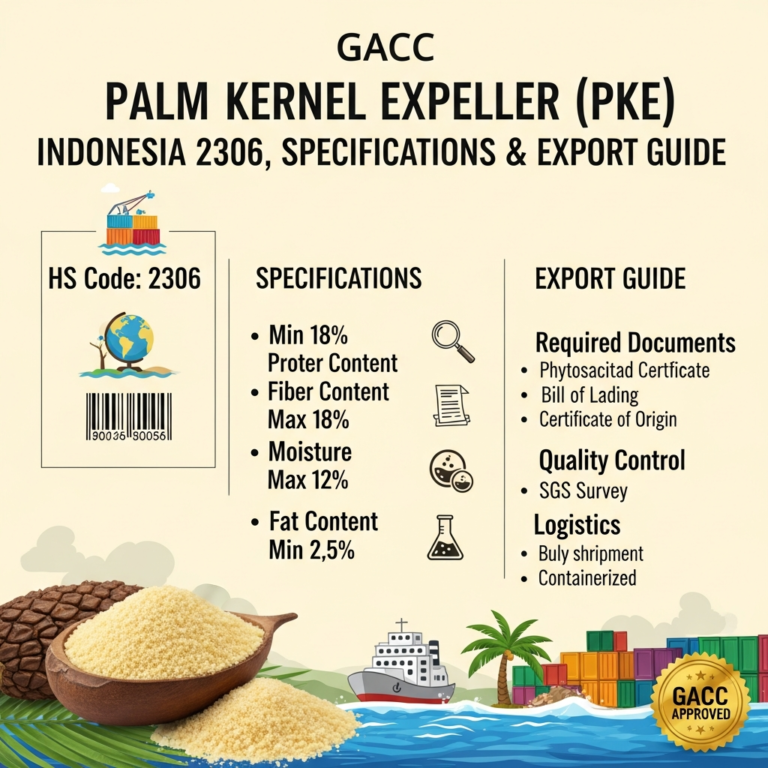
Globally, Palm Kernel Expeller is legally classified under the precise HS Code 2306.60. This specific category explicitly covers “Oil-cake and other solid residues, whether or not ground or in the form of pellets, resulting from the extraction of palm nuts or kernels.”
When preparing your vital export documentation, explicitly stating this HS code across all paperwork is an absolute necessity. Furthermore, your commercial invoices, packing lists, and marine bills of lading must all reflect this exact classification uniformly to avoid customs disputes.
To optimize bulk logistical operations, many savvy exporters parallel their shipments with other related byproducts. For instance, exporting sustainable Palm Kernel Shell utilizing shared maritime freight routes drastically reduces overhead container costs.
The Ultimate GACC Export Guide for China (2026)

[Image: Embedded video topic (YouTube-style): “Step-by-Step GACC Registration Tutorial for Agricultural Exporters in 2026”]
Exporting Palm Kernel Expeller to the vast Chinese market presents highly lucrative financial opportunities, but it demands strict adherence to the General Administration of Customs China (GACC) protocols. China’s biosecurity laws are undeniably among the most stringent in the world today.
In 2026, the GACC implemented updated, rigorous digital tracking measures. Exporters must be thoroughly prepared to prove the exact origin, safety, and phytosanitary hygiene of their feed ingredients instantly upon request via the digital CIFER system.
Facility Registration Requirements
Before a single cargo container of this feed leaves your origin port, the manufacturing facility must be officially registered and whitelisted by the GACC. This intensive process involves comprehensive audits by local agricultural ministries, which then formally recommend the facility to Chinese authorities.
Here are the critical GACC registration steps every exporter must carefully follow:
- Initial Application: Submit highly detailed facility blueprints, comprehensive pest control logs, and standardized production flowcharts.
- Government Audit: Your national agricultural quarantine body must physically inspect the mill for strict hygiene compliance.
- GACC Review: Chinese customs authorities review the submitted dossier securely through the CIFER digital platform.
- Approval Whitelist: Your exact facility name and registration number must appear on the official GACC whitelist before vessel departure.
Phytosanitary Certificates and Quality Standards
Every single commercial shipment of the product bound for Chinese ports must be accompanied by a pristine, government-issued Phytosanitary Certificate. This vital document legally proves the cargo is completely free from live quarantine pests, toxic weed seeds, and foreign soil contaminants.
Moreover, GACC port inspectors rigorously test arriving bulk cargo for heavy metals, aflatoxins, and unapproved pesticide residues. Partnering with an official GACC-compliant laboratory for exhaustive pre-shipment analysis is highly recommended to prevent costly rejections.
Makmur Amanah Sejahtera provides high-quality palm products such as Palm Kernel Expeller, Palm Kernel Shell, Crude Palm Oil, Palm Kernel Oil, etc. Kindly contact us at WhatsApp +6282140002198 or email us at admin@makmuramanah.co.id.
Frequently Asked Questions (FAQ)
To further clarify the persistent complexities surrounding this commodity, we have meticulously compiled detailed answers to the most common global industry inquiries regarding Palm Kernel Expeller.
Is palm kernel expeller good for cattle?
Yes, it is exceptionally beneficial for both dairy and beef cattle. Its high structural fiber content supports healthy rumen digestion, while the residual oil provides concentrated, slow-release energy, leading to improved milk butterfat content and steady weight gain.
What is the HS code for palm kernel expeller?
The internationally recognized HS code is definitively 2306.60. This strict classification applies universally to oil-cake and other solid residues resulting specifically from the mechanical or solvent extraction of palm nuts or kernels globally.
What is the difference between palm kernel expeller and cake?
The primary difference lies exclusively in the industrial extraction method used. PKE is produced safely via mechanical screw pressing and retains 6-9% natural oil. Conversely, Palm Kernel Cake is produced using harsh chemical solvent extraction, leaving less than 2% residual oil.
What is palm kernel expeller used for?
It is predominantly utilized as a highly nutritious, energy-dense base ingredient in commercial livestock feed formulations. Due to its perfectly balanced protein-to-fat ratio, this byproduct is particularly favored by nutritionists in the global dairy, sheep, and beef farming sectors.
Conclusion: Maximizing Your Palm Kernel Expeller Strategy

[Image: A professional shot of large shipping vessels loaded with agricultural exports silhouetted against a breathtaking ocean sunset.]
Successfully navigating the highly competitive agricultural feed market requires a profound, technical understanding of exact product specifications and international compliance laws. Explicitly differentiating between mechanically pressed products and solvent-extracted cakes fundamentally protects your feed formulations from nutritional deficits.
Furthermore, comprehensively mastering the HS code classifications and the rigorous GACC registration processes guarantees that your cross-border shipments remain entirely uninterrupted and highly profitable. Every minor documentation detail matters immensely when legally handling high-volume agricultural commodities.
By confidently securing premium, sustainably sourced Palm Kernel Expeller, your agricultural business can seamlessly meet the rapidly escalating global demand for top-tier animal nutrition in 2026 and far beyond.
 English
  Indonesian
  Chinese
  Arabic